Six getdx alternatives compared. See what each measures, where each falls short, and which fits developer experience, DORA, or cost attribution.
Engineering intelligence platforms: What they measure and how to choose one

Key Takeaways
Engineering intelligence platforms combine engineering-system data and developer feedback to explain delivery performance
AI-assisted organizations should compare how accurately each platform calculates AI activity and cost
Tempo Workforce Intelligence records blended human and AI effort at the Jira work-item level and supports finance-ready classification
Your engineering dashboards usually don’t show how much human effort and AI activity go into Jira work items.
That missing record matters. AI coding tools are now part of everyday engineering work. Engineers use AI to write code, generate tests, and speed up routine implementation work. But AI vendor invoices show only spend, while Jira shows only completed work.
So when the CFO asks about AI spend, you need to show which teams used it and for which Jira issues. That’s the new buying question for engineering intelligence platforms: Can the platform connect AI activity and cost to specific Jira issues, then compare that record with delivery outcomes?
In this guide, we explain what engineering intelligence platforms measure and how Tempo Workforce Intelligence helps you capture human and AI effort at the Jira work-item level.
An engineering intelligence platform collects data from tools like Git and Jira and turns it into metrics engineering leaders can use to understand delivery performance. The goal is to help you understand where work slows down and whether teams are moving planned work into released changes more predictably.
Most platforms start with DevOps Research and Assessment (DORA) metrics. DORA metrics, put simply, measure how fast and how reliably a team ships software through four signals:
Deployment frequency: How often teams release changes
Lead time for changes: How long work takes from code commit to release
Change failure rate: How often releases cause problems
Failed deployment recovery time: How long teams take to recover when a release causes a problem
Some platforms also measure developer experience through surveys or workflow signals. Those inputs help show whether review delays or interruptions are slowing the team down.
For a VP of Engineering, an engineering intelligence platform helps answer:
Where does delivery stall?
Which teams are over capacity?
Did the process change improve delivery?
The best platform depends on whether you need visibility into delivery and developer experience. For AI-assisted teams, AI cost, Jira work-item attribution, and finance-ready capitalization evidence matter more.
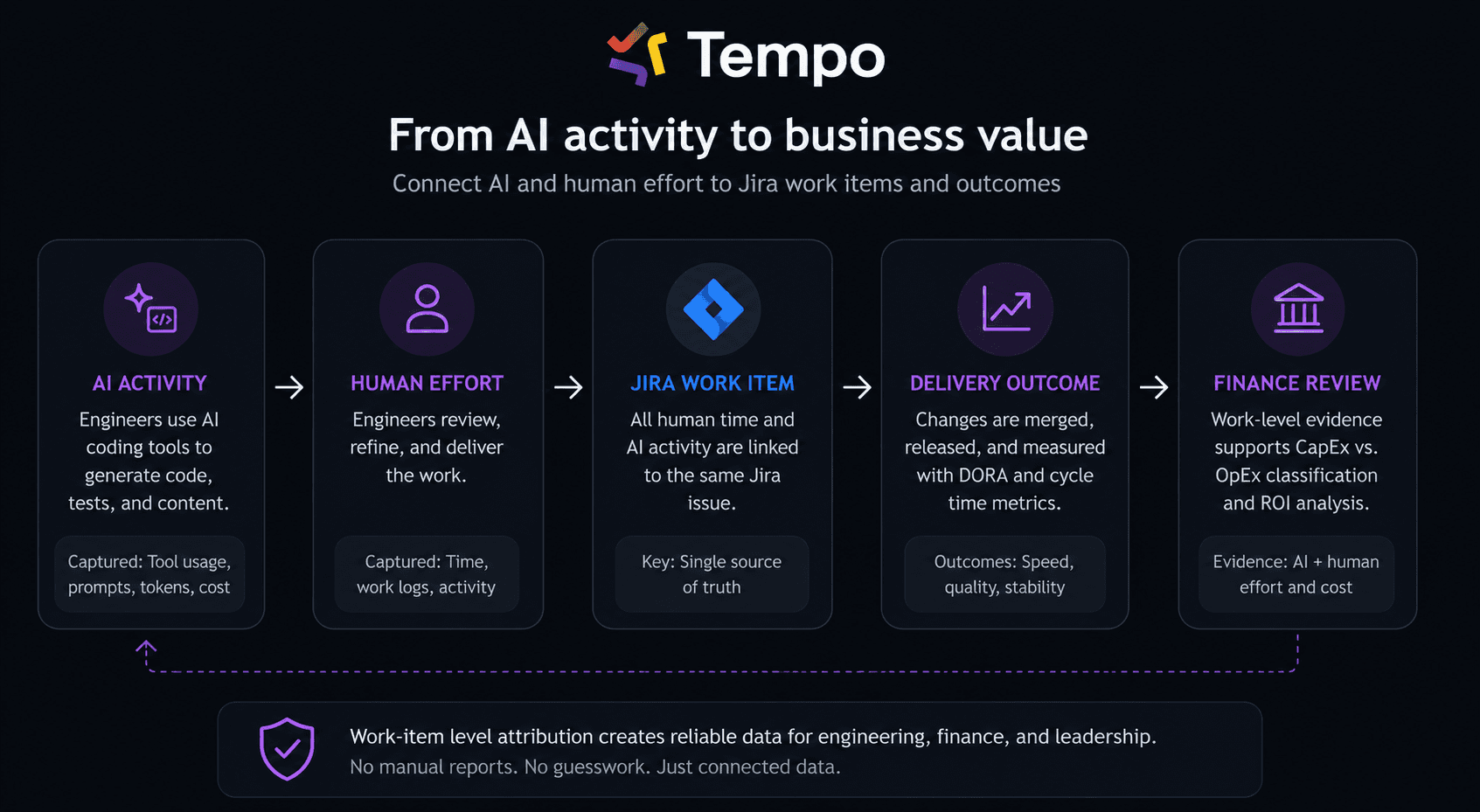
For years, engineering intelligence meant measuring delivery so teams could release software faster and more predictably. That job still matters, but AI adds another element to measure: Its contribution to the work.
AI’s impact can be difficult to judge because perceived speed may differ from measured performance. Google’s 2025 DORA Report, based on survey responses from nearly 5,000 professionals, found that 90% of respondents use AI at work and more than 80% believe it has increased their productivity. But the same report also found that AI adoption continues to have a negative relationship with software delivery stability, while 30% of respondents report little or no trust in AI-generated code.
That makes AI measurement a leadership issue. Engineering teams need to connect AI activity to actual work and delivery outcomes rather than relying on adoption rates or perceived productivity alone.
The board is also asking for proof of AI ROI. In Kyndryl's 2025 Readiness Report, 61% of leaders feel more pressure to prove AI ROI than a year ago.
Beyond proving AI ROI to the board, finance must determine how to account for the costs of AI-assisted software developments. The Financial Accounting Standards Board’s ASU 2025-06 updated the guidance on software cost capitalization. The key question is whether the work qualifies as CapEx (a long-term investment), or OpEx (an operating cost expensed immediately). Finance and auditors make that decision, but engineering must provide the work-level evidence behind it.
That falls to the VP of Engineering because engineering owns the Jira issues and delivery data. And that’s why AI attribution now belongs in the engineering intelligence buying criteria.
No single platform is right for every engineering organization. The best fit depends on the questions you need the data to answer.
Delivery metrics you will act on: Do you need to see DORA and cycle-time trends, or just a static score?
How it connects to your stack: Does the intelligence platform read Git, Jira, or both, and how fast does it sync?
Developer experience signals: Does it measure experience through surveys or system telemetry?
AI measurement, and at what level: Does it track real AI cost, and how finely: Team, tool, or work item?
Financial output finance can defend: Can it produce R&D cost reports an auditor will accept?
Adoption friction and trust: Does it measure the work, or rank the people?
For teams already using AI in everyday engineering work, work-level AI measurement matters most. But platforms now differ in whether they track AI cost by team or attribute AI activity to individual Jira issues.
Here’s an overview of the tools reviewed for software developer intelligence:
Platform | Best for | Delivery and DevEx focus | AI measurement | Finance output | Pricing |
Tempo Workforce Intelligence | Atlassian-native organizations that need Jira work-item attribution | Blended human and AI effort by Jira issue | AI activity and spend by Jira issue, team, and initiative | CapEx and OpEx classification prepared for finance review | Custom; book a demo to know more. |
Jellyfish | Larger R&D organizations | Engineering management, DevEx, business alignment | AI adoption, usage, token spend, and productivity insights | DevFinOps and software capitalization | |
DX | DevEx-led organizations | Developer surveys, DX Core 4, workflow analysis, SDLC analytics | Usage analytics, AI Code Insights, impact analysis, workflow optimization | Engineering allocation and R&D capitalization | |
LinearB | Teams improving PR workflows | Delivery analytics and workflow automation | AI impact measurement, AI code review, AI workflow support | R&D cost capitalization on Enterprise | |
Swarmia | Modular engineering intelligence adoption | Delivery analytics, surveys, investment reporting | AI adoption, activity, license cost, and token cost | Software capitalization reporting | |
Waydev | Leaders seeking public pricing | DORA, DevEx, code review, executive reporting | AI adoption, AI impact, AI ROI, token cost, and output | Automated cost-capitalization reporting | |
Faros AI | Large enterprises with complex toolchains | Delivery, developer experience, initiative tracking | AI token spend by team, tool, model, and workflow | Software capitalization |
Most engineering intelligence platforms begin with delivery data from Git, pull requests, CI/CD systems, and issue trackers. Tempo Workforce Intelligence addresses a more specific problem for Atlassian-native organizations: connecting human effort, AI activity, and AI spend to the Jira work item where the work is managed.
That makes Workforce Intelligence most relevant when your engineering team already uses Jira and AI coding tools, but you can’t connect the AI invoice to individual issues, teams, or initiatives.
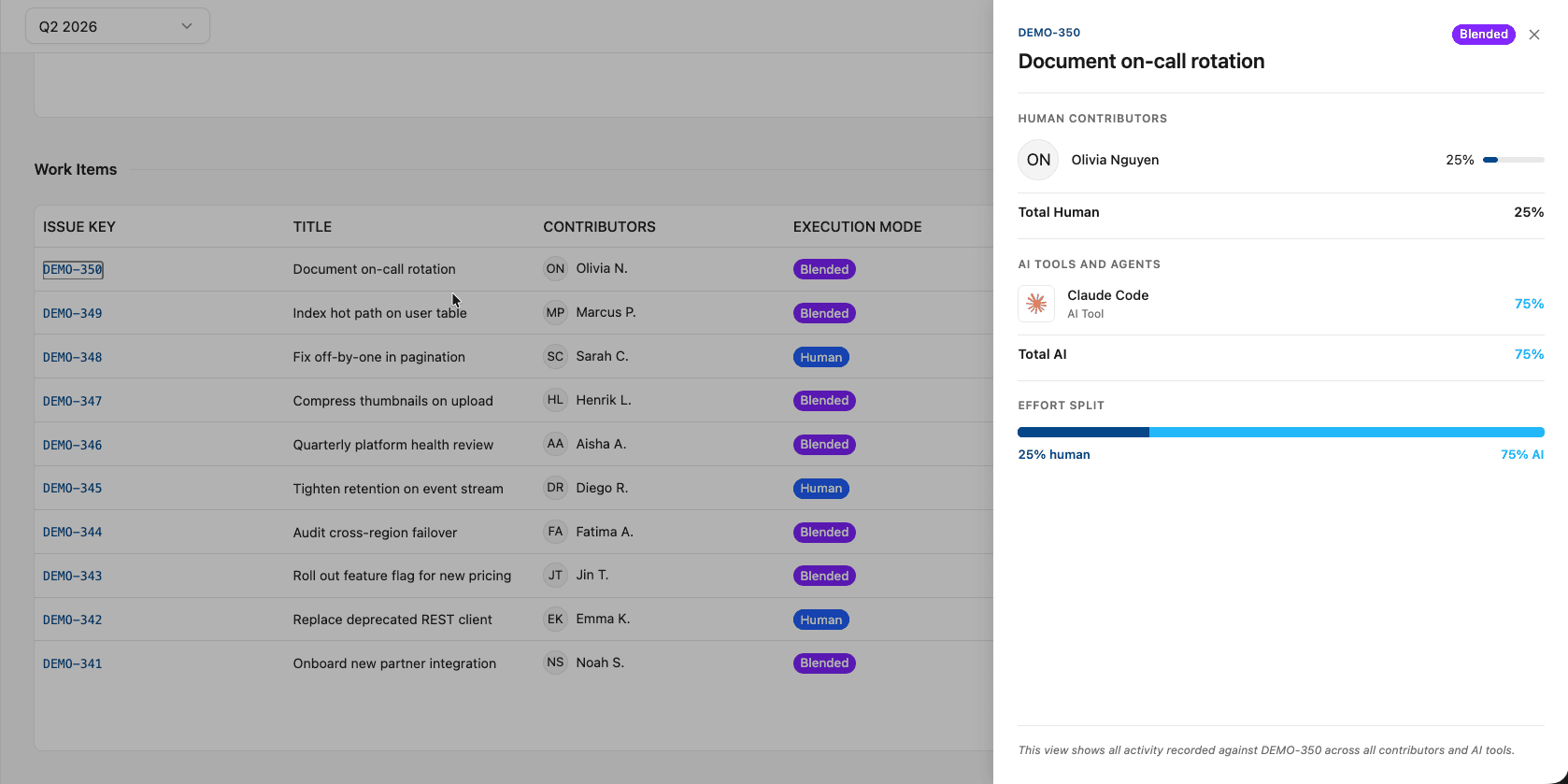
For Jira-based teams, Workforce Intelligence turns work-item data into practical benefits for engineering and finance.
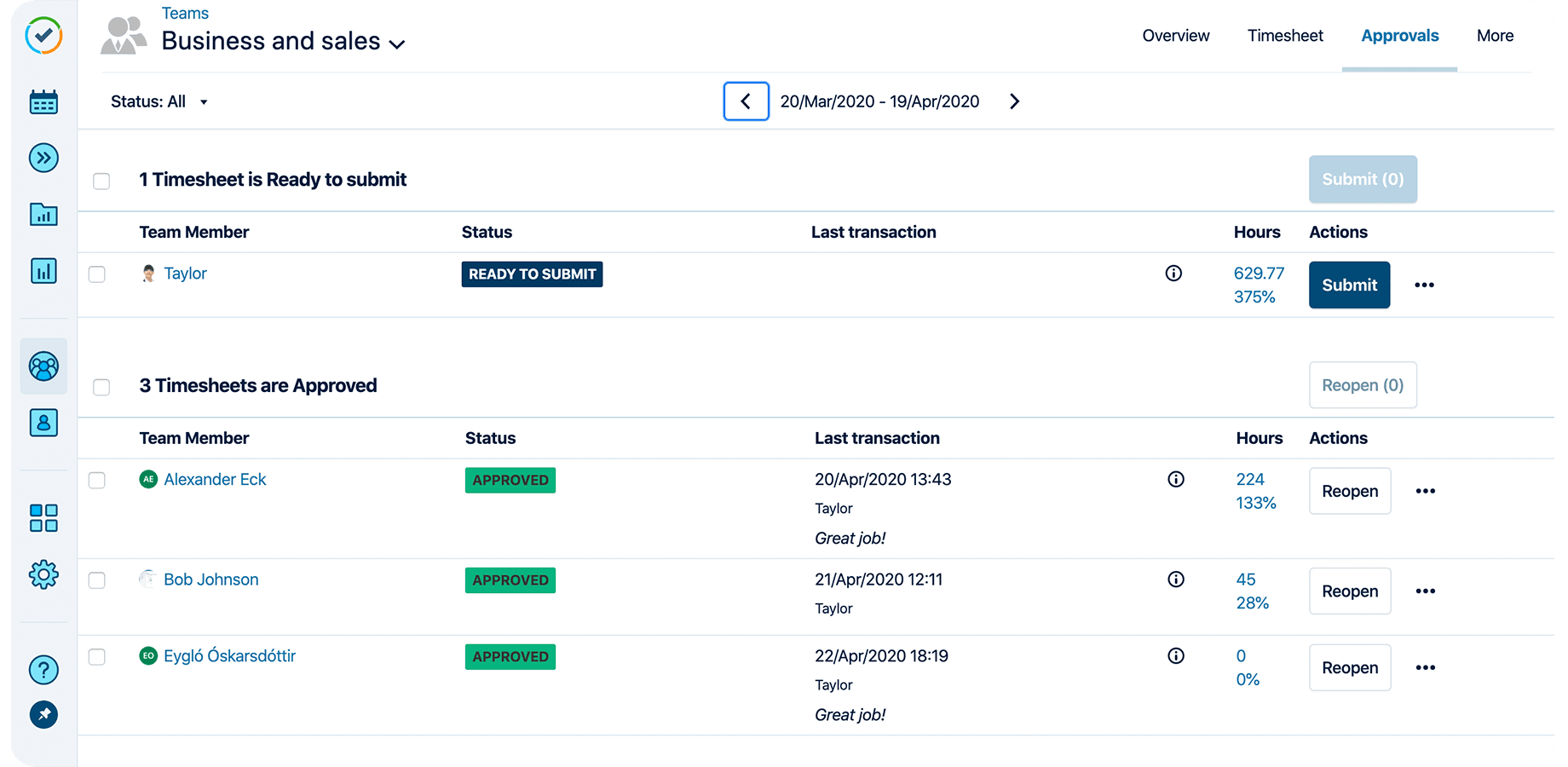
The Jira issue provides context for engineering work, including the assignee, project, initiative, and type of work. Tempo Timesheets records the human time logged against it while Workforce Intelligence adds the AI-tool activity associated with that work item.
Together, these records show how the issue was completed. Human time and AI activity remain separate, so AI usage does not inflate the engineer’s logged hours.
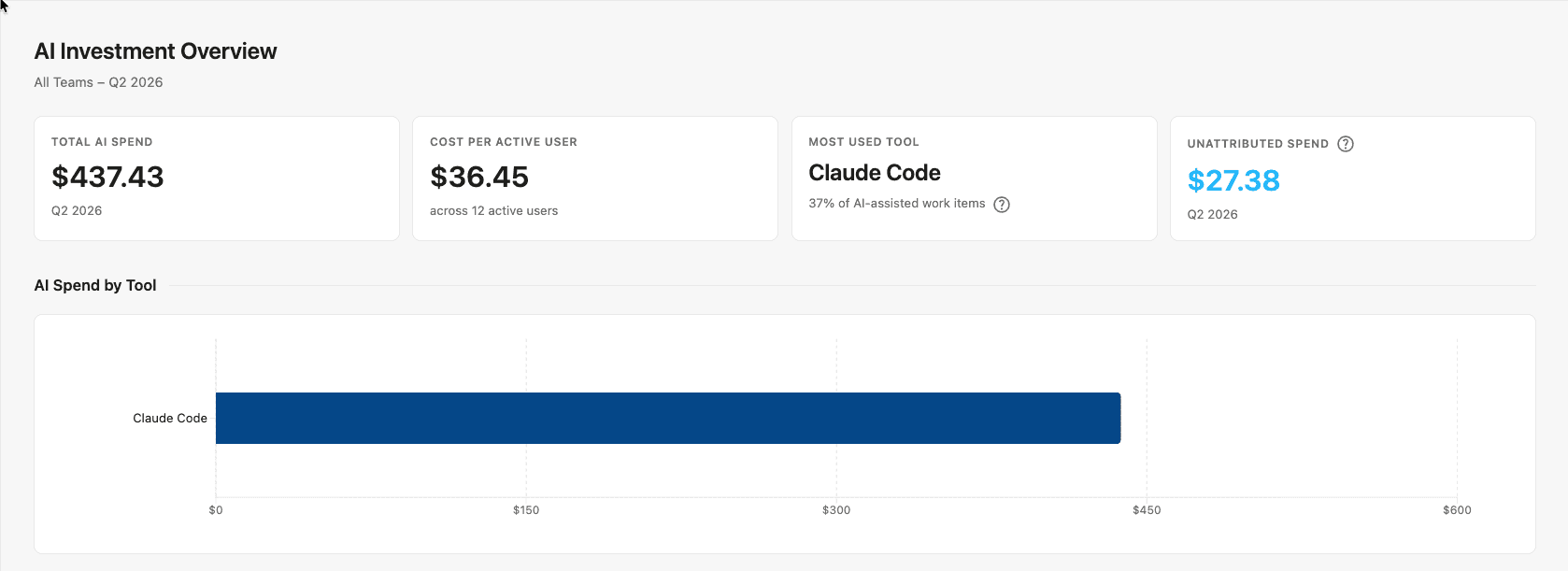
AI vendor invoices show how much your organization paid, but they rarely show which product or initiative used that investment. Workforce Intelligence attributes AI spend to Jira issues, teams, and initiatives, placing the cost beside the work it supported.
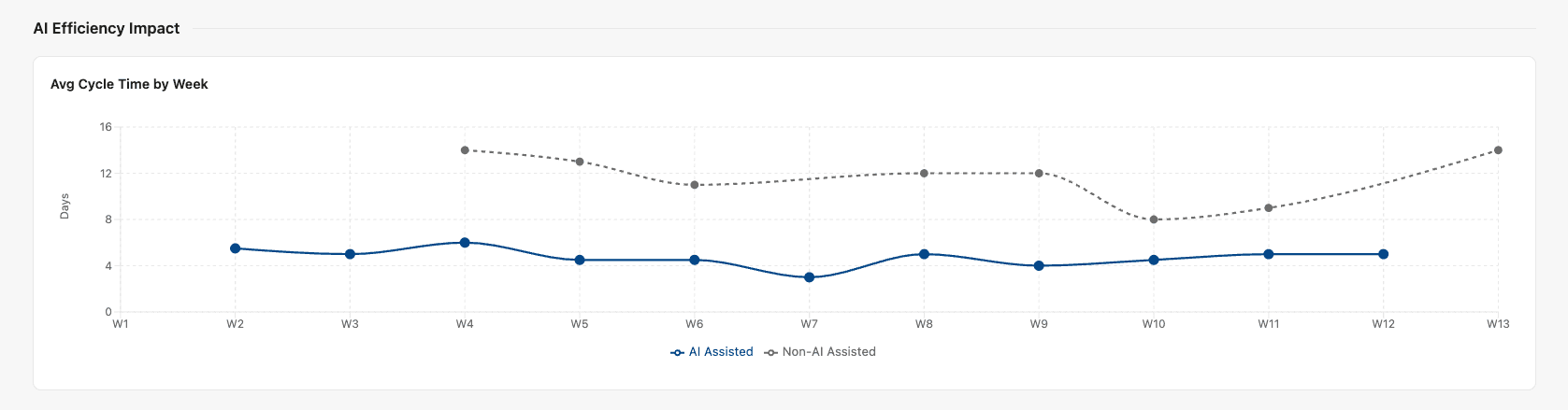
This way, you can see where AI usage is concentrated and whether the organization is paying for tools that support its priority work. That attribution also helps leadership evaluate AI ROI by connecting AI activity and cost with delivery outcomes. It can show whether AI-assisted work coincided with faster delivery, although it cannot prove that AI caused the improvement.
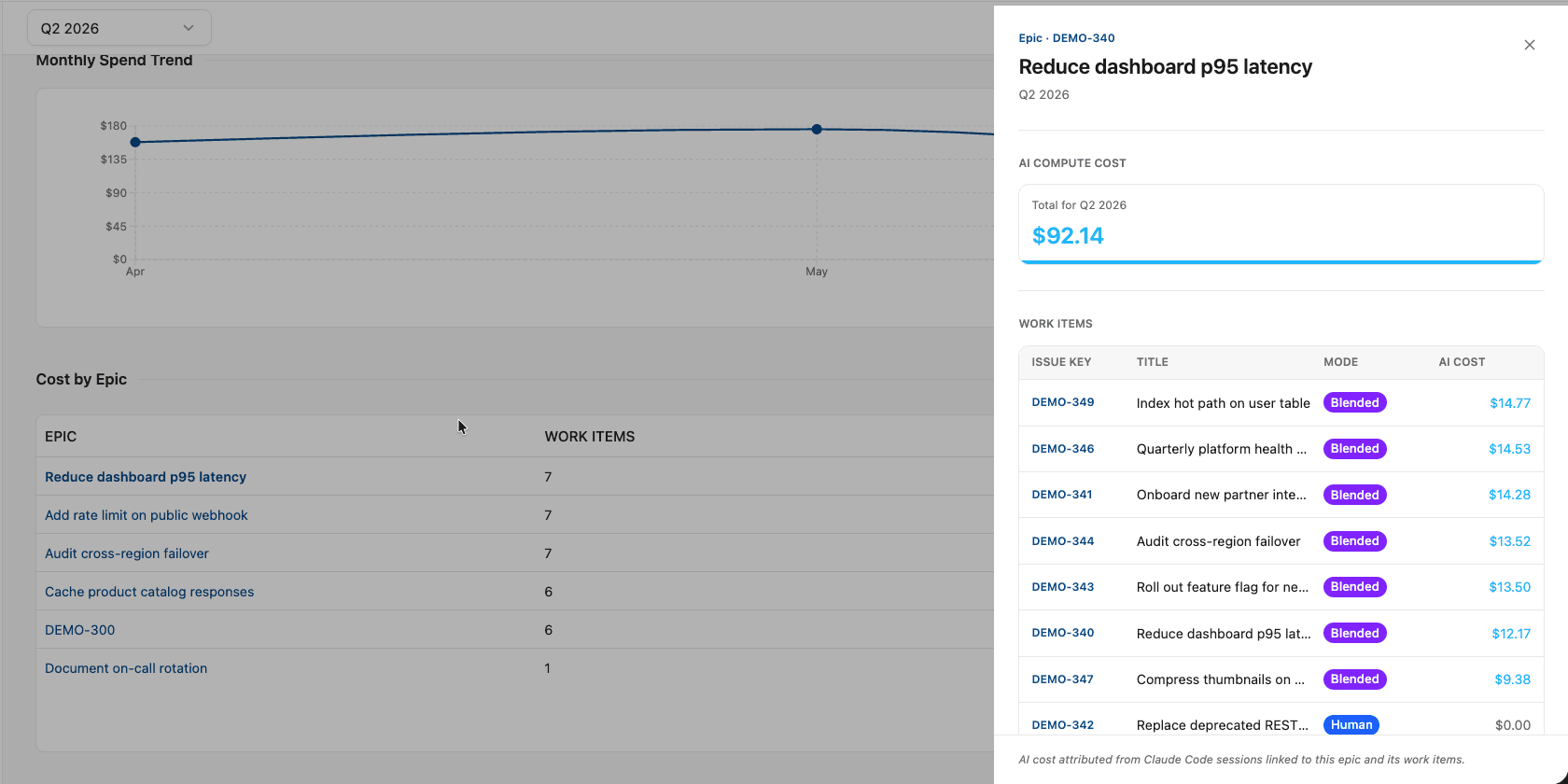
Tempo Workforce Intelligence brings three records together on the same Jira issue:
The issue and initiative context
The human time logged against the issue, and
The associated AI activity and spend
Resource managers can use that blended-effort record (human and AI effort) to understand how similar work was completed and plan future capacity more accurately.
This way, Tempo Workforce Intelligence helps provide the work-item record. Your finance team and auditors can then use its context to decide whether the cost should be classified as CapEx or OpEx.
It focuses on AI attribution, cost, and blended effort rather than broad delivery analytics such as DORA and cycle-time benchmarking
Its value depends on Jira being the system of work, so organizations using other platforms will have less to connect
For Jira-based teams already using AI in everyday engineering work, Workforce Intelligence adds the work-item record that existing delivery data doesn’t provide.
If your engineers already use AI in every sprint, this is the record you don’t have yet.
See how Tempo Workforce Intelligence captures blended effort inside Jira.
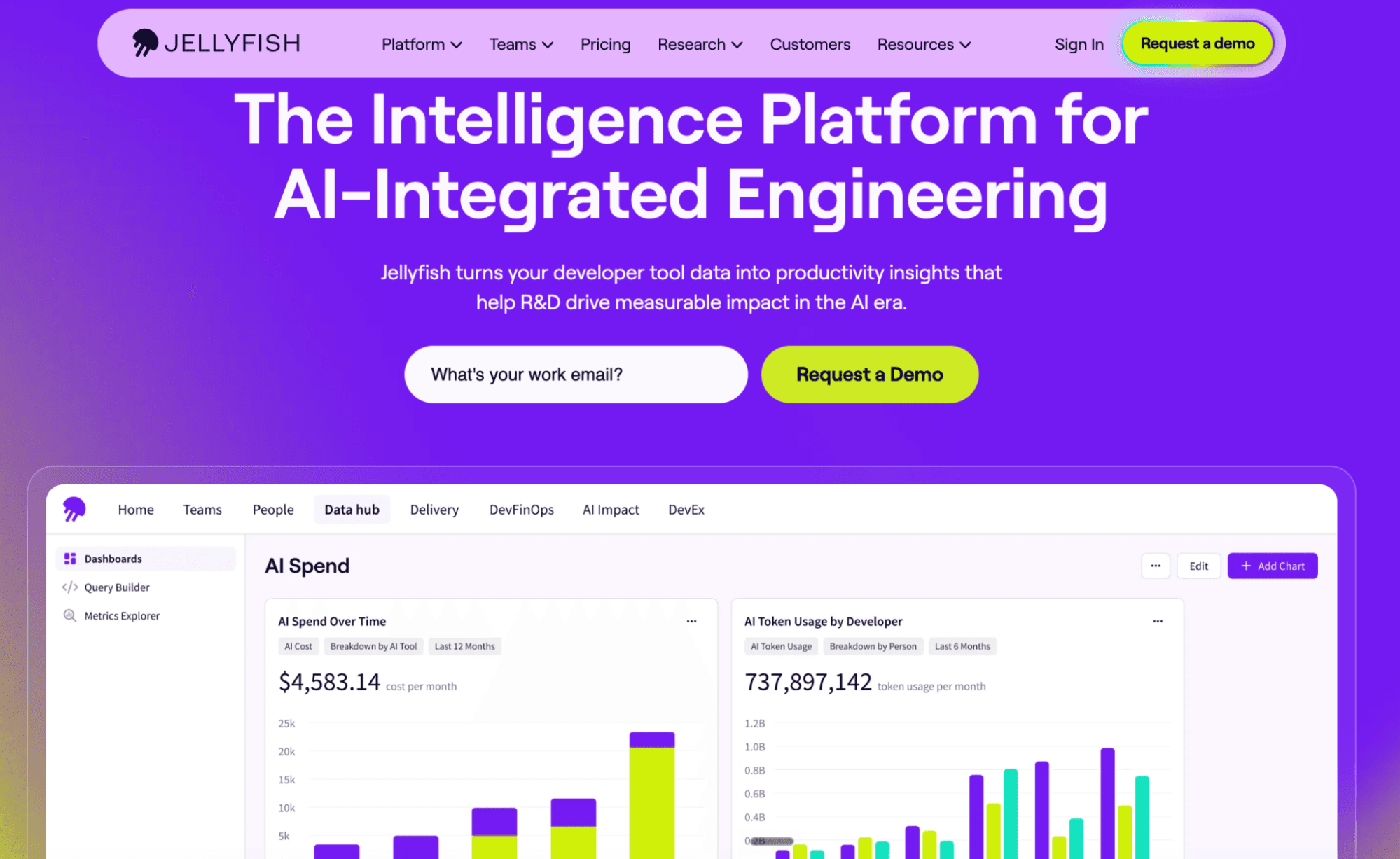
Jellyfish is the platform most focused on connecting engineering work to the business. It centers on delivery analytics and a finance-facing module called DevFinOps (engineering data shaped for finance).
Jellyfish helps generate audit-ready reports for R&D capitalization and tax credits. On AI-assisted workflows, its AI Impact module tracks AI adoption and spend by team or initiative, helping you catch cost overruns early. That spend view stops at the team and initiative level though, so it doesn’t extend to the individual work item.
Its delivery analytics link engineering work to initiatives and cost
Allocation views for where engineering effort and money go
Mature CapEx/OpEx reporting
Best suited to 200-plus engineer orgs defending R&D budgets to a board
No self-serve trial, so you cannot pilot it without a sales cycle
AI spend stops at the team and initiative level, never a single Jira issue
For per-issue AI attribution, Tempo Workforce Intelligence is the closer fit
Custom pricing for all tiers
DX, (acquired by Atlassian in late 2025), is a developer intelligence platform built by researchers, best known for the DXI, its Developer Experience Index. It pairs survey-based experience data with DX Core 4, which combines DORA metrics with Satisfaction and well-being, Performance, Activity, Communication and collaboration, and Efficiency and flow (SPACE) metrics with experience signals.
DX has also expanded into AI measurement. Its AI Code Insights view shows which AI assistants generated code, helping engineering leaders compare AI use across teams. A separate report estimates AI spend by pull request, team, and contributor. DX also applies CPA-reviewed formulas to software capitalization, giving finance a structured basis for R&D cost reporting.
Tells you why delivery is slow by surfacing friction like slow local builds or painful releases that DORA and PR counts miss
DX Core 4 combining DORA and SPACE with experience data
Easier to get engineers to trust, as its research-backed method reads as insight rather than surveillance
AI cost report estimating spend per pull request
The DXI runs surveys quarterly at best, so you read months-old signal between cycles, and someone has to keep response rates up
DX reports AI activity by team, repository, and tool, but doesn’t show human time and AI activity together on the same Jira issue
DX focuses heavily on PR volume to measure productivity, which can penalize teams using continuous deployment and encourage developers to submit smaller, meaningless PRs just to boost their scores
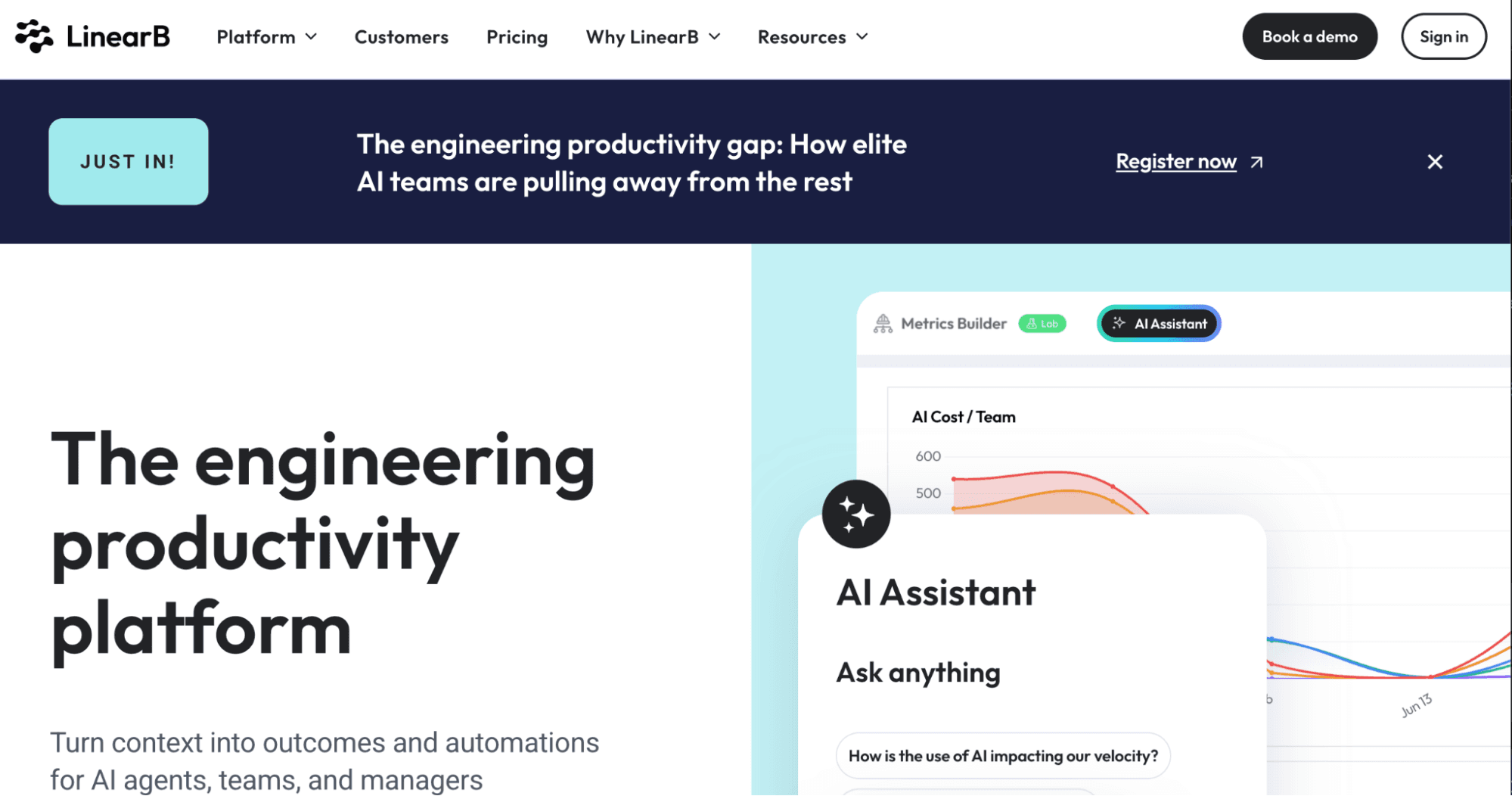
LinearB calls itself an engineering productivity platform, and its native strength is workflow automation. LinearB combines DORA and developer-experience metrics with workflow automation. Its programmable rules route pull requests and enforce review policies, helping teams reduce review delays.
LinearB splits AI data by team and repository, then compares AI-assisted pull requests with cycle time, helping leaders see whether AI use is improving delivery speed.
Combines delivery analytics and workflow automation in one platform
Public pricing and self-serve access make evaluation easier
Team and repository views help leaders compare AI impact across engineering groups
The DORA-at-scale and capitalization features you likely want sit in the Enterprise tier, so the cheaper plan won't answer the intelligence questions
Essentials supports GitHub Cloud only, so anyone on another Git host needs the Enterprise plan
LinearB doesn’t publicly show human time and AI activity together on the same Jira issue, so it can’t provide Tempo’s work-item-level attribution record for finance review
Enterprise at $59/user/month
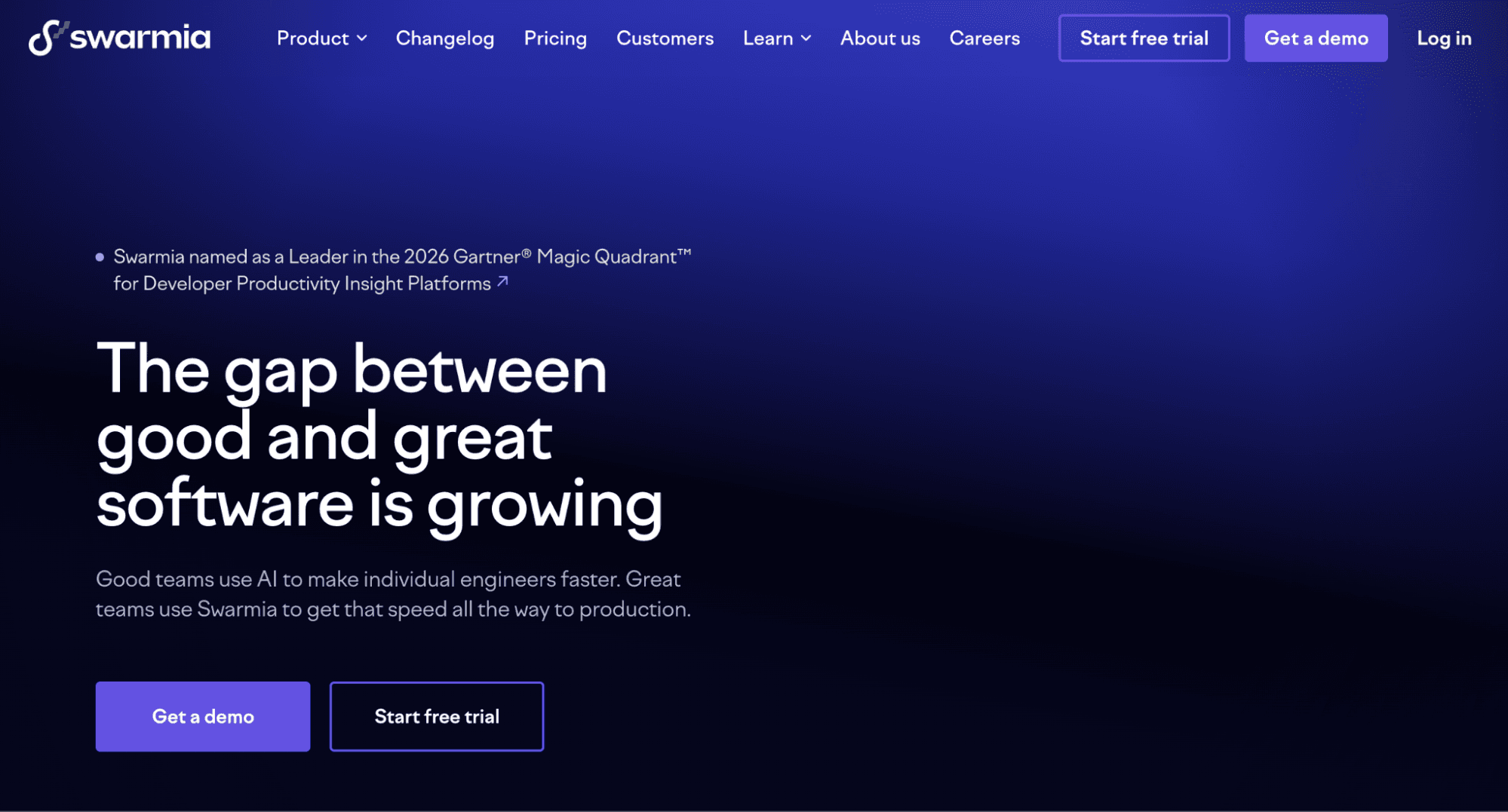
Swarmia is an engineering intelligence platform that connects GitHub or GitLab with Jira or Linear to surface delivery metrics and team-health insights. This helps you analyze delivery performance without requiring engineers to log additional activity.
On AI, it tracks adoption and cost across coding tools, then compares usage with delivery signals such as cycle time and review time. Its software-capitalization feature also traces calculated engineering effort to work items and code contributions, with monthly or annual finance reports.
Fast setup reduces the time needed before teams can use the data
Self-serve plans and a free tier make evaluation easier
Issue-linked capitalization reports give finance traceable R&D cost data
No commit-level AI line attribution: While Swarmia tracks tool usage metadata (e.g., whether a seat is active), it cannot differentiate AI-generated lines of code from human-written code at the commit level, making deep AI ROI analysis difficult
Limited VCS platform support: It heavily favors GitHub, offering minimal or no support for alternative version control systems like Bitbucket or Azure DevOps
Capitalization counts only issue-linked work, so teams with many unlinked PRs must tighten issue hygiene first
Enterprise at $55/developer/month (billed annually)
Other features include AI adoption & cost (at $6/dev/mo), developer surveys ($12/dev/mo), software capitalization ($22/dev/mo), and productivity & AI impact ($29/dev/mo)
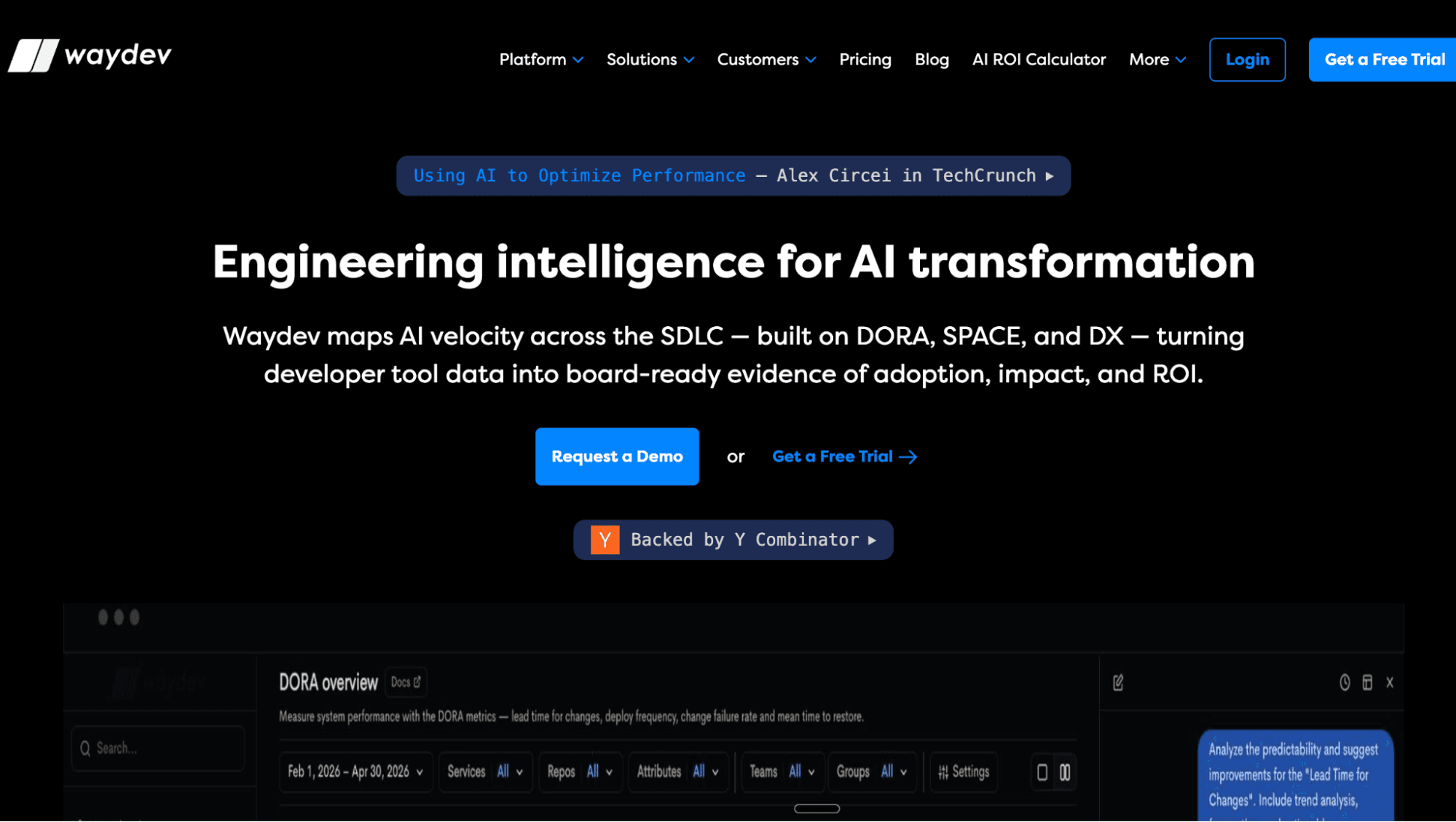
Waydev helps engineering leaders track delivery performance and communicate results to executives. It combines DORA and SPACE metrics with executive dashboards.
Its AI Impact view follows AI-generated code from the IDE to production, showing usage and outcomes by tool and team. Waydev also uses issue-tracker rules to automate software cost capitalization, giving engineering and finance one place to review AI activity and R&D costs.
Tracks AI-generated code from IDE acceptance through review and production, helping teams identify where AI-assisted work stalls or creates rework
Measures token usage and AI cost per merged pull request, giving leaders more than seat-adoption data
Uses configurable issue-tracker rules to generate monthly software-capitalization reports for finance
Full AI Impact and AI ROI features require the Premium plan
It shows AI cost by user and merged pull request, but not human time and AI activity on each Jira issue
Premium at $49/active contributor/month
Enterprise - requires a sales call
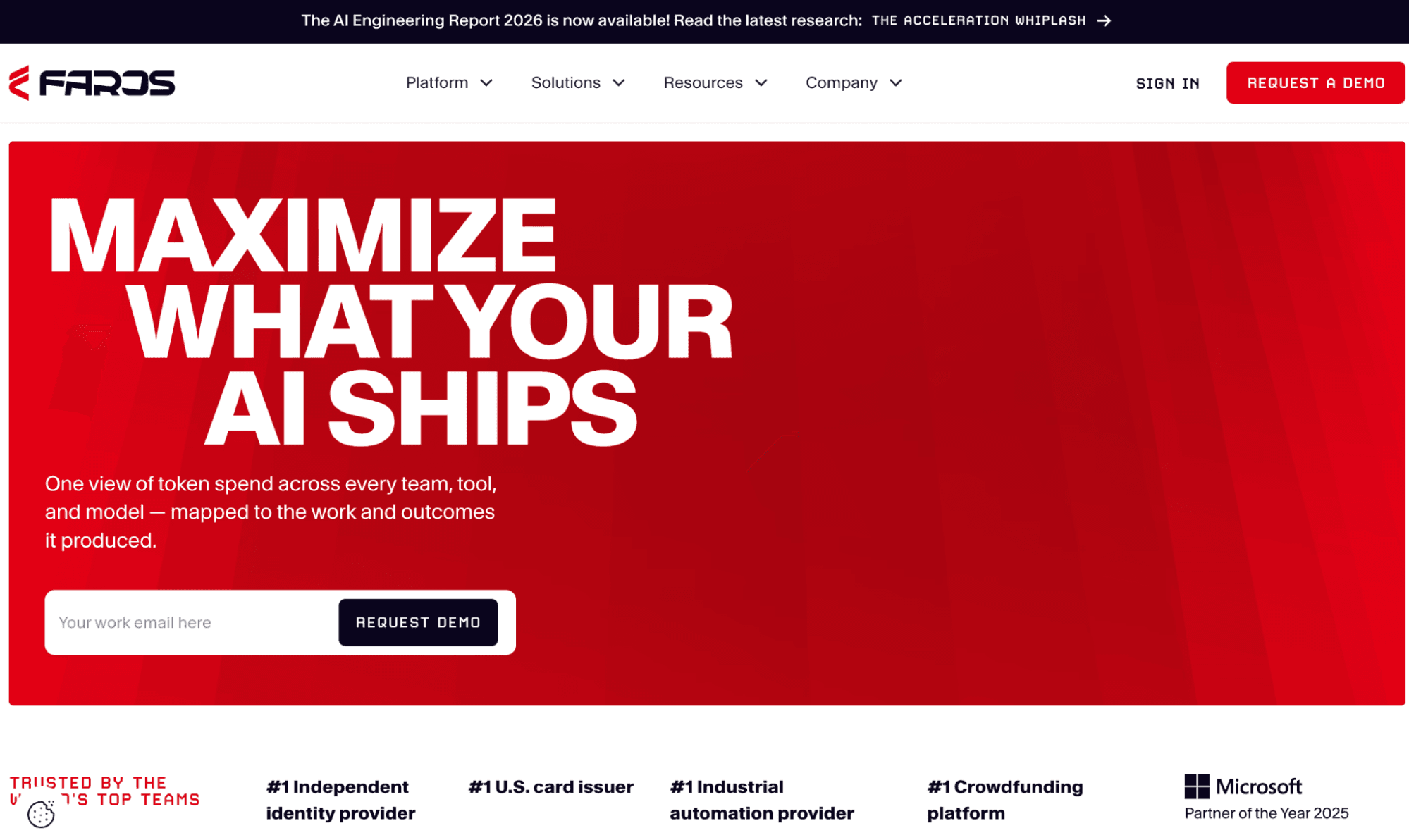
Faros AI is an enterprise engineering intelligence platform that connects data from more than 100 development tools. Its Token Intelligence product tracks AI spend by team, tool, and model, then classifies usage as productive, inefficient, or wasteful.
It also maps AI spend to teams and tasks, while its software-capitalization product generates finance reports by initiative, epic, or employee. That makes Faros one of the closest comparisons to Tempo Workforce Intelligence for organizations evaluating AI attribution and R&D cost reporting.
Connects AI usage with engineering context instead of reporting token totals alone
Helps leaders compare AI cost and efficiency across tools, models, and teams
Automates capitalization reports with exportable records and audit trails
Reliable insights depend on connecting detailed AI and engineering telemetry, which may require more setup in fragmented toolchains
Faros tracks AI cost and capitalization, but it doesn’t combine that data with logged human time on the same Jira issue
Pricing is not public, so buyers must request a demo to compare total cost
Your current engineering dashboards may show what the team completed. AI vendor reports may show how much the company spent. Neither record explains how AI activity and human effort come together on the Jira issue.
Tempo Workforce Intelligence is designed to create that record inside Jira. It connects AI activity and spend to the work item, places them alongside logged human effort, and gives engineering and finance a common source for planning, attribution, and classification review.
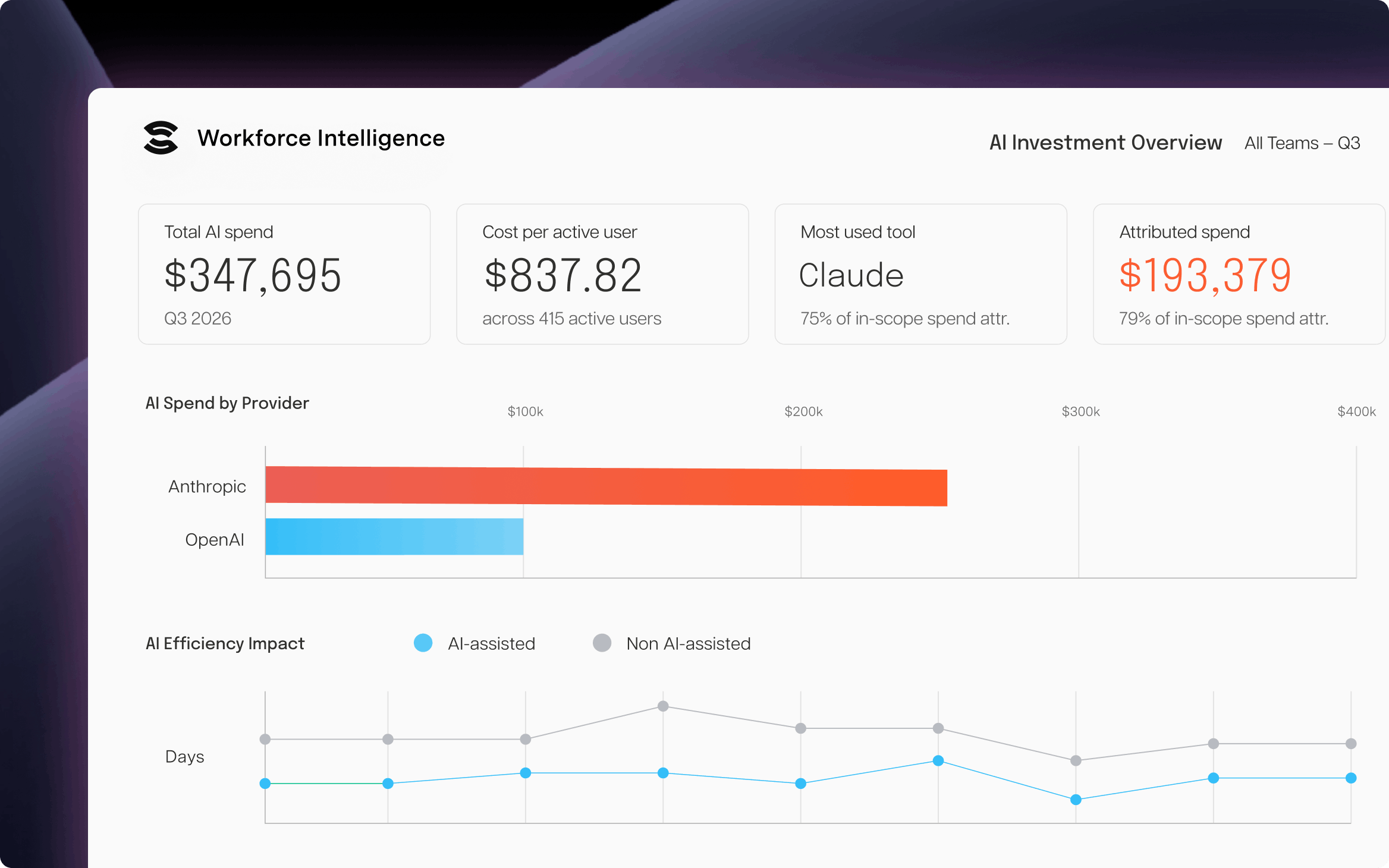
Workforce Intelligence
The only solution that ties AI vendor spend to the teams, epics, and Jira issues it supported.
Start a Free TrialCouldn't find what you need?Go to our documentation
No. Observability tools track how software behaves in production, including latency and errors. Engineering intelligence platforms analyze how teams build and release software using development and work-management data. Most organizations use the two categories for different purposes.
Jira dashboards show issue status, ownership, and progress. An engineering intelligence platform adds data from development tools to measure delivery performance or connect AI activity and cost to engineering work. Basic Jira reporting may be enough for work tracking, but DORA metrics, developer-experience analysis, and AI attribution require broader data.
That depends on what the platform measures and how leaders use the data. Team-level trends can expose workflow constraints and protect capacity. Individual rankings can push people to optimize visible activity instead of useful outcomes. Before rollout, define what each metric is for. Also explain who can see individual data and how it will be used.
No. Delivery analytics and AI attribution support different decisions. A delivery analytics platform can provide DORA and cycle-time analysis. An attribution product can connect human and AI effort to the Jira work item. The two records should work together without creating extra reporting work for engineers.
Six getdx alternatives compared. See what each measures, where each falls short, and which fits developer experience, DORA, or cost attribution.

Compare Swarmia and Jellyfish on DORA metrics, integrations, AI cost tracking, and capitalization to find the right fit.

Software engineering intelligence platforms read time logs, Jira, and Git as one dataset. See what they measure and where AI spend fits in.

Six Jellyfish alternatives compared: See what each one measures, where it runs, and which requirement it fits.

Workforce intelligence captures human effort and AI activity per Jira ticket, so finance can classify AI costs and prove ROI to the board.

AI attribution should pair human effort and AI spend on the same Jira work item, tracing every dollar to the work it delivered. Learn how we built it.

CEOs are asking their CTO and CFO: What did we get for the AI money we spent? Workforce Intelligence has the answer.

How to move Tempo data from Jira to any business intelligence tool with a user-friendly interface, flexible configuration, and no technical skills.
Explore the main differences between convergent versus divergent thinking and learn when to use each for better creativity and problem solving.