DevOps requires robust version control as supplied by Jira release management. Discover essential workflows, best practices, and more.
Learn the fundamentals and the importance of continuous integration and delivery (CI/CD), a mainstay of the DevOps development pipeline.

Continuous integration and delivery (CI/CD) is a DevOps practice that automates how code moves from a developer's commit to production. CI handles building and testing every code change against a shared repository. CD handles packaging and deploying those tested changes to staging or production environments. Together they turn what used to be a manual, risky release process into a repeatable pipeline that runs on every commit.
Modern software teams use CI/CD because customers expect a steady flow of new features, and manual release cycles can't keep up. This guide covers what each half of the pipeline does, how they differ, and why the framework has become a staple of DevOps.
CI/CD merges continuous integration and continuous delivery into a single automated development pipeline. It replaces manual steps between code commit and production with automated ones, including:
Building
Integration, regression, and unit testing
Deployment
Infrastructure provisioning
Code updates are tested, delivered, and deployed automatically. A well-configured pipeline shortens time to market, cuts downtime, and increases the frequency of safe releases.
Continuous integration is the practice of merging code changes into a shared branch multiple times a day, with each merge triggering an automated test and build. Every commit runs through static analysis, unit tests, and integration tests before the code is packaged for later stages.
The point of CI is early feedback. Bugs, security issues, and merge conflicts surface within minutes of being introduced, not weeks later during a manual QA cycle. Version control tools log every change to the repository, giving developers a clear history of the active release.
Continuous delivery picks up where CI leaves off. Once a build passes automated testing, CD systems provision infrastructure and prepare the packaged code for deployment across environments:
Development
Testing
Staging
Production
CD ensures the software is always in a deployable state. Releases can be triggered manually or fully automated as continuous deployment, where every passing build ships to production without human intervention.
The difference is where each practice sits in the lifecycle. Continuous integration focuses on merging and testing code — it runs on every commit or pull request, produces a tested, versioned build, and operates across a developer's machine and the CI server. Continuous delivery focuses on packaging and deploying code — it triggers on a successful build from CI, produces an artifact ready for release, and operates across testing, staging, and production environments.
Some teams take CD one step further with continuous deployment: every passing build reaches users automatically. For many engineering orgs, that's the ultimate destination of a DevOps investment.
Software applications get more complex every year, and manual release processes can't scale with the demand. CI/CD compresses the loop between writing code and getting it in front of users. That faster cycle produces continuous feedback — bug reports, feature requests, usage data — that feeds directly into the next iteration. The result: better products, happier customers, and less firefighting.
Smaller, more frequent code changes are easier to test than large batch releases. Issues get caught while the change is still fresh in the developer's mind, before it interacts with other in-flight work.
Releasing at any time means new features reach customers as soon as they're ready — not weeks later when the next release window opens. Faster releases mean faster feedback and a real competitive edge.
Automated testing catches regressions before they hit users. The product feels more polished, support tickets drop, and trust in the brand grows.
Breaking releases into small, testable pieces removes much of the uncertainty from planning. Teams estimate more accurately and hit dates more consistently.
Automating the repetitive parts of the release process frees developers to focus on the work only humans can do — design, architecture, and problem-solving.
Small batches make root-cause analysis faster. When something breaks, there are fewer changes to look through.
Deployment stress is a real driver of burnout. Automation removes the late-night, all-hands releases and replaces them with routine, low-risk deploys.
Small batches also mean faster rollbacks. If a bug slips through, teams can revert to the previous version in minutes instead of hours, keeping mean time to resolution (MTTR) low.
Running a healthy CI/CD pipeline depends on visibility into how engineering time actually gets spent. Tempo's Capacity Planner sits inside Jira and gives DevOps teams a live view of who's working on what, where the bottlenecks are, and how release cadence is trending week over week.
Pair it with Tempo Timesheets and you get accurate data on how much time goes into pipeline maintenance versus feature work — the kind of insight that turns "we should automate more" into a concrete case for investment. Timesheets integrates with Azure DevOps Server as well as Jira, so it fits regardless of which side of the toolchain your teams live on.
Structure PPM
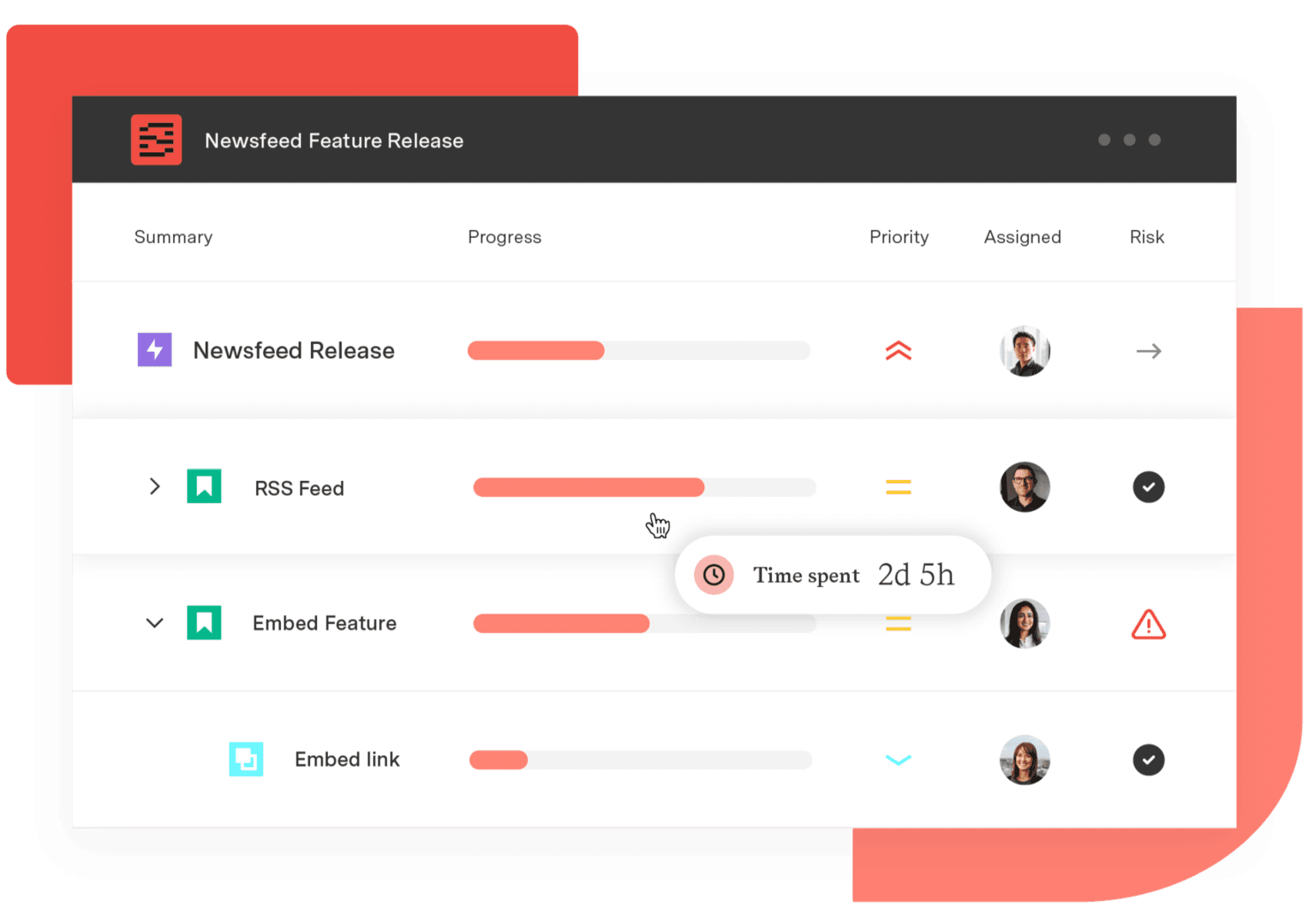
Manage products, projects, and programs in a single spreadsheet-like view. By providing a clear, real-time view of project progress and resource allocation, Structure helps teams meet deadlines and adapt swiftly to changing priorities.
Start a Free TrialCouldn't find what you need?Go to our documentation
Popular closed and open-source CI/CD tools include:
• Jenkins
• Azure DevOps Server
• Travis CI
• GitHub
• Kubernetes
Developers typically divide the CI/CD pipeline into four distinct phases:
1. Source: Translating software requirements into functional algorithms, behaviors, and features.
2. Build: Pulling source code from the program repository, developers program links to libraries, modules, and dependencies. Once complete, they compile the components into an executable file (EXE).
3. Test: The build undergoes comprehensive dynamic testing to ensure functionality.
4. Deploy: After testing is complete, automation deploys the code to a live production server or cloud environment.
Continuous delivery is built on six key pillars, ensuring rapid deployment of updates and new features with minimal bugs:
1. Version control
2. Build automation
3. Testing
4. Deployment automation
5. Configuration management
6. Monitoring
DevOps requires robust version control as supplied by Jira release management. Discover essential workflows, best practices, and more.
Learn about DevOps project management and how this agile framework improves from team performance to product quality and customer satisfaction.

DORA metrics help DevOps teams measure speed and quality and achieve consistent results. Learn how to gauge these KPIs and boost performance.

Streamline your business’s software deployment with these IT release management tips. Discover best practices and customizable software solutions.

Powerful and flexible filtering has never been easier for azure devOps thanks to Work Item Query Language support.

Timesheets by Tempo's integration with Jira Align, product leaders can effortlessly assess development investments

Exalate Modules add extensibility. Easily minimize the details of advanced system interactions and simplify the integration into synchronization.

Learn about Jira Software Cloud’s integration with Google Calendar to streamline your time management efforts and stay on top of your to-do list.
Develop integrations that sync your data seamlessly between Strategic Roadmaps and your product stack.