See how Structure PPM brings overdue task tracking into Jira with real-time reporting, dashboards, and portfolio rollups built for delivery teams.
Timesheets brings estimated vs actual time into Jira so teams can plan, report, and act on the same data.

Every estimate is a small bet. The team commits to a number, the work starts, and the actuals roll in over the next two weeks. Compare the two and you learn something useful: Where scope creeps, which tickets sandbag, which engineers come in light. With that comparison, planning gets sharper every sprint.
Estimated vs actual time is a reporting view that places a Jira issue's original or remaining estimate next to the time logged against it. The estimate captures what the team thought the work would take. The actual reflects what it took.
The gap between those two numbers is where teams find their planning intelligence. A small, steady variance suggests estimates are calibrated. A large variance points to scope ambiguity, dependencies the team did not see, or interruptions that pulled focus elsewhere. Tracked over time, these comparisons turn anecdote into pattern.
Jira teams usually have the raw inputs already — story points, time estimates, worklogs — but lack a clean way to surface the comparison without exporting to a spreadsheet. A dedicated report closes that gap inside Jira itself.
Sharper sprint planning. Historical variance gives planners a defensible buffer instead of a hopeful one.
Earlier risk signals. When actuals trend above estimates mid-sprint, leads can rebalance work before the demo turns into an apology.
Honest retrospectives. Teams stop debating who was busy and start discussing why specific issue types keep blowing past their estimates.
Fairer billing and capitalization. Comparing logged time to plan supports billable invoicing, CapEx and OpEx classification, and audit-ready records.
Start at the issue level. Pull a report scoped to a single sprint or epic, sort by variance, and look at the outliers. The tickets where actuals exceed estimates by 50% or more are the ones worth examining — not to assign blame, but to understand the cause. Was the spec underspecified? Was a dependency late? Did testing surface rework no one had budgeted for?
Roll the same view up to the team or project level for a planning conversation. Look at average variance by issue type, component, or assignee. Patterns at the team level usually point to systemic issues: A chronically underscoped category of work, a meeting load eating into delivery time, or a hand-off that adds days no one tracks.
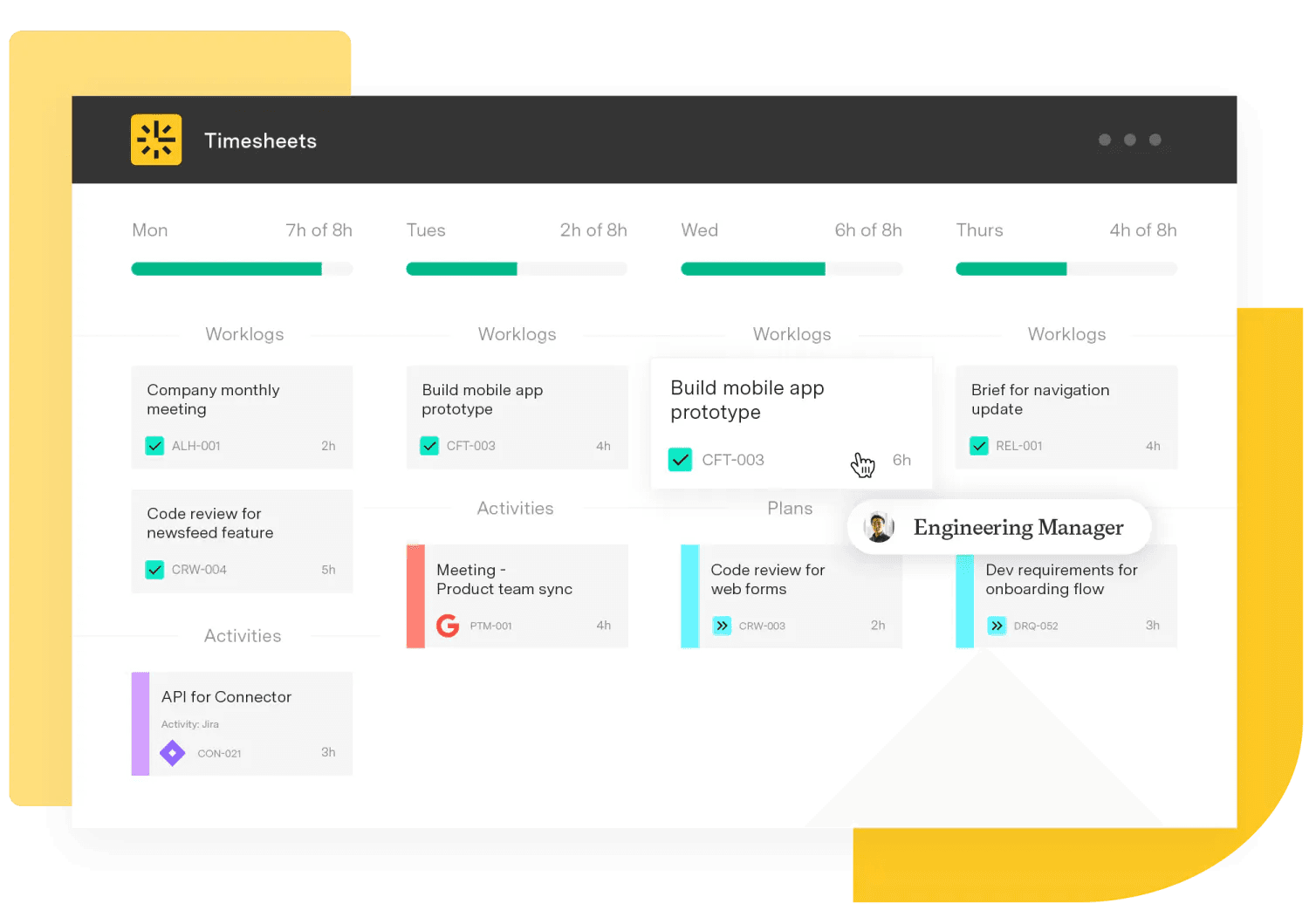
Timesheets pulls the actuals side of this comparison directly from worklogs. Because logging is automated through calendar, Slack, and IDE integrations, the time data underneath the report is closer to reality than manual entry would deliver — the most common reason estimated vs actual reporting fails is bad actuals, and Timesheets fixes that at the source.
Reports surface logged time alongside Jira's original and remaining estimate fields, so leads can see plan versus reality without leaving Jira. Filters by team, account, project, and issue type let project managers drill from a portfolio overview down to a single contributor. Tempo Accounts adds a financial layer on top, separating billable from non-billable hours and tagging time as CapEx or OpEx for downstream reporting.
Pair Timesheets with Custom Charts for Jira to visualize the variance on a dashboard. Custom Charts pulls Timesheets data and renders estimated vs actual as a bar chart, table, or grouped view that managers can keep open during sprint reviews.
Timesheets
The #1 time-tracking app for Jira. Timesheets seamlessly integrates with Jira and your existing workflows to help you track time for accounting, CapEx tracking, client billing, compliance, and more.
Start a Free TrialCouldn't find what you need?Go to our documentation
Original estimate is the team's first commitment when the issue is created – the planning number. Remaining estimate updates as the work progresses, reflecting how much effort the assignee believes is still ahead. Comparing logged time against original estimate measures how accurately the team plans. Comparing it against remaining estimate measures how well the team is tracking mid-flight.
Native Jira reporting is project-scoped. To compare estimated vs actual across projects, you need a tool that aggregates worklogs and estimate fields across the instance. Timesheets does this through its reporting layer, which lets you filter by team, account, or custom hierarchy rather than by single project.
Yes, but it depends on how your team rolls up estimates. If sub-tasks carry estimates and worklogs, an epic-level view sums both sides. Tempo Structure PPM goes further, letting portfolio managers aggregate estimated vs actual time up custom hierarchies that span multiple Jira projects.
The most common causes are unscoped work pulled in mid-sprint, meeting and context-switching time that engineers log against tickets, and chronic under-estimation of testing and review. Variance tracking surfaces which of these is dominant for your team, which is the first step to fixing it.
See how Structure PPM brings overdue task tracking into Jira with real-time reporting, dashboards, and portfolio rollups built for delivery teams.

Learn how Financial Manager delivers project revenue reporting for Jira teams — real-time reporting, dashboards, and portfolio rollups in one view.

Compare the best capacity planning software for engineering teams on Jira. See how six tools handle two-way sync, utilization, and plan vs. actual.
Learn how lead time vs cycle time reveals where work slows down, and why tracking both is essential for reliable delivery and strategic forecasting.

Time tracking gives PMO directors the portfolio evidence to defend spend and catch drift early. See why it's important and how to track it in Jira

Learn the difference between accuracy versus precision, with clear definitions, real-world examples, and tips to improve measurement and reporting.

Learn what portfolio reporting contains, report types by audience, why cycles break, and how continuous reporting changes the executive conversation.

Forecast project costs in Jira with Tempo Financial Manager. Combine actual and planned data to prevent overruns and improve budgeting.

Knowing the status of work is just as important as knowing when it will finish. See an aggregate of how long work takes for future estimation.