Learn about Jira Service Management's features and how it enhances IT, HR, and business workflows with powerful automation and collaboration tools.
Learn about IT service request management and discover best practices to help your service desk deliver outstanding client support.

IT departments keep companies running by supporting business systems and ensuring continuity. Maintaining that state of readiness is hard, and it depends on a disciplined way to handle the everyday asks that flow into the service desk.
Service request management (SRM) is the discipline for handling those asks. It sits inside an overarching IT service management (ITSM) strategy and coordinates the service desk protocols that govern how routine requests get fulfilled. Here's how to use SRM to benefit your business.
A service request is any formal submission asking for initial access to IT equipment, applications, or services from an employee, customer, or vendor — the definition used by the Information Technology Infrastructure Library (ITIL). Common examples include:
Software licenses
Password resets
WiFi access
Additional hardware
These requests follow an established pattern with a well-defined, repeatable fulfillment process. A replicable methodology streamlines service delivery and saves time and labor.
Service request management is separate from incident management. Service requests solicit access to existing functions; incident reports document system failures and interruptions. Incident management is tracked separately, usually in dedicated incident tracking software.
An SRM system lets service desk staff address, oversee, and monitor the fulfillment of IT requests. That produces three concrete benefits.
SRM establishes a service catalog outlining available resources. The catalog summarizes services and estimated completion times so staff can manage client expectations. Catalog entries expedite request workflows by presenting each service in a standard format.
Tracking key metrics — average response time, turnaround time — is essential for ticket resolution. With that data, the service desk can:
Provide status updates on every request in the system
Use historical data to generate realistic service targets
Improve the accuracy of time and cost estimates
SRM often includes an automated self-service portal where users submit requests, track status, and receive progress updates. Satisfaction rises and IT staff are freed for higher-value work.
Managing service requests is a five-step process. Here's how a request moves through the system.
The client initiates fulfillment by submitting a formal ticket describing what they need. Submission channels include:
Self-service portal
Mobile app
Phone call
Social media
Service desk staff or other qualified team members review the submission to determine:
Parameters
Urgency
Necessary resources or tools
Verification and approval requirements
Once IT understands and approves the request, the team gathers contact information, assigns fulfillment responsibility, and communicates the completion timeline to the client.
A technician fulfills the request, and the service desk closes and archives the ticket. IT may assess ticket management at the individual, team, and departmental levels to identify workflow improvements.
Customer surveys are a proven way to strengthen the process. Reaching out to requesters gauges their experience, confirms issue resolution, and demonstrates the desk's commitment to customer satisfaction.
A strong SRM process is customer-focused and knowledge-based, using automation to streamline service desk operations. Support teams can apply the following priorities to keep IT support meeting demand and delivering the best service possible.
The service desk absorbs a constant flow of client questions, submissions, and demands, which can become overwhelming when customers are frustrated. To safeguard staff well-being, IT should supply resources, support, and training that help team members develop coping tactics and reduce stress. Leaders should also run routine reviews to workshop responses to new and challenging situations.
Multiple submission channels look convenient, but they spread tickets across systems and invite errors. A centralized service request portal raises visibility, shortens response time, and improves the experience for everyone.
Empowering customers to help themselves increases SRM efficiency. "Shifting left" — removing impediments to self-service — frees technicians for high-value tasks and service level agreements (SLAs). One solution: A self-service portal populated with knowledge-base articles that helps clients resolve issues on their own, diverting high-volume, low-value tickets from IT.
Automating repetitive tasks cuts workloads and improves efficiency. Your IT team can automate responses to routine requests and follow-up emails checking on satisfaction. These processes improve the customer experience without adding to the service desk workload.
The following practices help IT teams handle submissions quickly and efficiently.
Standardize the easiest and most common requests first to drive immediate benefit for agents and clients. The experience your team gains becomes a template for optimizing more complex workflows.
Whether your team uses a dedicated SRM tool, a self-serve portal, or another submission process, use a comprehensive form that captures relevant request parameters. Collecting the information upfront cuts back-and-forth later.
Within the service catalog, document requirements for every service request, including:
Question fields
Approval process
Fulfillment procedures
Technicians
Process owners
SLAs
Reporting
This documentation ensures consistent responses, provides a benchmark for improving procedures, and informs responses to new and more complicated submissions.
Pare down the fulfillment process by standardizing and automating approvals wherever you can. Monitor requests could be pre-approved and opened directly on a technician's task dashboard. A new software license may require management approval, so the ticket should route to their workflow automatically.
Identify and close knowledge gaps in the self-service portal. Address common questions with FAQ pages and provide how-tos for recurring issues. Make sure these articles route users to additional support when they need it.
Assess SLAs so the support team tracks the right metrics and upholds each contract. Create automatic notifications to warn the service desk when a breach is likely.
Identify the reports and metrics IT needs to manage service requests effectively, including:
Customer satisfaction
Time to response
Time to resolution
Time to close
Well-executed service request management benefits clients and the organization. Customers get a smoother experience, and your team can direct more labor toward high-value work that moves key business goals.
Tempo understands the value of an SRM tool. That's why we've built a modular suite of Jira-enabled applications to manage every aspect of an ITSM system, including:
Time management and reporting with Timesheets and Custom Charts for Jira
Capacity and financial management with Financial Manager for Timesheets and Portfolio Manager
Project, program, and service management with Structure PPM
The suite is flexible and scalable, so your organization can deliver excellent service now and as demand grows.
Structure PPM
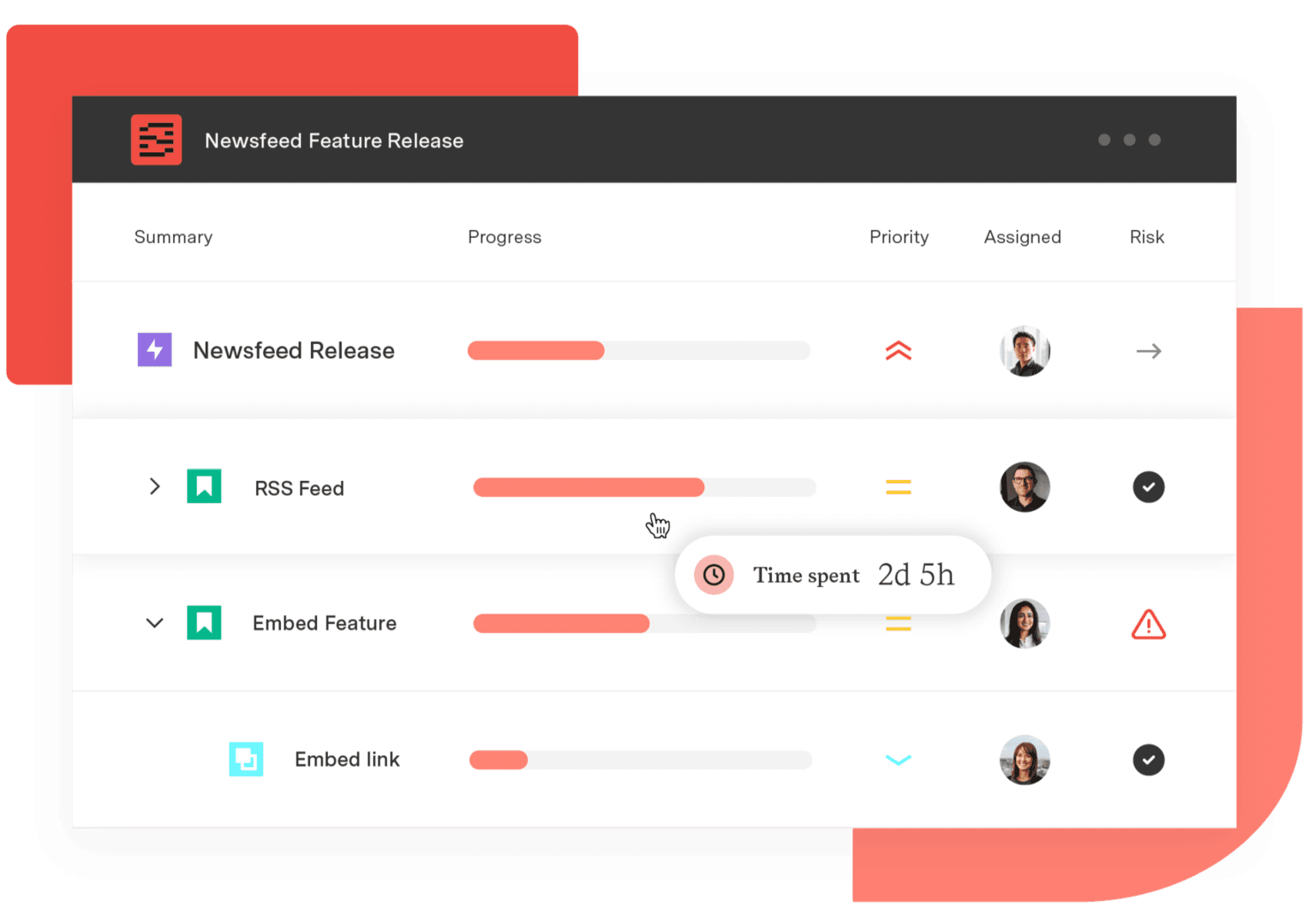
Manage products, projects, and programs in a single spreadsheet-like view. By providing a clear, real-time view of project progress and resource allocation, Structure helps teams meet deadlines and adapt swiftly to changing priorities.
Start a Free TrialCouldn't find what you need?Go to our documentation
ITSM provides the service management team with the tools necessary to
-Streamline management processes
-Categorize requests
-Allocate resources
-Visualize workflows
Service requests manage submissions for
-Access: Password resets, application licenses, and user account management
-Hardware: New devices, such as laptops, printers, peripherals, and equipment
-Software: New application installations and upgrades
-Information: Documentation, guidance, training, and tutorials
SRM focuses on providing users with new devices and services. IT considers these tasks low-risk, schedulable, and repetitive.
Incident management addresses unplanned events that disrupt business operations. Incidents require a formal emergency response, and incident management’s primary goal is to quickly restore services and determine the underlying cause.
For example, fixing a failure in the point-of-sale system requires an incident management response. If a user locks themself out of their laptop, that’s considered a service request.
Learn about Jira Service Management's features and how it enhances IT, HR, and business workflows with powerful automation and collaboration tools.

A well-designed RFQ template streamlines procurement and helps you secure the best prices. Learn how to create an RFQ form for your business needs.

Using Confluence as a knowledge base for Jira Service Management is the most common use case for a Confluence JSM integration. Find out how.

Learn about ITSM implementation and best practices so your company can improve effectiveness while increasing customer satisfaction.

Streamline support & service compliance using SLA reporting for Custom Charts to ensure you meet contractual obligations & your client’s expectations.

Learn to implement IT change management protocols with the latest best practices and strategies to minimize chaos and costly downtime.

Increase sales, retention, and long-term success by improving customer satisfaction with these client relationship management best practices.

What’s crowdsourcing? Learn the best tips and tricks to leverage the power of your target audience, drive product innovation, and gain insights.

Jira started purely as an issue tracking software targeting software developers, and quickly evolved into one of today’s biggest productivity tools.