CapEx vs. OpEx explained: 7 key differences, how to balance both budgets, and the classification mistakes that trip up most finance teams.
OpEx and CapEx tracking basics can help reduce your company’s bottom line, balance project budgets, and identify cost-cutting opportunities.

Determining a business's health requires accurate bookkeeping that shows when and where money is earned and spent. A company's accounts reflect its success in selling products and services, and whether it uses funds efficiently to generate a strong return on investment (ROI).
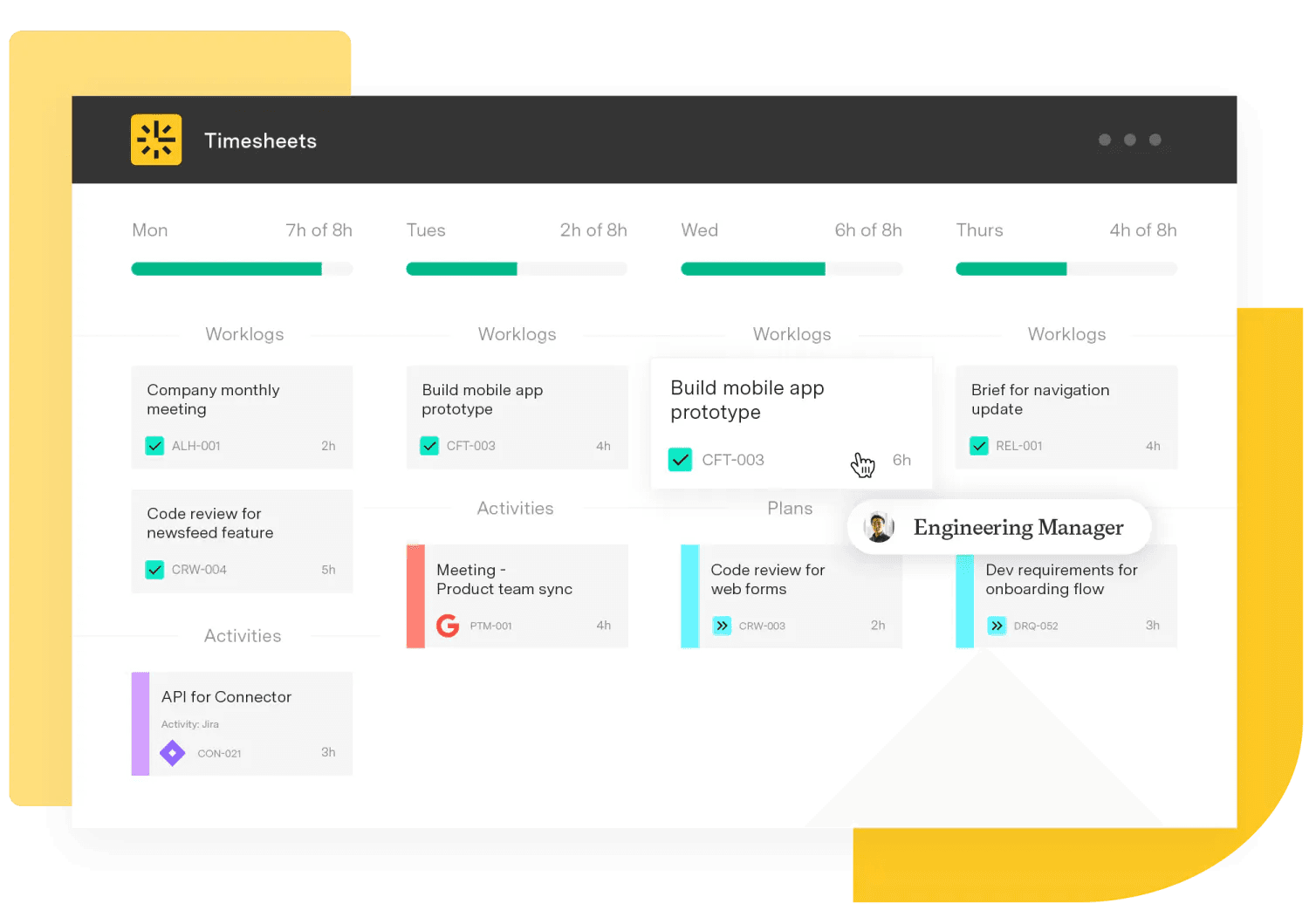
Tracking capital and operating expenditures is one of the best ways to evaluate a company's spending habits. Software like Tempo's Timesheets simplifies the recording and reporting side of that work.
If you're new to OpEx and CapEx tracking, the sections below cover the basics.
CapEx and OpEx describe the costs a business incurs during operations. CapEx covers long-term investments; OpEx covers day-to-day running costs.
Capital expenditures, or CapEx, are significant, long-term purchases designed to:
Grow the business
Replace outdated equipment
Increase the economic lifespan of an existing asset
These expenses typically require outside funding through debt, collateral, or equity financing.
Accountants treat CapEx as fixed assets. Examples include:
Property, plant, and equipment (PP&E)
Building improvements
Computers
Corporate vehicles
CapEx also covers some intellectual property, such as patents, trademarks, and copyrights.
For financial reporting, accountants record CapEx in the PP&E column of the balance sheet and under the investing activities section of the cash flow statement. A capital expenditure depreciates annually over its lifespan, reducing its value as an asset and shaping the company's tax burden. Because payments are spread over time, a CapEx purchase is deducted over multiple years.
Operating expenditures, or OpEx, are the day-to-day costs of running a business. Examples include:
Employee wages and salaries
Legal fees
Rent
Utilities
Supplies and materials
Vehicle maintenance and gas
Property taxes
Travel costs
Research and development activities
Operating expenditures appear on the income statement and are deducted from taxes in the year they are incurred. Unlike capital expenditures, OpEx purchases don't depreciate and carry no long-term tax benefit.
Tracking CapEx and OpEx does more than satisfy compliance requirements: It gives finance a clear read on how the business runs. Once a company starts tracking how and where it spends, the finance team gains insight into the factors below.
CapEx and OpEx offer different perspectives on a company's finances. Tracking both lets finance plan and budget for long- and short-term spending with confidence.
CapEx and OpEx spending are core measurements of operational effectiveness, showing how efficient production is. Comparing spending to output points to where cost-cutting through process streamlining or automation will pay off.
CapEx and OpEx are useful structures for aligning spending with long-term strategy. Comparing capital expenses to cash inflows also gauges ROI and shows whether a growth strategy is working.
Categorizing billable and nonbillable hours as CapEx or OpEx streamlines record keeping and simplifies the accounting process at tax time.
CapEx and OpEx shape a company's tax burden in different ways. Knowing when to make a capital purchase rather than an operational one — buying an expensive piece of equipment outright instead of leasing it, for example — can reduce liability over time.
Tracking OpEx and CapEx shows when to shift costs between categories to stretch the budget. Companies can redirect resources to lift productivity and improve the bottom line.
CapEx and OpEx data reveal spending patterns and resource utilization. Management can use that information to forecast performance and make budget, resource-allocation, and strategic-planning decisions.
The project manager is responsible for categorizing and tracking costs. Some organizations invest in stand-alone OpEx and CapEx management software; for Tempo Timesheets users, the same capability lives inside the product as the Tempo Accounts feature.
Tempo Accounts lets project managers organize time-tracking data across multiple Jira projects. It simplifies monitoring and categorizing hours by project type — CapEx or OpEx.
Alongside tracking time, Tempo Accounts allows project managers to:
Track billable and non-billable hours per customer
Monitor OpEx spending by cost center
Draft CapEx hour reports for tax credit applications
Integrate with Financial Manager to track and analyze CapEx and OpEx spending using project work logs
Categorize time spent on activities such as development, marketing, or training
Monitor sick days or planned time off
Companies use CapEx and OpEx data from an ERP for financial analysis and reporting on top of project management. Tempo Timesheets includes this reporting layer, which is standard for OpEx and CapEx management tools.
The dashboard uses reports and visualizations to help users measure and compare spending. Finance can weigh actual expenditures against benchmarks, budgets, and forecasts, showing each project's efficiency, profitability, and ROI.
Companies also use ERP and project management software to shape OpEx and CapEx planning, keeping those expenses aligned with strategic goals. Reviewing the data surfaces trends, opportunities, and risks, and lets management weigh scenarios and alternatives before approving spend.
Using data from Tempo Timesheets, for example, the planning team can prioritize CapEx projects based on impact, likelihood of success, and urgency.
Finding the right balance between capital and operational expenditures lifts profitability and reduces tax burden. Tracking CapEx and OpEx also builds a strategic view that improves productivity and efficiency.
Don't let data gather dust in your ERP. Tempo Timesheets and Financial Manager integrate with Jira to surface financial health metrics for your projects, so you can manage revenue and expenses without leaving the tools your teams already use.
Timesheets
The #1 time-tracking app for Jira. Timesheets seamlessly integrates with Jira and your existing workflows to help you track time for accounting, CapEx tracking, client billing, compliance, and more.
Start a Free TrialCouldn't find what you need?Go to our documentation
Using the CapEx tracking feature in your capital expenditure software helps project management avoid going over budget by: Centralizing spending details Increasing estimation accuracy with historical data and predictive analytics Tracking spending in real time Identifying variances between predicted and actual spending and facilitating corrective measures Improving forecast accuracy by basing estimates on historical data Allocating resources based on need Automating budget management to minimize human error Integrating with ERP and accounting tools to improve communication
CapEx monitoring features in an ERP help businesses forecast expenses and track ROI. Most importantly, they help companies drive profitability by ensuring high-value projects are approved.
To track CapEx, a company requires an ERP tool with the following features. Together, they ensure CapEx is well-documented and controlled: Budget tracking Reporting and analysis Real-time KPI tracking Project management functionality Monitoring of quality metrics (e.g., defect rates, compliance with specifications, and delivery windows) A tail spend management utility to boost the visibility of small purchases.
CapEx vs. OpEx explained: 7 key differences, how to balance both budgets, and the classification mistakes that trip up most finance teams.

What are operating expenses? How does tracking them improve a company’s bottom line? Here are the basics for understanding this type of expenditure.

Learn how incorporating a decision log into your project management process can smooth communication and build alignment behind your choices.

Take control of your budget. Learn about project cost-tracking practices and how they improve financial management and increase return on investment.

Take control of technology spending by implementing an effective and practical IT financial management framework that eliminates waste & redundancies.

A digital billable hours tracker helps ensure you maintain accurate records of your team’s hard work.

Learn how companies manage variable expenses to control costs, prevent overspending, and reach their financial goals.

Businesses increasingly use workflow automation to reduce manual tasks, improve accuracy, and streamline processes. Try it yourself in 6 simple steps.

Learn what project milestones are, why they matter, and how to create them to improve planning, visibility, and delivery.