Program increment (PI) planning is a vital event that builds alignment among agile release trains, prioritizing backlogs & uncovering dependencies.
Learn how backlog refinement at scale keeps your agile team working on tasks that align with business goals & provide an enhanced customer experience.

Backlog refinement at scale is the ongoing practice of reviewing, ordering, and clarifying backlog items across multiple agile teams so every Scrum team knows what to build next and why. Agile release trains and Scrum teams use a continuous, flow-based approach to ship products and features, and that flow depends on a well-organized backlog prioritized by value, business goals, and user expectations.
Without deliberate management, backlogs balloon and Scrum teams lose visibility into which items belong in the next sprint. Refinement fixes that. It surfaces high-priority tasks, exposes dependencies, and lines up resource allocation before planning begins. Here is how it works in practice.
Backlog refinement at scale is the process of adding, ordering, and preparing items across a scaled Scrum backlog so cross-team dependencies stay visible and each iteration starts with ready work. No matter which Scrum framework a business follows, development teams rely on a backlog containing every task needed to move the product forward. That includes:
User stories
Bugs
Design changes
Technical debt
User requests
Corrective actions from retrospectives
These items form an ordered list of desires, not commitments. There is no fixed timeline for completion, and teams stay flexible about which items to pull in and when. The product owner manages the backlog's content and balances conflicting stakeholder priorities.
Backlog grooming, or refinement, is the work of adding new items and prioritizing them alongside existing ones based on business and stakeholder needs.
A scaled backlog draws from three input channels:
1. ART backlog: During PI planning, the agile release train breaks features and functionality into user stories, which flow into the Scrum backlog for the next iteration. 2. Team context: Scrum members adjust priorities and add new items during sprint planning as they learn more about the work. 3. Stakeholder contributions: The backlog often absorbs user stories that address other teams' dependencies, including research estimates for features and epics tied to ART PI objectives.
Once those inputs are in, the Scrum team works with customers and stakeholders to refine what is there.
Refinement cadence varies by team. Some hold weekly refinement meetings, others fold it into daily Scrums, and some run requirement specification workshops using techniques like Behavior-Driven Development to sharpen stories. Whenever it happens, the product owner, stakeholders, and developers add new issues, prioritize them, and resolve problems with the current plan, looping back for more discussion when the plan needs to change.
There is no single blueprint, but the following product backlog management activities keep a scaled backlog healthy:
Refine user story requirements and set acceptance criteria.
Prioritize backlog items with the development team, Scrum masters, and stakeholders, pulling in subject matter experts when needed.
Define new user stories and revisit existing ones to decide whether they need updates or removal.
Prepare high-priority items by writing a definition of done and breaking them into sprint-sized tasks.
Reassess long-standing user stories and drop the ones that no longer earn a spot.
The point of a refinement event is a well-prioritized list of tasks produced through discussion and revision. Those sessions keep the backlog current and the work ready. The upside runs deeper than housekeeping.
Backlog items need defined requirements and outcomes, which give developers what they need for accurate estimation, planning, and prioritization. That shared understanding keeps Scrum teams aligned with organizational goals.
Refinement is a collaborative act. It brings a cross-functional group together to review, discuss, and clarify backlog items, and it builds communication, trust, and shared ownership along the way.
Breaking user stories into smaller increments lets teams deliver value each sprint. That rhythm makes it easier to adjust the product to customer feedback, cut risk, and improve UX while building brand loyalty.
Collaborative refinement organizes backlog items by value, dependencies, and customer need. Teams ship the highest-value features first, which maximizes return for customers and the business.
Every increment produces something shippable. Early feedback shortens time-to-market and prevents the delays and bottlenecks that pile up when teams wait to hear from users.
Scrum teams are made of subject matter experts across disciplines. Their perspectives sharpen refinement, drive innovation, and help sprint planning land on-time delivery inside the sprint timebox.
Whether you are running SAFe backlog refinement or another Scrum framework, Tempo gives scaled agile teams the tools to organize and manage a shared backlog. Strategic Roadmaps includes a built-in prioritization feature that keeps surfacing the most important tasks for the team to focus on next.
Structure PPM adds an epic tracker and sprint planner that ties the backlog to execution. Scrum masters can monitor team capacity and resource allocation so every completed initiative moves long-term business goals forward.
Structure PPM
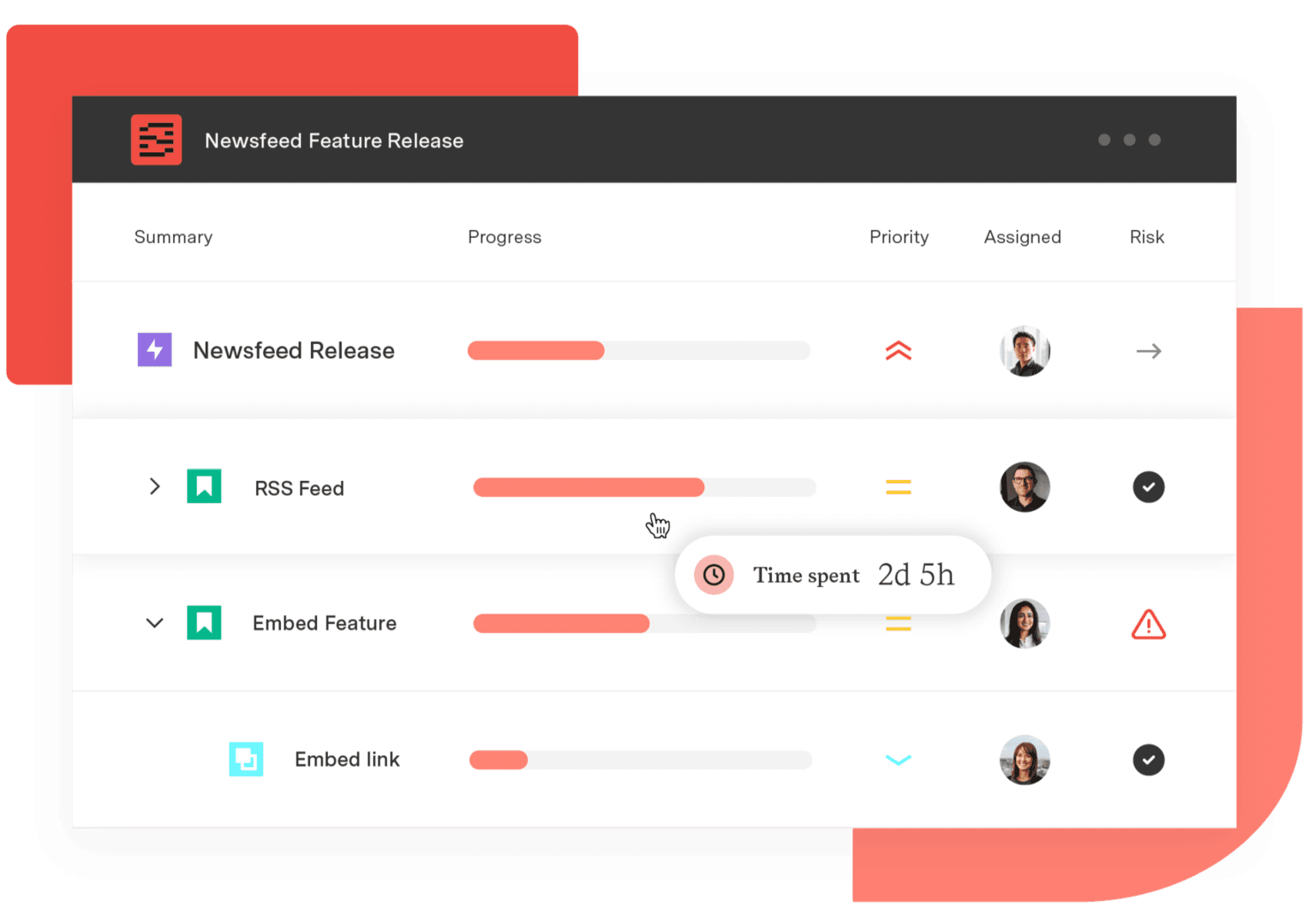
Manage products, projects, and programs in a single spreadsheet-like view. By providing a clear, real-time view of project progress and resource allocation, Structure helps teams meet deadlines and adapt swiftly to changing priorities.
Start a Free TrialCouldn't find what you need?Go to our documentation
Backlog refinement should take place before each sprint planning session, typically every 1–2 weeks for most Scrum teams.
The product owner leads backlog refinement sessions, with participation from the product manager, Scrum master, and at least one representative from each development team within the ART.
Program increment (PI) planning is a vital event that builds alignment among agile release trains, prioritizing backlogs & uncovering dependencies.

Learn how to run the five core agile ceremonies and see how PMO leaders connect them to SAFe and a hybrid portfolio view

Agile PI planning is an integral part of the SAFe project management framework. Learn about contributors, inputs & outcomes of a productive session

Learn how implementing Agile at Scale can level up your organization. Improve efficiency, responsiveness, and innovation to transform your business.

The agile practices that actually work – Scrum, Kanban, Lean, XP – plus the mistakes that turn agile teams into waterfall with stand-ups.

Learn how to leverage a sprint’s standing backlog. Focus your development team’s efforts to prioritize and deliver high-value product features.

Learn step-by-step processes for Agile release planning, overcome common challenges, and discover how to deliver value faster with practical tools.

Optimize agile workflows with Structure’s sprint planner. Boost team alignment, productivity, and Jira task management for seamless sprint success.

Centralize customer feedback, create a customer-validated idea backlog, systematically surface high-impact ideas, and promote ideas to your roadmap