With story points, teams estimate effort rather than setting due dates. Find out why, what, and how to use them to forecast project development.

In Agile, blind bets won’t get you far. Fortunately, Planning Poker turns project estimation into a strategic, collaborative game – literally.
With the Planning Poker technique, Agile teams estimate the effort needed for tasks, user stories, and backlog items. No wild cards, no guesswork – just teams playing their best hands (and having fun while doing it).
Want to bet on a smarter way to estimate your backlog? Planning Poker in Agile might be exactly what your team needs. Here, we’ll explain what Planning Poker in Agile is, how it works, when to use it, and who on your team to invite.
Planning Poker in Agile – also known as Scrum Poker – is a gamified estimation technique used in Agile development to assess the effort required to complete tasks or features, such as user stories or other backlog items. It’s a consensus-driven approach where team members use numbered cards to vote on the complexity of a user story.
Software engineer James Grenning, one of the original authors of the Agile Manifesto, introduced the technique in 2002 as part of Extreme Programming (XP) practices. Agile coach and author Mike Cohn later popularized Planning Poker in his 2005 book “Agile Estimating and Planning,” presenting it as an alternative to traditional estimation methods.
Planning Poker primarily relies on the Fibonacci sequence, where higher values indicate increasing uncertainty. This method helps Agile teams break down product backlogs into manageable components, supporting more effective sprint planning and project management.
Unlike other estimation techniques, Planning Poker fosters engagement and collaboration, ensuring every participant has a voice. By encouraging open discussions, teams identify potential challenges early on, leading to more realistic planning and improved project execution.
Planning Poker follows a structured, interactive process that encourages team discussion and alignment. Here’s how it works:
Each team member receives a deck of Planning Poker cards, typically containing numbers based on the Fibonacci sequence (e.g., 1, 2, 3, 5, 8, 13, etc.). These numbers represent the estimated effort required to complete a task, considering factors like complexity, required time, dependencies, and uncertainty. Higher numbers indicate tasks that are more difficult to estimate or require significantly more effort.
The Scrum Master or Product Owner selects a user story from the product backlog and presents it to the team. The story should have clearly defined acceptance criteria – specific conditions that must be met for the feature to be considered complete (e.g., functional requirements, performance benchmarks, edge cases).
Each team member independently selects a card representing their estimated effort for the user story. This Planning Poker story highlights the need to factor in complexity, dependencies, and risks.
All team members reveal their cards simultaneously. If there are discrepancies, the team discusses the reasoning behind different estimates. The goal is to reach a shared understanding of the work involved.
After discussion, the team repeats the estimation process as needed. The final estimate is determined through consensus, ensuring that everyone is aligned on the required effort level.
By following this structured approach, teams can improve estimation accuracy and enhance collaboration, promoting smoother sprint planning in Agile development.
Planning Poker sessions are typically held when teams need to estimate the product backlog to scope a project effectively. Incorporating Planning Poker into sprint planning can encourage more accurate estimations, improve collaboration, and streamline project execution. These sessions help Agile teams break down complex tasks and ensure a realistic workload distribution.
To help identify when Planning Poker sessions are useful, here are a few common scenarios to consider:
Before sprint planning, teams can use Planning Poker to assign story points to backlog items, ensuring a structured approach to workload management.
When a new feature or user story is introduced, Planning Poker helps gauge the effort required to develop it.
By estimating tasks in advance, teams can allocate resources effectively so projects stay on track.
Different team members bring unique perspectives. Planning Poker helps establish a shared understanding of effort estimates and project scope.
If a user story or task is unclear, discussing it in a Planning Poker session can build a shared understanding among team members before development begins.
A successful Planning Poker session depends on the right stakeholders who actively contribute to the estimation process. Their input ensures that estimates are well-informed, realistic, and reflect diverse perspectives.
When planning your next Planning Poker event, be sure to invite:
Scrum team members: Developers, testers, and designers are responsible for executing tasks, making their input essential for accurate estimations. Their firsthand knowledge of technical complexity, dependencies, and effort helps the team assign realistic story points.
Scrum Master: The Scrum Master facilitates the Planning Poker session, guiding the team through the estimation process while ensuring discussions stay productive and align with Agile principles. They help prevent biases, encourage open dialogue, and make sure that all voices are heard.
Product Owner: The Product Owner provides background information on user stories and business priorities, helping the team understand the purpose and impact of each backlog item. Their insights ensure that estimates consider both technical feasibility and business value.
Beyond improving estimations, Planning Poker helps teams work more efficiently by reducing uncertainty, preventing scope creep, and fostering accountability. Integrating it into Agile workflows leads to more predictable development cycles and better project management. Here’s how:
More accurate estimations: Incorporating diverse perspectives and Fibonacci sequence-based voting helps minimize estimation bias, resulting in more reliable effort assessments.
Clearer understanding of tasks: Estimation discussions help align expectations, clarify uncertainties, and ensure that all team members grasp the scope and complexity of a user story before development begins.
Stronger team communication: Planning Poker promotes structured conversations, giving every team member a voice in the estimation process and reinforcing collaborative decision-making.
More effective sprint planning: With better estimates, teams can sequence work strategically, optimize workload distribution, and anticipate potential roadblocks before a sprint begins.
Planning Poker is an Agile estimation method that fosters collaboration, improves forecasting, and strengthens backlog management. Tempo’s Agile roadmap solutions make these sessions more effective by helping teams manage multiple projects, align priorities, and centralize collaboration.
With Tempo, teams can visualize project timelines through audience-friendly roadmaps, prioritize ideas with structured estimation methods, and track progress in real time so teams are always in sync.
Want to improve your Agile estimations? Try Tempo today.
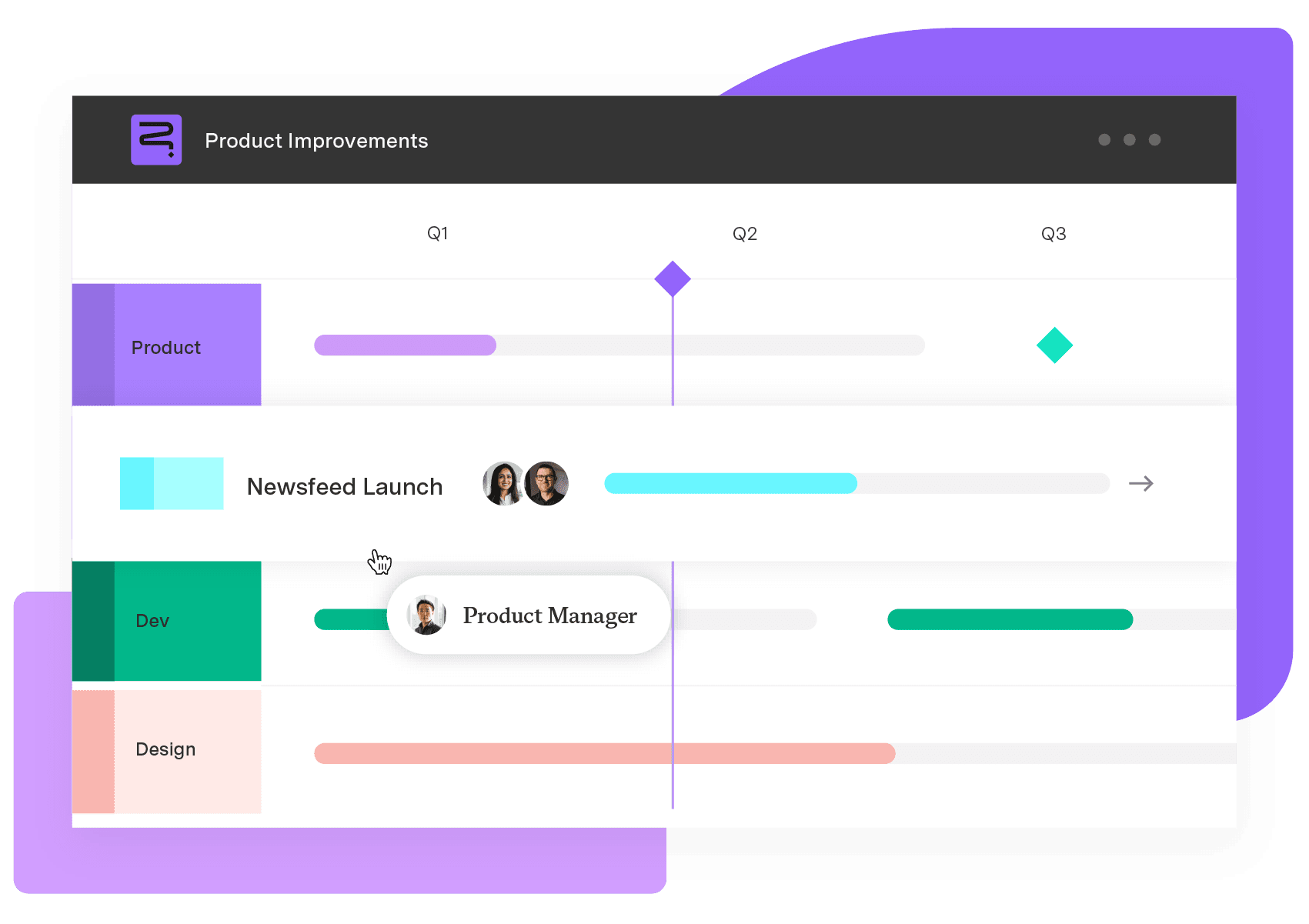
Strategic Roadmaps
Build your portfolio vision with Strategic Roadmaps. With powerful visualization capabilities, you can communicate strategy to the entire organization and gain alignment around strategic objectives, product goals, and milestones.
Start a Free TrialCouldn't find what you need?Go to our documentation
Planning Poker is primarily designed for Scrum teams, but Kanban teams can also use it to estimate effort during backlog refinement and workflow planning. By incorporating Planning Poker, Kanban teams can improve alignment on task complexity and prioritize work more effectively.
Jira offers Planning Poker functionality through third-party integrations, enabling teams to run estimation sessions directly within their Agile project environments. These integrations allow teams to collaboratively assess user stories, assign effort estimates, and refine their backlog without leaving Jira.
With story points, teams estimate effort rather than setting due dates. Find out why, what, and how to use them to forecast project development.

Optimize agile workflows with Structure’s sprint planner. Boost team alignment, productivity, and Jira task management for seamless sprint success.

Guide your development team to success using agile sprint goals. Establish goal-setting strategies to increase team productivity and improve outcomes.

Learn step-by-step processes for Agile release planning, overcome common challenges, and discover how to deliver value faster with practical tools.

Avoid cost overruns and missed deadlines by accurately forecasting resources and time with these six powerful project estimation methods.
Improve project accuracy with three-point estimating that finds best, likely, and worst-case scenarios. Learn the formulas and how to apply them.

Learn how to calculate sprint capacity per person and convert story points to hours, so your sprint plans match what your team can deliver.

Learn about product owner’s responsibilities in agile teams. Discover how communication, prioritization, and planning drive product development.

Learn how to improve your technical and project management skills with Tempo’s complete guide to technical project management.