Effective resource utilization will optimize your team’s productivity and efficiency. What’s more it will increase morale and improve your bottom line
If you’re looking to optimize employee productivity, look no further than Tempo’s guide to measuring and improving employee productivity reports.

Tracking employee productivity gets messy fast. Some teams measure deliverables and quality. Others track sales closed or tickets resolved. Without a consistent way to gather and read the data, the numbers pile up and the story disappears.
A well-structured employee productivity report cuts through that noise. It shows what people are working on, how long the work takes, and where output is trending. Done right, it gives managers a defensible view of team performance and a starting point for change.
This guide covers the benefits of productivity reporting, what to include in a report, and the four methods teams use to track performance.
Employee productivity reporting is the structured measurement of how team members spend their time and what they produce. A report tracks metrics such as completed tasks, billable hours, and idle time to surface work patterns and outputs.
Most productivity measurements compare output against time worked. That ratio helps organizations track progress and set realistic goals grounded in what teams can actually accomplish. Good reporting also supports better decisions about deadlines and resource allocation, so time and effort don't go to waste.
Regular productivity analysis gives teams a clearer view of workflows and where they break down. The main benefits:
Real data about how employees work leads to better calls on priorities and workloads. When managers see where time is going, they can shift resources before problems compound.
Tracking work patterns makes it easier to spot who is thriving and who needs support. Matching work to strengths creates a more efficient and supportive team environment.
Usage trends expose bottlenecks and uneven workloads before they burn people out. Balanced work distribution improves morale and reduces fatigue.
When employees can see their own progress, they take more ownership of their work. Transparency about contributions builds trust across the team.
Productivity data gives managers and HR objective evidence for reviews. Employees leave those conversations with more confidence because evaluations rest on measurable results rather than impressions.
A useful productivity report covers several dimensions of performance so managers see the full picture. Here's what belongs in one:
Daily and weekly progress data reveals strengths and gaps. Track KPIs like completed tasks, logged hours, and milestones hit. The more specific the metric to the team's work, the more useful the signal.
Check-ins against specific objectives show whether employees are on pace to meet expectations. Regular reviews of goal progress keep team members engaged with what matters.
Naming obstacles is the first step to solving them. If certain tasks run long or workloads skew, adjusting the process prevents repeat setbacks. Documenting shortcomings, including resourcing constraints, adds context for future reports and reviews.
A strong report doesn't stop at problems: It offers next steps. Clear recommendations tell the team exactly how to adjust and improve output.
Charts and graphs make patterns readable at a glance. Dashboards also make findings easy to share with stakeholders who don't have time to parse raw data.
Teams measure and report productivity in different ways. Each method has trade-offs:
Manual tracking uses spreadsheets or written logs to record progress. It gives direct control but eats time and invites errors.
Digital time-tracking tools automatically record hours worked and tasks completed. They help calculate labor costs, monitor billable hours, and improve the accuracy of any employee productivity analysis.
A performance scorecard is a structured evaluation that assigns ratings based on KPIs. Scorecards give a clear snapshot of contributions and highlight where extra support would help.
Automated reporting platforms pull real-time data to generate productivity reports on their own. They reduce manual effort, improve accuracy, and make it easy to track trends over long stretches.
A strong productivity report keeps teams on track and gives managers a clear view of progress. A few habits make the difference:
The best approach depends on team size and working environment. Remote and small teams often do well with time-tracking software; larger organizations tend to need automated platforms for live insights.
Start with the question the report is meant to answer. Defining the purpose upfront keeps the data collection focused and the output relevant.
Accurate data is the foundation of any productivity report. Pull from trustworthy sources, like time-tracking software or project management tools, to avoid inconsistencies. Imprecise data leads to wrong conclusions and worse decisions.
A clean, consistent layout makes findings easier to analyze and share. Use sections and headings so readers can jump to what they need.
Base the report on numbers, not assumptions or opinions. Objective reporting is the only kind that holds up under scrutiny.
Recommendations turn data into action. A good report names patterns and offers concrete next steps, whether that's reallocating tasks or adjusting schedules.
Different readers need different levels of detail. Executives want the summary; managers want the breakdown. Match the depth to the audience so the report earns its place in their inbox.
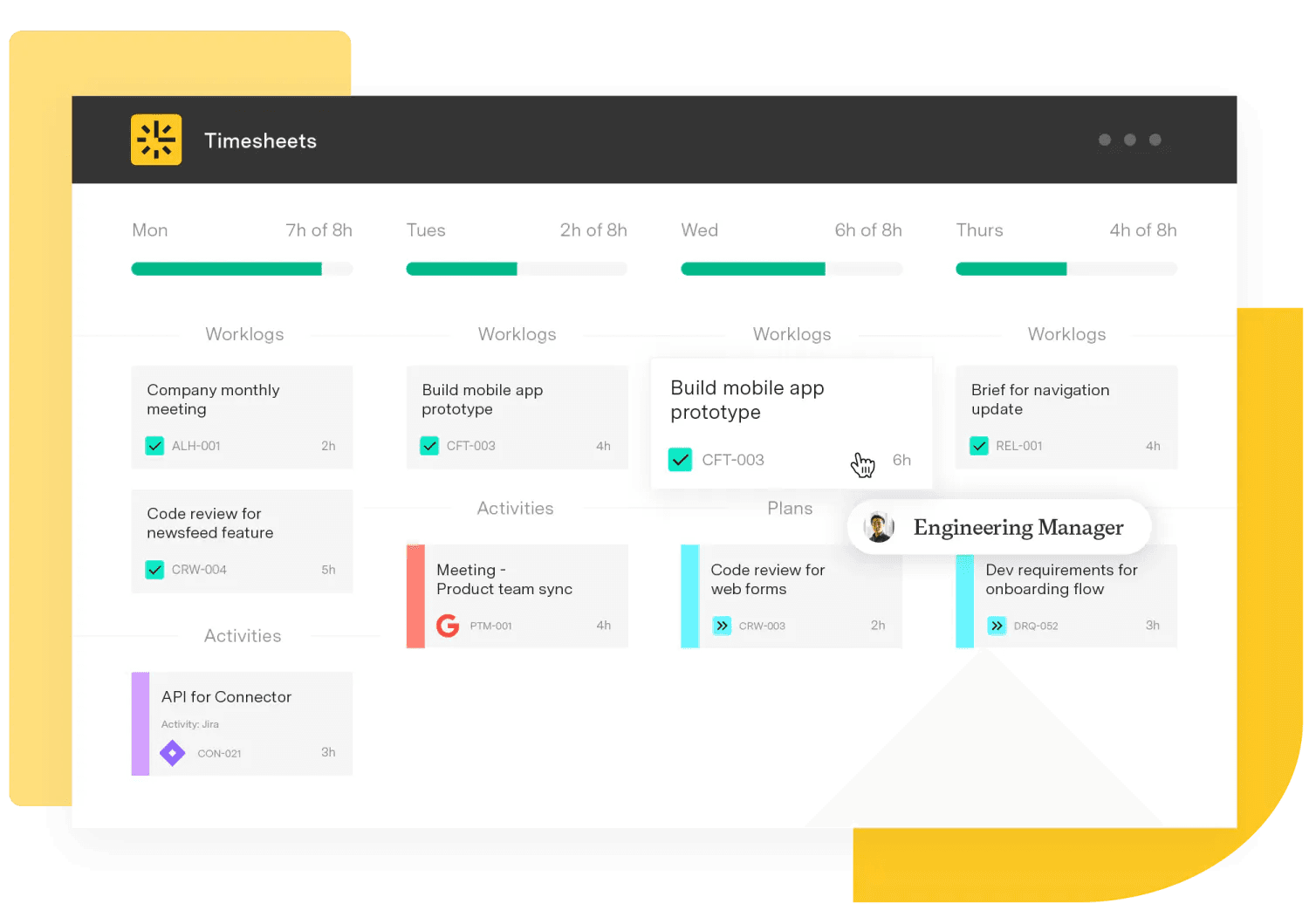
Productivity tracking should feel intuitive, not punitive. Tempo Timesheets records work hours and task completion in real time and lets teams customize reports to fit their size and workflow, so reports reflect what people are actually doing.
BigQuery Connector for Jira handles the analytics side, moving Jira data into a warehouse for large-scale reporting, custom dashboards, and automation. Together, the two tools cut the time managers spend wrestling with spreadsheets and free them to coach their teams.
With Tempo, businesses can see how work gets done, where improvements are needed, and how to help employees reach their potential. Try Tempo to see what Jira time tracking looks like when the reporting works for you.
Timesheets
The #1 time-tracking app for Jira. Timesheets seamlessly integrates with Jira and your existing workflows to help you track time for accounting, CapEx tracking, client billing, compliance, and more.
Start a Free TrialCouldn't find what you need?Go to our documentation
Key metrics include billable hours, completed tasks, time spent on projects, labor costs, and overall output. These indicators assist businesses in measuring work performance and identifying areas that need more support.
The frequency depends on your company’s needs. Some teams benefit from weekly reports to track short-term progress, while others may prefer monthly summaries for a broader overview.
Yes. These reports provide team members with valuable feedback, helping them understand role expectations and adjust workflows accordingly. When used correctly, productivity reports can create a more productive and engaged workforce.
Employee productivity is generally calculated using a formula that divides output by input.
For example, in a service-based business, productivity could be measured by comparing the number of completed tasks to the hours worked. Companies that track billable hours often assess productivity by looking at revenue earned per hour.
Effective resource utilization will optimize your team’s productivity and efficiency. What’s more it will increase morale and improve your bottom line

Learn how timesheet reports enhance productivity and resource management. Discover valuable tools that automate the reporting process.

Learn how performance review templates help managers give clearer, more constructive feedback to bolster team goals and support employee growth.

Learn to identify bottlenecks, reduce workflow inefficiencies, and boost team productivity with Jira’s time-in-status function and Tempo’s Charts.

Explore Tempo’s guide to understanding resource loading, including how to calculate it to increase productivity and streamline workflows.

Learn how to measure developer productivity beyond story points and velocity, with effort data and AI-contribution tracking for engineering leaders.

Learn to establish and communicate achievable employee expectations without stressing or micromanaging your team.

Learn about team capacity planning. Discover the various types, strategies, and best practices for improved deliverables.

With a deep understanding of your team’s activity, you’ll be better equipped to make the decisions that matter.