Take the guesswork out of project forecasting by learning analogous estimating techniques that leverage historical data to ensure greater accuracy.

Timing is everything — and that’s especially true in project management. A project’s success depends on your capacity to deliver outcomes according to scheduled milestones and timelines.
Project management and time tracking work hand-in-hand to ensure your team completes their work on time while providing the data necessary to evaluate performance and project profitability. But, while monitoring how team members spend their time is essential to a project manager’s role, no one likes to feel micromanaged.
Time-tracking software helps avoid peering over your team’s shoulder by providing a tool to accurately track the hours spent on each task. Project time-tracking apps like Timesheets by Tempo, Clockify, or Timecamp offer the visibility necessary to evaluate a working group’s productivity, ensure they meet deadlines, and streamline payroll processes.
Time tracking is an essential part of task management, monitoring how long it takes a team member to complete an assigned task. Visibility around task duration allows the project manager to evaluate individual and team productivity and assess task progress.
By tracking time, the project manager can also analyze the accuracy of their project timeline estimates and adjust the schedule based on accurate, real-world data. Team members can also use a time tracker to review their productivity to ensure they meet their deadlines.
While you can track time using a shared spreadsheet or telephone timesheets, adopting a time tracking app integrated within your project management software like Jira, Wrike, and ClickUp, or a stand-alone version like Toggl Track, lets you:
Accurately track time spent on specific tasks
Monitor team progress by automatically updating your product roadmaps, such as those produced by Tempo’s Strategic Roadmaps, Trello’s Gantt charts, or Kanban boards in ClickUp
Quickly generate reports on task duration, workflows, and billable hours when integrated with invoicing software like Paymo or Hubstaff
Identify potential roadblocks and bottlenecks, giving you time to address them before they impact timelines
Time tracking is vital to every stage of a project’s life cycle:
Planning: During the initiation phase, time management efforts focus on defining the scope and identifying risks to establish a realistic timeline.
Execution: Time tracking helps you assess project progress and identify task dependencies and roadblocks during execution, allowing you to address them without impacting the schedule.
Closure: The data gathered by the time tracker app enables the team to analyze their performance and the project’s overall success. The project manager can also use this information to improve the accuracy of resourcing estimates, timeline creation, and expense management.
Aside from helping project managers understand how the project team spends their time, tracking task duration offers the following five benefits.
If your organization bills by the hour or employs remote or freelance staff, a time management app provides visibility surrounding the time worked. The clock within the tracker creates a log of billable hours, assuring clients of correct billing, which enhances the customer/provider relationship and the company’s reputation. And time tracking for freelancers lets the employer confirm their invoices quickly so they receive full payment for services rendered without delay.
Leaders can easily evaluate performance by tracking and comparing how long it takes team members to complete a task. If someone requires more time than their peers, it could mean they need extra support or additional training. And if someone is significantly faster, the manager can analyze their process for efficiency (perhaps they do the hardest task first) and encourage its adoption across the group.
Should a client request an invoice audit or an investor a project profitability assessment, you can verify employee timesheets and create a report outlining all activities, resources used, and the time required to complete the initiative.
Time tracking provides accurate data managers can leverage to identify areas of operational improvement. The report allows leaders to review workflow effectiveness and expense tracking to address activities that consume too much of the team’s time or budget.
Accurate time and resource management are essential to a profitable project outcome. The historical data generated by employee time tracking lets project managers accurately estimate the time and, therefore, the cost of staffing, determining the value of the work delivered. And with a faithful cost assessment, sponsors can assess a project’s return on investment (ROI) to decide whether to proceed or avoid losses due to undercharging the client for the organization’s services.
Establishing work timelines will be different for every project. While you can use historical data to inform your schedule, leveraging these strategies streamlines the process, making it easier for teams to stay on track.
Until you’ve established the project plan, it’s hard to provide stakeholders with a firm timeline — as much as they might want one. If they have concerns with the project’s viability, provide them with a general timeline to give them an idea of the tasks, deliverables, and scheduling.
Begin by defining the main phases of the project, including a list of every task and the time estimates for each in either work hours or days. Once you’ve established the rough amount of hours needed, map them on a calendar, taking into account vacation days, holidays, and weekends to create a high-level schedule.
Using your preferred project management tool, create a WBS to establish a firmer project timeline that includes granular task data. This document captures single-task-level deliverables, like the expected duration for each, the team member responsible, and its completion date. Use this information to identify dependencies and potential roadblocks you can address in your project plan.
Once project execution begins, update the WBS to include each task’s actual start and end dates and the number of work hours needed for completion. You can then assess whether the work is progressing according to the project timeline, ahead of schedule, or delayed.
Regular communication throughout the planning and execution phases of the project ensures you’ve fully incorporated stakeholder expectations into your timeline and WBS. Provide regular updates and review deliverables to ensure you and your team are on track to meet milestones and objectives.
Any project scope changes affect the deliverable cost, quality, and, most importantly, schedule. Address all alterations via a strategic change management plan that outlines the following:
Which documents must be updated, and by whom, regarding various common changes
Who to communicate to regarding adjustments
Who to gain approval from before making any planning alterations
Various project management aspects rely on accurate and up-to-date time tracking, which becomes labor-intensive when done manually. Integrate Jira project management software with Tempo’s Timesheets for time tracking, Strategic Roadmaps for audience-friendly roadmaps, and Azure DevOps for process and workflow streamlining and enjoy a comprehensive suite of tools that take this workload off your hands. Sign up today.
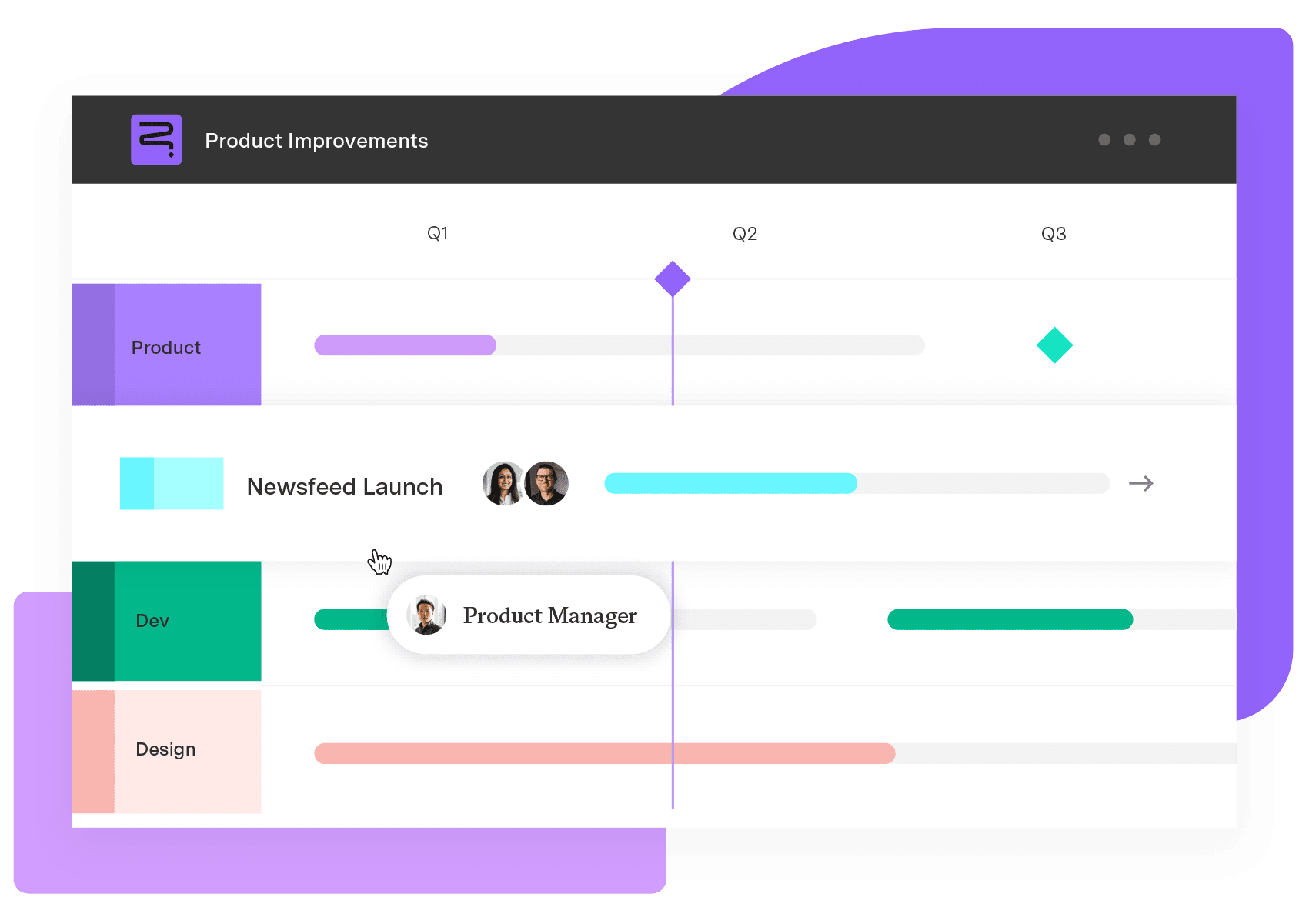
Strategic Roadmaps
Build your portfolio vision with Strategic Roadmaps. With powerful visualization capabilities, you can communicate strategy to the entire organization and gain alignment around strategic objectives, product goals, and milestones.
Start a Free TrialTake the guesswork out of project forecasting by learning analogous estimating techniques that leverage historical data to ensure greater accuracy.

Learn how parametric estimating in project management uses historical data to create faster, more accurate project cost, resource, and time estimates.

There are lots of ways of optimizing your time management, and they may not all work for you. So, which time management techniques are best?
Learn how to use the top-down and bottom-up project management approaches when it comes to estimating project times, resources and more.

Avoid cost overruns and missed deadlines by accurately forecasting resources and time with these six powerful project estimation methods.

Learn how revenue tracking and projection help your teams monitor project income and forecast financial performance – using Tempo Financial Manager.

Learn how project tracking in your management process can help effectively monitor timelines and deliverables, improve collaboration, and reduce risk.
Learn how lead time vs cycle time reveals where work slows down, and why tracking both is essential for reliable delivery and strategic forecasting.

We're addressing time management myths head on to help you break free of striving to master time management strategies that don’t deliver.