Use project management automation to streamline tasks and boost efficiency allowing project managers to focus on creative problem solving and strategy

Most project managers hope personnel effortlessly meet deadlines and deliver high-quality products. But that’s no small feat. To operate within this performance sweet spot, management efforts must be both efficient and effective.
You might think there’s no difference between efficiency versus effectiveness. But they’re actually two sides of the same coin, and you want collaborating employees to be both.
Peter Drucker wrote, “Efficiency is doing things right; effectiveness is doing the right thing.” To achieve the optimal state, you need to understand the difference between efficient and effective and when to apply each yardstick to your project management strategy.
The expression “Do more with less” perfectly defines efficiency. This doesn't mean cutting corners but rather employing the correct processes and tools while wisely deploying team members, materials, and finances to optimize productivity without wasting resources.
To be efficient, your project team should:
Be process-driven and resourceful
Develop effective resource management plans
Incorporate workflow automation wherever possible
Work efficiently with limited resources
Use specific metrics to measure progress
While efficiency focuses on deploying processes and resources that boost overall productivity, effectiveness concentrates instead on the outcome. It's about prioritizing and dedicating resources to the “right things” — tasks that move the needle, advance project objectives, and drive value. Whether viewed from the perspective of a project or a business, effectiveness requires a clear understanding of overarching goals and strategies.
Effective project management requires that teams are:
Goal-oriented
Invested in their project’s outcome
End-user focused
Linking their work to the company’s overall strategy
For your project team to operate like a well-oiled machine, you must properly balance efficiency and effectiveness. Viewing operations from a perspective that combines the two can help you assess employee performance and project success.
A team that’s more efficient than effective, more effective than efficient, or neither can lead to inferior outcomes:
Low efficiency | High efficiency | |
Low effectiveness | Your team: Fails to meet expectations Takes too long to deliver Goes over budget and wastes resources | Your team: Uses resources appropriately Meets deadlines Fails to deliver work that’s up to spec Doesn’t meet business needs |
High effectiveness | Your team: Delivers high-quality work Meets project goals and objectives Fails to operate within a set schedule or budget, missing deadlines and experiencing cost overruns | This is the ideal balance. Your team: Fulfills expectations Meets deadlines Makes the best use of available resources |
Achieving the ideal balance of efficiency and effectiveness requires effort. If you’re unsure about creating this balance, prioritize improving your team’s effectiveness first. By getting everyone on the same page and focused on ensuring deliverables are high-quality, meet project objectives, and align with the organization’s big-picture goals, you maximize effectiveness. From there, you can look back and identify potential efficiencies and improve your process, which boosts performance, leading to increased efficiency.
If your objective is optimizing the efficiency and effectiveness of your projects, here are a few strategies that’ll help.
Avoid information silos and ensure alignment with project goals, objectives, and expectations by creating a communication plan that provides access to essential documents such as the project plan, risk register, and burndown chart. Leverage communication channels to maintain visibility around work activities and keep everyone up-to-date on progress to avoid duplication of effort and rework.
Provide your team access to all project documents in a central location. Include:
Project plans
General workflow and process guidelines
Company and project-specific critical success factors
Communication cadence guidelines
Access details to important tools like communication platforms
Instead of coming to you for answers, team members can independently find the information needed, like project requirements and task responsibilities, to get on with their work faster.
Without understanding desired outcomes, it's difficult for your team to plan how to organize their workflow throughout the project's life cycle. Establish and communicate the project’s core goals, key performance indicators (KPIs), and milestones to keep everyone performing at their best and on track for a timely delivery.
Improve your team’s productivity and effectiveness by directly connecting efforts to the organization’s mission and vision. Understanding the project’s contribution to the business’s bottom line helps teammates better prioritize tasks and maximize value.
Start on the right foot by reviewing stakeholder expectations and project requirements with your team before beginning. Involving team members in the project planning process familiarizes them with what they need to accomplish and ensures you don’t overlook anything that may affect the outcome.
Improve efficiency and save employees time by integrating business process automation (BPA) into your workflow. These tools automate repetitive or manual tasks, allowing teammates to focus on jobs that require their specific skill set.
As the project manager, you must communicate the resources necessary to complete the project successfully. When you encounter limitations, you need to allocate what’s available wisely and creatively while taking advantage of your team’s unique strengths and talents to maximize productivity.
Knowing which tools and processes best suit your project can mean the difference between a productive team that delivers desired outcomes and one performing below its potential. Consider auditing your tools to ensure they improve communications, resource planning, and task tracking.
Looking back through project post-mortems and team performance reviews offers vital insights into potential improvements. You’ll identify what worked, where you can streamline processes to become more productive, and any gaps in your operations that negatively affect your output.
Even if you manage a high-performing team, ensure everyone feels good about their efforts. Schedule regular check-ins, offer praise and feedback, and encourage collaboration. You’ll create a supportive company culture that motivates employees to put in their best effort and see a project through to completion.
Understanding efficiency versus effectiveness helps keep your team’s efforts oriented toward productive tasks, maximizing output and delivering on the project’s desired goals. But you don’t have to foster this balance alone — let Strategic Roadmaps by Tempo help.
Roadmunk is an easy-to-use application that creates audience-friendly project roadmaps. With a few keystrokes, you can input the details of your work, and the project management software delivers visibility surrounding project requirements and helps your team direct their endeavors to where they’ll be most effective.
But that’s not all. Coupled with Jira-enabled Timesheets, you’ll be able to track the amount of time your team spends on each task to ensure they’re maximizing efficiency.
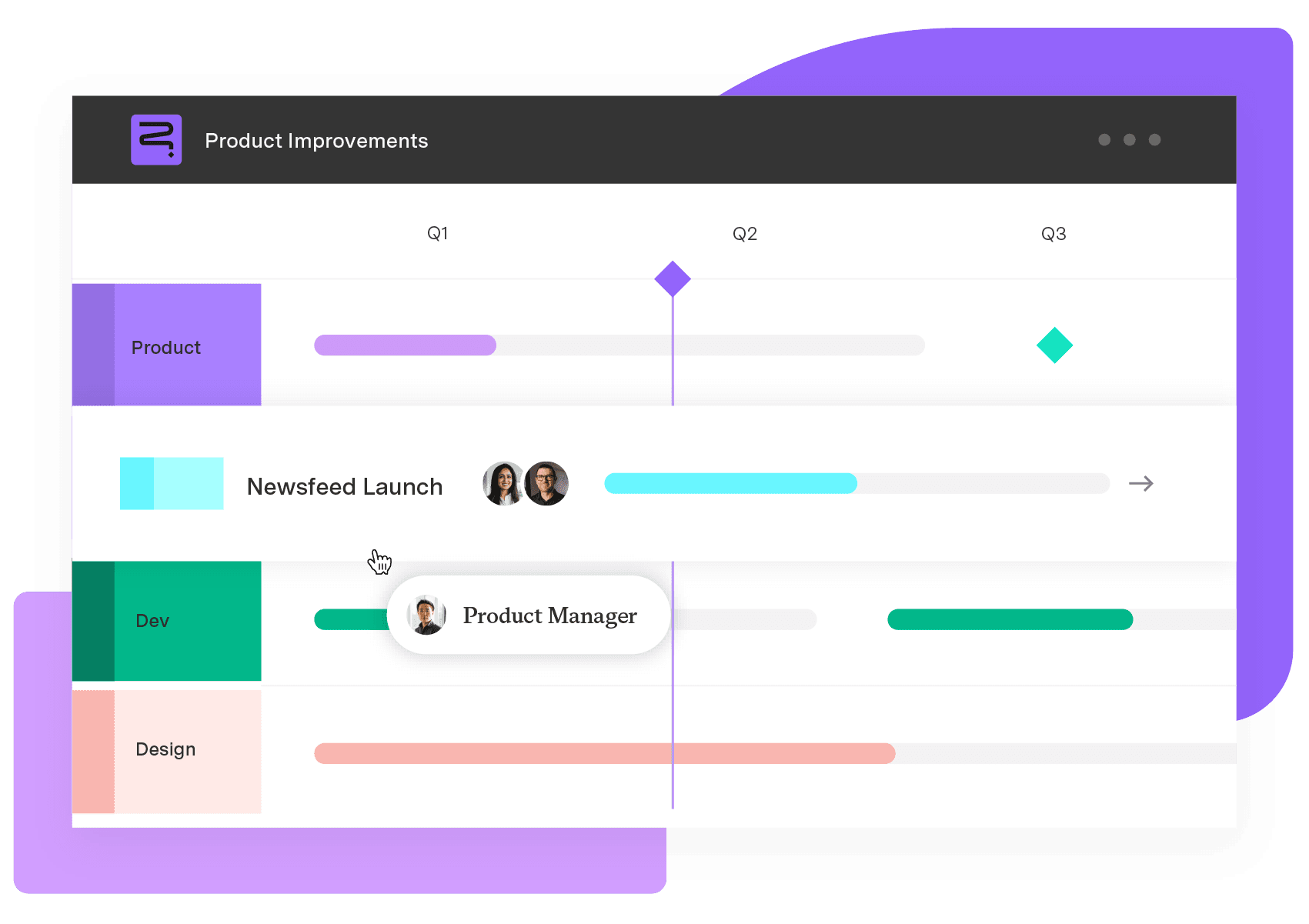
Strategic Roadmaps
Build your portfolio vision with Strategic Roadmaps. With powerful visualization capabilities, you can communicate strategy to the entire organization and gain alignment around strategic objectives, product goals, and milestones.
Start a Free TrialUse project management automation to streamline tasks and boost efficiency allowing project managers to focus on creative problem solving and strategy

From core principles to best practices, discover how to use Lean portfolio management for transforming project outcomes and boosting efficiency.

Discover smart tips for accidental project managers to navigate challenges and lead projects effectively, even without formal training.

Learn to establish and communicate achievable employee expectations without stressing or micromanaging your team.

Discover how to conduct a product audit and how it improves manufacturing productivity, quality assurance effectiveness, and customer satisfaction.

Boost efficiency with project portfolio optimization. Align resources, focus on high-value projects, and make smart decisions for long-term success.

Learn all about the project management triangle and how to balance each element. Explore other tips for handling roadblocks and constraints.

Discover 13 project management tips and tricks to help you deliver desired outcomes on schedule and within budget without stressing your team.

Learn how scheduled floats in project management can increase team efficiency and productivity while ensuring you never miss a client deadline.