Control priorities with the Eisenhower Matrix. This tool provides visibility around important and urgent tasks, helping you be project efficient.

Every task and project requires time, money, and material to complete. An activity’s results should always merit the expenditure of these resources, whether or not they’re in short supply. In other words, the impact of a project or task needs to justify its level of effort (LOE).
When faced with competing priorities, project managers can leverage the impact effort matrix to prioritize jobs and communicate the order of completion to team members and stakeholders.
The impact vs. effort matrix is similar to another decision-making tool, the Eisenhower prioritization matrix. Both use a two-by-two grid with an x-axis and a y-axis to categorize work. However, the Eisenhower matrix ranks tasks according to urgency and importance, whereas this variant uses exertion and consequence.
The project team measures impact according to a task or project’s ability to achieve a strategic goal and gauges effort in terms of resources (e.g., money, time, or physical assets) needed to accomplish the work. Action items are then ranked within the impact effort matrix template by comparing those two variables, allowing the project management team to quickly visualize and prioritize tasks.
The completed assessment provides a clear roadmap for the team to draft an action plan that delivers the highest return on investment (ROI).
The impact effort matrix is easy to use. The x-axis defines the required effort, and the y-axis represents the impact produced. Together, these axes form a two-by-two table.
Here’s how these factors are evaluated:
Impact: How valuable is the task or project to the company? Does it move the needle on long-term goals? The greater its effect, the more promise the work holds.
Effort: What resources does the task or project require? Can the work be completed with existing assets?
These measures don’t have to be quantified; a qualitative analysis is all you need. However, team members must prioritize actions through collaboration and communication.
Now that the team understands the axes’ defined values, it can visualize and categorize the quadrants based on their relationship.
Quadrant 1: Low effort / High impactLow-hanging fruit | Quadrant 2: High Effort / High impactMajor projects |
Quadrant 3: Low effort / Low impactNice to haves | Quadrant 4: High effort / Low impactTime sinks |
Low-hanging fruit: These quick wins deliver considerable value for minimal effort. Because of their ease and speed of implementation, they belong at the top of the team’s to-do list.
Major projects: These activities hold significant promise but require considerable time and resources. Working on them can be risky, so assess their potential value to ensure they yield substantial ROI.
Nice to haves: These items are usually side projects or experiments that are easy to implement but don’t provide much value for the company. The team can work on these when they have extra time or resources that aren’t required elsewhere.
Time sinks: These are thankless tasks to avoid at all costs. If regulations or policy force their completion, assign nonessential resources and personnel to the job, at least temporarily. These tasks can provide a valuable learning experience for newbies while freeing the time of more experienced staff.
LOE project management delivers several critical benefits:
Conducting and communicating an impact effort matrix ensures everyone is on the same page while working toward a common goal. Team members can ensure their efforts build off one another and contribute to the outcome.
The priority matrix outlines which tasks to complete first, providing context to the resource and capacity management team. The data helps them allocate assets accordingly, ensuring high-priority tasks receive critical resources without delay.
By sequencing task completion, the impact effort matrix becomes a high-level project roadmap, explaining which tasks project managers should prioritize and why. Team members can focus on work according to established priorities rather than mistakenly operating at cross purposes.
Employees must also consider the organization’s long- and short-term goals to build an effective impact effort chart. This insight helps them see how their work contributes to these strategies, increasing motivation and engagement.
By understanding the group’s priorities, team members can avoid wasting time on tasks that deliver little value to the organization. Their workflows become more efficient, ensuring timely contributions to the team’s overall performance.
The following best practices will help the team prioritize tasks effectively as they draft an impact effort priority matrix.
Project managers must establish why the team needs to create an impact effort matrix. This shared goal aligns the team and ensures their effectiveness.
Gather team members and other stakeholders for a task and project priority brainstorming session. Varied perspectives can improve accuracy and uncover additional insights.
It’s pointless to prioritize tasks without the means to complete them. Establish an action plan, including the completion sequence, to ensure team members have a smooth workflow and complete tasks on schedule.
Proactively communicate the sequence of events to stakeholders to ensure everyone aligns on priorities and workflows. Also, solicit feedback on the matrix’s efficacy to provide incremental improvement for the next iteration.
No matter your preferred project management approach – whether it’s Kanban, Six Sigma Lean, or the traditional waterfall – your practice must involve prioritization tools. So, trade in your sticky notes and whiteboards for a digital solution like Tempo’s Strategic Roadmaps to better communicate priorities to your team.
An audience-ready roadmap facilitates alignment while improving strategic organization and team collaboration. In addition, project managers can use the chart to rank, track, and manage task completion once team members identify their priorities using an Eisenhower matrix, impact effort matrix, or other prioritization methodology.
All Tempo products are modular and Jira-enabled, allowing organizations to scale the tech stack according to their unique needs.
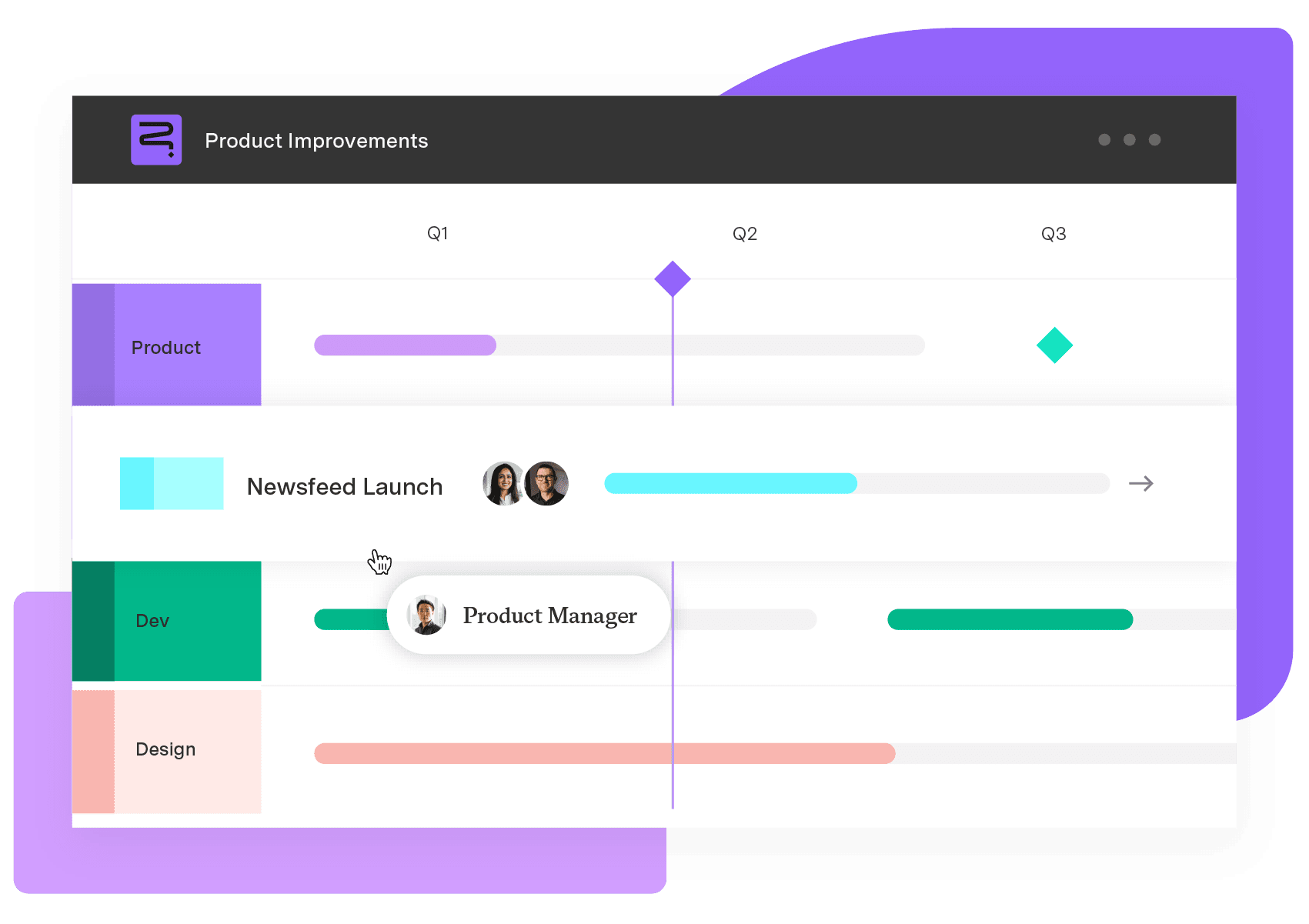
Strategic Roadmaps
Build your portfolio vision with Strategic Roadmaps. With powerful visualization capabilities, you can communicate strategy to the entire organization and gain alignment around strategic objectives, product goals, and milestones.
Start a Free TrialControl priorities with the Eisenhower Matrix. This tool provides visibility around important and urgent tasks, helping you be project efficient.

Determining priority between competing tasks or projects can be difficult. A prioritization matrix offers an objective rationale to back your choices.

The Hoshin Kanri matrix helps your organization plan & execute key goals. Learn how to build your own, and guide your team from strategy to execution.

Discover the differences between Gantt and roadmap charts. Learn how and when to use each to improve communication and boost productivity.

A TOWS matrix expands on the SWOT analysis to showcase how various factors affect each other. Discover the pros and cons of this method.
Unlock the potential of burndown charts and learn how this powerful tool can help you visualize your project’s path from kick-off to delivery.
Explore our guide on how to write a SWOT analysis, see how it looks in practice with a real-world example, and discover this tool’s benefits.

Struggling with competing priorities? Learn the best tactics to balance deadlines, stakeholder demands, and resources while keeping projects on track.

A matrix organizational structure blends project experts with leadership teams, enabling agile resource use and better cross-functional collaboration.