Learn how implementing Agile at Scale can level up your organization. Improve efficiency, responsiveness, and innovation to transform your business.
You’ve decided your company needs the resilience and adaptability that Agile at Scale delivers — it’s time to take the plunge and implement it.

Implementing agile takes more than reading the agile manifesto and deploying a few processes. It requires transformation across your entire organization. Whether you’re applying a few practices at the team level as a pilot project or diving right in and adopting agile methodologies at every level, there are some things you need to keep in mind to ensure a successful implementation process.
Whether implementing the agile methodology at the team level or across the entire organization, the first step to successful deployment is buy-in. You must ensure everyone is on board with Agile at Scale, not just upper management or team leaders.
To encourage buy-in, you can discuss the following benefits of agile implementation with the whole team.
At the organizational level, implementing Agile at Scale:
Closes the gap between high-level strategy and real-world execution
Removes silos and improves collaborations by building cross-functional teams
Encourages adaptability, allowing the company to shift gears quickly to remain competitive
Generates more value for your customers
For teams, agile project management delivers the following benefits:
Entrenches team autonomy, allowing each working group to decide the best method to complete management objectives
Builds transparency, allowing managers to easily account for individual and team workflows
Streamlines work in progress (WIP) to achieve efficient and effective processes, boosting team productivity
Sets priorities by building clarity and visibility into the project management process
Addresses potential bottlenecks and roadblocks before they impede progress
Eliminates waste and boosts efficiency
Diversifies the decision-making process by giving every team member a voice
Frees teams to experiment, delivering iterations in real-time
Offers customers, end users, and stakeholders continuously improved and updated deliverables
You’ll choose your ideal framework from the many agile process models depending on your industry, offering, and organizational size. Some of the more popular frameworks include:
Scaled agile framework (SAFe) combines Lean, Kanban, and DevOps practices and works best for enterprise-level organizations. It’s more prescriptive and structured than other models, promoting alignment and synchronizing collaboration across large-scale teams working on complex solutions.
Large-scale Scrum (LeSS) provides a lightweight, agile framework for organizations leveraging smaller, more dynamic teams. Each working group operates independently, with individual Scrums, sprints, and backlogs, coming together as a cross-functional team to collaborate on more complex projects.
Disciplined agile (DA) is an agile toolbox that lets you pick and choose which strategy to implement depending on whether you’re scaling for finance, IT, governance, or some other business function. Thanks to its flexibility, DA evolves as your organization grows.
Scrum at Scale (S@S) is excellent if you’re already proficient with the Scrum framework at the team level. This framework lets you scale the model to align the organization behind a company’s vision and shared goals.
Nexus is even more lightweight than LeSS, targeting only essential workflows. It reduces dependency and complexity while allowing the organic evolution of processes, product structures, and communications within the agile framework.
What agile process will perfectly suit your business straight out of the box? There isn’t one. You’ll customize your chosen model to suit your business, so assess each agile framework to determine which one most closely aligns with your current needs and has the flexibility to grow and evolve with you.
Once you’ve secured organization-wide commitment to agile and your chosen framework, it’s time to implement. The process varies depending on whether you’re establishing the model using a top-down, bottom-up, or hybrid process, but generally, it will follow these steps:
Save time by defining your organization’s capacity and competency for agile. If you have them, use existing agile processes to create a purposeful vision for your organization based on the business changes you want to see. Examples include:
Don’t expect to write your vision in stone. It should evolve as your organization grows and changes. Revisit it regularly throughout implementation and beyond.
Connect value streams and use them to visualize organizational segments, from the highest strategic level to individual working groups. Then, work with upper management to identify and create a portfolio for each initiative containing its separate supporting projects. You’ll break down each project into smaller deliverables and pass these items to the teams responsible for relevant task work.
Individual teams will review these projects, determine methodologies, and begin work. As they flow through development, they’ll refine and define the project management process, choosing which tasks to execute and when, proactively addressing potential issues, and adding new work as they finish others until the development cycle is complete.
Agile’s ultimate purpose is to synchronize all levels of your organization so everyone works on the right job at the right time.
To achieve synchronization, you must:
Limit WIPs: Keep your teams focused and complete projects as quickly as possible by limiting the number of strategic initiatives on the go. Concentrating on one priority at a time ensures each project receives the group’s full attention and produces top-quality deliverables.
Introduce commitment milestones: Milestones create a shared understanding of a project’s progress, from inception to completion, and help organize its final delivery to the client.
Establish tracking metrics: Whether you’re working with Kanban or using sprints, your team needs accurate lead times, cycle times, and throughput at the strategic and project levels. These metrics create realistic project development timelines and help you analyze systems to identify optimization opportunities.
You must organize and plan work at the global level. Upper management will gather for planning meetings to develop, review, and adapt initiatives and communicate strategies to the rest of the organization. Teams can then have similar meetings to sync work progress and find ways to maintain adaptability and flexibility.
In addition, strategic working groups can consider additional gatherings to maintain alignment and improve communication, like:
Project stand-ups are daily or weekly sessions for reviewing progress, communicating changes, and identifying issues.
Operational reviews are holistic meetings regarding internal team performance to identify potential inefficiencies to build agility into the system.
Strategy reviews involve upper levels of the organization evaluating progress toward strategic goals, making adjustments, and planning new objectives.
Project retrospectives respect that failure is a given in an iterative environment. At the end of a sprint, retrospectives generate feedback to identify what worked, lessons learned, and opportunities to incorporate ongoing improvement into the next round.
Successful agile implementation requires ensuring your team’s familiar with agile principles and comfortable with the project management methodology. To do that, invest in training, particularly at leadership levels. Managers can offer ongoing coaching in agile processes, tools, and, most significantly, culture.
Implementing Agile at Scale invites various roadblocks, but you can overcome them with foresight and planning. Here are a few tips for combatting common challenges:
Resistance to change: Some people have a way of doing things and require some convincing to accept a new process. Remind everyone — especially the holdouts — of the benefits of adopting the agile method and ensure they understand your chosen framework as well as why you chose it.
Poorly coordinated agile teams: Getting everyone on the same page requires coordination and communication. Without these factors, development teams and management could work toward unaligned purposes. Management must collaborate closely with team leaders, Scrum masters, and product owners to communicate change across all levels of the organization and ensure the resources and project management tools are available to drive overall acceptance.
Changing company culture: Upper management might find it difficult to let go of the control offered by the waterfall project management methodology. But, for successful agile implementation, teams need the autonomy to make decisions about their work without management interference. Management can encourage confidence in their teams by becoming servant leaders, providing the tools, resources, and support working groups need to deliver the required outcomes. In return, project managers must ensure their team's work is of the highest quality, consistently meeting or exceeding management requirements.
Roadmap your Agile at Scale implementation with Strategic Roadmaps to capture progress at every organizational level. Then, integrate it with Jira-enabled Timesheets to track conversion activity and ensure your teams meet their targets.
For more resources like this visit tempo.io/solutions/agile-at-scale.
Sign up for a demo
Request Demo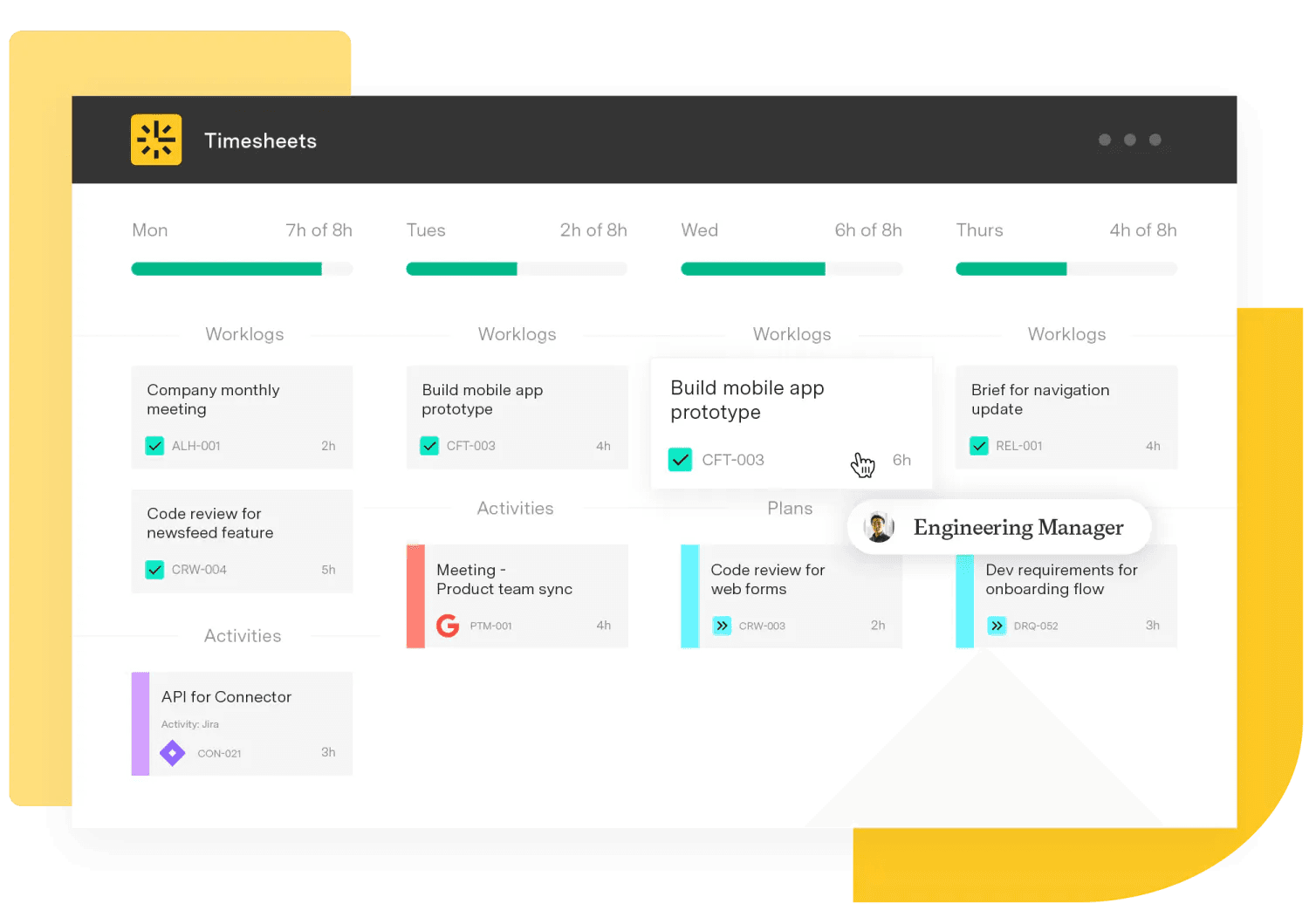
Timesheets
The #1 time-tracking app for Jira. Timesheets seamlessly integrates with Jira and your existing workflows to help you track time for accounting, CapEx tracking, client billing, compliance, and more.
Start a Free TrialLearn how implementing Agile at Scale can level up your organization. Improve efficiency, responsiveness, and innovation to transform your business.

Knowing which Agile at Scale metrics will best track your team’s productivity and success helps you set realistic KPIs and improve performance.

Learn what the iterative process is and how it can benefit your project management. Here’s everything you need to know about this agile method.

Don’t be intimidated by Agile at Scale implementation. The SAFe roadmap will help you successfully transition to the agile methodology in five steps.

Discover strategies to enhance your team’s performance by fostering agile continuous improvement throughout their processes and operations.

Everything you need to know about ServiceNow and Tempo’s connectors, why you should connect these tools together, and the use cases.

Learn all you need to know about bottom-up vs top-down approaches to problem-solving. Here’s what sets each process apart and when to implement them.
Take the fear out of scaling agile. Thanks to these agile case studies and best practices, you’ll discover secrets behind successful scaling efforts.

Want to become a master of change management? Explore insights, tips, and challenges you may face when implementing organizational change.