Develop your product sense with five simple tips and guidance from top product managers. Use these insights to drive innovation of your own.

It’s said that a crowd holds greater wisdom than a single expert.
For businesses, a large group of people is an attractive source of collective knowledge and skills to inform novel concepts, iterative testing, and successful development. The question is, how do you access that wellspring of inspiration?
The answer for most companies is to outsource innovation to volunteers or freelancers within their target market using a technique called crowdsourcing. The concept took off in 2006 when Wired magazine author Jeff Howe discussed leveraging the power of social media and the internet to source original ideas and drive innovation.
When done right, crowdsourcing is a powerful tool that propels an organization to new levels of achievement. In fact, crowdsourcing is what’s responsible for some of the cleverest marketing campaigns of the last 20 years. But achieving that success isn’t easy. Companies must understand and carefully plan their crowdsourcing campaigns to tap into their audience’s collective intellect.
The crowdsourcing definition describes the practice as a campaign to approach a group of people in hopes of accessing specific resources like knowledge and services. Using social media and online platforms, organizations have crowdsourced new ideas, raised money, and gathered vital operating data.
By leveraging crowdsourcing, companies engage with a broader cross-section of insight and opinions than those relying exclusively on traditional channels — such as employees, suppliers, and subject matter experts — all at a fraction of the cost.
Depending on the resources a company wants to crowdsource for, campaigns can fall into one of four categories.
Wisdom-based crowdsourcing leverages the collective judgment of large groups versus that of a single expert for problem-solving or assessment. Organizations like OpenIDEO and InnoCentive take the process one step further, inviting expert problem-solvers worldwide to collaborate on addressing pressing social issues.
Companies often generate innovative designs by outsourcing the creative process to freelancers or invested members of the general public. Wikipedia and open-source software are examples of organizations that solicit user input directly for product updates and improvements.
Platforms like Crowdspring, Clickworker, and 99designs connect freelancers from every discipline with companies seeking crowdworkers. These freelancers are willing to complete microtasks like transcription, logo design, and content creation. And Amazon Mechanical Turk (MTurk) even created a virtual marketplace dedicated exclusively to crowdsourcing technical expertise.
Crowdsourcing in marketing often involves polling users or the target market to uncover their preferences for a new policy or product feature. The information these polls collect helps companies improve product quality and value based on consumer input.
Crowdfunding is a popular way to raise money for business start-ups, artistic endeavors, and charitable initiatives. Groups solicit small donations from grassroots contributors via websites like Kickstarter and Indiegogo to amass the necessary funds for launching an initiative.
Crowdsourcing data and resources can provide significant benefits like cost savings and speed — but there’s a flipside. It’s essential to familiarize yourself with the pros and cons before considering any crowdsourced campaign.
Improved outcomes: When a company crowdsources work globally, it can experience significant savings and access skills and insights that are unavailable in-house.
Increased efficiency: Organizations can reduce turnaround time by microtasking — breaking bigger jobs into smaller segments and offering them as contracts on freelancing platforms like Upwork and HeroX.
Broader insights: Rather than relying on a small focus group for feedback on new designs or products, consumer-oriented companies can survey millions of users from different socio-economic backgrounds via social media. By crowdsourcing opinions, they receive comprehensive feedback to gauge their audience’s needs and preferences.
Higher customer engagement: By soliciting consumer input and creating opportunities for user involvement, companies generate a buzz surrounding their product’s design and evolution. Campaigns get people talking, and by encouraging consumer participation, companies help their audience feel valued, thus generating brand loyalty.
Possible bias: If organizations aren’t careful, they could skew the results of crowdsourced data and opinions by limiting their audience.
Increased labor: Sorting through every pitch to find a winning idea can be time-consuming, requiring more time and human effort.
Potential legal issues: Companies must be very clear about terms when crowdsourcing opinions, designs, and concepts. Otherwise, they could face problems with confidentiality agreements and intellectual property challenges.
Unguaranteed success: A crowdsourcing campaign isn’t a panacea. It may fail to deliver the next big thing, solve a problem, or fall short of fundraising goals.
Crowdsourcing isn’t as simple as putting a call out on your social media channels. It takes time and planning to implement a successful strategy. Before you start, consider following these best practices:
Be specific: If your request is too vague or complex, you might intimidate your audience, discouraging involvement. Keep tasks simple and provide precise submission guidelines for participants.
Track results: Establish metrics to monitor campaign success. For example, when Starbucks solicited a new coffee cup design, they posted submissions on their website and encouraged users to vote for their favorite.
Offer incentives: Entice crowdsourcing consumers with discounts, gift cards, or contests open only to campaign participants. No matter the method, you should reward contributors for lending their time to help your organization.
Several well-known businesses have thrived thanks to their tactical application of crowdsourcing. Consider these three examples to inspire everything from marketing campaigns to business models.
With over 90 million contributors from around the globe, community-based Waze — a GPS and navigation app — offers commuters real-time traffic jam, accident, and hazard reports. It can even locate cheap gas while selecting the best route to your destination, ensuring you arrive quickly and safely. Waze implemented these features based on their users’ needs and expectations, which they gathered through proper crowdsourcing.
From 2007 through 2016, Doritos saw massive marketing success from their Crash the Super Bowl campaign. Every year, they tapped into the imaginations of thousands of wannabe filmmakers, hoping to create an unforgettable ad for the sports world’s coveted commercial spots. One of the highest-rated and memorable ads was “Time Machine,” which cost $300 and took six hours to create.
Airbnb wouldn’t exist without crowdsourcing. It bases its entire business model on travel accommodations crowdsourced from its audience. Anyone with an available room, house, or apartment can host travelers by signing up and creating a listing on the platform. Booking statistics show that two million people stay in an Airbnb rental every night.
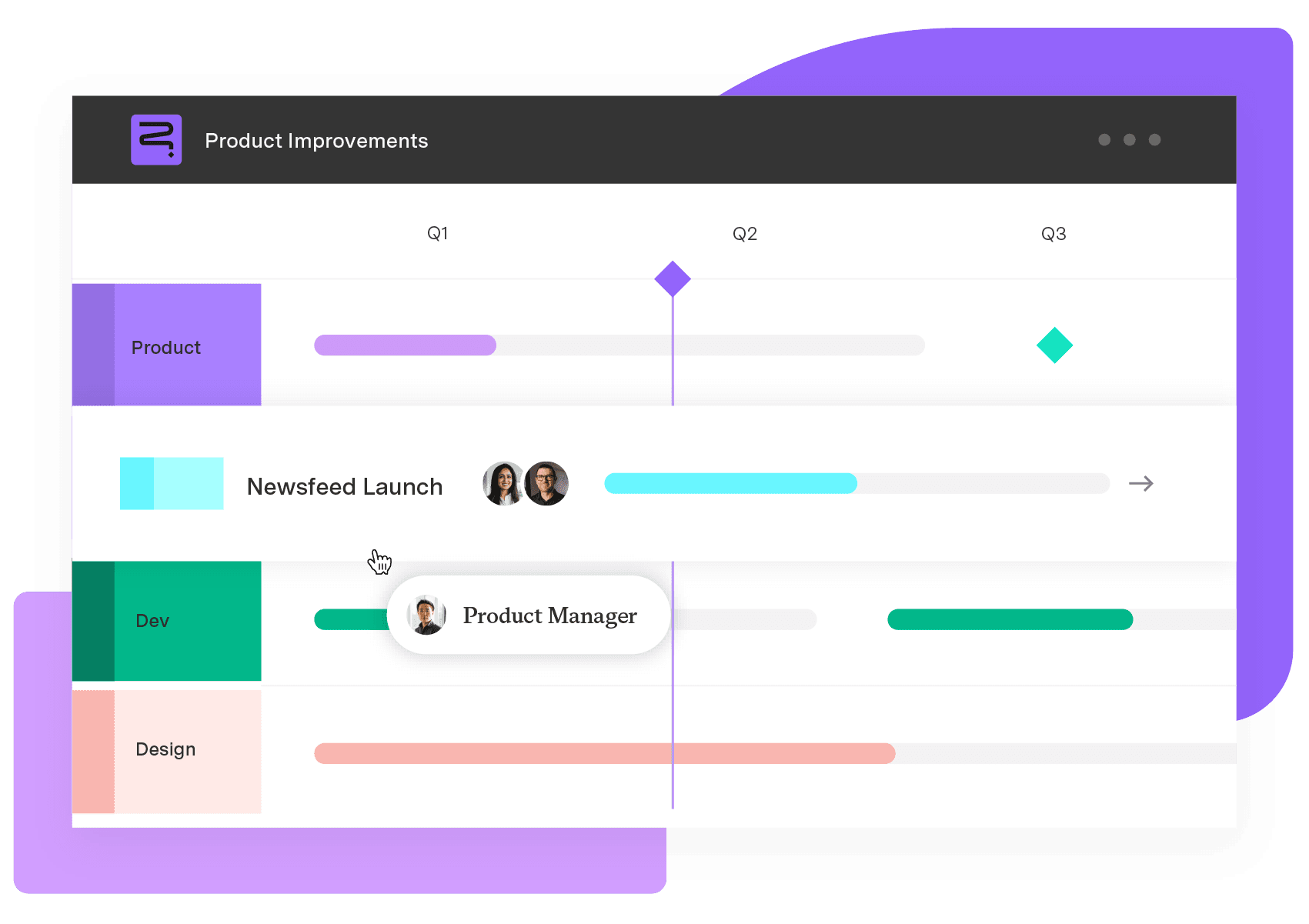
Plan your crowdsourcing strategies with audience-friendly project roadmaps from Tempo’s Strategic Roadmaps. With one easy-to-use tool, Strategic Roadmaps lets you plot out your campaign’s steps, apply customer feedback, and track multiple initiatives.
Whether you’re working in IT, product development, or project management, you’ll have the features you need to track your team’s work.
Strategic Roadmaps
Build your portfolio vision with Strategic Roadmaps. With powerful visualization capabilities, you can communicate strategy to the entire organization and gain alignment around strategic objectives, product goals, and milestones.
Start a Free TrialDevelop your product sense with five simple tips and guidance from top product managers. Use these insights to drive innovation of your own.

Seek insights leading to product innovation and improved customer satisfaction by sourcing consumer data with a customer feedback portal.

Great marketing starts with a plan. Learn what marketing management is, its best practices, and what tools to use for excellent strategies.

Write better briefs with clear steps and creative brief templates. Learn how to align strategy and content to elevate your creative output.

Learn how to use different types of marketing calendar templates to streamline your workflows. Find free template resources to get you started.
Learn how to use a project intake form to streamline requests, improve approvals, and manage your project portfolio more efficiently.
our content plan is how you connect with your audience and build brand recognition. Here’s how to create a content plan and engage customers.

Learn the pros, cons, and use cases of qualitative vs. quantitative data to make smarter business and project decisions.

Understand the difference between strategy vs tactics with clear definitions and real-world examples across product, marketing, and customer success.