Take control of your schedule with time management AI. Use smart tools to schedule meetings, set deadline alerts, and establish time blocks for work.

Some employees consistently ship more work in the same eight hours as everyone else. The difference is rarely talent or effort — it's how they handle their calendar. Time management is a soft skill that lets people prioritize, organize, and expedite tasks to reach peak efficiency and productivity, and it's teachable.
As a project manager, you can set schedules and deadlines, but the process leads to frustration unless you also help your team prioritize their work and build the habits that protect their focus. Deadlines by themselves don't create discipline — the surrounding practice does.
The sections below cover what time management is, why it matters, what gets in the way for most teams, and which tools help people get more out of a workday without burning themselves out along the way.
Time management is the practice of coordinating tasks and activities so effort produces higher-quality output in less time. It applies at home and at work, and it depends on organization, planning, and scheduling working together.
Doing it well also means accounting for the people involved: Their working conditions, capacity, and personal rhythms. Motivation and routine matter as much as the calendar itself, and any system that ignores them tends to collapse the first time a hard week arrives.
Time has value, but its worth is hard to pin down without a system for spending it. Time management gives leaders and teams that system.
In a business setting, managing time helps leadership set expectations for the organization and its employees. It supports staff in delivering high-quality work and hitting their objectives, and it helps managers see capacity honestly and set realistic goals.
When team members lack the skill, anxiety and stress climb quickly. Employees short on time either deliver rushed, inferior work or miss the deadline altogether — and project quality takes the hit either way.
Left unaddressed, this becomes time poverty: Too much to do, not enough time to do it, and no runway to catch up. Home life and personal well-being suffer even when employees are doing their best work, because the workload keeps outpacing the hours available to it.
Over the long term, poor time management contributes to burnout, higher turnover rates, and a diminishing reputation that makes hiring harder and more expensive.
Every task takes time, but some hours produce more value than others. Good time management helps team members spend their hours on the work that matters, improving productivity and work-life balance at the same time.
Effective strategies pay off in several ways:
1. Innovation: Stress kills creativity. When employees manage their time well, they have room to think instead of react, and better ideas surface. 1. Productivity: Employees who feel challenged rather than overwhelmed report higher job satisfaction. They finish more work and take on new projects willingly. 1. Engagement: Without constant time pressure, team members feel a sense of accomplishment and stay engaged with their work and company. 1. Absenteeism: Motivated staff show up. Highly engaged employees are less likely to take sick days, lowering absentee rates by up to 41%. 1. Turnover: A productive, engaging environment keeps people in their roles — or moving into other roles inside the company. 1. Recruitment: Reputation attracts talent. Candidates look for companies that treat employees well, which cuts hiring costs.
Poor time management usually has more than one cause. Some barriers are internal, others come from the work environment. Project managers and team leads need to recognize both and respond accordingly.
Some people are naturally more organized than others, but the techniques can be taught and modeled.
Common habits that hurt time management, and how to help:
1. Multitasking: Splitting attention across jobs at once dilutes every one of them. Encourage team members to finish one important task before starting the next. 1. People-pleasing: Workers who try to satisfy every conflicting request end up spread thin and frustrated. Empower them to delegate or say no to unreasonable asks. 1. Anxiety: Stress narrows judgment. When a team member is overwhelmed, prioritize the work for them until the pressure eases. 1. Lack of motivation: People stall on work they don't understand the point of. Connect individual tasks to team or company goals. 1. Poor self-control: Distractions shut down productivity. Encourage focus blocks, short breaks between them, and a workspace free of interruptions. 1. Procrastination: Some employees need a deadline crunch to start. Help them build a daily schedule and reallocate time before the crunch arrives.
Workplace conditions can undermine even a disciplined employee. These barriers are usually outside their control, and it's on leadership to address them:
1. Job constraints: When employees can't make decisions about how their work gets done, they face unrealistic timelines and needless inefficiency. Give them the authority and tools to work their way inside a realistic window. 1. Workload: Managers can avoid overloading staff by asking for input during delegation and scheduling — not after the fact. 1. Distractions: Life happens — family emergencies, illness, and vacations can all pull an employee off delivery on any given week. Build buffers into project timelines so unexpected absences don't derail the schedule. 1. Resources: Understaffed teams and urgent last-minute requests leave everyone scrambling. Time management tools help employees work smarter and stretch the hours they have across what's on the plate.
Tempo's Jira-enabled productivity apps help teams get more out of a workday. Paired with the habits above, they produce results without burning anyone out.
Tool: Custom Charts for Jira
A SMART goal is specific, measurable, achievable, relevant, and time-bound — a strong fit for any time management plan. Review historical data from past projects in Custom Charts for Jira to understand what a task actually takes and set expectations your team can hit.
Tool: Strategic Roadmaps
Prioritization frameworks like the Eisenhower Matrix or the Rapid Planning Method help order work into weekly or daily buckets. Strategic Roadmaps turns whichever framework you use into a shared plan stakeholders and team members can see.
Tool: Portfolio Manager
Overloading a few people is a productivity killer. Portfolio Manager balances work across the team using predictive scheduling and resource leveling grounded in real-time data.
Tool: Time Tracker
The Pomodoro Technique breaks work into short focus blocks — usually 25 minutes on, five minutes off — so attention stays fresh. Tempo's Time Tracker records the effort and shows the progress.
Tool: Timesheets
Have team members log their work with Tempo Timesheets. Tracking effort discourages procrastination and produces a detailed record of where the hours went, so people can see where they're strong and where they leak time.
Tool: Capacity Planner
Show the team how their day-to-day work connects to business objectives and project ROI with Capacity Planner. People who can see the bigger picture stay motivated on the smaller pieces, and the sense of progress carries them through the harder stretches of a project.
If any of the challenges above sound familiar, start with one or two habits alongside the Tempo tools that fit the shape of your team — then adjust the mix based on what your people actually respond to over the following weeks.
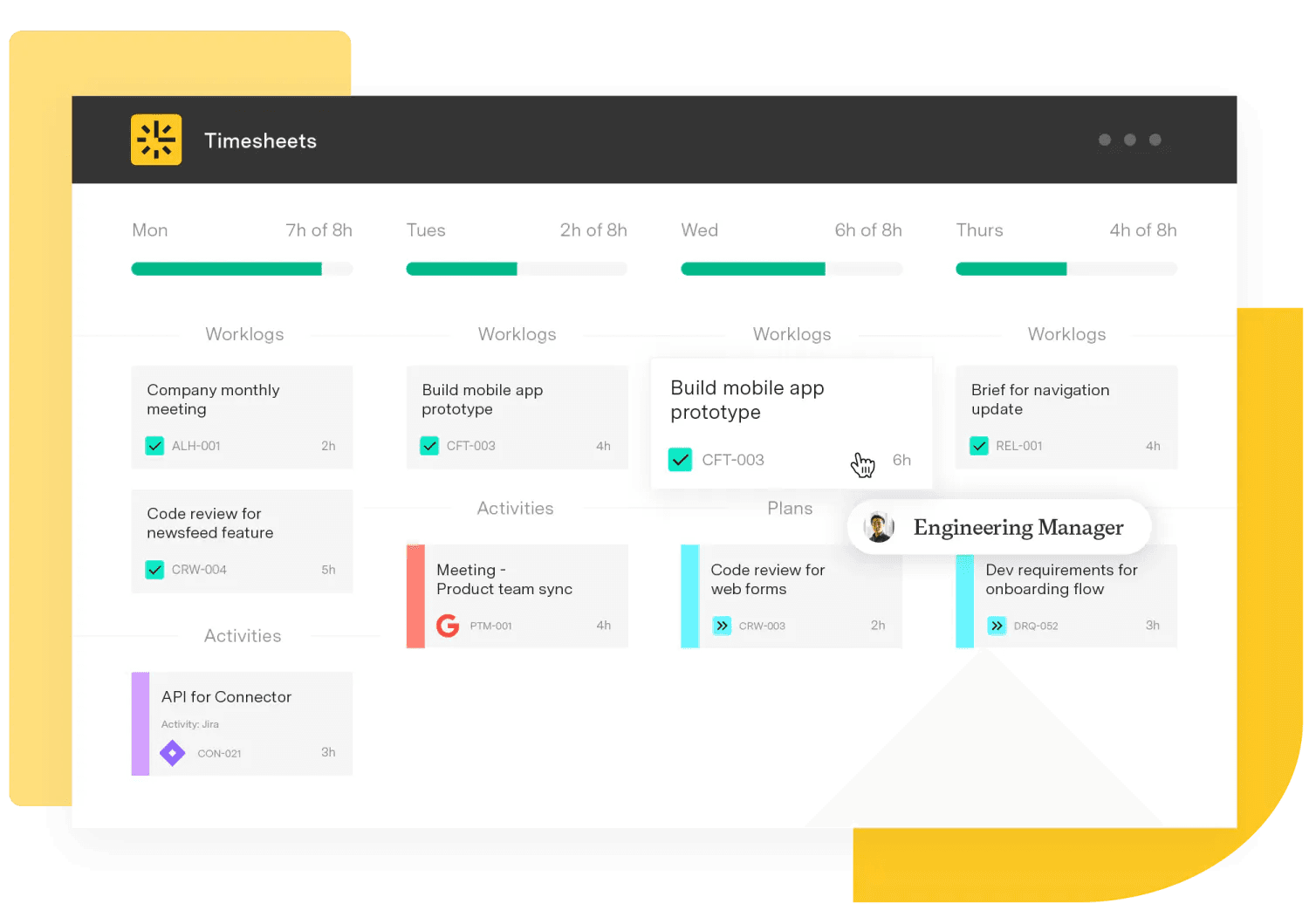
Timesheets
The #1 time-tracking app for Jira. Timesheets seamlessly integrates with Jira and your existing workflows to help you track time for accounting, CapEx tracking, client billing, compliance, and more.
Start a Free TrialCouldn't find what you need?Go to our documentation
If time management has one golden rule, it's: “Take care of what’s bothering you the most.” Completing a task weighing on your mind removes worry and frees up energy to focus on other matters.
Effective time management means that, no matter how you organize and plan the day’s activities, you work smarter, not harder, getting more done in less time.
The three primary elements of effective time management are organizing, planning, and scheduling activities to maximize available hours.
Take control of your schedule with time management AI. Use smart tools to schedule meetings, set deadline alerts, and establish time blocks for work.

Discover the importance of productivity tools and how they can help your team work smarter, collaborate better, and achieve goals more efficiently.

There are lots of ways of optimizing your time management, and they may not all work for you. So, which time management techniques are best?

We're addressing time management myths head on to help you break free of striving to master time management strategies that don’t deliver.

Learn how to increase your team’s work productivity and improve performance with time management techniques like speedruns and other tools.

Learn what Parkinson’s Law is, see real examples, and discover time management tips and tools to overcome it and boost productivity at work.

Everybody gets the same 24 hours per day to achieve whatever they put their mind to. Once it’s lost, time can no longer be used.

Improve how you prioritize work and plan smarter with these prioritization techniques to manage your projects with planning intelligence.

If you juggle a variety of project tasks every day, you’re in good company. Here are seven habits to acquire to be an effective, productive juggler.