Discover product management tools to enhance your launches. Tools offer heatmaps, immersive user research, roadmapping, product analytics, and more.
Discover the importance of productivity tools and how they can help your team work smarter, collaborate better, and achieve goals more efficiently.

The world is full of distractions, constantly vying for our attention. It’s easy to get sidetracked. But by understanding the importance of productivity tools, you can transform technology from a distraction into a powerful ally.
Productivity tools are a type of software designed to help teams work more efficiently, streamline tasks, and collaborate effectively. We’ll explore the benefits of incorporating productivity tools into your workflow, from improving work quality to boosting customer satisfaction.
Productivity tools are designed to simplify and optimize everyday work functions, helping your team accomplish more in less time. These tools come in different forms, each addressing specific workplace needs. Common types include:
Project management tools: These help teams plan and track the progress of projects from start to finish. They offer features like task assignment, deadline setting, and progress monitoring to ensure projects stay on track and help your team become more productive.
Communication tools: These enable seamless correspondence between team members, no matter where they’re located. They have features like instant messaging, video conferencing, and file sharing to promote smooth collaboration.
Time management tools: These help employees track the time they spend on tasks, identify bottlenecks preventing increased productivity, and optimize their workday. With insights into their work habits, savvy users can make data-driven decisions to improve efficiency.
Document collaboration tools: These empower teams to create, edit, and share documents in real time. They eliminate the need for long email chains and ensure everyone can access the most up-to-date information.
Let’s explore some of the most significant advantages you can gain by incorporating office productivity tools into your workflow:
Productivity tools often include features like automated reminders and version control to help you minimize errors and maintain consistency across projects.
Project management platforms help your team meet deadlines on time, reducing the risk of last-minute rushes that could compromise quality. Similarly, document collaboration tools prevent confusion by keeping everyone updated and minimizing the need to scrap and redo outdated work.
As with any tool, you must learn the software well and get buy-in from the rest of your team to guarantee success.
Computer productivity tools enable a systematic approach to project management and collaboration that encourages your team to develop and maintain good habits and best practices.
For example, consistently using a project management platform helps your team internalize effective planning and communication skills. This leads to greater efficiency and a sustainable, organized workflow, even as projects change and team members come and go.
Productivity tools also provide valuable data and insights for better strategic decision-making. By tracking progress, identifying bottlenecks, and measuring success, you can continuously refine your team’s processes and optimize performance for the long haul.
When your team members are equipped with the tools to do their jobs effectively, they feel more empowered and supported. This leads to increased job satisfaction and easier team management.
Workplace productivity tools are also crucial for building a culture of collaboration and communication. Your team members develop a stronger sense of belonging and camaraderie when they can easily connect with their colleagues, share ideas, and work together toward common goals.
Letting technology handle repetitive and time-consuming work frees up valuable time and energy for more meaningful and satisfying responsibilities.
For example, instead of manually sending reminders and updates, project management tools can be configured to automatically notify team members about upcoming deadlines and changes in project status and scope. This saves time and reduces the likelihood that important information will fall through the cracks.
Similarly, integrated calendar functionality and email filters help your team manage their schedules and inboxes more efficiently. By automatically sorting and prioritizing deadlines and messages, these tools minimize distractions and allow team members to focus on their core responsibilities.
Data security is a top priority in the digital workplace. Many productivity tools provide secure cloud storage to protect important files and documents from unauthorized access or data breaches. These tools typically include robust encryption, regular backups, and strict access controls, giving you and your team peace of mind when storing and sharing confidential data.
Productivity tools also help companies maintain compliance with industry regulations and data protection standards. Audit trails and activity logs let you monitor who has access to sensitive information. This makes it much easier to detect and prevent potential security issues.
Productivity software often comes with time-tracking tools. By monitoring how much time your team spends on different tasks and projects, you gain valuable insights into your team’s productivity patterns and locate areas for improvement.
For example, if a particular task is taking longer than expected, you can dive into the data to investigate the reasons behind the delay and take steps to optimize the process. You can also determine which team members need additional support or resources to get the job done.
In today’s highly online business environment, the flexibility to work from anywhere is more important than ever. Many employees have hybrid work schedules and work from home several days a week. Companies have global workforces, with employees spread across the globe in many different time zones. Productivity tools make it easier for you and your team to stay connected and collaborate effectively, regardless of location.
The ultimate goal of any organization is to keep clients and customers satisfied. When carefully applied, productivity tools can help. The higher-quality results and more efficient workflow enabled by productivity tools help your team deliver better results faster, leading to more happy customers.
Productivity tools also help your team respond to customer inquiries on time and resolve issues more efficiently. They provide features like shared inboxes, tagging, and prioritization, which ensure customer questions and feedback never slip through the cracks and the most urgent issues are addressed promptly.
Embracing the power of productivity tools is essential for any organization looking to streamline workflows, enhance collaboration, and drive better results. Add Structure PPM to optimize how you manage and track projects, teams, and resources in Jira.
Sign up for a demo
Request Demo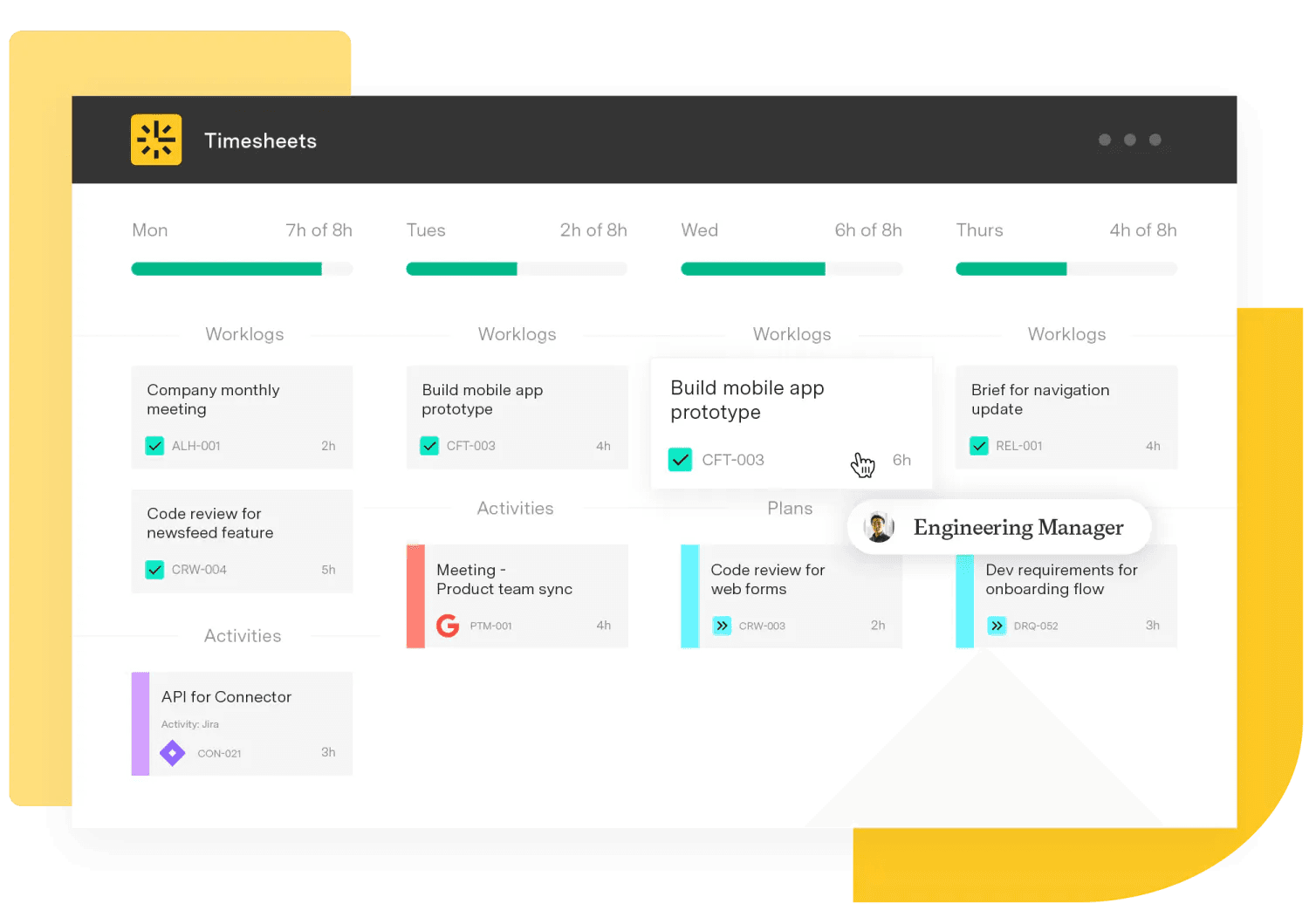
Timesheets
The #1 time-tracking app for Jira. Timesheets seamlessly integrates with Jira and your existing workflows to help you track time for accounting, CapEx tracking, client billing, compliance, and more.
Start a Free TrialCouldn't find what you need?Go to our documentation
Online productivity tools span categories like task management, time tracking, note-taking, and AI assistance.
Task and project management
Notion provides a flexible workspace for notes, databases, task lists, project tracking, and collaboration. With Notion AI, you can generate drafts, summarize text, and refine content within your workspace. Freemium pricing is available.
Asana enables teams to manage tasks, timelines, goals, and communication in one platform. It includes automation and reporting tools, and recently launched AI Studio for workflow automation. Freemium and paid plans are available.
Trello uses a Kanban-style board-based approach to visually manage projects and tasks. It integrates with Slack, Google Drive, and more, making it effective for straightforward team workflows.
Monday.com offers a customizable work operating system that adapts for project and team management workflows. It supports automation, dashboards, and integrations.
Time tracking and focus
Clockify provides free time tracking with reporting, timesheets, and integrations with Trello, Asana, Todoist, and others. It works well for freelancers and teams.
Toggl Track offers hands-on manual tracking for teams, while RescueTime automatically tracks work patterns, blocks distractions, and delivers productivity insights. Both have free tiers available.
Forest uses a gamified Pomodoro focus approach that blocks phone distractions and encourages focus through virtual tree planting.
Collaboration, notes, and writing
Grammarly provides real-time grammar, tone, and style suggestions plus plagiarism detection. It's useful in emails, documents, and professional writing contexts.
Otter.ai and Fireflies offer AI-powered meeting transcription and collaborative notes with action-item extraction and searchable transcripts.
Mem AI and NotebookLM serve as smart note-taking tools using AI to index information, summarize content, and support retrieval. NotebookLM is now free after recent upgrades and works well for team research.
Automation and AI helpers
ClickUp combines tasks, docs, chat, whiteboards, and AI-powered automation in a unified workspace. It supports AI-assisted task creation and reporting.
Reclaim is an AI planner that automatically schedules tasks and meetings into your calendar, helping optimize your time blocks. A free plan is available.
Zapier provides workflow automation that connects thousands of apps. It automates repetitive tasks across tools like email, CRM, and spreadsheets, with a free plan available.
Freedom, Pomodor, and Habitica focus on distraction blocking, time-boxing, and habit tracking with gamification. Free and premium versions exist for each.
Additional tools worth mentioning
Todoist offers a clean, powerful to-do list manager with reminders, recurring tasks, and integrations. It's available as freemium.
TickTick provides a fast, intuitive app for task management and note-taking. Many users prefer its interface and workflow speed. Freemium and premium options are available.
Slack serves as a team chat platform with file sharing, channels, and integrations. It acts as a hub connecting many productivity tools.
Google Calendar and Microsoft Teams provide essential platforms for scheduling, meetings, reminders, and collaboration. They're often integral parts of Google Workspace or Microsoft 365 suites.
Which tool should you use?
For all-in-one workspace plus collaboration, consider Notion, Asana, or ClickUp based on your team size and integration needs.
For time tracking and understanding where your hours go, try Clockify or RescueTime.
For to-do lists and light task planning, Todoist, TickTick, or Kanban boards in Trello work well.
For AI-assisted work, leverage Notion AI, Grammarly, Otter.ai, ClickUp AI, or Reclaim to enhance creativity and efficiency.
For automation, use Zapier to connect and automate workflows across your apps.
A productivity tool is a digital application or platform designed to help individuals and teams work more efficiently, stay organized, and focus on what matters most. These tools streamline workflows, automate repetitive work, and improve communication and task coordination.
Purpose and definition
Productivity software increases efficiency and effectiveness in completing tasks and achieving goals. The applications reduce manual effort, enhance accuracy, and support better time use.
The purpose is to help users manage tasks, projects, time, and collaboration more effectively whether working alone or in teams.
Common types of productivity tools
Task and project management tools organize, assign, and track work items and deadlines. Examples include Trello, Asana, and Basecamp.
Time management and tracking tools monitor time usage, schedule work, and prevent distractions. Google Calendar, Toggl, and RescueTime fall into this category.
Note-taking and documentation tools capture and organize ideas, notes, and collaboration. Evernote, OneNote, and Notion serve these purposes.
Communication and collaboration tools enable real-time messaging, meetings, and file sharing. Slack, Microsoft Teams, and Zoom provide these capabilities.
Office productivity suites create documents, spreadsheets, and presentations. Google Workspace, Microsoft 365, and LibreOffice fit this description.
These categories align with modern workflows and help users handle everything from planning to execution and communication.
Key benefits
Productivity tools increase efficiency by reducing repetitive or manual work and simplifying workflows. This saves time and effort across your operations.
Better organization and task priority keep tasks, deadlines, and responsibilities clearly defined and organized. You maintain better control of your work.
Enhanced collaboration centralizes communication, file sharing, and coordination across teams. This proves especially essential in hybrid and remote work settings.
Progress tracking and analytics let you monitor work in real time and review metrics. You stay on track and measure productivity over time.
A word of caution
While productivity tools aim to help, they can sometimes have the opposite effect. Too many tools or rigid systems may create a sense of pressure rather than actual efficiency.
Tool overload can become problematic. Relying heavily on apps without focusing on meaningful work can lead to distraction rather than productivity.
The key is mindful use. Choose tools that genuinely meet your needs rather than using them for their own sake.
Productivity tools deliver a wide range of benefits for individuals and teams, from task managers to collaboration platforms.
Key benefits of productivity tools
- Enhanced efficiency and output result from automating routine tasks like document formatting or reminders. The tools streamline workflows and use templates and macros to save time. Users accomplish more in less time with fewer errors.
- Better time management and task prioritization come from calendars, reminders, to-do lists, and progress tracking. Productivity tools help you set priorities and stay focused on what matters most.
- Improved collaboration and communication happen through real-time co-editing, shared workspaces, version control, built-in chat, and video conferencing. This reduces email overload and keeps teams aligned and responsive.
- Streamlined project and task tracking uses features like Gantt charts, task delegation, resource tracking, and dashboards. These provide visibility into deadlines, status, and responsibilities, helping avoid missed milestones and miscommunication.
- Increased accuracy and reduced errors come from automation that lowers human data-entry mistakes and paperwork errors. Structured forms, templates, and centralized data storage contribute to this benefit.
- Centralized data storage and accessibility through cloud-based tools ensure documents, task information, and schedules are securely stored and easily retrievable from anywhere. This reduces delay and data fragmentation.
- Cost savings and process optimization result from reducing manual work, decreasing physical resources like paper, and freeing up time for creativity or strategic tasks. Organizations save both time and money.
- Better security and compliance come from modern tools offering access controls, user authentication, and encryption. These features protect sensitive data and ensure compliance with regulations.
- Support for remote work and flexibility through cloud-based collaboration platforms enable individuals and distributed teams to work together seamlessly from anywhere in real time.
- Performance tracking and insights happen through dashboards, built-in metrics, and reporting that let you monitor productivity, recognize bottlenecks, and make data-driven process improvements.
Productivity gains with AI assistants
Integrating AI into productivity tools can supercharge output and elevate job satisfaction. A government trial using Microsoft 365 Copilot saved users approximately 26 minutes per day, totaling about two weeks of annual work time with reported improvements in creativity and balance.
AI tools in developer environments can boost productivity by up to 30%, letting engineers focus on strategic work instead of manual tasks.
However, speed alone doesn't equal productivity. Processes must be reimagined to fully leverage AI benefits.
Benefits summary
By combining automation, structure, collaboration, and smart insights, productivity tools help individuals and teams work smarter rather than harder. When thoughtfully adopted and aligned with your workflows, they not only save time and reduce errors but also empower more creative and strategic work.
Discover product management tools to enhance your launches. Tools offer heatmaps, immersive user research, roadmapping, product analytics, and more.

Discover how goal-setting software promotes clarity, accountability, and alignment from strategy to execution, helping teams deliver results.

Take control of your day with these essential time management strategies. Discover tips, techniques, and tools to help you work smarter, not harder.

Learn how to increase your team’s work productivity and improve performance with time management techniques like speedruns and other tools.

Learn how predictive scheduling can boost your project team’s operational efficiency, and help members achieve better work-life balance.

Discover how ICT in project management improves collaboration, cuts costs up to 40%, and keeps projects on track. See the tools and why they matter.
Support your team by using the best project planning tools out there, and discover how Tempo’s products can enhance your workflow.

The benefits of exercise include boosted productivity, enhanced creativity & improved mental health. Learn how this can impact your professional life.

Explore how Jira plugins for Outlook enhance project management by automating task creation from emails and simplifying file attachments.