Explore Scrum ceremonies and their purpose. Learn how to run them to keep agile teams aligned, productive, and delivering real results.

Scrum of Scrums (SoS) is a scaled agile technique where representatives from multiple Scrum teams meet on a set cadence to coordinate work, surface blockers, and align on shared goals. It exists because Scrum teams stay small on purpose, and small teams can't ship large, cross-functional projects without a reliable way to talk to each other and reconcile priorities.
The Agile Manifesto puts a Scrum team at five to nine people. When a project needs more hands, agile doesn't add people to the team. It adds more teams. Each one still runs its own daily standup, and delegates from each team meet in a Scrum of Scrums to keep everyone pointed the same direction.
If you're new to scaling agile, here's how the format works, what it delivers, and how to run one.
Scrum of Scrums is a meeting format used in scaled agile frameworks to coordinate multiple Scrum teams working on the same initiative. Jeff Sutherland and Ken Schwaber developed the approach in the mid-1990s to improve workflow between cross-functional units without breaking the small-team model that makes Scrum work.
In the Scaled Agile Framework (SAFe), Scrum of Scrums coordinates development teams on large, complicated projects. The scale grows; the agile principles stay put: self-organization, collaboration, and iterative design.
Where a daily Scrum tracks task-level progress inside one team, the SoS operates one level up. It reviews recent achievements, upcoming goals, and impediments that cross team boundaries. Meetings happen less often, and they exist to:
Keep teams informed about work that could affect them
Surface roadblocks before they spread to other groups
Coordinate competing dependencies and resource allocation
Reprioritize remaining work so each team can hit its sprint goals
Scrum of Scrums meetings work best face-to-face, but remote and hybrid teams run them successfully every day.
The payoff is collaboration, faster problem-solving, and shared context across teams. Specifically:
1. Scaling: Teams keep their ideal size while gaining the coordination needed to deliver larger projects. 2. Alignment: Big initiatives create a lot of detail. SoS pulls attention back to sprint objectives and how they map to broader project goals. 3. Problem-solving: Cross-disciplinary attendees bring diverse input, so teams solve problems together instead of grinding alone. 4. Consensus: Open communication and collective decision-making produce workable agreements between teams. 5. Course correction: Regular SoS meetings act as rolling sprint reviews and catch drift early.
A Scrum of Scrums needs three things: the right people, a workable cadence, and a tight agenda.
The attendee list is flexible, but it should mirror the roles in a daily Scrum:
**Product owner:** Knows the product backlog, prevents redundant work, and helps define what "done" looks like across teams.
**Scrum of Scrums Master:** Similar to a Scrum Master, but for the group. Directs the team's trajectory, tracks progress, and communicates status back to individual Scrum teams.
**Team representatives:** Delegates from each Scrum team, often the Scrum Master but not always. Whoever attends has to communicate progress and blockers accurately and advocate for the team's priorities.
The roster can expand when the work demands it. A project heavy on validation might pull in a QA lead. A regulated product might include a compliance owner.
Cadence is up to the group. Many teams meet daily at project kickoff, then taper to weekly or bi-weekly as delivery stabilizes. Time-box each session to 15 minutes.
The exception is an urgent, cross-team issue. When something blocks multiple teams at once, the SoS meets on demand and stays as long as it takes to unblock the work.
A structured agenda keeps the meeting productive. The SoS Master should publish topics and questions in advance so representatives arrive prepared.
Every session should answer:
What has your team completed since the last meeting?
What roadblocks have come up?
What do you expect to finish before the next meeting?
Is anything you're doing likely to affect another team, or vice versa?
If you've never run one, plenty of Scrum of Scrums templates exist online to seed the agenda.
A few habits that separate a useful SoS from a status meeting nobody wants to attend:
1. **Ambassadors:** If envoys rotate, pick people who can communicate clearly and represent their team's interests without getting lost in the weeds. 2. **Visibility:** Confirm the next meeting's schedule, duration, and topics before this one ends. Circulate a draft agenda in advance and ask for input. 3. **Communication:** The SoS is not a competition. Reward honest reporting on progress and problems. Transparency is a Scrum value; it also gives every team the support it needs to hit its goals. 4. **Productivity:** Solve what you can inside the meeting. When something needs more time, schedule a follow-up immediately, not later. 5. **Monitor:** Track how long blockers take to resolve. If response times slip, address the workflow gap in the next sprint retrospective.
Whether your organization is starting an Agile at Scale transformation or has run Scrum teams for years, Tempo has the tooling to keep the coordination layer honest.
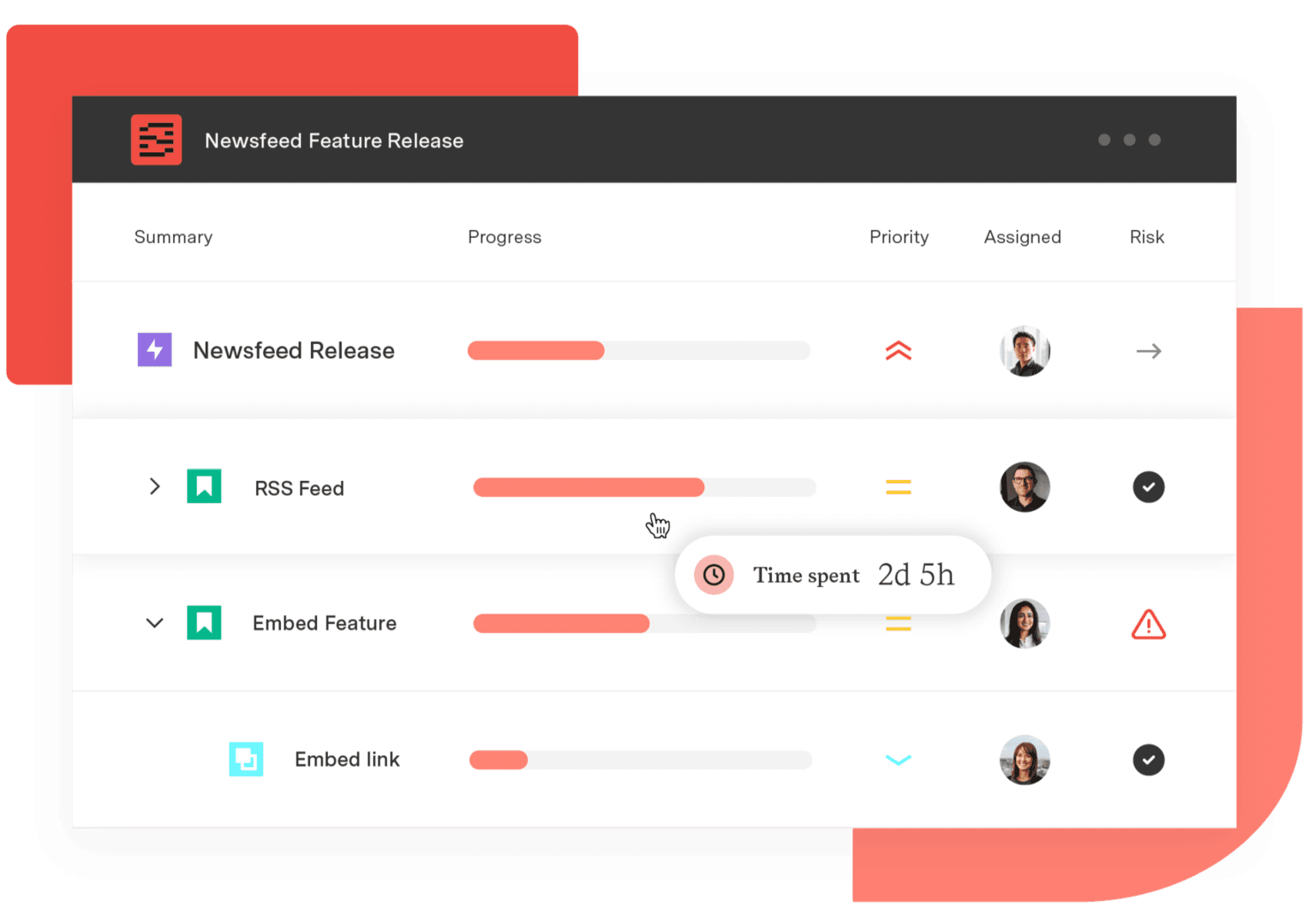
Structure PPM is a Jira-native application built for how agile teams actually work. It gives project managers flexible ways to track Scrum artifacts, manage issues, and report progress across projects, product lines, and portfolios. For an individual Scrum team or a Scrum of Scrums, Structure surfaces sprint planning data and resource allocation in one place, so the information needed for a productive standup is already there.
Custom Charts for Jira adds the visibility layer. SoS envoys can build the exact views they need for backlog refinement, capacity distribution, and progress tracking, without leaving Jira.
Project size and complexity stop being a blocker when the tooling scales with the team. Tempo supports any agile initiative, one Scrum at a time.
Structure PPM
Manage products, projects, and programs in a single spreadsheet-like view. By providing a clear, real-time view of project progress and resource allocation, Structure helps teams meet deadlines and adapt swiftly to changing priorities.
Start a Free TrialCouldn't find what you need?Go to our documentation
A Scrum is a daily agile team meeting of 3 - 9 members. Upon its completion, the group designates an ambassador to update envoys from other Scrums of the team’s activities during a daily Scrum of Scrum meeting.
SAFe is a framework and knowledge base that facilitates the implementation of Scaled Agile. Scrum of Scrums is an organizational methodology that coordinates the activities of multiple Scrum teams within a company.
Explore Scrum ceremonies and their purpose. Learn how to run them to keep agile teams aligned, productive, and delivering real results.

Scrum provides a framework for individual teams to collaborate. But how can multiple teams use scrum together? The answer is Scrum at Scale.

Take the fear out of scaling agile. Thanks to these agile case studies and best practices, you’ll discover secrets behind successful scaling efforts.

Learn how implementing Agile at Scale can level up your organization. Improve efficiency, responsiveness, and innovation to transform your business.

Discover how Scrum values strengthen agile teams. Learn to apply Scrum values in the workplace to encourage collaboration, transparency, and respect.

Whether it’s your first time or you’re a seasoned pro, this guide to SAFe PI planning will help you get the most out of each session.

Learn how you should add Scrum boards to your agile practice. Effective implementation boosts collaboration and productivity, improving outcomes.

A matrix organizational structure blends project experts with leadership teams, enabling agile resource use and better cross-functional collaboration.

Program management is more than scaling up your project management practices. You'll need new capabilities to create order from program chaos.