Agile templates are great additions to any project manager’s toolbox. Learn how roadmap, project planning, & other templates improve project outcomes

Overseeing project development is labor intensive, requiring project managers to juggle responsibilities in areas like stakeholder expectations, risk assessment, and resource management. So when a tool exists that streamlines any part of this workload, it’s worth implementing into your project management process.
One such asset is the resource planning template. The success of any project depends on whether it has the staff, materials, and funding required to produce required deliverables. And using a resource allocation template helps you tick all the boxes and set your team up to exceed expectations.
Instead of struggling with Excel or Google Sheets, learn how integrating resource planning into your practice saves time and improves productivity.
A resource is any item required to successfully execute a project, including personnel, software, and office space. Generally, there are two types of resources: storable and non-storable. Storable resources, like cash and raw materials, are consumable assets available until team members have depleted the stock. Non-storable assets, such as machinery and staff, are items you can periodically restock or expend only during specific periods within the project timeline.
Resource planning in project management develops the blueprint for deploying these assets throughout the work’s life cycle based on the project scope. If it’s complex, the job requires meticulous tracking, so organizing the information within a standalone project resource management template or one integrated into project management software is essential.
Templating helps answer vital questions like:
How do I assign workloads to avoid overburdening human resources?
What supplies do team members need to deliver on time and within budget?
When’s the latest that vendors can consign materials for each project phase?
Resourcing is essential to the project planning process, but it takes time. Having templates at your fingertips ensures you’re quickly aligning assets with the project’s schedule and budget.In addition, using a resource planning template lets you:
Speed up the planning process: You’ll create a resource plan every time you launch a project. Using a template means you’ll have your spreadsheets, trackers, and logs at the ready, saving you time spent searching for documents.
Access historical data: You can save old resource templates for future reference when you complete a project. And if your project plan is similar to previous work, you can review the data and use that information to inform and improve forecasting, allocation, and execution.
Communicate spending: Your resource plan template serves as a central hub of information, keeping all stakeholders up to date on budget and financial standing.
Track project progress: Tracking resource use helps you monitor project progress, providing means to determine whether the team will meet its deadlines with the resources allocated.
Tempo’s Strategic Roadmaps, a Jira-enabled project management tool, provides many free templates to make resourcing your projects easier. Here are some of the best templates to integrate into your practice for improved resource planning.
Visualize how a product or technology will evolve and the resources it’ll need over time using the agile project roadmap. This template creates a statement of intent for the product, describing how the team expects it to progress and change over time. It’s flexible enough to adjust quickly, so you can ensure resourcing accommodates updated plans.
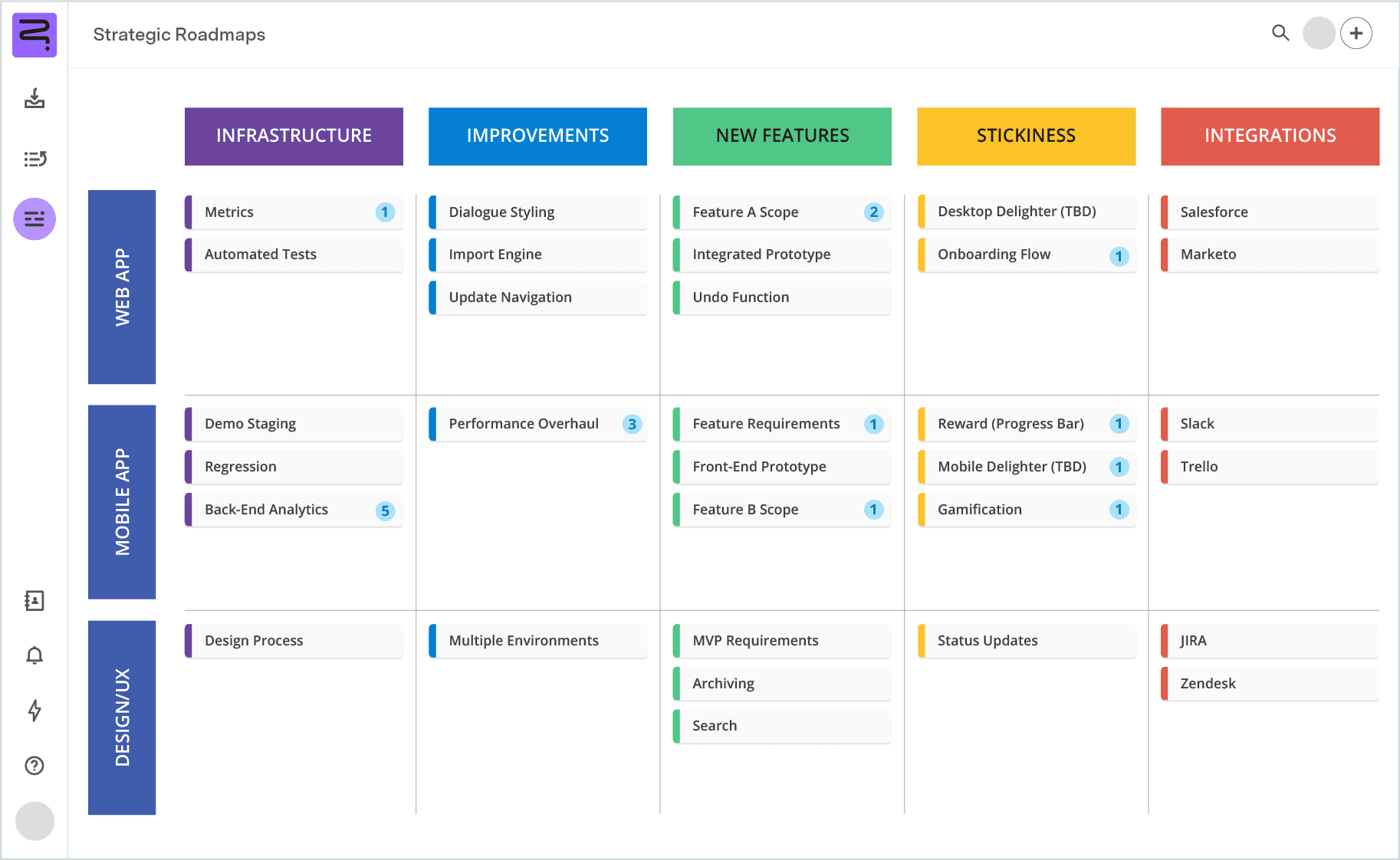
Source: Strategic Roadmaps

Source: Strategic Roadmaps

Source: Strategic Roadmaps
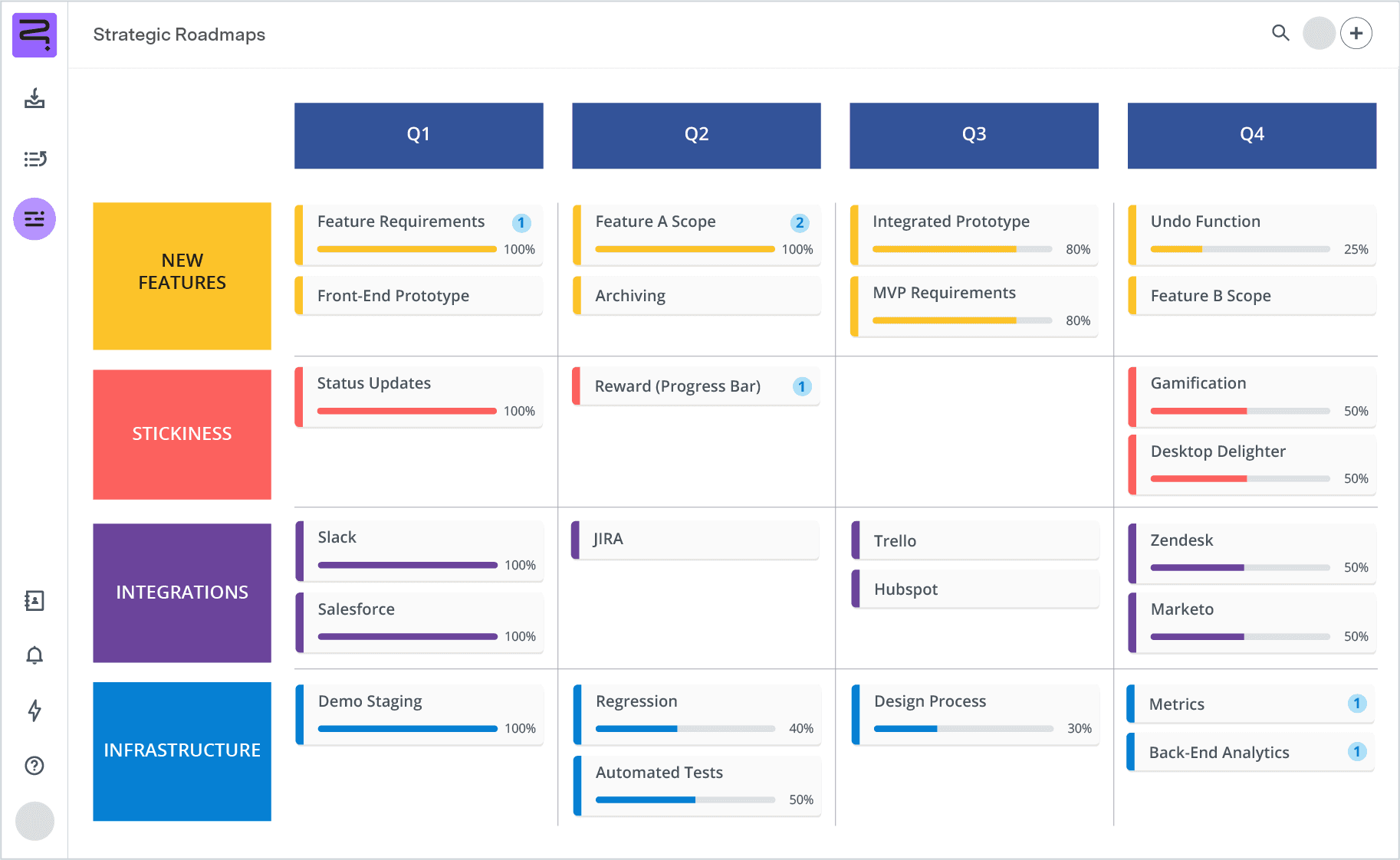
Source: Strategic Roadmaps
Rather than mapping project by project, capability roadmaps track an organization’s large-scale initiatives through upcoming quarters or years. They’re goal-oriented, framing the strategic plan in terms of future potential. Resource management can use the capability to devise staff, materials, and technology availability over the long term and avoid roadblocks caused by unforeseen project dependencies.
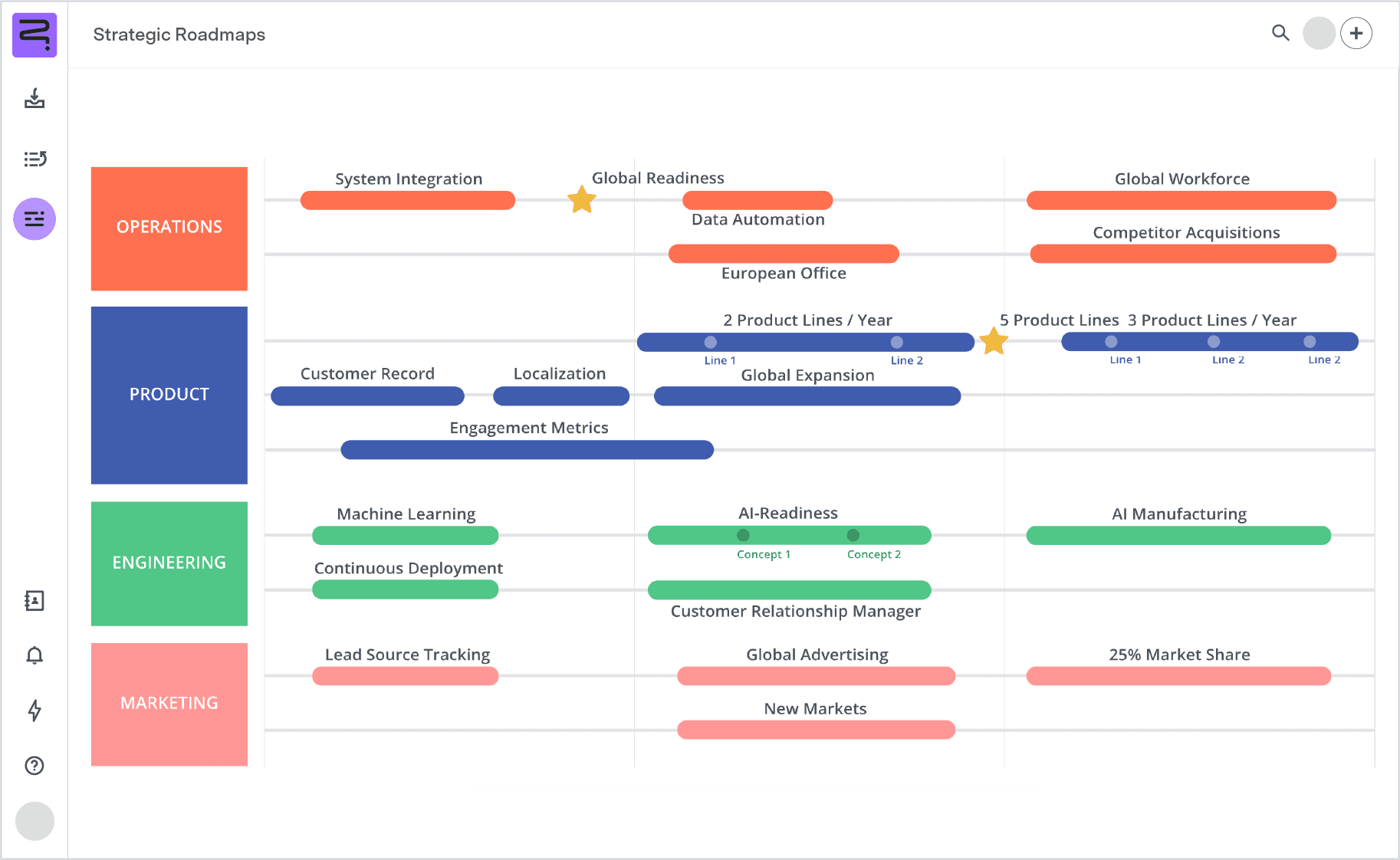
Source: Strategic Roadmaps
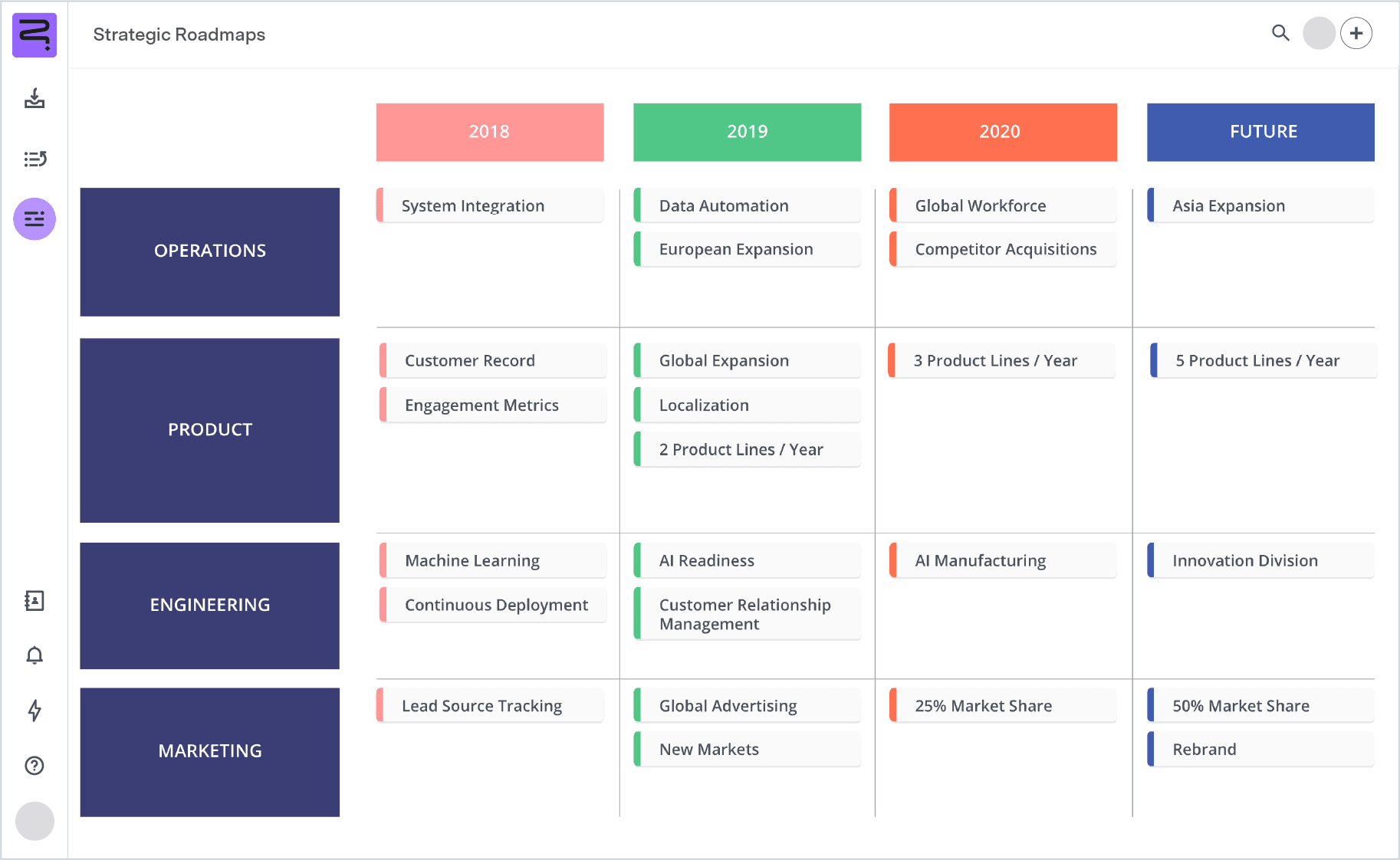
Source: Strategic Roadmaps
Use enterprise architecture roadmaps to visualize how the organization will increase its agility, efficiency, and efficacy. This roadmap communicates the current status and outlines its evolution over the coming quarters and years. It also conveys plans to develop the company’s infrastructure in preparation for market changes and new competition.
For resource managers, the enterprise architecture roadmap provides a synopsis of the availability of future internal assets, such as technology, that they can leverage for long-term project and portfolio planning.
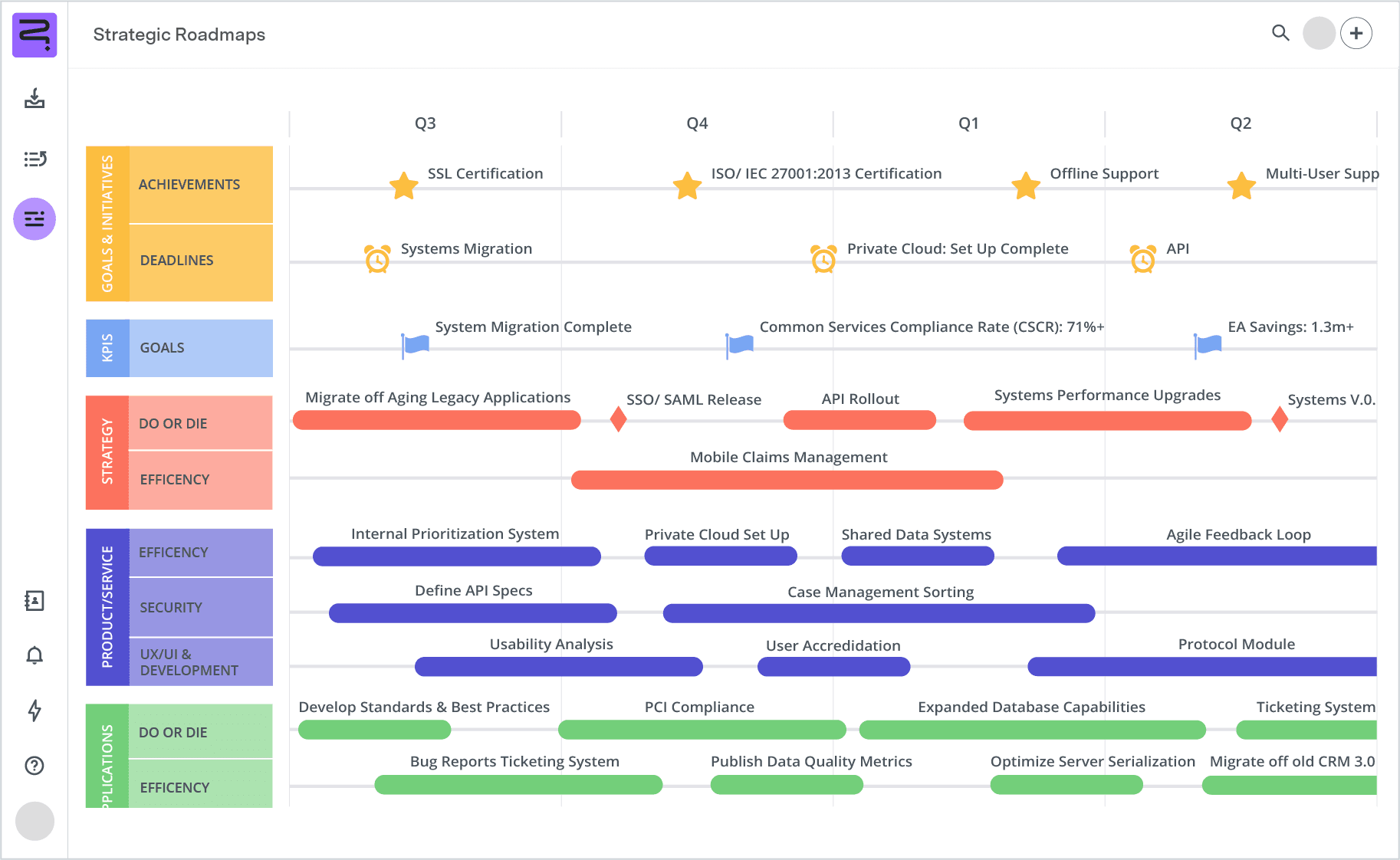
Source: Strategic Roadmaps
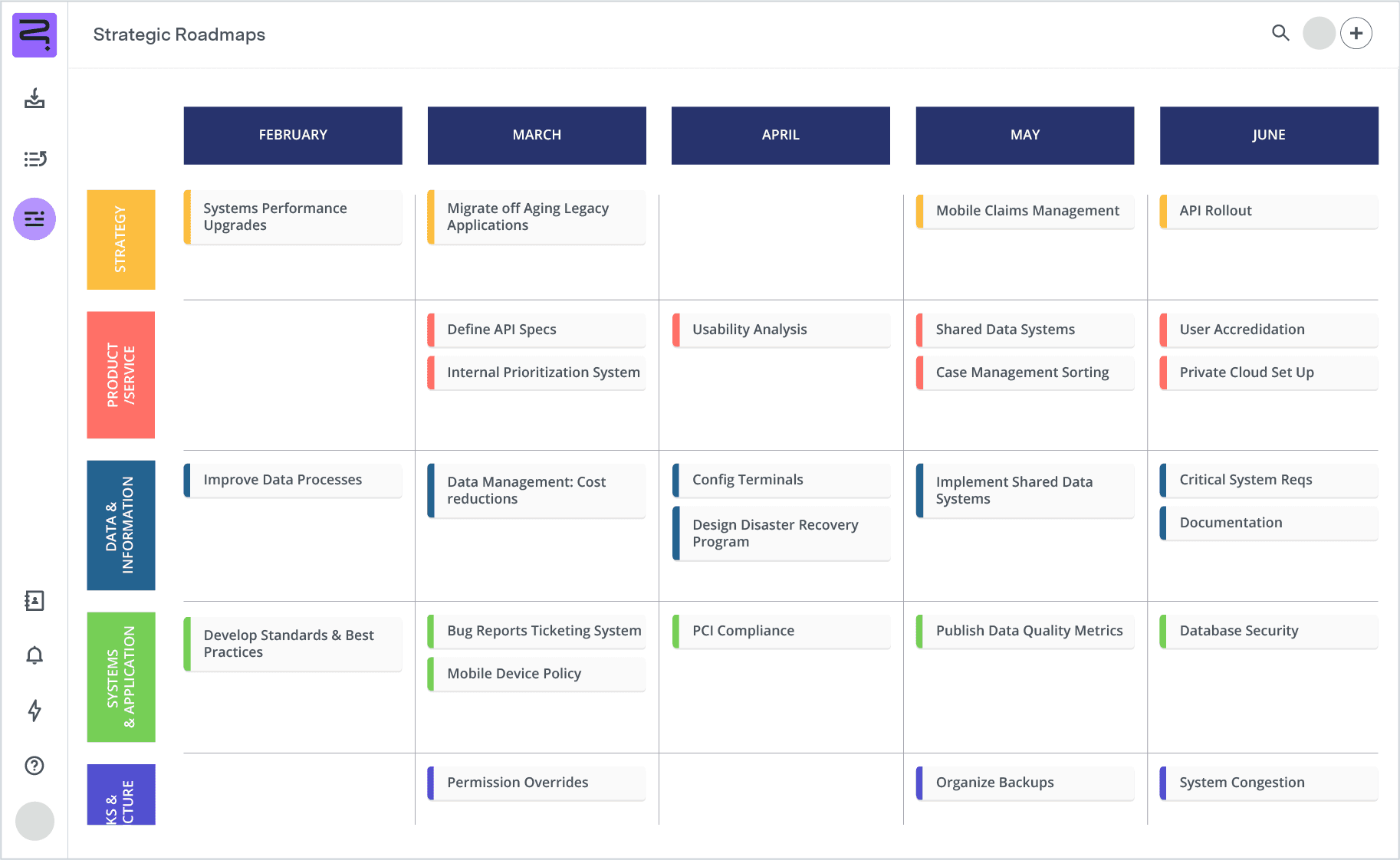
Source: Strategic Roadmaps
No matter how successful, companies must evolve to remain competitive. A change roadmap illustrates an organization’s evolution, bringing the big picture to life and helping employees envision the end game. It also provides a framework for the company’s expectations so they can source and allocate assets to keep pace with advancement, ensuring team alignment behind the changes and readiness to execute.
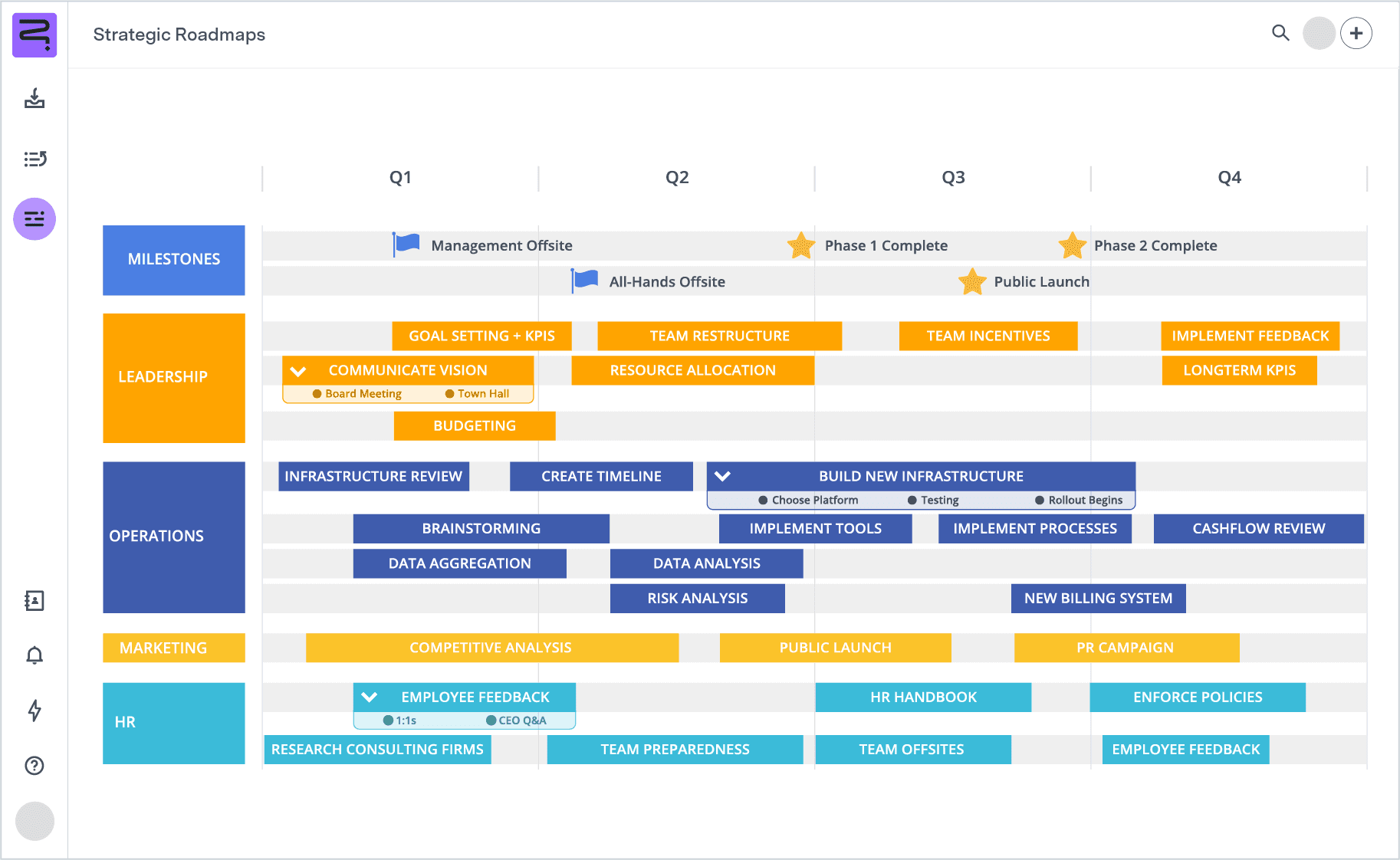
Source: Strategic Roadmaps
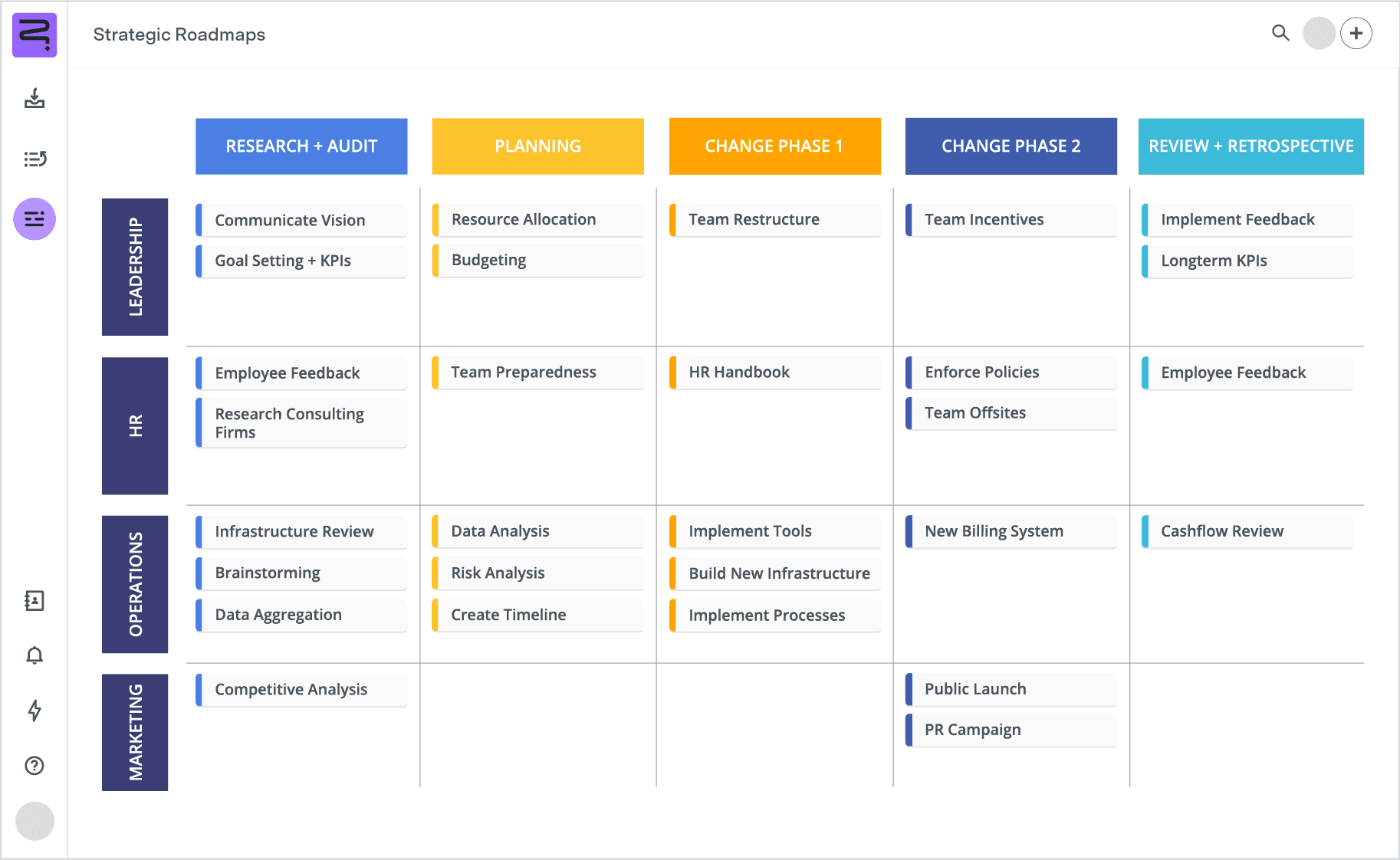
Source: Strategic Roadmaps
Visualize upcoming sprints using a Scrum roadmap that outlines a product’s work breakdown structure. For Scrum Masters juggling multiple teams, roadmapping helps with scheduling and prioritizing backlog items, ensuring accurate resourcing for each sprint. It also keeps everyone on task and facilitates open communication, lending stakeholder transparency to the product management process.
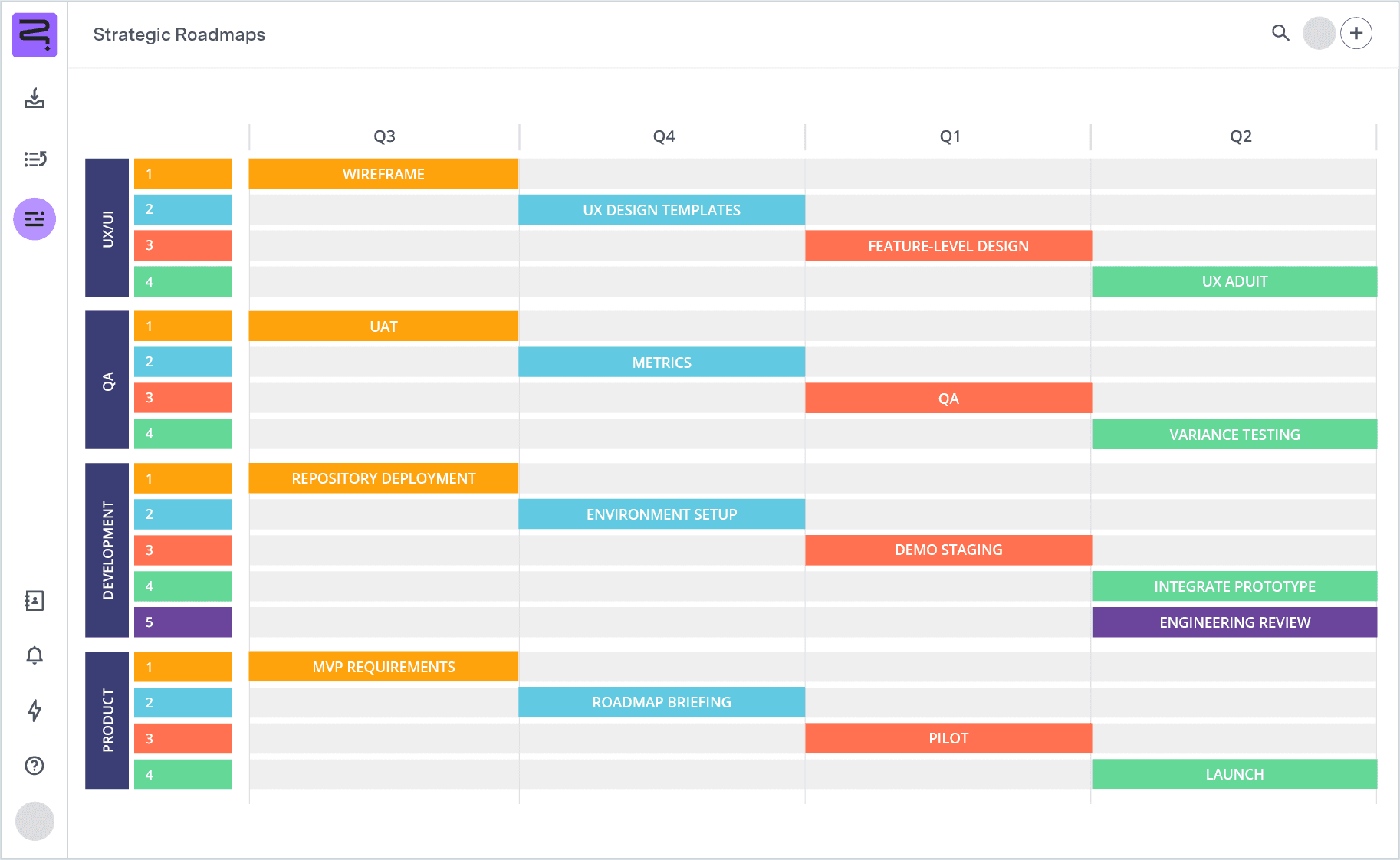
Source: Strategic Roadmaps
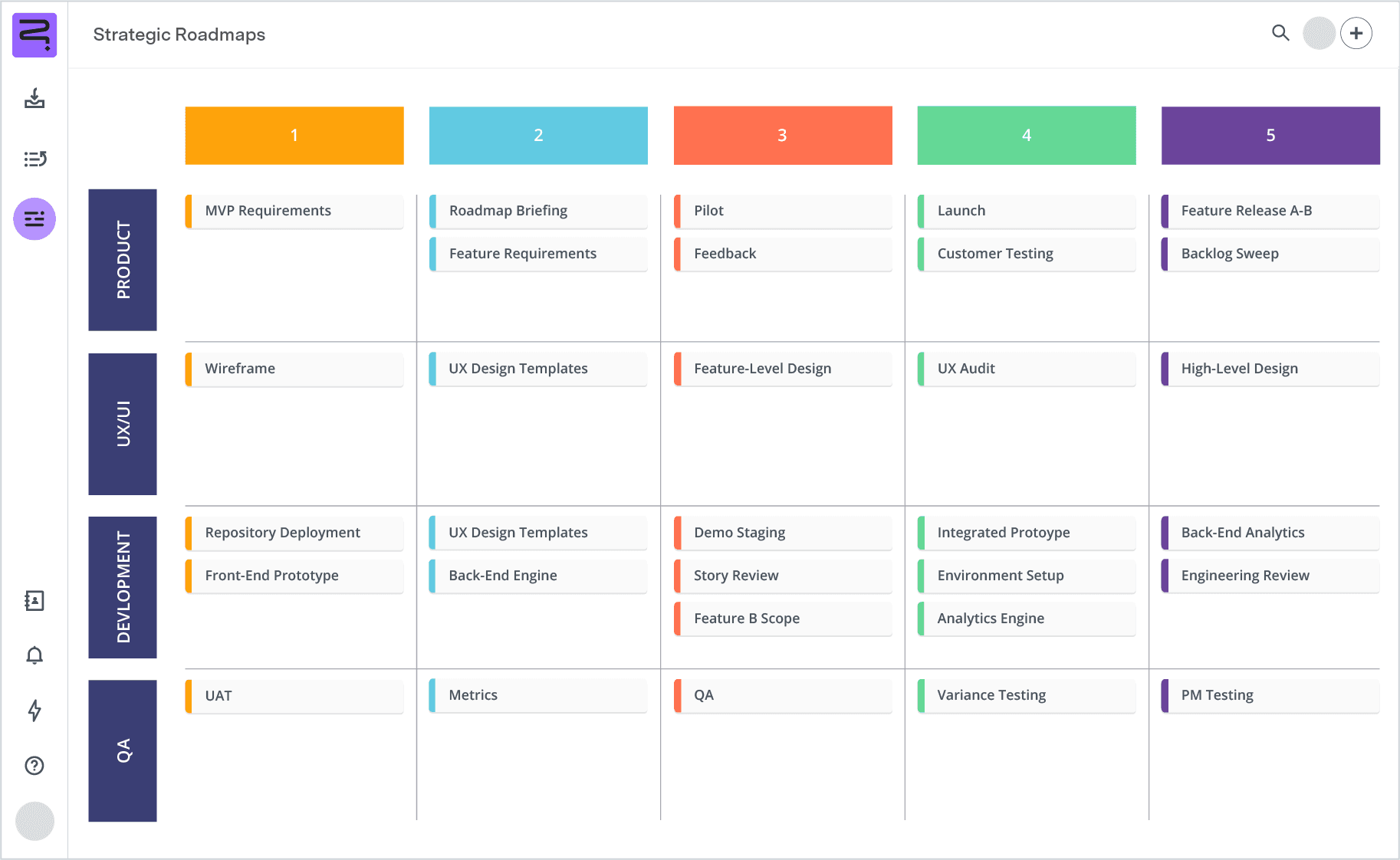
Source: Strategic Roadmaps
While each template offers its own set of capabilities, there are some primary features to look for when selecting the best option for your team. All of the above templates from Strategic Roadmaps offer:
Multiple views: Switch between the timeline template view, similar to a Gantt chart, or the swimlane view to focus on various project development stages of project development. For those working in an agile framework, some templates allow you to switch between themes, sprint roadmaps, and fuzzy time.
Resource tracking: Visualize asset use by assigning assets to specific team members and departments.
Milestone identification: Effortlessly chart key milestones to ensure your team has the material to meet each deadline.
Ownership status: Some templates allow you to assign and track tasks based on ownership.
Pivot and filter: If you need a custom data set, you can tailor your roadmap template to display the information you and your stakeholders need.
Portfolio management: When managing multiple projects, you can use templates to help roadmap the entire portfolio, identify dependencies among different initiatives, and improve resource forecasting across the board.
Import data: If still using Excel or Google spreadsheets, you can import the information into the template with a drag-and-drop editor.
Team Collaboration: Share, discuss, and track activity within your resource planning template.
Customization: Help your team better visualize resource and project plans with custom color palettes for the dashboard and flexible export options.
No matter the project aspect you’re working on, from budget forecasting to server space allocation, Tempo Strategic Roadmaps by Tempo provides the best templates to streamline preparation, execution, and management while simplifying your workload. Combined with Timesheets, Tempo’s powerful time-tracking tool, you have everything you need to keep your team resourced and working smoothly.
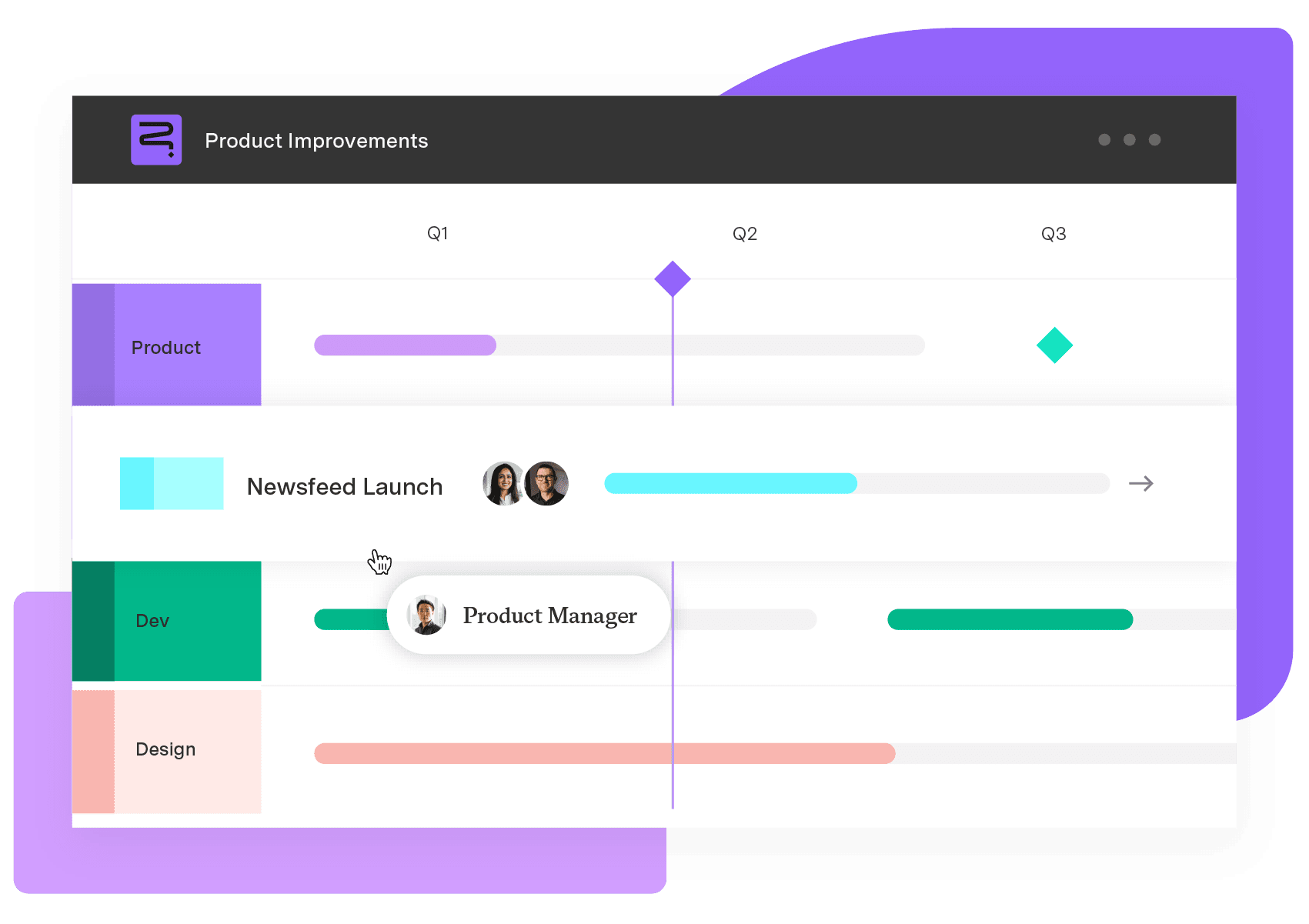
Strategic Roadmaps
Build your portfolio vision with Strategic Roadmaps. With powerful visualization capabilities, you can communicate strategy to the entire organization and gain alignment around strategic objectives, product goals, and milestones.
Start a Free TrialAgile templates are great additions to any project manager’s toolbox. Learn how roadmap, project planning, & other templates improve project outcomes

Integrate project management templates into your practice for help streamlining and organizing management tasks while maintaining focus.
Dive into agile project management with free Kanban board templates. These tools help you design a standardized workflow process to suit your team.

Establishing a plan for a project can be challenging. Use these project plan templates to create a roadmap of your vision for your team to follow.

Simplify your product management practice by incorporating some easy-to-use product management templates to roadmap your projects.

Learn resource planning to increase the likelihood of project success. Deploy company assets and workers to deliver outcomes on time and under budget.
Discover how roadmapping your project management with workflow templates builds efficiency into your processes and consistency into your results.

Learn how to use different types of marketing calendar templates to streamline your workflows. Find free template resources to get you started.
What’s the buzz about strategic planning for nonprofits? Find out how implementing a strategic plan can change your organization for the better.