Discover eight OKR templates to set and track team goals, including Excel, Google Sheets, & other planning formats that support alignment & execution.
Learn how to turn annual goals into 90-day targets with structured quarterly planning that supports alignment, adaptability, and measurable progress.

Quarterly planning turns high-level annual goals into practical, 90-day steps that keep teams aligned and moving in the same direction.
Not all quarterly plans are equal. With clear objectives and open communication, though, your business can make steady progress toward its long-term goals.
Quarterly planning divides your annual business initiatives into four stages, each spanning three months. It's the process of choosing which short-term goals put you on track to hit broader organizational objectives.
For most companies, quarters begin in January.
Annual planning focuses on the big picture; quarterly planning breaks those objectives into actionable, 90-day targets. It's not a choice between the two — quarterly and annual planning are complementary, defining and driving short- and long-term success together.
Compared to annual plans, quarterly plans are:
Flexible: Quarterly planning helps teams adapt. As broader objectives or market conditions shift, it enables faster course corrections.
Easily trackable: Objectives and key results (OKRs) form the foundation of quarterly planning, including setting OKRs for the upcoming quarter and reviewing outcomes from the previous one.
Granular: Quarterly goals focus on specific, detail-oriented tasks that feed into larger annual objectives. Annual plans, by contrast, tend to be high-level.
Quarterly planning delivers four As for businesses: Agility, accountability, alignment, and acuity.
Effective quarterly plans aren't fixed to-do lists. They're iterative and dynamic, helping teams adjust to shifting conditions — internal, technological, market-driven, or regulatory — without losing momentum.
Because quarterly plans define clear OKRs for teams and individuals, everyone knows what to achieve, by when, and how. The sharper the objectives and tracking, the more effective the plan.
Quarterly plans unify team initiatives so no department works in a silo. A strong quarterly plan earns cross-functional buy-in, with each team seeing its role in the larger goal.
Quarterly plans are granular, clear, and actionable. They remove ambiguity by giving teams focused, measurable objectives they can realistically finish within the quarter.
Hold planning meetings within the first week of the quarter and involve every key stakeholder. In the meeting, build a quarterly planning template or roadmap by working through the following topics:
Outcomes from the previous quarter: Analyze last quarter's results to shape next quarter's strategy. Identify what worked, what didn't, and why.
Primary outcomes for the next quarter: Define business-critical outcomes for the coming quarter. Cap each team at three primary outcomes so efforts don't spread too thin.
Focus areas: Break each primary outcome into actionable focus areas. Create as many as needed, provided team members can hit them within 90 days.
OKRs: Define success by assigning specific OKRs to each task.
Metrics and tracking mechanisms: Decide how you'll measure and monitor progress on those OKRs.
Risk assessment: Identify potential barriers — limited resources, regulatory constraints, technology issues, market shifts — and build contingency plans where needed.
There are two main approaches to quarterly planning: Standard and agile. Consider both.
A standard quarterly plan gives you a general structure for hitting short-term objectives and suits businesses of any size. Start with quarterly SMART goals (specific, measurable, achievable, relevant, and time-bound). Translate each goal into actionable steps, define OKRs, assign responsibilities, and set firm deadlines. Then track performance on each OKR and adjust as needed.
Every quarterly plan is flexible, but agile quarterly plans lean harder into iteration and responsiveness. They suit businesses facing rapid changes that shape planning outcomes.
The difference between standard and agile planning: Agile runs on short, time-boxed cycles and frequent feedback loops. Those cycles let teams re-prioritize tasks and refine deliverables throughout the quarter instead of committing to one fixed plan up front.
Every business has different objectives. All can benefit from the following quarterly planning best practices.
Assigning tasks based on individual strengths optimizes resource allocation, reduces bottlenecks, and increases engagement.
Once you've defined the primary outcomes and focus areas for the upcoming quarter, run a thorough skills assessment of your team(s). Assign responsibilities that match each member's expertise. This is a balancing act: No single team or individual should be overloaded while others sit underused.
Effective quarterly plans cap each team at no more than three primary outcomes. That limit stops teams from diluting effort across too many objectives.
Start by identifying the three primary outcomes your team needs to deliver this quarter. Then map the steps to get there. Schedule those tasks in reverse chronological order so each action directly supports the final objective. Record dependencies between steps so resource planning stays accurate.
A core goal of quarterly planning is to point every team in the same direction. To do that:
1. Involve all key stakeholders in quarterly planning meetings: Early in the quarter, include representatives from each department or team in planning sessions. Use these meetings to set collaborative initiatives, align priorities, and address cross-functional dependencies upfront. Keep cross-functional collaboration going all quarter. 1. Promote open communication: Create intentional moments for stakeholders to share updates, challenges, and insights openly. This breaks down information silos and builds unity across teams. 1. Clarify responsibilities: Define each team's responsibilities so accountability is clear and overlap is prevented. Tools like a RACI matrix (Responsible, Accountable, Consulted, Informed) or similar frameworks help clarify roles and ownership.
Siloes exist in over 80% of companies. They pull businesses further from long-term goals. Removing them takes a values-based commitment to intentional, transparent cross-functional communication.
Quarterly plans should stay adaptable. That doesn't mean sacrificing clarity by leaving action items vague or open to change. It means building in regular checkpoints to review and adjust priorities.
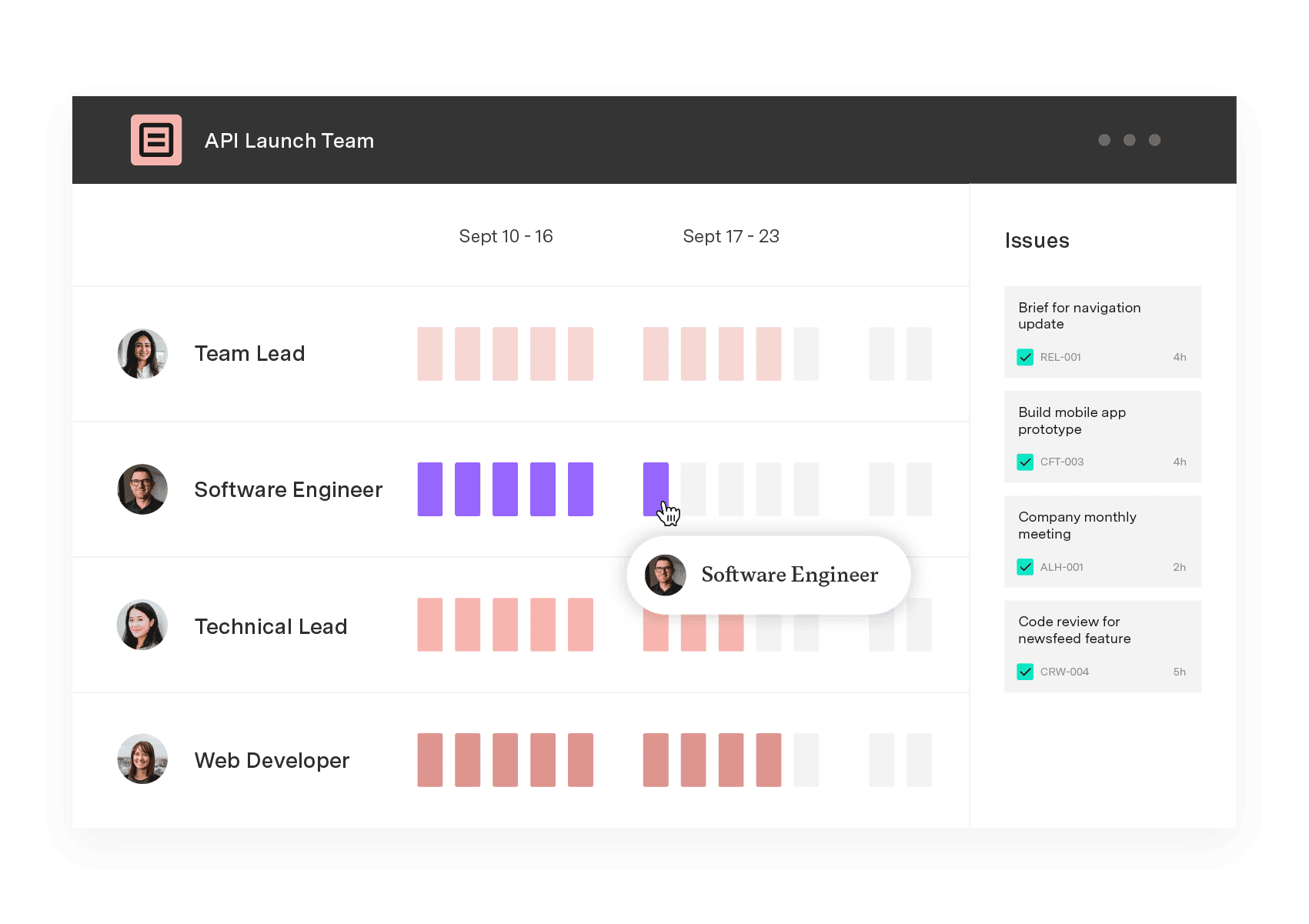
Capacity Planner streamlines quarterly planning. It's a resource planning and capacity reporting tool that delivers real-time, data-driven insights across teams and projects, so decisions are grounded in operational reality rather than static schedules.
Learn how Capacity Planner can streamline your quarterly planning.
Capacity Planner
Capacity Planner is the only tool in the Atlassian Marketplace that allows planning for multiple resources on one issue. Users can customize the UI to include their existing Jira issues and projects.
Start a Free TrialCouldn't find what you need?Go to our documentation
Quarterly planning focuses on setting 90-day goals that align with broader annual objectives. They provide a structured yet flexible framework for achieving short-term targets. In contrast, monthly planning breaks quarterly goals into even smaller, more immediate tasks.
To make your quarterly plans more effective, ensure that all focus areas – on the branch, department, team, and individual level – directly align with broader organizational goals.
You can achieve this through reverse engineering high-level organizational objectives, breaking them down into actionable, measurable steps. Dedicate each team a maximum of three key outcomes for the quarter that, when achieved, move the business closer to its overarching strategic vision.
A quarterly meeting is what should take place in the first week of each quarter that involves all key stakeholders. This meeting’s focus should be on creating a quarterly business plan template or roadmap by talking through the following items:
-Reviewing the previous quarter’s performance: Analyze successes, challenges, and lessons learned to inform the upcoming quarter’s strategies.
-Defining primary outcomes: Define three business-critical outcomes that each team will aim to achieve this quarter to advance annual goals.
-Establishing focus areas and OKRs: Break down outcomes into actionable steps with specific, measurable objectives and key results.
-Assigning roles and metrics: Clarify responsibilities (e.g., using a RACI matrix) and define tracking mechanisms to monitor progress.
-Assessing risks and contingencies: Identify potential obstacles
Assign OKRs to every team and individual staff member. Make sure these OKRs are SMART: specific, measurable, achievable, relevant, and time-bound. Collectively, these OKRs should align with and contribute to the organization’s broader goals.
Discover eight OKR templates to set and track team goals, including Excel, Google Sheets, & other planning formats that support alignment & execution.
Smart goals are Specific, Measurable, Achievable, Relevant, Time-bound. See the framework's history, 7 examples, common mistakes, and a template.
Explore the best OKR software for goal alignment and progress tracking. Compare top tools and learn how Tempo enhances OKR visibility in Jira.

Learn practical strategies for first-quarter planning to set a positive tone for the year, enabling better resource allocation and strategic alignment

Use a business requirements document template to align teams, clarify goals, and streamline project planning for successful execution.

Discover how goal-setting software promotes clarity, accountability, and alignment from strategy to execution, helping teams deliver results.

Remove the confusion and frustration surrounding task ownership and accountability by incorporating a RACI chart into your project planning practice.
Stretch goals are just outside your reach, but that doesn’t mean they’re unachievable. These are ambitious goals that push you and your team further.
Stay on track and hit every deadline with milestone tracking. Learn how to monitor and optimize project milestones for seamless execution with Tempo.