How to use your product strategy and product vision to plan your roadmap
Align your product strategy, vision, and roadmap so every decision points the team at the right outcomes.


Key Takeaways
A product roadmap inherits its meaning from the product strategy, and the strategy inherits its meaning from the product vision.
If the vision is the destination and the strategy is the route, the roadmap is the schedule that shows everyone the planned stops along the way – both inside and outside the product team.
Use a product strategy canvas – Roman Pichler's or Melissa Perri's – to pressure-test the logic before the strategy starts shaping the roadmap.
Your product vision, product strategy, and product roadmap are three distinct artifacts that should be closely connected to one another.
Strategic drift is quiet at first. Your product vision statement was written a couple years ago and rarely gets looked at anymore. Your product strategy lives in a Notion page somewhere.
Your roadmap, meanwhile, keeps getting updated every sprint because it has to. After a while, the roadmap is the only live document of the three and "strategy" bends to the whims of various stakeholders. There's a better way to keep these three artifacts together, and that's what we'll lay out here.
First, a quick summary: Product vision describes the long-term outcome the product exists to deliver. Product strategy names the choices the team is making about how to get there and what to leave out. Product roadmap describes the work in time order.
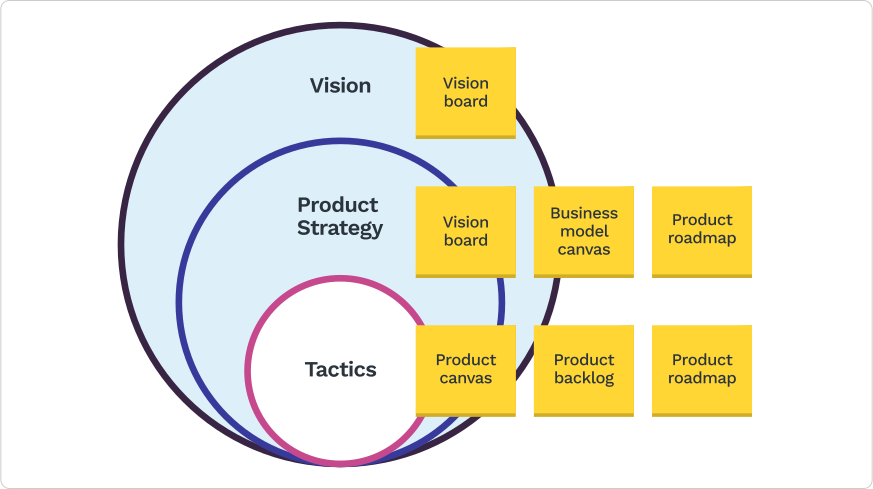
What makes a good product vision?
A good product vision focuses on long-term outcomes and benefits you want your product to deliver. As Roman Pichler put it in his book, *Strategize: Product Strategy and Product Roadmap Practices for the Digital Age*, your "vision describes the ultimate reason for creating the product."
Look at these product vision examples. Spot the long-term aspirational outcomes between the lines:
JetBlue: To inspire humanity – both in the air and on the ground.
LinkedIn: Create economic opportunity for every member of the global workforce.
Nike: To bring inspiration and innovation to every athlete in the world. If you have a body, you are an athlete.
Your product vision should describe the impact your product will have on your customers' lives. It tells your team and your customers exactly how the product will benefit them – today and in the future.
One way to build a solid product vision is Geoffrey Moore's product vision template:
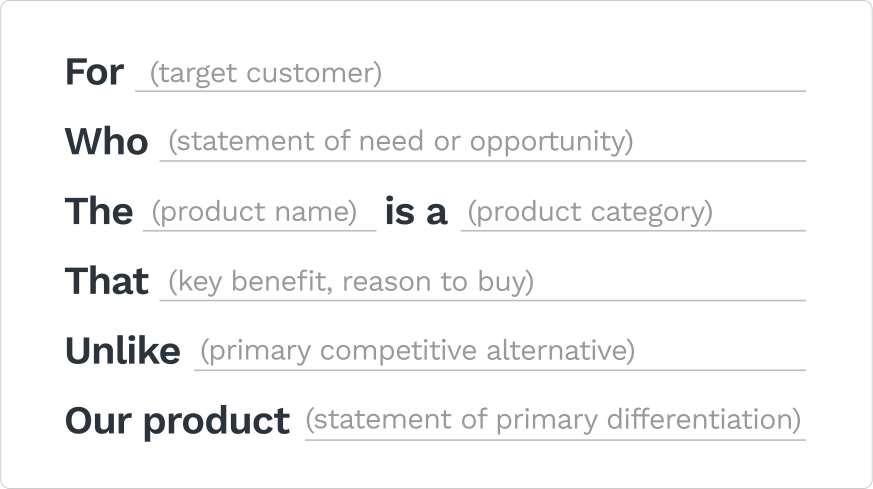
Diagram: a product vision framework (Geoffrey Moore's product vision template).
But a product vision isn't just an emotional pitch to potential customers. It drives everyday decision-making inside your team. When the vision is clear, it reminds each person how their role contributes to the bigger goal. That grounding matters more than most teams realize.
What to include in a product strategy
If your product vision is the long-term outcome you hope to deliver, your product strategy defines how you'll get there. A strong product strategy lays out the choices that turn vision into measurable outcomes. It explains what you'll build, why customers will care, and how the work will set you apart (Gartner: Product strategy).
Your strategy should cover:
Target market and unmet needs
Value proposition and key differentiators
Success metrics that show progress
High-level initiatives that tie work to the vision
Resource constraints and major risks
The strategy is the link between your roadmap and your product vision – it turns the vision into actions you can take to reach long-term goals.
Good product strategy planning rests on these foundations:
Market and needs: Understanding the target audience and the problems they face that you want to solve in a way competitors haven't.
Key features and differentiators: What your competitive differentiation is and how you'll deliver that value.
Your product strategy needs to stay flexible. Your team will keep learning about users and the product as it evolves.
Here are five questions to calibrate your strategy. They should have formed its foundation, and they still apply when you need to course-correct:
What emotional reactions do you want users to have every time you release a feature?
What unique purpose will your product fill in the market?
What valuable aspects do you need to build into the product?
What resources – time, effort, money – does the company have to get there?
What limitations and risks might your product face?
How to use a product strategy canvas
The product strategy canvas is a structured tool that helps product managers define their strategy. Working through its sections forces you to confirm you're covering what matters most to product success.
Roman Pichler's product strategy canvas is a practical tool for defining who your target audience is, what their problems are, and how to turn those problems into actionable tasks.
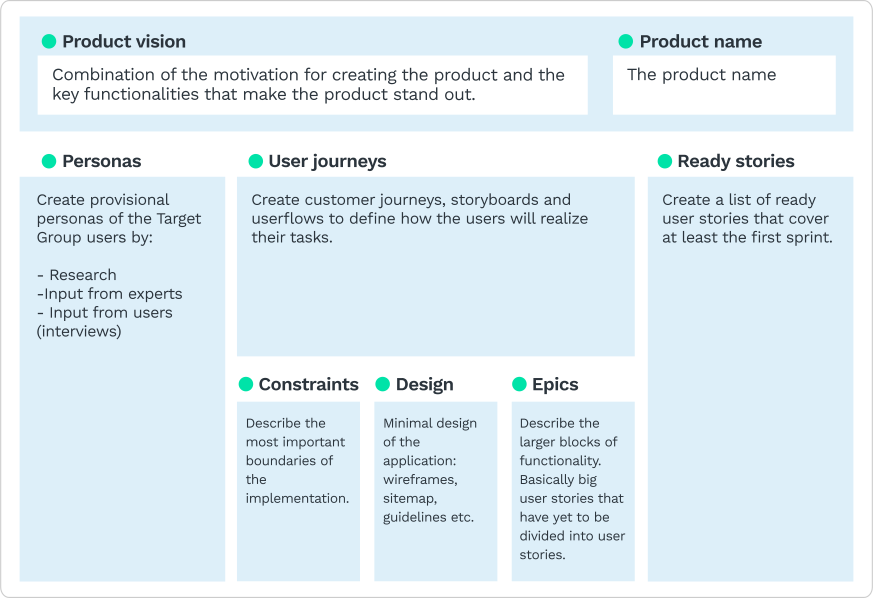
Melissa Perri's version of the product canvas is less formal. It's a good exercise if you want to surface where your team members and stakeholders actually stand on strategy before you commit.
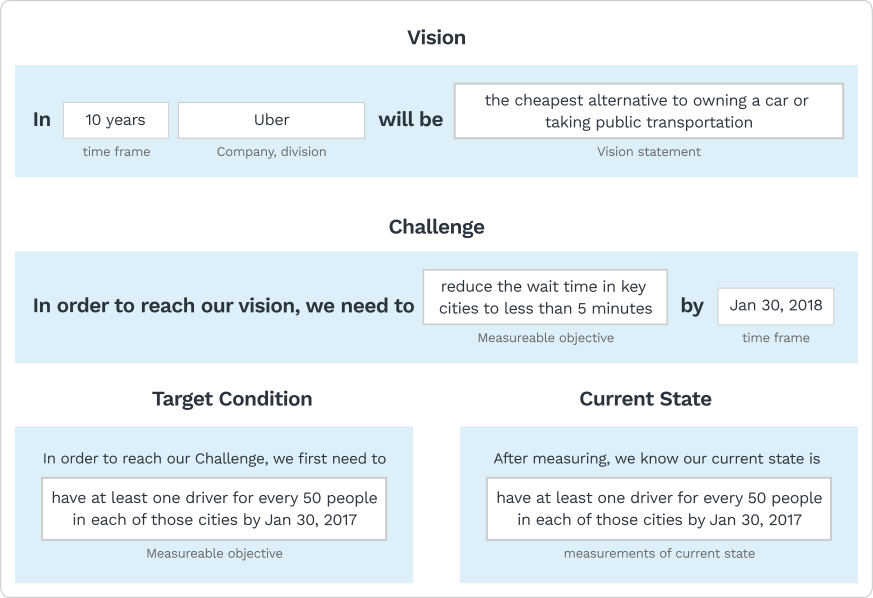
Which version you pick depends on your product's maturity and how much alignment you already have on the team.
Canvas | Formality | Best for | When to pick it |
|---|---|---|---|
Roman Pichler canvas | More formal | Teams defining a full product strategy from scratch | You need a structured, end-to-end tool that covers target users, needs, and outcomes |
Melissa Perri canvas | Less formal | Teams pressure-testing existing alignment | You want to surface where stakeholders actually stand before committing to a strategy |
Why is product strategy important?
A customer-focused strategy cuts through ambiguity. When everyone understands the problem you solve and the value you're aiming to deliver, day-to-day decisions get clearer.
Without that shared direction, goals slip. Morale drops. Resources get spent on the wrong work. And then it's too late to course-correct cheaply.
Access the 2026 State of SPM report
Get the ReportThe first challenge in product strategy planning is defining all the elements that go into something like a product canvas. But that's the easy part. The harder part is reinforcing it – making it part of how the team actually works and maintaining the discipline to stay on the path the strategy defines.
How does your product roadmap reflect vision and strategy?
Your roadmap should translate strategic choices into a time-ordered plan that shows when and how the team will deliver work tied to the vision.
If the vision is the destination and the strategy is the route, the roadmap is the schedule that shows everyone the planned stops along the way – both inside and outside the product team.
Think of the roadmap as a statement of intent rather than an unchangeable map. It should show how the product will evolve over each phase by sequencing tactical work. That means forecasting how the product might grow while staying ready for what you'll learn about your market and customers.
A good strategic product roadmap reflects your vision and strategy. It guides the execution of the strategy, aligns internal stakeholders, communicates short- and long-term progress, and shares the product strategy clearly with external stakeholders.
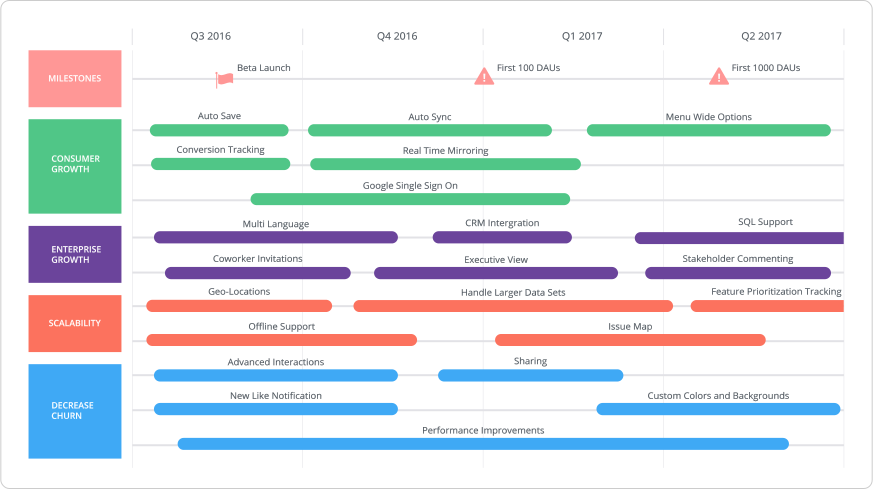
If you're building a feature-based roadmap, use a prioritization framework to confirm every effort aligns with the strategy. Prioritization exercises help the product manager verify that everyone understands the strategy – and spot where adjustments are needed.
Tempo Strategic Roadmaps can display roadmaps in a timeline view or a bucket view, and works with any framework and any stage of the Technology Adoption Lifecycle Model.
Putting it together
Every roadmap decision should trace back to your goals, metrics, and constraints. When it doesn't, the roadmap drifts into a feature list – and stakeholders fill the gaps with their own assumptions. Tie roadmap items to strategic themes rather than individual features, and revisit that connection regularly.
A visual roadmap makes those strategy conversations easier and keeps the link to product vision visible as priorities shift.
Ready to start building customer-driven roadmaps? Explore our roadmap templates in Tempo Strategic Roadmaps.
Sign up for a demo
Request Demo
2026 State of SPM report
This is the data you've been looking for
This original research from almost 700 PMO leaders shows you what is working, what is wobbling, and what it all means for SPM in 2026.
Download the 2026 State of SPM reportFrequently Asked Questions
Couldn't find what you need?Go to our documentation
Your roadmap turns strategy into action. Group planned work under themes that map to your strategic goals, and show timing at a high level – think quarters, not exact dates – so you can adjust as you learn. Review the roadmap regularly with your team and stakeholders to confirm every item supports the vision. Tempo Strategic Roadmaps lets you tag items by goal and update plans with drag-and-drop, keeping your roadmap in sync with your strategy.
The distinction is one of strategy vs. tactics. Product strategy explains why and what – the choices about market, value, and long-term goals. The product roadmap explains how and when – the order of work that brings the strategy to life. Strategy is directional and steady; the roadmap is tactical and changes as you learn.
Set your product strategy first. Clear goals and target outcomes guide every roadmap choice. Once the strategy is defined, build a roadmap that sequences the work and shows when value will be delivered. Revisit both regularly and update the roadmap whenever the strategy shifts.
When strategy and roadmap drift apart, teams build features that don’t connect to any meaningful goal. Stakeholders lose confidence in the plan, and prioritization decisions become arbitrary. The fix is a regular strategy review – at least quarterly – where you check every roadmap item against the current strategic goals and remove or reprioritize anything that no longer fits.