Learn how to create compelling visual project timeline roadmaps that outline milestones, track dependencies, and keep your team aligned.

Project management is a juggling act — one where someone keeps adding balls. Most project management involves delegating and monitoring tasks, handling cross-functional teamwork, and planning resources. And, of course, there’s always client communications and increased expectations.
To keep tabs on every moving part, create strategic project timelines that outline all tasks, milestones, and deliverables. This time management tool might be the key to project success — and to retaining your sanity.
A project timeline is a visualization of every project deliverable, listed chronologically. Project managers create this visualization to provide all stakeholders with an understanding of the time available for each item and the entire project outcome.
Here are the key components of initiative timelines:
An overall start and end date
Task start and end dates
Milestones, like deliverables, sprints, and check-in dates
Task dependencies (those teammates must complete before work on another can start)
Every project plan will contain a project timeline. Timeline development during the project planning stage helps project managers:
Organize tasks
Track start and due dates
Connect dependent tasks
Clip a project into phases/sprints
Assign work to team members
Project timeline management is essential when handling a complex and cross-departmental initiative. Creating project timelines offers your team the following:
Project clarity: Teammates can quickly gather useful information, like start and end dates and specific deliverables, when viewing a timeline.
Aligned goals: All stakeholders can quickly understand overall project objectives in one place.
More effective communication: Providing a clear timeline makes it easier for clients and coworkers to understand expectations or illuminate potential risks and delays.
Easier tracking: With a flexible timeline, you gain an updated view of task hierarchy, dependencies, and completion.
Fewer bottlenecks: All this clarity helps your team quickly notice and remove roadblocks.
Streamlined change management: Timeline creation is the perfect opportunity to consider how you’ll tackle changes, like losing an employee or increasing the project’s scope.
No matter how you draw up your project timeline, remember that it’s for the whole team. Choose a timeline type that allows you to provide all internal and external stakeholders with the insights they need to contribute great work and approve deliverables.
Here are some of the more common timeline types:
A Gantt chart showcases project work in bar graph form. It can contain dates, milestones, dependencies, and role assignments and is among the most versatile tools, appearing in many project management software packages and through stand-alone templates.
Program evaluation and review technique (PERT) charts lay out your project in a network diagram, helping you quickly visualize your critical path.
A Kanban timeline is useful for creating daily and weekly task timelines, as it breaks items down into “Not started,” “In progress,” and “Completed” categories. This is a great way to discuss progress during team check-ins. And you could pair this with a more comprehensive Gantt chart that defines overall project progress.
Historical timelines lay out every project task in a straightforward, chronological view. You’d use this method to outline the most crucial deliverables, omitting smaller tasks and dependencies.
Vertical chart timelines are great when tracking data-heavy changes, like revenue or site traffic, as they display changes numerically over time. For a marketing campaign, you might define how many website clicks you hope to gain throughout the project.
Making a timeline might seem simple — jot down a start date, end date, and fill in the gap. But ensuring you have the information necessary to create a thorough and informative one that everyone understands is hard work. We’ve made it easier by outlining this five-step guide to excellent timeline creation.
A project’s scope outlines the deliverables a project will and won’t provide. Say a team’s creating a new website. Their project scope might include designing, adding content to, and publishing five web pages — but maybe it omits search-engine-optimizing these pages.
When creating your timeline, you must respect the project’s scope. Otherwise, you might cause delays when adding unapproved tasks or leave room for scope creep: when a project’s deadline keeps increasing as managers and clients add to the workload.
Start your timeline with a project summary that includes a scope statement so everyone involved understands this initiative's purpose and boundaries.
With clear deliverables and the project’s purpose in mind, plot crucial milestones, or progress markers. These might be “Complete feature #2” or “Gain final client approval” — really any small achievement that contributes to overall project success.
To make time estimations as accurate as possible, work collaboratively to find out how long tasks take teammates and how previous project work went. Learn from this process, assisting time estimations in the future. You might implement a time-tracking application like Clockify to help with future predictions or ask teammates to start documenting task timelines in a shared workspace to encourage visibility.
Every employee has their own working style, and task work times might differ across the team. To address this variation, use this step to assign tasks so you can ask the right people how much time they need for each item.
Work with your team to choose the best timeline tool, considering one of the popular methods listed earlier. You might use several, like a Kanban board for daily task progress and a Gantt chart for a more comprehensive project overview.
Now create your chart, adding a start and end, tasks, dependencies, and milestones. You might also include responsibilities and resource information, perhaps making this information accessible via a click or hover to avoid distracting from the main overview.
Once completed, share this draft with your team and external stakeholders, asking for and implementing their feedback. After you’ve gained approval from all involved, house this document somewhere central everyone can access, updating it often to make it most effective.
A timeline roadmap is like a project timeline, but it focuses more on mapping out multiple projects or initiatives over a large period, like a team’s yearly goals. Creating these roadmaps is an excellent way to help your team:
Prioritize initiatives based on start dates
Understand how project and task work contribute to overarching company goals
Organize resources considering long-term needs
To quickly create a versatile timeline roadmap, try Strategic Roadmaps. This tool’s streamlined interface makes timeline creation easy. And try implementing Timesheets by Tempo to help your team make better task time predictions.
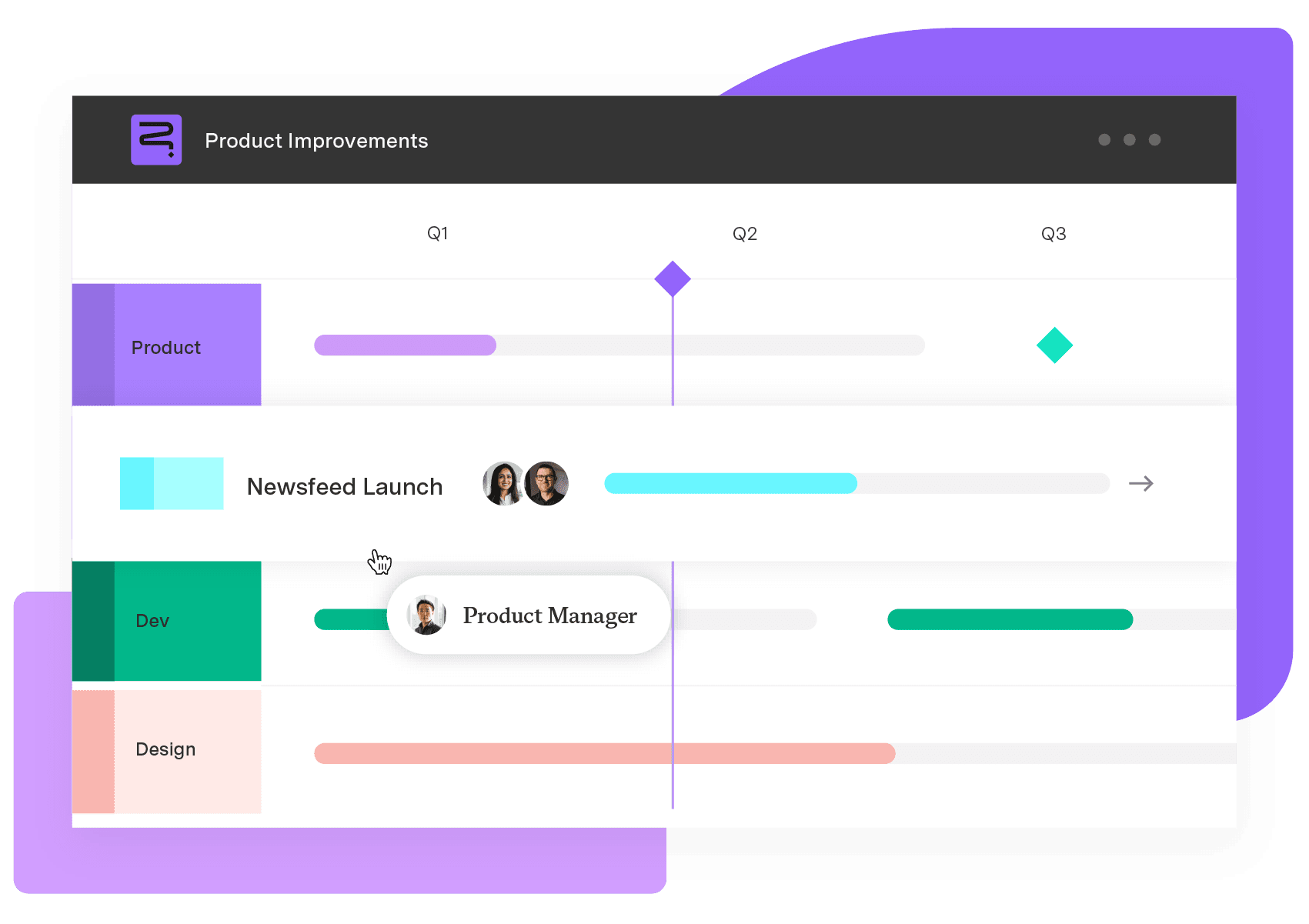
Strategic Roadmaps
Build your portfolio vision with Strategic Roadmaps. With powerful visualization capabilities, you can communicate strategy to the entire organization and gain alignment around strategic objectives, product goals, and milestones.
Start a Free TrialLearn how to create compelling visual project timeline roadmaps that outline milestones, track dependencies, and keep your team aligned.
Struggling to keep your project on track? A timeline roadmap helps you plan, visualize milestones, and stay aligned. Here’s how to create one.

When facing delays or tightening your project timeline, fast tracking sets you up to deliver. Learn more about this schedule compression technique.

Learn the basics of project scheduling and help your team manage time, establish priorities, and visualize workflows without becoming overwhelmed.

Create a successful onboarding strategy with a 30-60-90 template. Learn how to plan, track, and achieve your goals in the first three months.

Maximize efficiency with six innovative project timeline templates. Learn how to improve team productivity while saving time and resources.
Learn what an action plan is and how to use it for individual and team goals. Create your action plan with the help of Roadmunk by Tempo.

Learn how project tracking in your management process can help effectively monitor timelines and deliverables, improve collaboration, and reduce risk.

Support your team by using the best project planning tools out there, and discover how Tempo’s products can enhance your workflow.