4 real-world marketing roadmap examples
Four marketing roadmap formats that actually get used – from town halls to quarterly planning.


Key Takeaways
A marketing roadmap usually needs more than one view of the same plan, because the version that lands in a town hall is rarely the version that holds up in a launch-ops review.
Theme-based roadmaps pair well with all-hands audiences because they emphasize narrative over task detail.
Goal-based roadmaps organize the plan around outcomes, which is the format most executives want during strategy reviews.
By-person roadmaps surface workload and capacity gaps early enough for marketing leaders to resequence before a launch slips.
Marketing roadmaps come in many shapes and sizes – that's the point, as a matter of fact. The same strategy rendered in multiple formats is more effective with different audiences. The version that works in a company-wide town hall is rarely the same one used in a launch-ops review.
This is why experienced marketing teams keep several views of the same plan rather than settling on one canonical format. Each view answers a different question, and giving someone the wrong view costs credibility the next time planning comes around.
Marketing roadmap formats at a glance
Format | Best for | Organizing dimension | Example use case |
|---|---|---|---|
Theme-based | Town halls and all-hands updates | Category (digital, content, design) | Quarterly view of what each marketing function is shipping |
Goal-based | Strategy alignment with executives | Business goal (leads, brand, sales enablement) | Showing how each project maps to a tracked outcome |
Deadline-driven | Launches and fixed-date initiatives | Timeline with owners and due dates | Coordinating every launch element before release day |
By-person | Quarterly planning and resource checks | Team member workload | Spotting overload and validating hiring plans |
Theme-based marketing roadmap: Best for town halls
This is how to structure the roadmap you show at a monthly town hall. Organizing quarterly by theme usually turns out to be the clearest option.
A couple reasons why:
Organizing by category is simple for anyone to follow. Even if you're not a marketer, everyone knows who handles digital marketing, content, and design. It's a direct way to orient the whole company to what different members of the marketing team are working on.
A monthly roadmap can be too restrictive for a growing team. Quarterly allows room for bigger projects while keeping some structure.
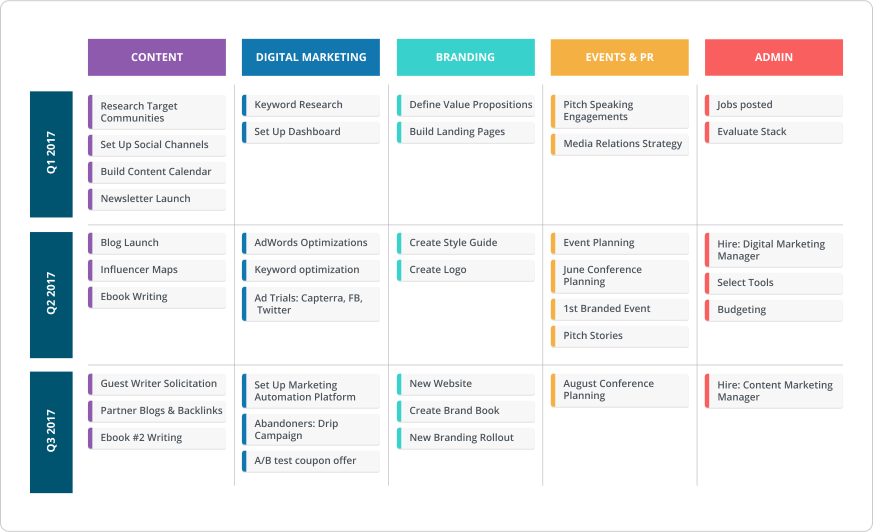
Build your own theme-based marketing roadmap here.
Goal-based marketing roadmap: Best for strategy alignment sessions
When doing strategy alignment with other leaders, start with the category roadmap and say, "This is what we're going to do." Then switch to a goal-oriented roadmap and show, "This will be the impact of each of those projects."
Teams track success across a few metrics: Generating qualified leads, building brand awareness, and supporting sales to convert free trial users. A goal-oriented roadmap shows how you plan to distribute resources across those goal types.
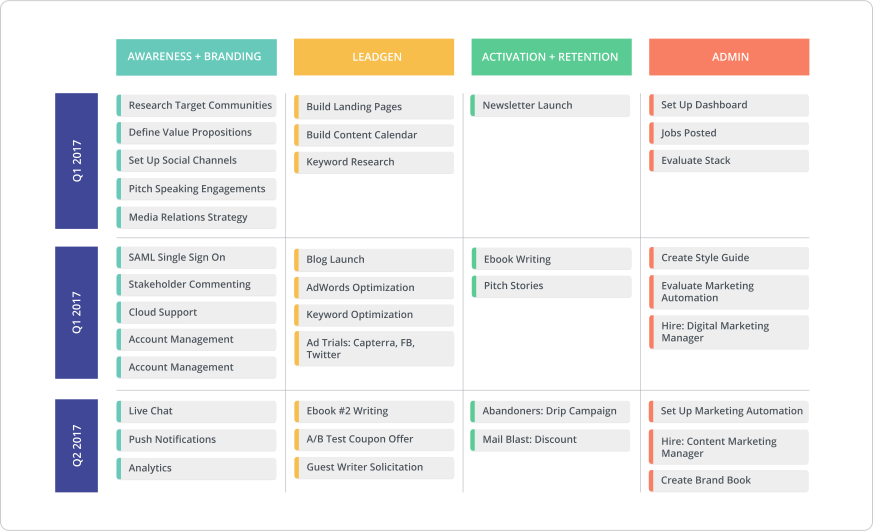
With Strategic Roadmaps, it's straightforward to maintain two views you can switch between in meetings. Each view pulls from the same data set – same information, different structure – so maintaining them isn't finicky. During meetings, pivot between views to give the full picture.
Create your own goals-based marketing roadmap template here.
Deadline-driven marketing roadmap: Best for launches
A timeline roadmap won't be most marketing teams' default. But it can be useful – and sometimes essential – when everything is rallying toward a specific date.
The example below is more typical for process-driven teams that work to strict lead times. It shows marketing initiatives evolving over time, with projects assigned to specific team members.
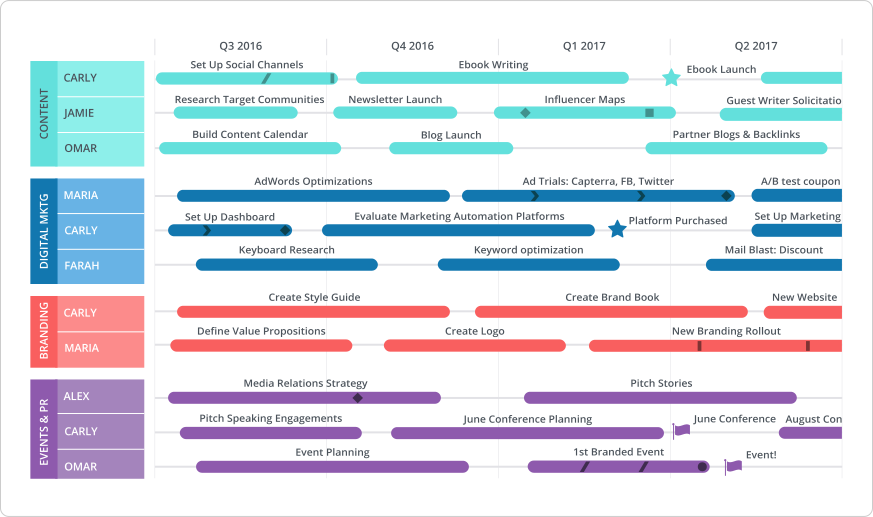
Process-oriented marketing teams can access this template here.
Who's-doing-what marketing roadmap: Best for quarterly planning
The by-person view is something you can build during quarterly planning. It gives you a person-by-person breakdown of the roadmap, showing whether we have the resources to execute – and whether anyone is dangerously overloaded.
You can also use this view to validate new hires, figure out which projects will have the biggest impact toward our goals, and map out what resources we need to get there. Marketing teams that tie resource plans to measurable outcomes consistently outperform those that don't.
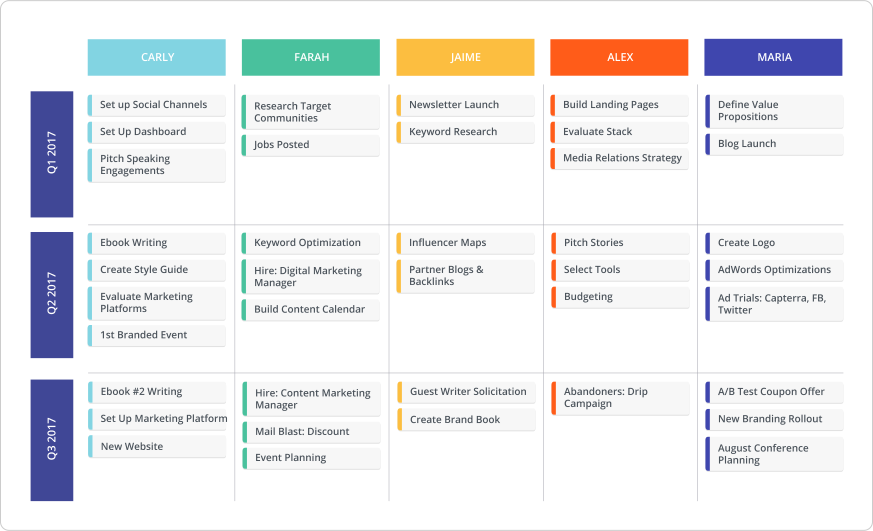
In a view like this, it's immediately obvious when one team member has a light quarter and another is at capacity. Workload planning isn't the primary purpose of a roadmap, but it's a useful side effect of having everyone's work in one view.
Build your own by-person marketing roadmap.
One more stat worth knowing: the Content Marketing Institute's 2025 research shows only 29% of marketers say their content strategy is extremely or very effective. Part of the problem? Without a clear visual plan, it's hard to know whether your strategy is working or just generating activity.
See our other roadmap templates.
Sign up for a demo
Request Demo
2026 State of SPM report
This is the data you've been looking for
This original research from almost 700 PMO leaders shows you what is working, what is wobbling, and what it all means for SPM in 2026.
Download the 2026 State of SPM reportFrequently Asked Questions
Couldn't find what you need?Go to our documentation
A marketing roadmap is a visual timeline that maps campaigns, content, and milestones to business goals. It shows what will happen, when it will happen, and why it matters – so everyone stays aligned and can adjust as plans change.
A marketing plan is your detailed strategy document: target personas, messaging, channel mix, budget breakdown, and KPIs. A marketing roadmap is the visual summary of that plan – it shows what’s happening and when, without the full detail. Use the plan to do the strategic thinking; use the roadmap to communicate it and keep execution on track.
Update your marketing roadmap whenever priorities shift, a campaign is added or dropped, or timelines change. For most teams, a monthly review keeps it accurate. If you’re in a fast-moving launch period, weekly updates are worth the time.
A theme-based roadmap organized by quarter is the simplest starting point for small teams. It’s easy to read, requires no complex tooling, and gives leadership a clear picture without excessive detail. Once your team grows and quarterly planning gets more complex, layering in a goal-based or by-person view adds useful signal without much overhead.