How VDAB brought clarity to their IT portfolio management with Tempo


VDAB is the public employment service of Flanders, Belgium's northern region. As a government agency, it handles job placement, career counseling, and vocational training for hundreds of thousands of people.
The IT department behind all of that – the teams building and maintaining the systems that keep VDAB running – is large, complex, and spread across multiple specialized units.
Managing that much work, across that many teams, is not a small job.
"When there are different departments involved, you automatically bump into the different ways of working these departments have," says Bram Verstraeten, I&T portfolio manager at VDAB. "In addition, many of their teams all have their specialties which are often unique within an IT organization. Streamlining those was the biggest challenge."
VDAB already used Jira to manage its projects. What it needed was a way to bring the financial and capacity picture together with the work already tracked there.
That's when the team turned to Tempo – and the solutions of Timesheets, Capacity Planner, and Structure PPM.
The problem with assumptions
Before Tempo, the portfolio management team had a reasonable overview of what was happening across the IT department. But reasonable isn't the same as detailed.
Budget tracking was scattered. Data was spread across different systems and had to be pulled together manually – a time-consuming process that left project leads doing administrative work instead of managing delivery. External partner invoices couldn't be easily linked to the actual work performed.
And while VDAB was meeting its compliance obligation to retain timesheets for 10 years, the records weren't detailed enough to be genuinely useful.
The result was a portfolio team making decisions based on assumptions.
"Where, before Tempo, we were deciding on assumptions, we now have detailed information that can be further analysed if necessary," Verstraeten explains. "Why has team x spent more time on issue y? What can we do to improve that original estimation? And that is worth a lot in times where capacity is under stress in an ever-evolving IT world."
Getting the full picture
Six months into using Tempo Timesheets, VDAB's IT department has a complete picture of where development capacity is going.
Project leads, capacity planners, team leads, and portfolio managers all have access to project reports that previously required significant manual effort to produce. The team knows exactly what budget has been spent on each project, can link external partner invoices directly to the work performed, and now has the detailed compliance records they were required to keep – records that are actually useful rather than just filed away.
"We now have a complete overview of what they are working on, how much time they have spent and how much time they have left," Verstraeten says. "It shows us exactly where to adjust our timings and budget, we are building up historical data to improve our project budget estimates."
One practical example: VDAB allocates specific development budget to areas like technical application management and helpdesk support. Timesheets makes it immediately visible if that reserved time isn't actually being used – so those resources can be redirected to project delivery before the gap becomes a problem.
The compliance picture has improved too. VDAB's obligation to retain timesheets for a decade hasn't changed, but the quality of what's being retained has. Detailed timesheets, as Verstraeten puts it, are "infinitely more useful" than the records they had before.
Planning with more confidence using Capacity Planner
Alongside Timesheets, VDAB is now building out its use of Tempo Capacity Planner.
Adoption is still growing – the team is candid about that – but the direction is clear. More teams are beginning to plan in the same way, giving project managers visibility into the capacity reserved for them. It's also given the team a reliable view of when a specific resource will be available to contribute to a project.
One area where it's already made a difference: Architect allocation. With estimates of how much time architects expect to spend on each project, VDAB can now plan their involvement more efficiently. Given how frequently architects are needed across multiple projects simultaneously, that kind of visibility matters.
What comes next
VDAB is working toward integrating Tempo's actuals directly into its internal project business case tool. Once that integration is live, project leads will no longer need to input data manually – a change that, across a large portfolio with many project leads, will add up to a meaningful reduction in administrative overhead.
Next – they have brought Structure PPM into their tech stack, another one of Tempo’s offerings that integrates directly into Jira. It provides visualizations and rollups of all work happening across the organization – from the issue level all the way up to the biggest initiatives with custom fields for anything they need.
For now, the shift is already tangible. The portfolio team is moving from a world of assumptions to one of documented, queryable data. And when something goes wrong – when a team overspends on an issue, or a project's timeline starts to drift – there's now a record to learn from.
"The most important change by implementing Tempo has been the detailed view it offers us of how our development capacity is being spent over our projects and our different maintenance tasks," Verstraeten says. "That is worth a lot."
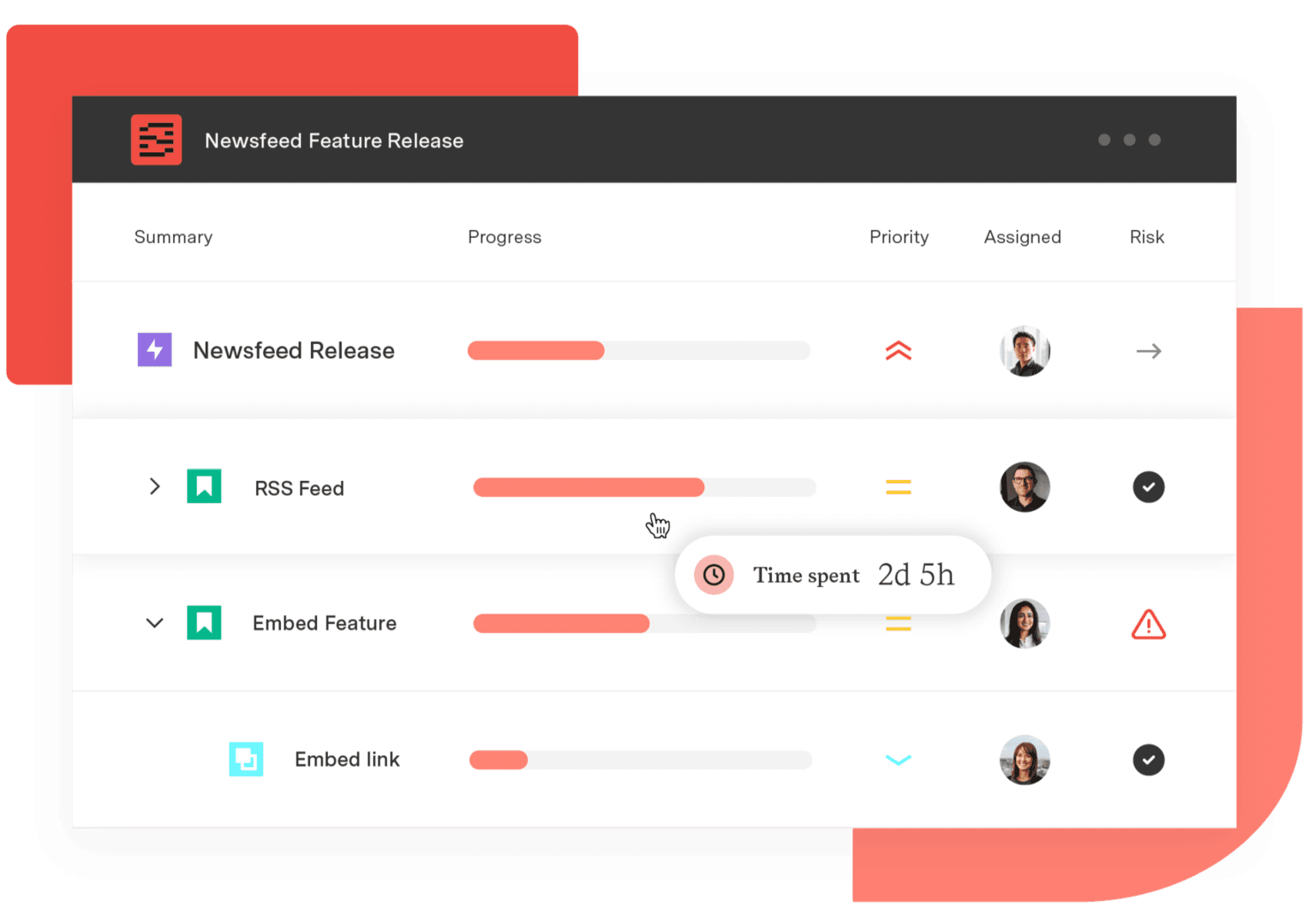
Structure PPM
Align your entire organization
Manage products, projects, and programs in a single spreadsheet-like view. By providing a clear, real-time view of project progress and resource allocation, Structure helps teams meet deadlines and adapt swiftly to changing priorities.
Start a Free Trial