How Tempo found the blind spot in its own AI spending


Six months ago, Tempo's leaders sat down to talk about something everyone in engineering was starting to notice: AI was changing how we were building software, and fast.
Adoption inside Tempo's own engineering org was climbing without anyone having to push it. Developers wanted to use the new tools. Cycle times were moving. Everything about the rollout looked healthy, right up until the CFO asked the one question nobody had a real answer for:
What are we actually getting for this spend?
The tools Tempo already had showed developer sentiment and productivity metrics like cycle time – useful information, but not the answer. None of it said what the growing AI bill was paying for, or whether it lined up with anything the company had actually committed to.
"The best option we had was to make some guesses or to stitch together information from different sources and try to make a guess of what the outcomes were," Shams Chauthani, Tempo's CTO, said. "That wasn't very satisfactory, and that wasn't very exciting for us."
What Tempo built
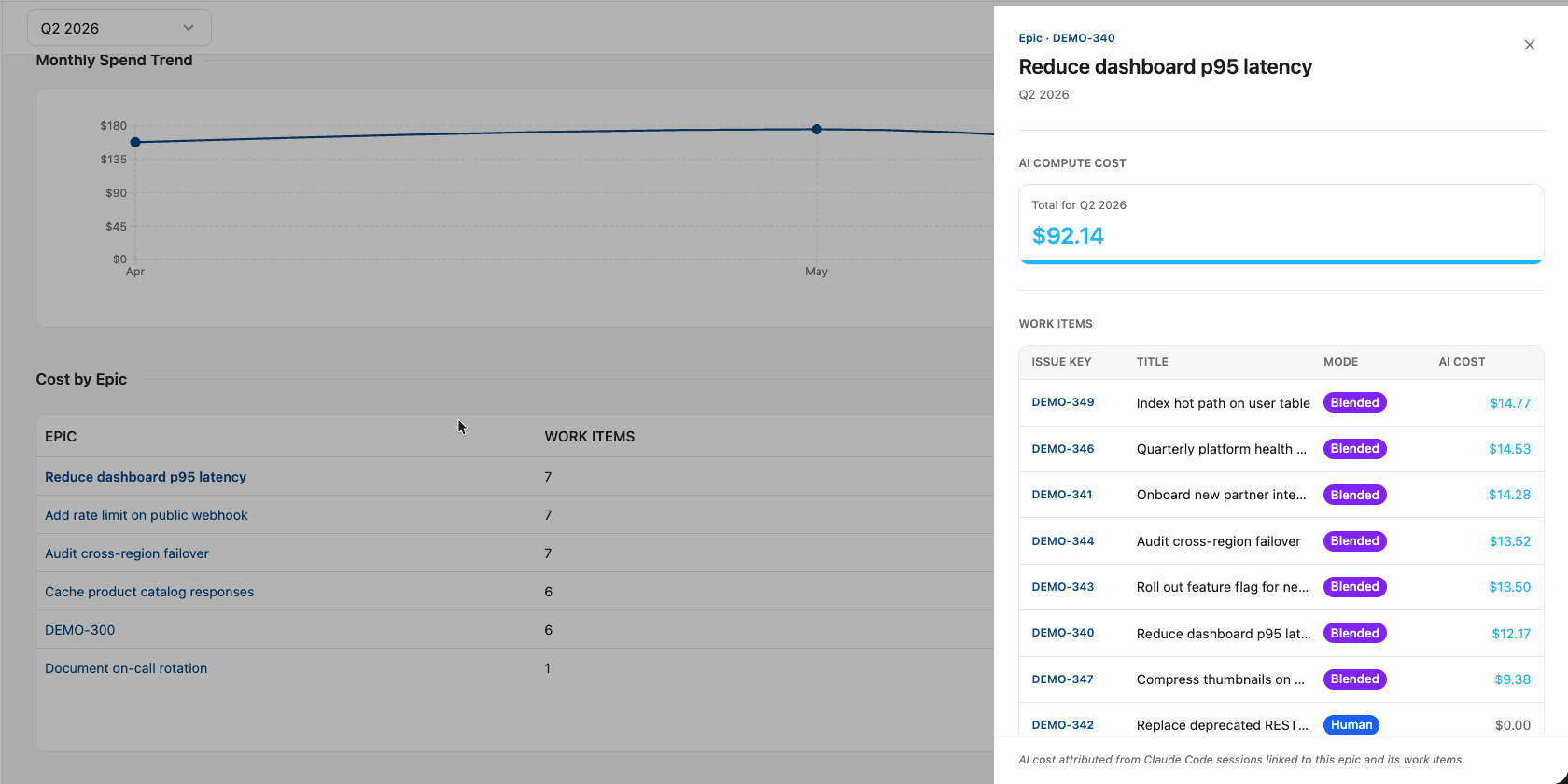
So a couple of Tempo's own developers started building. They pulled data from the source repository and the ticketing system and lined it up against AI spend, tying every dollar back to a ticket, an epic, and the strategic initiative it was supposed to serve.
The picture that came back wasn't flattering.
25% of Tempo's AI spend wasn't tied to any strategic objective at all.
A quarter of the AI budget, with no clear line to anything Tempo had said mattered. Once that was visible, redirecting spend toward the work that counted stopped being a guessing game – and started being a decision leadership could actually defend to the board.
From internal fix to product
Word got around. Customers already using Tempo's Timesheets to track how people spend their time started asking the obvious next question: "You already do human cost management," Chauthani recalled them saying. "What about AI costs?"
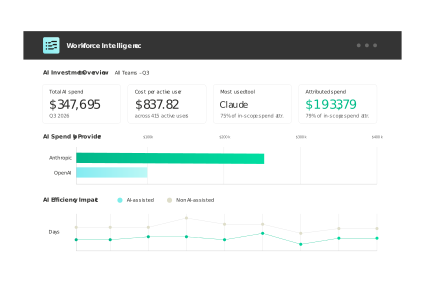
That question is why the internal prototype became Workforce Intelligence. It takes the same approach Tempo built for itself – attribute AI spend to the work it's actually funding, then roll that up to strategic goals – and turns it into something any team can run.
"A lot of the competitors are focused very much on developer experience and how to drive adoption of AI," Chauthani said. "But very, very seldom do we see anything that's actually tying the AI spend to the outcomes."
The result
After a trial on Tempo's own teams, the team could see the actual attribution behind its AI spend instead of estimates. That's when the internal build became a product decision. On August 25, 2026, Tempo released Workforce Intelligence.
The numbers tell the rest of the story. Tempo now attributes 88% of its AI spend to specific work, up from a starting point where a quarter of that spend led nowhere. And the visibility didn't just clean up reporting – it shortened delivery. Work that used to take 18 months to ship now moves in six, a 66% reduction in cycle time overall.
What Workforce Intelligence does, in practice, is map every dollar of AI spend to the ticket, the epic, and the strategic goal it's meant to serve. Instead of three disconnected reports, a team gets one place to see whether that spend is moving the initiatives leadership actually cares about, or just accumulating unaccounted for.
For finance, it turns AI cost from a line item nobody can defend into something tied to real outcomes. For engineering leads, it means the next budget conversation starts with evidence instead of a guess.
What's next
None of this started as a product idea. It started with a CFO asking a question Tempo couldn't answer, and a couple of developers who went and found the answer anyway. The bigger story isn't really about Tempo – it's about every company that watched its AI spend climb this year without a clean way to explain where it went.
Tempo isn't alone in that. According to Protiviti, 47% of organizations say they lack full visibility into their AI spend. Tempo just happened to hit that wall before it built something to get past it.
Workforce Intelligence
See the true value and costs of your AI tools
The only solution that ties AI vendor spend to the teams, epics, and Jira issues it supported.
Start a Free Trial