How atmira replaced spreadsheet guesswork with real-time capacity planning


Key Takeaways
Planning time cut in half with planning with Capacity Planner
Automation almost entirely removed any manual project setup
Kicking off projects went from 1.5 – 3 hours of planning to 10 minutes
atmira is a software and AI company driving digital transformation across industries, with particular expertise in banking and insurance, in EMEA and Latin America.
However, when it came to managing their internal capacity or planning holidays, they were doing it in one of the most labor-intensive ways possible: Spreadsheet by spreadsheet, per team and per department.
As experts in digital transformation, atmira and their team knew the value of turning to specialists for assistance. We spoke with Jaime Basco, tools lead at atmira, about how Tempo Timesheets and Capacity Planner cut their manual capacity planning time in half.
The challenge
Every month, atmira's tools team pulled data from the company's ERP and reconciled it by hand – project by project, person by person.
While it did the job, the teams at atmira knew there was room for improvement. Nobody's spreadsheet talked to anyone else's, not even over shared folders. If someone was splitting time across two client accounts, there was no way to see that at a glance.
"It was very specific – specific to a project, a team, or a cluster," said Jaime Basco, tools lead at atmira. "There was no visibility when someone was split between two clients. And because everything was manual, it took forever, and it was bound to have errors."
Vacation requests brought their own headache. Whether a day off had been logged by the employee or approved by their manager wasn't always clear, and small disputes over the details were routine.
Basco put it simply: “You could shrink the error rate, but with that setup, you couldn't get rid of it.”
What changed
Before Tempo, a third-party script handled some of this work, but it kept throwing errors under the weight of atmira's data volume, and every fix meant going back to an outside provider.
After migrating to Atlassian Cloud – the team saw an opportunity to refresh their processes and evaluate where they can develop with the new capabilities they have. They found Timesheets and Capacity Planner to be their tools of choice – both the #1 add-ons in Jira for time tracking and resource and capacity management.
atmira built a custom integration connecting its Navision environment directly to Jira – reliable enough to trust, and something the team could maintain in-house instead of depending on a vendor. They had it running in under a year.
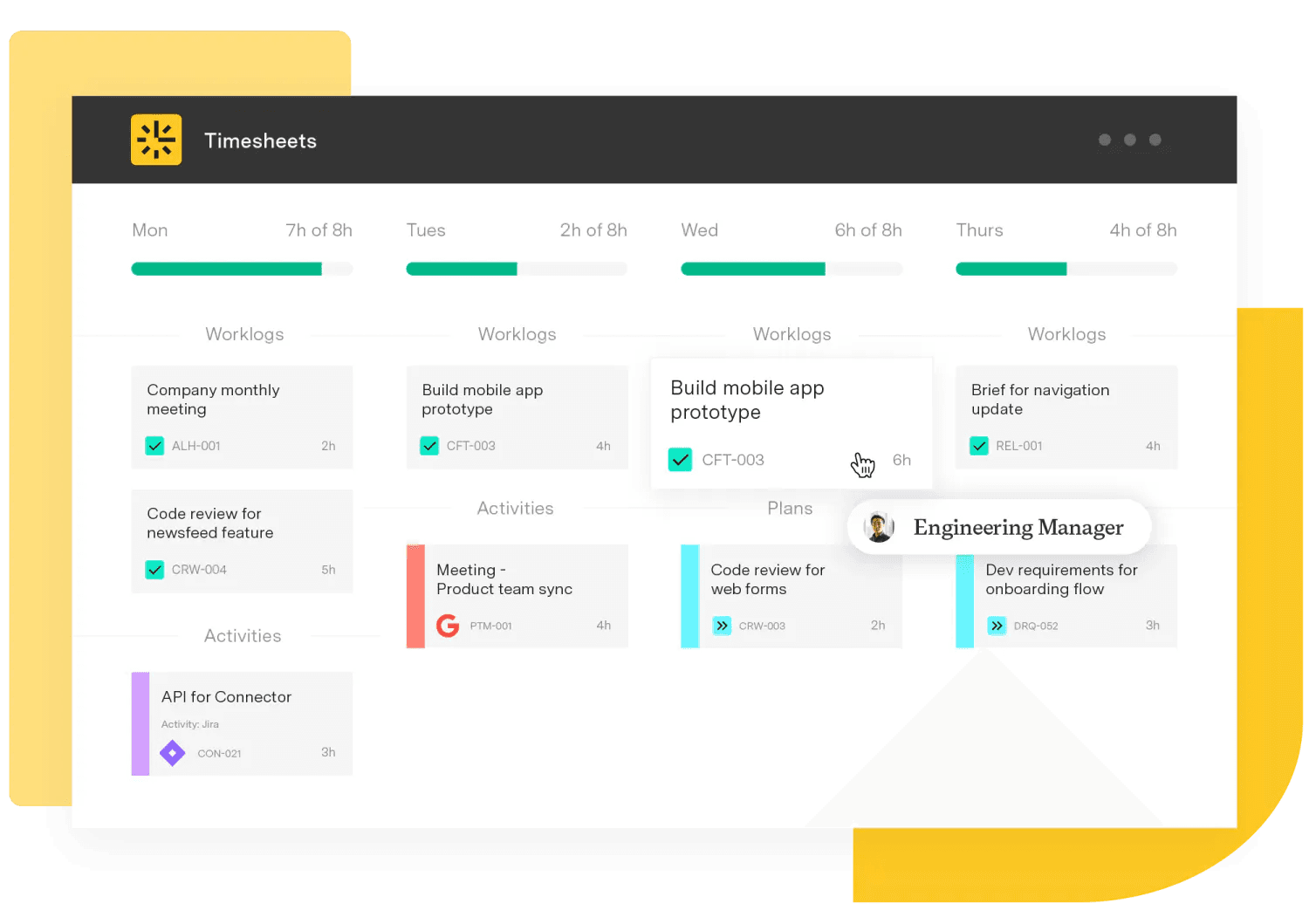
Timesheets tracks the work that's already happened – people log hours against Jira issues, and that data feeds straight into reporting, budgeting, and billing without anyone re-entering it somewhere else.
Capacity Planner creates visualizations from Jira data on who's available, who's already booked, and by how much, so teams can plan new work against real capacity instead of guesswork.
Used together, they give a far more complete picture of their entire portfolio – planned time up front, actual time after the fact, and one consistent source for both.
The difference was clear even at the start of rollout in how capacity gets tracked. The moment a deal closes with a client, that plan is visible – no more waiting until month-end to find out who's stretched thin.
"The day-to-day looks nothing like it used to," Basco said. "Right now, the moment we close a deal with a client, that plan is visible. The person's capacity is already sitting in Tempo."
Project setup changed just as much. What used to mean re-entering the same data in an Excel file and in Tempo now runs on its own from a single trigger.
"Before, that work happened in Excel or in Tempo, or both, which meant doing it twice," Basco said. "Now that's gone completely. Someone formalizes the project in our ERP, hits send, and a multi-step process just runs. My time goes into building out tasks and leading the team, not setting things up."
The results
Project kickoff planning cut from 1.5–3 hours to 10 minutes.
Planning and vacation management time cut by roughly half. No more rebuilding plans – Tempo adjusts for them automatically.
Manual project setup nearly eliminated. The Navision-to-Jira workflow that used to require duplicate manual entry now runs end-to-end without anyone touching it.
Basco framed the shift in one line: "Before, we were guessing. Now we have real traceability. Our decisions are clearer, sharper, and made in real time."
Asked what he'd miss most if Tempo disappeared tomorrow, he didn't hesitate: "Practically everything. And don't even get me started on vacations."
What's next
As atmira continues to grow and develop, they are doubling down and expanding on the visibility and flexibility that Tempo’s tools provided for them – and where AI could help.
"We’re hoping to find ways to use natural-language queries and actions, so teams can spend less time on manual work and more on what actually adds value."
The time Basco and his team saved is being redirected to help processes and workflows across the company – all possible thanks to Timesheets and Capacity Planner.
Timesheets
Optimize your projects, teams, and resources
The #1 time-tracking app for Jira. Timesheets seamlessly integrates with Jira and your existing workflows to help you track time for accounting, CapEx tracking, client billing, compliance, and more.
Start a Free Trial