With Tempo Timesheets, you can create filters that can be used in different ways for time tracking and reporting on work performed in Jira.
Did you know that in Tempo Timesheets for JIRA there’s an easy way to see how much the time spent on issues within an epic?

Did you know that in Tempo Timesheets for JIRA there’s an easy way to see how much the time spent on issues within an epic, including how much time each team member has logged on each issue. This is done by using the Advanced Timesheets in Tempo Timesheets. To access the Advanced Timesheet, you have to have a Browse Projects permission in JIRA.
The Advanced Timesheet is one of the features that makes Tempo Timesheets so flexible in terms of reporting. It allows you to generate reports on basically anything in JIRA by utilizing JIRA filters. To get an overview of time spent on a specific epic, you have to start by creating a filter in JIRA.
In this case, we want to get an overview of time spent on an epic for our Tango 2.0 version that our GreenCloud Tango team has been working on. We start off by creating a new JIRA filter, either with Basic or Advanced filtering.For Basic filtering we select:
Tango OnDemand under projects
Epic under type, and in progress under status
Finally we want to see the epics for Tango 2.0, so we select Fix Version from the More dropdown and type Tango 2.0
We save the filter (in this case we save the filter as Tango 2.0)
Open If we know the epic key, we can use a JQL filter in JIRA. First,we create a filter using the “Epic Link” JQL to find issues within the TO-15 epic. We then save the filter (we save the filter as Tango 2.0).Use: “Epic Link” = TO-15 Open Creating a report in Advanced Timesheets
Having saved the JQL filter, we open up the Advanced Timesheet. The Tempo top navigation Timesheets option, opens the User Timesheet and from there you can navigate to the Advanced Timesheet.
In the Advanced Timesheet we select our newly created filter, Tango 2.0, and select the Report View, and adjust the period (if needed). Here's how you search for and select the Tango 2.0 Filter:Open
Selecting the Report view:Open
The Advanced Timesheet Report view:Open
And there you have it! This is how you use a Jira filter and the Advanced Timesheet to create a report on time spent on issues within an epic. If you want to include more epics, you can select more epics when creating your filter and save it.Make sure you’re fully utilizing your Tempo instance and stay tuned to our blog for more neat tips and tricks on using our Tempo suite for Atlassian’s Jira or try a demo to learn more.
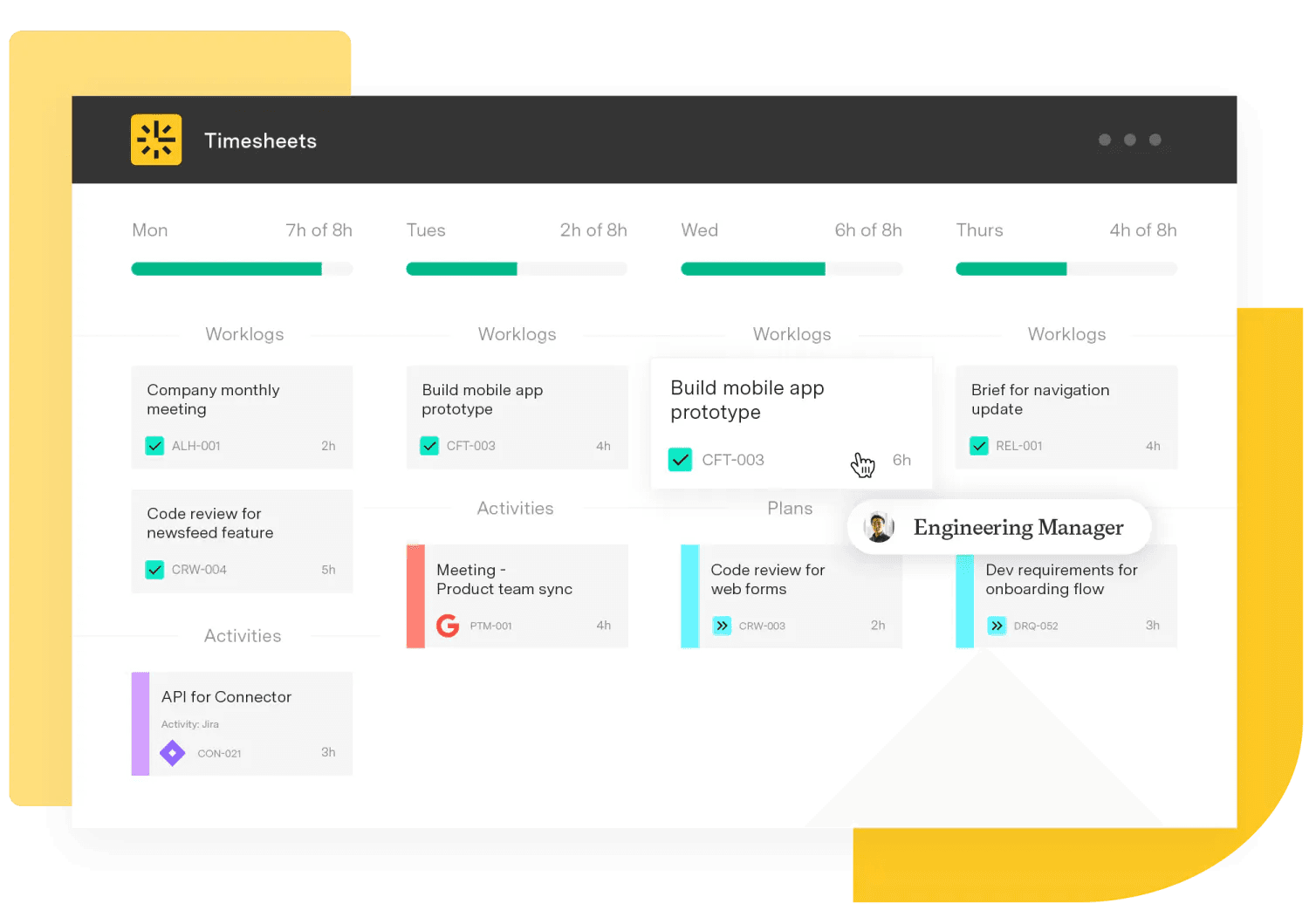
Timesheets
The #1 time-tracking app for Jira. Timesheets seamlessly integrates with Jira and your existing workflows to help you track time for accounting, CapEx tracking, client billing, compliance, and more.
Start a Free TrialWith Tempo Timesheets, you can create filters that can be used in different ways for time tracking and reporting on work performed in Jira.

Did you know that Tempo Timesheets allows admins to customize project colors for your Timesheets' planning display?

Did you know you can use Timesheets data to track project progress by billable hours and more – all within the Structure interface?

Tempo makes it possible to conveniently customize your time tracking experience with Timesheets or time tracking. So which should you choose?

Project managers and executives can combine Timesheets with Epic Sum Up to better use existing time reporting to save the company money

See how Timesheets brings estimated vs actual time into Jira with real-time reporting, dashboards, and portfolio rollups built for delivery teams.

Tempo Timesheets and Tempo Capacity Planner work better together to empower teams to create, improve, and deliver on time and on budget.
Timesheets offers a variety of real-time business intelligence for executives, account managers, project managers, and team members
Measure how long Jira issues take to close, broken down by status. The resolution time report turns workflow drift into a number you can act on.