The SPM journey: From silos to seamless execution
Realizing strategic portfolio management one step at a time


Key Takeaways
Strategic portfolio management is a six-stage progression, not a single software purchase: most organizations move through disparate tooling, department-level visibility, and program alignment before reaching a true enterprise-wide strategic portfolio.
Fewer than 30% of organizations have an integrated portfolio management process today, yet 72% plan to increase portfolio management investment within the next two years, and that mismatch between spending and structure is where SPM programs succeed or stall.
Reaching SPM maturity takes more than automation and AI-driven insights: it requires shared data across finance, the PMO, and delivery teams, plus a shift from tracking project delivery to measuring portfolio-level value realization.
A Forrester Consulting study commissioned by Tempo (2024) found that fewer than 30% of organizations have an integrated portfolio management process. The result is predictable: poor communication, misaligned priorities, and underperforming investments. Yet 72% of organizations plan to increase investment in portfolio management solutions over the next 24 months.
That mismatch – rising investment chasing an unintegrated process – is where most strategic portfolio management (SPM) programs either find their footing or lose their budget. Moving from scattered spreadsheets to an AI-informed, enterprise-wide portfolio doesn't happen in one leap, and it isn't primarily a tooling problem: the organizations that make it through all six stages are the ones that treat SPM as a finance, PMO, and delivery mindset shift, not a system rollout. For most organizations, SPM is a progression through six distinct stages, each with its own tooling, its own failure points, and its own specific actions that move a team to the next stage.
This guide breaks down each stage of that progression: what it looks like, where teams get stuck, and what advancing requires. Start with the quick self-check below to place your organization on the map, then read the stage-by-stage detail that follows. The guide closes with the role technology and data play in sustaining SPM once you reach it, and how Tempo's modular platform supports each stage without forcing a rebuild every time you outgrow the last one.
Quick self-check: which stage are you in?
Most PMO Directors place their organization a stage ahead of where the evidence puts it. If producing a portfolio view still takes your team more than a day, or if scenario planning means someone rebuilding a spreadsheet rather than re-running a model, you're not at stage 5 yet, whatever the dashboard software on your desktop implies. Use the clearest available signal, not the tool license, to place yourself in the table below.
Stage | The clearest sign you're here | What moves you forward |
|---|---|---|
1: Disparate project tooling | Status updates travel by email or chat, and no two teams track work the same way | Basic reporting and one shared work management tool |
2: Single department visibility | Each department has its own dashboard, but nobody outside it can see it | Standardized reporting and resource management across departments |
3: Program level alignment | Reports take weeks to compile and are often stale before they reach leadership | OKR-based program alignment and automated portfolio reporting |
4: Strategic portfolio management | Roadmaps exist, but no one trusts one enough to make a funding call directly from it | AI-powered risk insight and real-time dashboards |
5: Predictive outcome-driven insights | Predictive insights exist, but only a few teams act on them consistently | Organization-wide training and adoption of AI-driven recommendations |
6: Organizational flow | Portfolio priorities shift between reviews, not just at them | Continuous planning loops and fully integrated strategic execution |
Stage 1: Disparate project tooling
At this stage, teams assemble their own systems for tracking work, usually a mix of spreadsheets, email threads, and whatever tool a previous project lead happened to prefer. Visibility across departments is minimal, and collaboration follows no consistent structure.
Because there is no unifying approach, project managers spend a disproportionate amount of their week manually chasing status updates instead of acting on them. Communication happens ad hoc, over email or chat, rather than through a structured workflow that anyone outside the thread can see. Decisions get made on incomplete or outdated information, which raises the risk of delays and budget overruns on projects that looked fine a week ago.
Key challenges at this stage
Data stays scattered across disconnected tools, making it difficult to track progress across the organization.
Teams work in silos, which limits cross-functional visibility and coordination.
Project tracking is manual and inconsistent, which invites errors and rework.
How to advance to stage 2
Implement basic reporting so status is visible without a status meeting.
Adopt a shared work management solution, such as Tempo Structure PPM, so every team is tracking work in the same place.
Align departments on a common project tracking methodology, even a simple one, before adding more tooling on top of it.
Stage 2: Single department visibility
Once basic reporting and a shared work management tool are in place, the next fight is visibility beyond a single department's walls. Individual departments now use common tools and build their own dashboards, but that visibility still stops at the department's edge. Reporting stays reactive: each department maintains its own version of project progress, invisible outside that department until something goes wrong.
Because reporting methods and tracking mechanisms differ from one department to the next, comparing projects across the organization stays difficult. Priorities get set locally rather than strategically, and resources get assigned based on whichever department asks loudest rather than what the business needs.
Key challenges at this stage
Data remains siloed within departments, which blocks any enterprise-wide view.
Reactive reporting limits the ability to make proactive decisions before a problem compounds.
Teams typically plan and execute around a single methodology, all waterfall or all agile, which makes it harder to compare projects that don't fit that mold.
How to advance to stage 3
Establish standardized reporting and a consistent demand intake process across teams.
Introduce resource management and dependency mapping, such as Tempo Capacity Planner, to track workloads across departments rather than within one.
Build cross-team visibility so departments can see how their work affects, and gets affected by, everyone else's.
Implement financial management and budgeting, such as Tempo Financial Manager, that spans projects instead of stopping at the department line.
Stage 3: Program level alignment
With resource management, dependency mapping, and financial tracking now spanning departments instead of stopping at each one, program oversight finally clears the department fog: multiple teams align toward broader goals, with real visibility into deliverables and cost estimation that wasn't possible a stage ago.
That clarity has limits, though. Alignment with overall business strategy is still developing, and enterprise-wide integration remains a work in progress. Program leaders work to allocate resources effectively and surface dependencies, but without a broader portfolio management platform, execution stays inconsistent. Reports can take weeks to compile, which means leadership is often responding to conditions that no longer exist by the time the report lands. Teams juggling both traditional and iterative methods, meanwhile, fall back on disconnected tools to track dependencies, because no automated system is doing it for them.
Key challenges at this stage
Misalignment between individual projects and programmatic goals reduces efficiency.
Resource conflicts arise as teams compete for funding, prioritization, and different execution methods.
Reporting exists, but governance, policy compliance, and adherence to standards lag behind delivery speed, with no dedicated owner enforcing them yet.
Measuring the return on investment of portfolio-level funds is still mostly guesswork.
How to advance to stage 4
Align programs to business goals using OKRs or KPIs for real performance management, not only activity tracking.
Expand resource and dependency planning across every team involved in a program, not only the ones reporting loudest.
Give teams the ability to plan and execute across both traditional and iterative methodologies without switching tools.
Automate portfolio-level reporting with data connectors, such as a BI or Tableau integration through Tempo Custom Charts, so reports reflect current reality instead of last month's.
Stage 4: Strategic portfolio management
With OKRs now tying programs to business goals and portfolio reporting automated instead of manually compiled, the shift stops being procedural and becomes structural: organizations move their focus from individual programs to a strategic, enterprise-wide approach, aligning multiple initiatives to business objectives and prioritizing investment accordingly. The goal is a cohesive strategy that gives leadership a comprehensive, data-driven view of the entire portfolio.
Execution still lags the ambition, though. Organizations at this stage begin emphasizing scenario planning, risk management, and value-based decision-making, but automation and AI-driven insights still get bolted on as a side report instead of feeding the planning workflow directly. Roadmaps exist, but they're often not fully actionable, because manual oversight and disconnected systems keep them from reflecting what programs and projects are doing. Funding allocation stays hard to prioritize with confidence, and limited automation makes it difficult to configure more than one delivery methodology at a time.
Key challenges at this stage
Inability to prioritize investments and allocate funding confidently across strategic portfolios.
Roadmaps exist but stay disconnected from what programs and projects are doing, because manual oversight sits between the plan and the work.
Automation in execution processes stays limited, along with difficulty configuring multiple delivery methodologies.
How to advance to stage 5
Introduce AI-powered insights for risk prediction and mitigation, rather than discovering risk after it has already cost a sprint.
Shift from reactive reporting to real-time, automated dashboards that update as work happens.
Enable portfolio-wide scenario planning and governance so leadership can model a decision's impact before making it.
Build a roadmapping practice that keeps portfolios, programs, and projects aligned to business goals as those goals shift.
Use change impact assessment to gauge organizational readiness before rolling out a new SPM capability, so adoption doesn't stall on day one.
Stage 5: Predictive outcome-driven insights
Once AI-powered risk prediction, real-time dashboards, and portfolio-wide scenario planning are running, the organization crosses into genuinely predictive territory. AI and machine learning start doing real work enhancing decision-making and automating workflows across portfolio management, rather than sitting in a tool nobody opens. Predictive analytics and automated workflows become a core part of how the organization operates, letting teams anticipate risk, optimize execution, and drive continuous improvement instead of reacting to whatever surfaces last.
AI-driven forecasting helps organizations allocate resources more precisely, reduce delays, and catch potential project failures before they happen. The catch is that many organizations still struggle to fully embed predictive capabilities into daily operations. Data fragmentation is usually the culprit, along with the absence of change management processes strong enough to get an entire organization using the new insights rather than ignoring them.
Key challenges at this stage
Learning curves slow adoption of automation and AI-enabled tooling.
AI models require clean, reliable data, which may still be fragmented across systems.
Predictive insights exist but aren't fully embedded into everyday decision-making.
How to advance to stage 6
Run adoption and training programs that support successful rollout of complex portfolio management tooling.
Train teams to interpret and act on AI insights, and embed AI-driven recommendations directly into planning workflows rather than treating them as a separate report to check.
Keep investing in automated workflows, open integrations, and a scalable architecture that supports enterprise growth rather than one more disconnected point solution.
Stage 6: Organizational flow
Reaching full SPM maturity, even after adoption training, embedded AI recommendations, and a scalable integration architecture are all running, is not the finish line. Organizations that stop here start losing ground, because market conditions keep shifting and a portfolio management practice that doesn't shift with them starts drifting out of date the moment it stops being tended. The most mature organizations continue to evolve: integrating predictive analytics, AI-driven decision-making, and real-time adaptability into their strategic workflows as a standing practice, not a one-time initiative.
Key challenges at this stage
Resistance to change slows full adoption of portfolio governance.
Maintaining alignment at scale remains an ongoing effort, not a solved problem.
Supporting technology has to keep adapting to user experience expectations, deeper insights, and workflow optimization, which means the work of maintaining SPM never fully stops.
Continuous improvement
Move from reactive adjustments to real-time adaptability, so priorities shift as conditions change rather than at the next scheduled review.
Implement continuous planning loops that adjust priorities dynamically instead of waiting for a quarterly reset.
Establish fully integrated strategic execution, so every investment stays aligned with business priorities as those priorities evolve.
The role of technology, data, and building an SPM culture
Technology and data: The key to real-time, not sometimes
As organizations progress through the SPM journey, technology and data become the difference between a portfolio that's managed and one that's merely tracked. Decision-makers need real-time visibility into progress, risk, and resource allocation as conditions change, not whenever someone last updated a spreadsheet.
Without reliable data, decisions default to gut feeling instead of evidence, which is how priorities drift and inefficiencies compound. Data-driven decision-making cuts down on that drift: it reduces bias, improves forecasting accuracy, and keeps investment decisions aligned with business objectives instead of whoever argued for their project most recently. AI-driven tools extend that further, helping organizations move from reactive to proactive portfolio management by surfacing risk before it affects execution, optimizing resource use, and keeping the whole portfolio pointed at the strategy it's supposed to serve.
One team, one SPM dream
Technology alone can't drive strategic portfolio management. Organizations still need a mindset shift toward portfolio-driven thinking, because delivering individual projects on time was never the goal. Delivering business value is, and that only happens when every initiative stays connected to the strategy that justified funding it in the first place.
That shift depends on collaboration between finance, the PMO, and strategy teams. Integrating financial planning, resource management, and execution across those three groups keeps prioritization, resource allocation, and investment decisions reflecting enterprise-wide needs instead of whichever department's goals are loudest this quarter. It also changes what gets measured. Organizations that want SPM to stick should track portfolio value realization, strategic alignment, and investment performance, not only whether individual projects hit their delivery milestones.
The payoff for making that shift is larger than it looks on paper. According to Gartner's 2024 research on building a value-driven foundation for strategic portfolio management, only 13% of organizations are highly effective at capturing the benefits of SPM. Those organizations, though, are twice as likely to drive better business outcomes than everyone still managing by spreadsheet and instinct. Thirteen percent is a narrow group. Being in it is worth the work of getting there.
Tempo's modular approach to strategic portfolio management
Traditional portfolio management tools tend to over-promise and under-deliver, forcing organizations into rigid, all-in-one systems that don't flex to how that specific organization works. Tempo takes a different approach. Its strategic portfolio management platform is modular: teams adopt the tools they need, when they need them, without the steep learning curve or forced standardization that comes with a monolithic platform.
Tempo's platform is built to improve alignment and visibility across every level of project and portfolio management. Instead of siloed point solutions, its integrated modules span demand management, roadmapping, portfolio management, capacity planning, resource management, financial management, project management, and time management, rolling up into one connected view of insights and analytics covering capacity planning, AI planning scenarios, OKRs, team performance, risk management, and financial impact.
That range matters because SPM maturity is rarely won or lost on a single capability. A PMO Director evaluating tools for stage 3 or 4 needs resource management, financial visibility, and dependency tracking working together, not living in three separate logins that each tell a different story about the same program.
Structure provides the program and portfolio backbone. Tempo Timesheets and Capacity Planner give the resourcing and time data that make forecasting credible. Financial Manager turns work log data into the budget and cost visibility that finance trusts. Custom Charts turns all of it into the dashboards leadership reviews without waiting weeks for someone to compile them.
None of that works in isolation from the tools an organization already runs on. Tempo's platform integrates with Atlassian's Jira and the wider Atlassian toolset, along with monday.com, Asana, ServiceNow, and Azure DevOps, so teams keep their existing workflows instead of migrating everything to adopt one more system. For a PMO Director managing delivery across a mix of Atlassian-native teams and other tooling, that integration depth is often the difference between a rollout that sticks and one that quietly gets abandoned after six months.
Tempo is trusted by more than 30,000 organizations globally, including Cisco, Slack, Oracle, Airbnb, Airbus, and Netflix, to bring this kind of structure to portfolios that used to run on spreadsheets and good intentions. With a modular, flexible foundation like that, organizations can evolve through each SPM stage at their own pace, without the risk of a rebuild every time their needs change, and without waiting for a single big-bang implementation to prove the model works.
For more on what a portfolio management tool needs to do to support that kind of progression, see what a PPM tool should do for your organization.
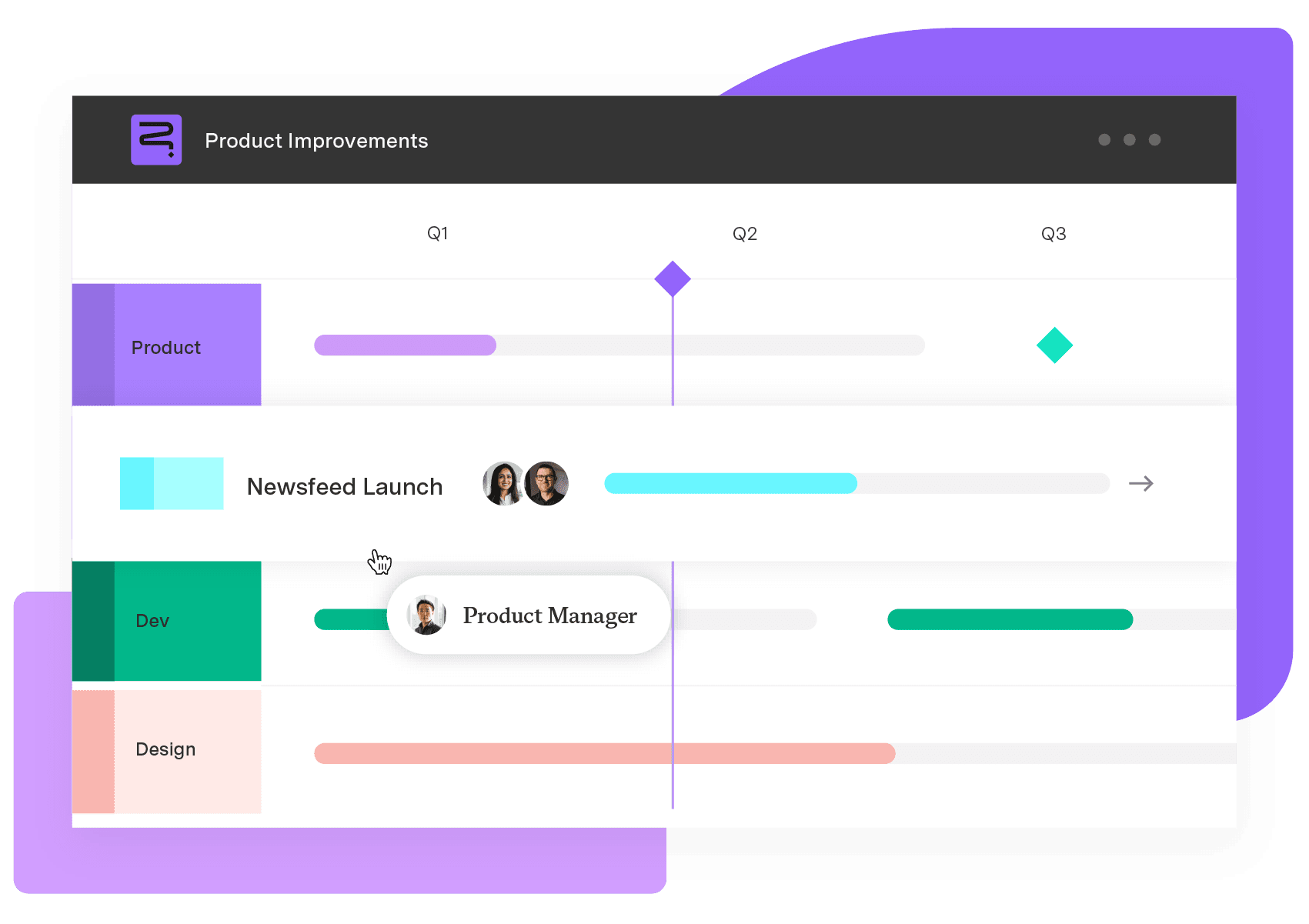
Strategic Roadmaps
Strategic roadmapping
Build your portfolio vision with Strategic Roadmaps. With powerful visualization capabilities, you can communicate strategy to the entire organization and gain alignment around strategic objectives, product goals, and milestones.
Start a Free TrialFrequently Asked Questions
Couldn't find what you need?Go to our documentation
There's no fixed timeline, and few organizations move through all six stages in a straight line. Progress depends less on which software gets purchased and more on data quality, executive sponsorship, and whether finance, the PMO, and delivery teams agree on a shared set of metrics. Organizations that treat maturity as a one-time project tend to stall around the program level; the ones that keep advancing treat it as a continuous practice rather than a milestone to check off.
PPM maturity models, including PMI's OPM3 and the P3M3 framework, mostly measure how well an organization executes and reports on individual projects and programs. SPM maturity asks a different question: whether the mix of programs and initiatives an organization funds is the right mix for its business strategy, not whether each one individually is delivered well. An organization can be highly mature at PPM, with on-time and on-budget delivery, while still being immature at SPM if it lacks a mechanism to reallocate funding when strategy shifts.
Ownership shifts as maturity rises. In stages 1 and 2, whoever champions a shared tool, often a program manager or an early PMO hire, owns the push, because the problem is still mostly about getting teams onto common ground. By stage 3 or 4, it becomes a PMO Director's mandate, since program-level alignment and cross-department resource conflicts need a role with authority over more than one team. By stage 5 and 6, IT or a platform owner joins the PMO to keep the underlying data clean enough for AI-driven insights to be trustworthy. Handing the effort to a platform team without that ownership progression in place is a common reason rollouts stall.
Not cleanly. A small organization can look like it skipped ahead because it never had multiple departments to unify in the first place, but the underlying capabilities, cross-team resource visibility, standardized reporting, and shared financial tracking, still have to exist before scenario planning or AI-driven insight is trustworthy. What smaller organizations can genuinely compress is the calendar time: with fewer stakeholders to align, moving from stage 1 to stage 4 might take months instead of years. The stages themselves aren't optional, even when several get compressed into a single quarter of work instead of a separate initiative apiece.