Prescribing success: A playbook for healthcare planning leaders
Hitting delivery dates requires meticulous coordination across departments, not to mention strict regulatory compliance.


Key Takeaways
Healthcare projects miss deadlines because static, department-by-department scheduling cannot absorb regulatory, staffing, and clinical variability, not because planning teams lack discipline.
Adaptive planning cycles, a defined scope-change process, and shared real-time data across departments keep projects on track when conditions shift mid-stream.
Consolidating visibility across every project system and applying predictive analytics lets PMOs catch resource bottlenecks before they cascade into missed patient-care commitments.
A hospital that slips two weeks on an electronic health record rollout pays for it downstream: training for clinical staff gets pushed back, a compliance filing slides past its window, and patients get routed through the manual workaround someone built in a spreadsheet three months ago.
That kind of slippage is the norm. PMI's 2026 Pulse of the Profession report found that 35% of complex projects miss their delivery deadlines outright, and 55% run into some form of delivery disruption along the way. Healthcare carries a heavier version of that risk: tight budgets, chronic staffing shortages, shifting patient demand, and regulatory requirements that do not bend for a busy quarter all stack on top of the usual project pressures.
Advances in medical technology, new patient care models, and the push to integrate data across clinical and administrative systems keep raising the degree of difficulty every year, and none of that moves the deadline. The healthcare planning leaders who hit their dates anyway run something close to a diagnosis-and-treatment-plan approach to delivery risk: they predict problems before those problems land, adapt plans while conditions are still shifting, and deliver through execution planned weeks ahead of go-live rather than improvised the week of it.
Why healthcare delivery dates keep slipping
Predicting, adapting, and delivering sound straightforward until a single project has to move through five different departments' calendars at once. That is where most generic project management advice breaks down for a hospital, health system, or life-sciences PMO: general frameworks assume a project team can absorb a scope change, shift a launch date, or reassign a specialist without asking a compliance officer, a clinical department head, and a staffing office to all agree first.
Healthcare planning leaders rarely get that luxury. A single project, like a new patient portal or a clinical workflow change, can touch IT, nursing, compliance, finance, and facilities at once, and each of those departments runs on its own calendar and its own definition of done. Add a staffing shortage or an unplanned regulatory audit, and a schedule built on static assumptions falls apart within weeks.
That is the real diagnosis. Healthcare project delivery does not fail because planning leaders lack discipline. It fails because static, department-by-department scheduling cannot absorb the volume of change healthcare throws at it. Fixing that means building forecasting, adaptability, and execution habits designed for that level of turbulence.
Predict: Build forecasting that survives regulatory and staffing shocks
Traditional scheduling assumes conditions stay roughly the same between the kickoff meeting and the launch date. In healthcare, that assumption rarely holds: a single staffing gap, a new compliance requirement, or a supply chain delay can undo months of planning in an afternoon. Four practices help healthcare PMOs forecast timelines that hold up anyway.
Scenario planning – Map two or three plausible futures for every major project, covering the setbacks as well as the happy path. If a key clinical specialist becomes unavailable mid-project, a pre-built contingency plan lets the team redistribute the workload immediately rather than losing weeks to a fire drill.
Historical data review – Analyze how past projects actually ran, not how they were scheduled to run. If late-stage compliance reviews consistently add three weeks to go-live timelines, build that buffer into the plan from day one so the team stops relearning the same lesson every cycle.
Real-time tracking – Static status reports show where a project stood last week. Real-time tracking shows where it's heading, and pairing it with predictive analytics on emerging bottlenecks gives a PMO time to reallocate a specialist or renegotiate scope before a delay in one department cascades into a missed compliance deadline.
A living risk register – Document the specific risks facing each project, with an owner and an action plan attached to each one, so the response is already written when a risk materializes instead of improvised in a leadership meeting.
None of this replaces judgment. It gives judgment something better to work with than a schedule built on optimism and a hope that nothing changes between now and launch day.
Adapt: Build flexibility into plans without losing control
Prediction reduces surprises; it does not remove them. Healthcare planning leaders also need plans flexible enough to bend when conditions shift mid-project, without losing the governance a regulated environment requires.
Adaptive project plans – Trade rigid, fixed-date timelines for plans built to flex on task sequencing and resourcing while holding the delivery commitment steady. A continuous feedback loop with stakeholders keeps the plan aligned to what the business and patients need as those needs evolve past kickoff.
Shorter planning cycles – Quarterly, or even monthly, planning reviews let teams adjust course without losing sight of the long-term roadmap. Annual planning cycles move too slowly for an environment where staffing and regulatory conditions can shift inside a single quarter.
A defined scope-change process – Scope creep derails more healthcare projects than any single external shock. A clear intake process for change requests, with defined thresholds for what needs re-approval, keeps a project from quietly expanding until the original deadline becomes unreachable.
Shared, real-time data across departments – When IT, clinical operations, and compliance work from the same live view of a project rather than separate spreadsheets, decisions happen in days rather than weeks. Tempo Structure PPM rolls up work across every department's Jira boards and projects into one governed hierarchy, so that shared view is possible without asking every team to change how it works on a Monday morning.
A fast path for changing conditions – Build a standing process for responding to sudden shifts, like a resource pulled onto an urgent patient-safety issue, so the response is a known procedure rather than an improvised scramble.
Agility at the team level is not enough on its own; it has to be matched by agility at the portfolio level, where a PMO director is watching for ripple effects across a dozen projects at once, not just one.
Deliver: Turn resource allocation and accountability into on-time delivery
Prediction and adaptability set a healthcare project up to succeed. Execution is where that setup either pays off or gets wasted.
Dynamic resource allocation – Specialized healthcare staff, like clinical informaticists or compliance reviewers, are usually the scarcest resource on a project, not the budget, and that scarcity is tightening: the U.S. Bureau of Labor Statistics projects 15% employment growth for health information technologists and medical registrars through 2034, faster than most occupations, which means the specialists healthcare PMOs depend on most are also the hardest to backfill. Monitoring workload in real time and reassigning before a bottleneck forms keeps a shortage in one area from stalling five projects at once. This is the healthcare-specific version of a decades-old operations principle: Eliyahu Goldratt's Theory of Constraints, introduced in his 1984 book The Goal, which holds that a system's total output is set by its most limited resource.
Clear accountability and communication – Every task needs a named owner and a visible status, not a rotating cast of whoever picked up the ticket last. When a clinical workflow change stalls because the compliance sign-off owner changed mid-project and nobody updated the board, real-time visibility catches that gap the day it happens instead of at the next steering committee meeting.
A standing focus on patient impact, not the date alone – A go-live that hits its date but skips the training clinical staff need to use a new system safely is not a win. Regular check-ins with clinical and compliance stakeholders keep a project's definition of done tied to what the department actually needs, not just the number on the Gantt chart.
Put prediction, adaptability, and disciplined execution together, and a healthcare PMO stops managing single projects and starts managing a portfolio: dependencies become visible, resource conflicts surface early, and status reporting reflects reality instead of an optimistic guess.
Where portfolio-level tooling closes the gap
None of the habits above require new software. All of them get considerably harder without a way to see resourcing, risk, and timelines across every project at once, which is why they're worth building into a platform rather than a shared spreadsheet.
A reasonable compliance officer will raise an objection before any of this gets approved: doesn't rolling every department's Jira boards into one shared portfolio view just create a bigger, single target for a HIPAA audit? That is a fair question, not a formality to wave past. The answer lives in how the consolidation is governed: role-based permissions that limit what each department can see, an audit trail on every change to scope or schedule, and consistent access definitions that do not depend on which spreadsheet happened to get shared that week. A portfolio view nobody can trace is the bigger compliance risk; a portfolio view built on governed, permissioned access is what turns consolidation into an asset instead of a liability.
Tempo Structure PPM was built for exactly that governance problem. It rolls up work from every department's Jira boards and projects into one hierarchy, so a PMO director can see a new patient portal initiative, a clinical workflow change, and a facilities project side by side instead of stitching five status emails together. Paired with Tempo Capacity Planner, that same governed view surfaces where a specialist is stretched across too many projects before the overcommitment becomes a missed date. Tempo Custom Charts turns that data into a live executive dashboard, so a PMO director isn't rebuilding a status deck from a half-dozen sources every time hospital leadership asks for an update.
A PMO director is accountable to hospital leadership for delivery predictability. Forecasting, adaptability, and consolidated, governed visibility together turn portfolio reporting from a defensive monthly ritual into an early-warning system leadership can actually act on.
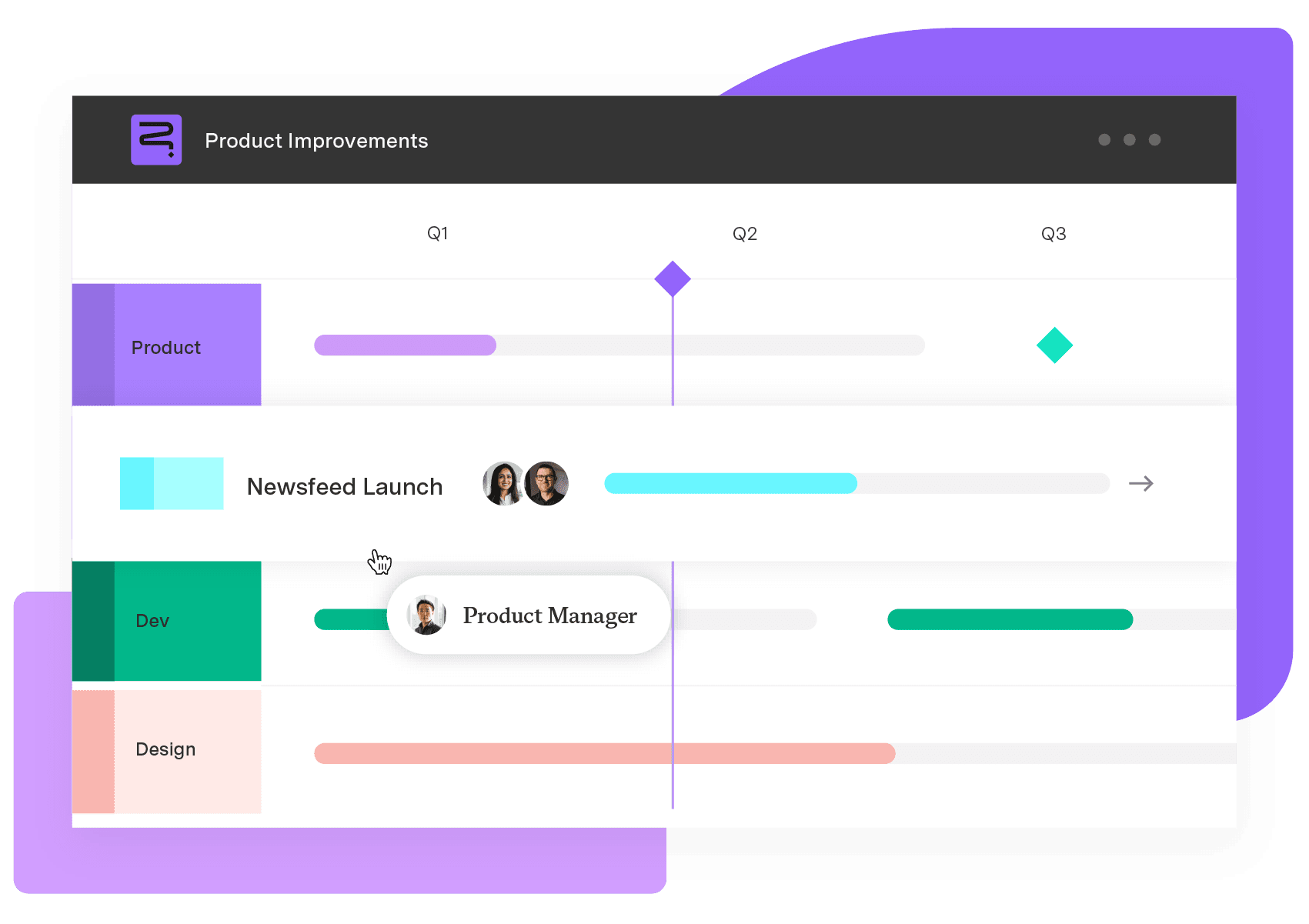
Strategic Roadmaps
Strategic roadmapping
Build your portfolio vision with Strategic Roadmaps. With powerful visualization capabilities, you can communicate strategy to the entire organization and gain alignment around strategic objectives, product goals, and milestones.
Start a Free TrialFrequently Asked Questions
Couldn't find what you need?Go to our documentation
A healthcare PMO sets and enforces a shared project methodology across clinical, IT, compliance, and facilities teams so every initiative gets tracked, resourced, and reported the same way. Its core job is dependency visibility: knowing which projects share the same specialists, systems, or regulatory approvals so conflicts surface before they become missed deadlines. In smaller health systems, this role is often a single planning leader rather than a formal office, but the function stays the same.
Yes, though healthcare PMOs typically run a hybrid model rather than a pure agile framework. Short planning cycles and iterative feedback loops work well for prioritization and internal coordination, while formal change control and documentation stay in place wherever compliance approval is required. The goal is shorter feedback loops inside a governance structure regulators still recognize, not the removal of governance.
Rolling out portfolio-level visibility across a hospital or health system almost always happens in phases rather than a single cutover, because clinical IT, compliance, and facilities teams are already running their own Jira boards and workflows. Most healthcare PMOs start with a governance layer over their two or three highest-dependency, highest-risk programs, establish a shared hierarchy and reporting cadence there, and then extend to the rest of the portfolio once that works. A realistic phased rollout runs closer to one to two quarters per wave than weeks, in part because compliance change-approval cycles set the pace for how fast new governance can spread. A plan built around a full-portfolio switch inside a single quarter is optimistic about how many department heads have to sign off on a change to their own reporting process.
The most useful metrics track predictability, not just completion: forecast accuracy (how close early estimates land to actual delivery dates), the percentage of projects with an active, reviewed risk register, resource utilization against capacity, and the ratio of planned to unplanned scope changes per project. Reporting raw on-time-completion rates alone tends to hide the early-warning signals leadership needs.