Building an HR roadmap from scratch
How to build an HR roadmap that connects hiring plans, culture initiatives, and efficiency goals to what the business actually needs.


Key Takeaways
Stakeholder conversations, especially one-on-ones with frontline employees, are the fastest way to decide where to focus first and what to cut from the plan.
Budget belongs on the roadmap as a first-class field. Attaching real cost figures to each initiative turns the document from a wish list into a decision-making tool the CFO will work from.
An HR roadmap ties people priorities back to business goals in one shared view, so leadership can see what HR is working on and why it matters.
If you've asked around about HR roadmaps, people have probably told you you don't need an HR roadmap. HRIS, payroll, a learning platform, a couple of spreadsheets – that was the stack, and it more or less covers the job.
A roadmap doesn't change the work HR does. Implementing one makes that work legible to the executives who approve the budget for it, and conversations about headcount stop being a negotiation held in the dark.
The part that keeps most people leaders from getting there is the instinct to treat the roadmap as an internal HR artifact rather than a cross-functional one. The useful version? It's built with the CFO's lens already in view – budget attached to every initiative and trade-offs named openly, on a review cadence that matches how the rest of the business plans.
Step 1: Understand why you need an HR roadmap
Start by getting clear on what the roadmap needs to do for your team. Here are four ideas.
Priority mapping. HR leaders have a long list of things they want to accomplish immediately. A roadmap forces you to ask: What matters most to the business right now, and is it achievable in the time I've given myself? That exercise makes planning more honest.
Resourcing. HR touches a lot of teams – one-on-one leadership coaching, compensation reviews, policy updates, onboarding. It's easy to overcommit. The roadmap shows you whether you're spreading the team too thin. Burnout is real – more than half of US workers are experiencing it right now.
The WHO classifies burnout as an occupational phenomenon driven by chronic workplace stress, and HR's visibility into workload is one of the few structural levers available to address it.
Hiring plans. If recruitment is a priority, the roadmap makes it visible – which teams are getting headcount, when, and what onboarding support they'll need from HR. Nobody gets caught off guard when a new hire lands.
Identifying efficiencies. HR doesn't bring in revenue. It's to help the business do more with less. The roadmap gives you a place to track efficiency targets, like automating administrative tasks and cutting onboarding time.
Your reasons may look different. But you should be able to name them before you build anything.
Step 2: Talk to your stakeholders
This step looks different depending on your company's size. At a smaller company, you might have direct conversations with every founder and department head to find out where the pain was. At larger organizations those conversations are harder to schedule – but they're still worth it.
These chats should inform your prioritization, help spot teams with talent gaps, and show where an efficiency improvement would actually make a dent.
If your company is small enough, talk to frontline employees too. They usually have more direct insight into what's broken than their managers do. If leaders say they need more coaching but frontline workers think leadership is strong, that tells you coaching isn't the priority – and you can redirect your energy somewhere more impactful. Casting a wider net gets you better data.
Questions to guide your stakeholder chats
Go into every stakeholder conversation with a few consistent questions. The start, stop, continue framework is simple and it pulls out the most relevant information every time:
What should we start doing?
What should we stop doing?
What should we continue doing?
Two more you might find useful:
If time and budget weren't a constraint, what would you change?
Which company do you really admire for its culture, and what are they doing that we're not?
That second question tends to surface concrete ideas. People start referencing things they've seen elsewhere and wondering whether you could pull off something similar.
Step 3: Decide what goes on the HR roadmap
You've gathered the input. Now decide what actually makes the cut.
Have your first pass focus on efficiency – for example, specifically, making onboarding faster. You might also include company events that fall under HR's scope – all-hands meetings, annual retrospectives – or major initiatives like rolling out a new HRIS or revamping your benefits package.
One thing to always include: budget. Every item on the roadmap has a cost attached. Can we afford to bring in BambooHR? Can we fund external training this quarter? Tempo Strategic Roadmaps' numerical fields make it easy to attach budget figures to each initiative, and that turns the roadmap from a planning exercise into something that drives real decisions.
Step 4: Choose a view and build your HR roadmap
With your content sorted, it's time to build. Strategic Roadmaps offers two views for HR teams.
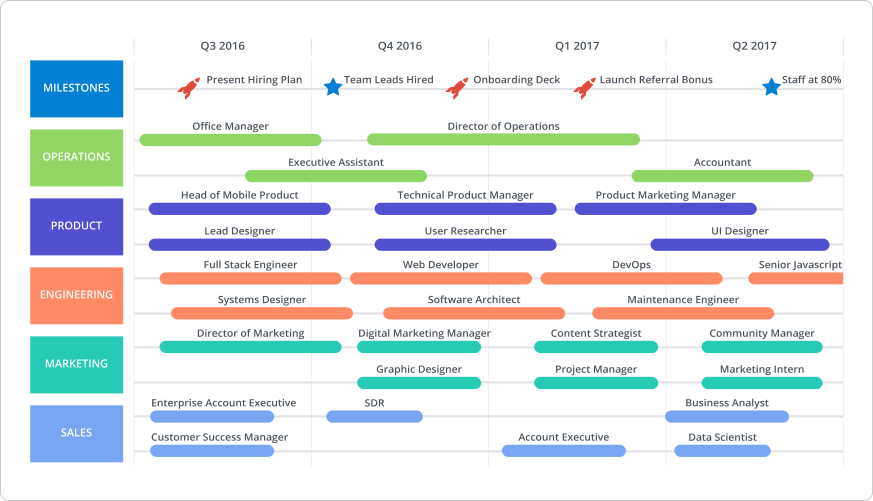
Pick the view that matches how your plans move
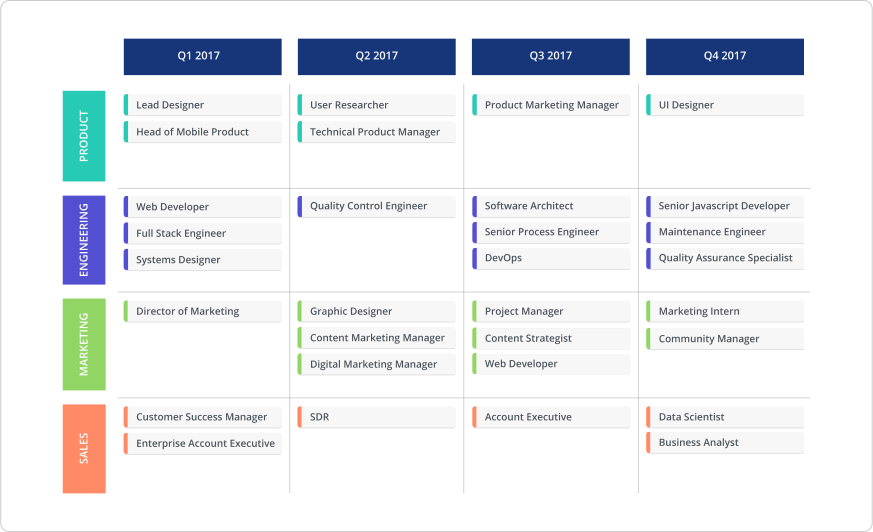
Strategic Roadmaps offers two views for HR teams. Timeline view pins work to specific dates. Swimlane view groups work into flexible buckets when priorities shift often.
View | Best for | Strengths | Example use case |
|---|---|---|---|
Timeline | Date-driven HR plans | Maps milestones, targets, and events across weeks, months, or quarters; shows whether goals are achievable given team bandwidth; strong format for stakeholder presentations | Planning a new HRIS going live in Q2 and a benefits rollout in October, then walking leadership through the year to secure buy-in and resources |
Swimlane | Growing or fast-changing teams | Groups work into flexible buckets (months, quarters, "soon," "later") so priorities can shift without rebuilding the roadmap; pivots by department for a consolidated hiring view | Tracking hiring across departments and presenting one screen to executives that shows all hiring plans with full transparency |
Both HR roadmap templates – Timeline and Swimlane – are available in the Strategic Roadmaps template library.
If you're someone who's never built a roadmap before, this process will take less time than you expect and give you something you actually use every day. Grab an HR roadmap template from the library to get started.
Sign up for a demo
Request demo
2026 State of SPM report
This is the data you've been looking for
This original research from almost 700 PMO leaders shows you what is working, what is wobbling, and what it all means for SPM in 2026.
Download the 2026 State of SPM reportFrequently Asked Questions
Couldn't find what you need?Go to our documentation
An HR roadmap is a planning document that maps your people team's priorities, initiatives, and timelines so leadership can see how HR work connects to business goals. It can cover hiring plans, culture programs, system rollouts, and policy changes. Some teams keep it simple with a few key projects; others build out an HR technology roadmap for system implementation or a broader HR transformation roadmap when rethinking how the function operates.
At a minimum: your objectives, the initiatives tied to each one, rough dates, ownership, and how you'll measure progress. Many teams also map dependencies and risks. If system changes are part of the plan, include an HRIS roadmap so tech and process timelines stay in sync. Budget estimates matter too – attaching cost figures to each initiative turns the roadmap into a real decision-making tool rather than a wish list.
A roadmap that includes career path milestones gives employees a visible answer to "what does growth look like here?" When people can see how they'll develop over time, they're more likely to stay – which means fewer backfill hires and lower recruiting costs. Documenting career paths on the roadmap also helps HR plan development programs ahead of demand rather than reacting to turnover after the fact.
Monthly for small adjustments, quarterly for a real review of priorities, budgets, and capacity. Fast-growing teams may need to revisit more often as headcount changes shift what's feasible. If you're running a larger HR transformation, write down your decision criteria at the start and check back against them regularly – it keeps you from overcommitting when new requests arrive mid-quarter.