How Tempo solved time, capacity, and accountability issues at a global company


What is the most efficient and stress-free way to manage a Jira instance of thousands of users spread across dozens of countries? If it were easy, Tempo probably wouldn’t exist.
We spoke with one of the world’s leading technology providers about how they manage an international workforce, get folks to log their time, finance to audit it, and senior leaders to understand where their investments go.
Their secret? Tempo’s Timesheets and Capacity Planner sit at the center of how they make all of that work.
We spoke to Rohan Kulkarni, their principal solutions architect, about the work they do and how to work with users from across U.S. and U.K. to Saudi Arabia, Brazil, and beyond effectively.
They have chosen to be anonymous for this customer story.
How Timesheets works across a global team
When you work across multiple countries, teams, and timezones, reliable and usable data can be hard to come by. For this team, roughly 4,000 active users submit timesheets every Friday. Every submission goes through a structured approval chain – managers approve their teams' hours before records are finalized.
The data then flows in one of two directions:
For internal projects It feeds into a central finance tool where the company tracks costs and allocations.
For client-facing projects Time logged in Timesheets gets exported and sent directly to the client's own billing systems. They charge the client for the hours worked. One source of data, two separate destinations, both audit-ready.
However, Jira tracks work at the issue level. It doesn't have a native approval process, and it doesn't stop anyone from editing a time entry after the fact. For a business where logged hours feed directly into client invoices and internal finance allocations, that's not workable.
"We have to have the entire audit trail for the finance approval side," says Kulkarni, the principal solution architect at the company. "At the end of the day, whatever time is happening inside Jira is being billed. Somebody's paying for that!
"Timesheets came into the picture to give us approvals we can trust. It’s what we’ve used since 2018, when we were only around 100 people."
Keeping those flows clean and auditable would be significantly harder without a consistent approval process sitting above every time entry. Timesheets is an essential part of the workflows at the company, both for data and approvals.
"Tempo is one of the plugins we can’t live without."
Rohan Kulkarni, Principal Solutions Architect
A resource picture leadership can act on
Jira's planning tools work at the issue level. Story points, original estimates, sprint commitments – all of it ties to the work, not the person. What it can't show is whether a specific engineer actually has capacity in the next four weeks, or whether the work being planned fits the people available to do it.
That's the gap Capacity Planner fills. The team adopted it primarily to give managers a way to plan hours at the individual level and give leadership a clearer picture of what’s coming.
"The top management now has a clear view: For this bucket, that much is planned. They can understand if a team needs more resources. They're able to understand all those things now."
Rohan Kulkarni, Principal Solutions Architect
Kulkarni and the team built dashboards on Capacity Planner data that organize hours by activity type – development, testing, and ten other categories. Senior directors can see what's planned across their areas. Top management sees the full picture, like what has been logged historically, what's planned going forward, and whether specific activity types are under-resourced.
Logged hours and planned hours sit side by side in the same view. The comparison between past performance and future plan is immediate – no switching between tools, no manual exports.
What's next
The team is working toward a migration from Jira Data Center to Atlassian Cloud. One entity within the organization, based in Europe, has been running Timesheets and Capacity Planner on its own separate Jira Cloud instance for several years. Their experience is feeding into how the wider business thinks about the move.
For a lean team managing tools for thousands of engineers around the world, Timesheets and Capacity Planner are what Kulkarni needs to keep the company thriving and serving its customers worldwide.
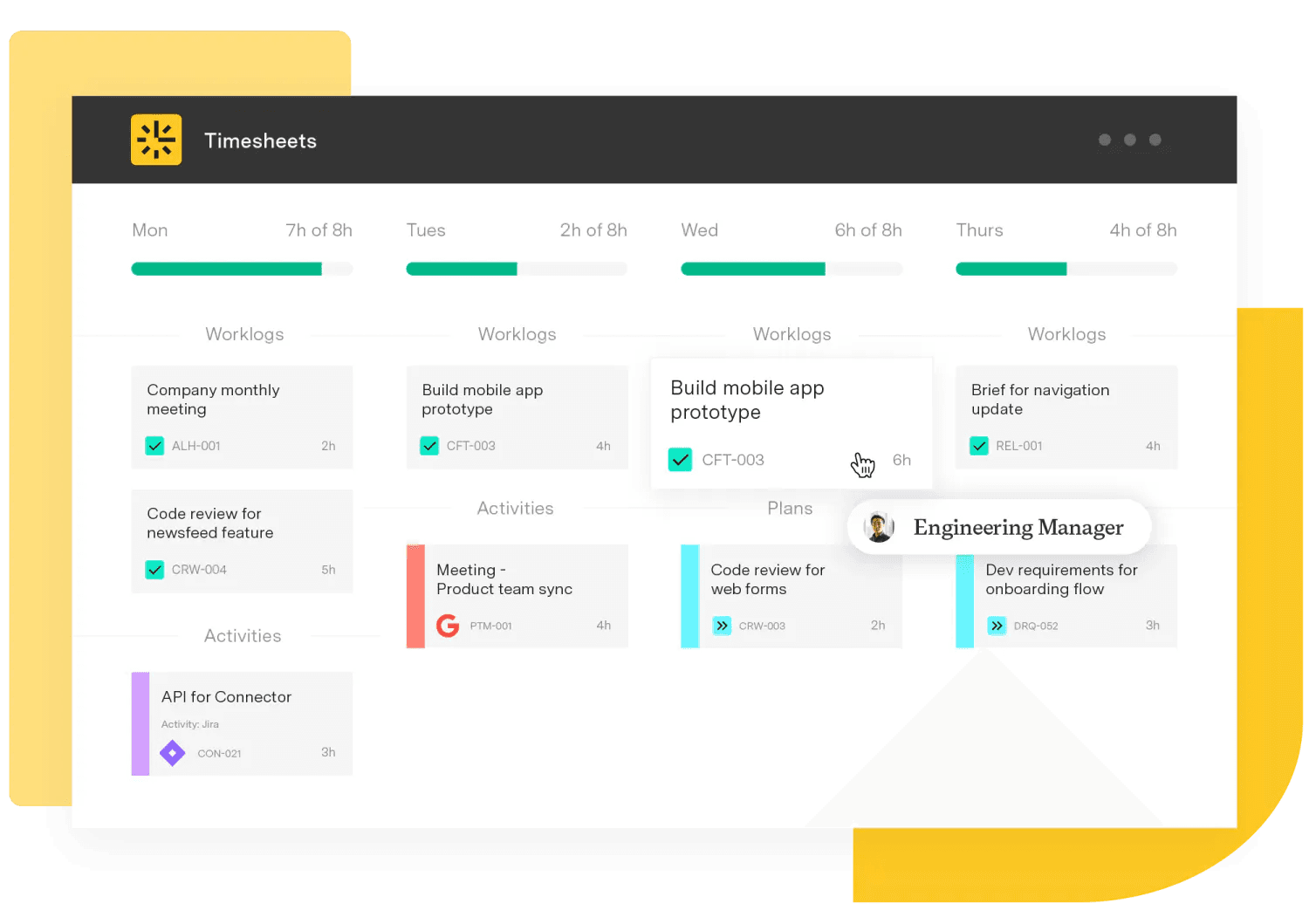
Timesheets
Optimize your projects, teams, and resources
The #1 time-tracking app for Jira. Timesheets seamlessly integrates with Jira and your existing workflows to help you track time for accounting, CapEx tracking, client billing, compliance, and more.
Start a Free Trial