Clean billing and detailed data: Why SultanBank chose Timesheets


We spoke with one of the world’s largest banking groups about how they use Tempo to provide a host of financial services to their 8 million customers across the world.
That work requires careful process tracking, clean billing cycles, and the ability to get granular data from your team, not just surface-level insights.
However, their old solution for tracking time wasn’t suitable for a company with requirements like theirs. Like many organizations, they were using an internal time capture tool – but it couldn’t communicate with where their teams were logging work.
They have chosen to remain anonymous for this case study – so we will refer to them as SultanBank throughout.
SultanBank’s teams were logging their hours in Jira, but no one could see where those hours were actually going. All that finance and leadership could see were the highest-level data points.
For a billing cycle that runs like clockwork each month, that kind of vagueness can create real problems – particularly for a major international financial institution.
"We wanted to drill down to the task level and see what work was actually happening, but we couldn't do that," says Alex Seth, who leads Jira support at SultanBank. "The detail was in Jira – but our time capture tool was too high-level.
“Tempo Timesheets was the answer to that problem."
Why Timesheets
The decision to move to Timesheets came down to one thing: Granularity. SultanBank needed a solution that lived where the work happened – inside Jira.
"Timesheets plugged right into Jira, so it just made sense," Seth explains. "It captured everything, even down to the subtask level, and finally gave us that clear view we wanted of what our teams were working on.”
The other draw was Tempo’s support for more rigorous processes. Timesheets’ approval workflows and billing period management were capabilities SultanBank simply didn't have before – essential for running a clean monthly billing cycle across thousands of users.
The contrast with native Jira is also worth noting. "Native Jira doesn't give you these capabilities," Seth points out. "Tempo gives you a bird's-eye view of everything you're submitting before you submit it – your teams, the settings, the config, the audit. Everything is clustered very nicely."
"It's an amazing tool." Alex Seth, Lead Jira Support Team, SultanBank
However, bringing any new tool to 3,500 users is a big undertaking. SultanBank didn't rush it.
"It was a phased approach," says Seth. "We had a huge change management initiative – training, hand-holding, and post-implementation support." The team helped users understand not just how to use Timesheets, but why the change mattered and what would be different.
One advantage: Most team members were already in Jira every day. Timesheets was a natural extension of the environment they already knew.
"They were already using native Jira for sprint velocity and managing tickets," Seth notes. "It was just the idea of getting used to capturing time in a timesheet and submitting it."
The rollout went smoothly – and the adoption stuck.
Visibility, accountability, and clean billing cycles
Six years on, Timesheets is embedded in how SultanBank works. The benefits show up in a few key areas:
Task-level visibility: Finance and leadership can now see effort at every level of the hierarchy – right down to the subtask. That's a fundamental shift from where they started." Drilling down into projects has helped us greatly with our reporting and productivity," Pillay says.
A billing cycle that actually closes: SultanBank runs a strict monthly timesheet cycle. Tempo's approval and rejection workflows make this possible at scale – and give the team clear visibility into recovered hours from approved timesheets.
Better auditing and reporting: The audit capabilities in Tempo have become a core part of how the team reviews work and validates data.
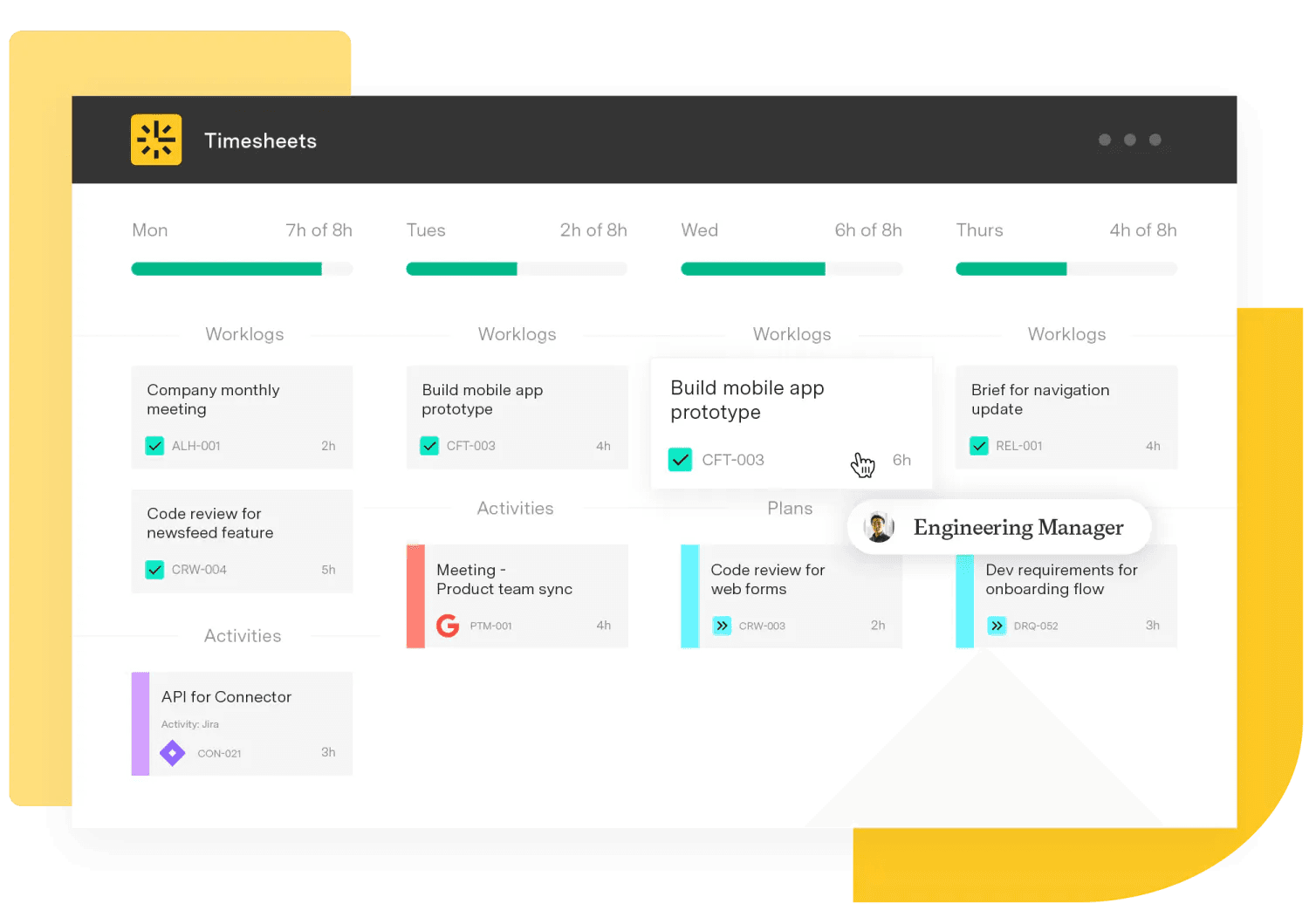
Logging time without leaving the ticket: One of the most-appreciated wins for end users was simple: You don't have to leave what you're working on to log your time.
"When the squad members were on a ticket, they could capture their time right there and then," says Seth. "That integration with Jira makes it easy."
A powerful tool – when you know how to use it
After six years with Tempo, Seth has a clear perspective: The tool rewards teams who invest in understanding it.
"It's a powerful tool, and you also need to understand what the setup means and how you set it up is important," Seth say. “Knowing those details can make a difference.”
Seth highlighted that Tempo’s support team was always on hand to help with queries around implementation – and helped make their continued use of Timesheets a success.
SultanBank continues to evolve how they use Tempo – and for a team this size, with billing cycles running every month and thousands of hours being tracked daily, Timesheets has become less of a tool and more of an operating system for how work gets measured and valued.
Timesheets
Optimize your projects, teams, and resources
The #1 time-tracking app for Jira. Timesheets seamlessly integrates with Jira and your existing workflows to help you track time for accounting, CapEx tracking, client billing, compliance, and more.
Start a Free Trial