How Loop cuts status-report time by 10 hours a week


Tom Rumberg, senior vice president of product at Tempo Software, used to spend two to three hours building a single status report: Pulling a static roadmap out of a spreadsheet or a slide deck, cross-referencing it against Jira, then chasing details down in Slack and email.
Depending on how much was on fire that week, he did that daily, weekly, or every other week.
Resolving that is no small task – but part of the beauty in working in software is you get to trial the latest advancements in technology that could solve old problems that are assumed to be facts of working life.
We spoke with Tom about the difference adopting Loop made for his teams, and his tips for others getting started with the platform.
The challenge: A roadmap that never matched reality
Tom’s day-to-day ran across tools that never quite talked to each other. The roadmap lived apart from the work. Consolidating a single, coherent story out of that for an executive update or a customer board meeting was the hardest part of the job.
Tom put it plainly: "To tell that whole story to somebody else was a nightmare."
Each version of the report also had to shift shape depending on the audience, engineering wanted problem-then-solution, executives wanted the result first, background second, which meant rebuilding it by hand every time.
Bringing the roadmap to where the work happens
Then Tom started using Loop, Tempo's AI-native portfolio tool, as it moved toward general availability.
Before Loop, his roadmap lived in a color-coded Excel spreadsheet, or a slide deck if the team "got real fancy", and it had to be rebuilt by hand depending on the audience, one version for engineering, a different one entirely for executives.
What he noticed right away was that this stopped being static. "The first noticeable difference was that the roadmap was dynamic. It was a living roadmap versus this static thing," he says.
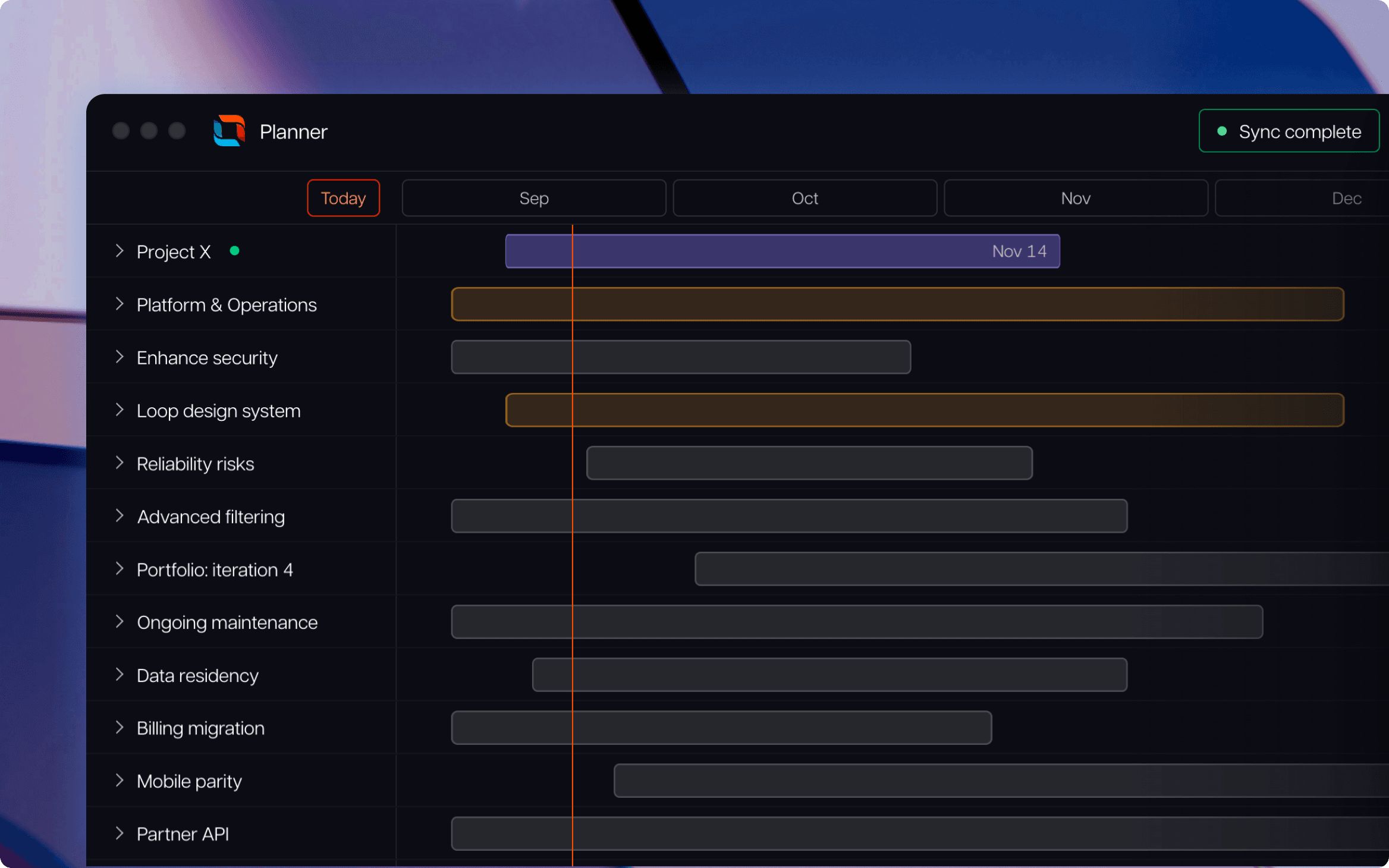
Loop replaced the spreadsheet with a living roadmap organized around strategic objectives instead of scattered line items — and went further than a simple red-and-green status view, surfacing actual recommendations on how to get a drifting project back on track.
That shift surfaced something uncomfortable at first: "Oh man, our data hygiene sucks," Tom remembers thinking.
Missing estimates, unassigned owners, dates nobody had updated – all of it had been quietly absorbed by the old manual process. Loop just showed it.
Tom came to see that as a gift rather than a flaw. A live system can't hide a mess the way a spreadsheet can.
A workflow built on top, not around
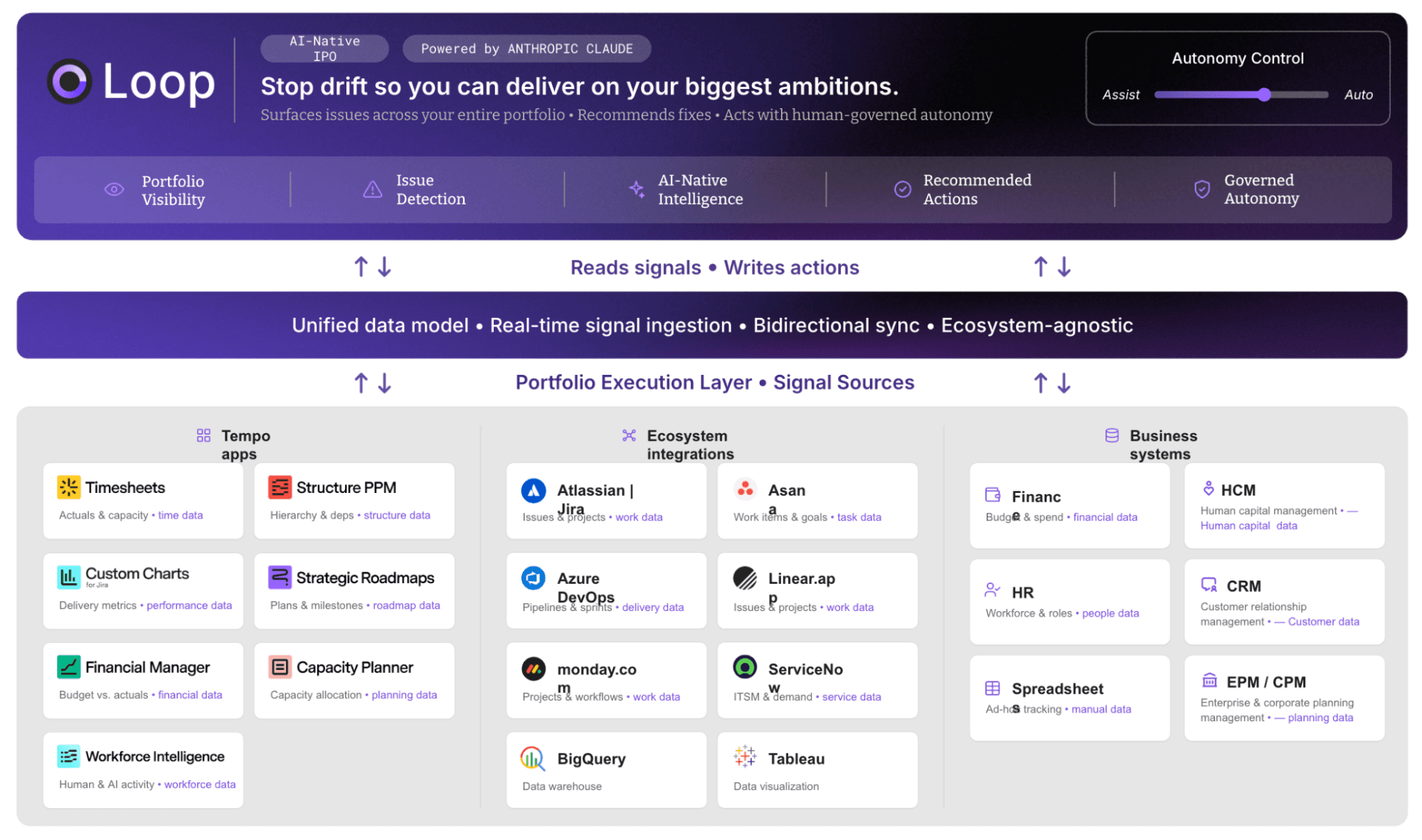
Where it got interesting was what Tom layered on top of Loop. He pairs it with Claude through the “Model Context Protocol”, using Loop as the source of truth on strategy and status, then letting Claude handle the legwork: pulling competitive research, cleaning up batches of stale Jira tickets, and fully automating a status report that used to eat his Friday mornings.
"I'm probably 70% in MCP and 30% in the tool," Rumberg says of his current workflow.
That balance works because Jira and Azure DevOps stay the system of record; Loop only reads status, and nothing writes back until a human reviews and approves it. Rumberg could build his own workaround on top without worrying about anything drifting out of sync underneath him.
What the automation actually does
Tom's Friday routine used to be a multi-hour writing exercise. Now it looks like this:
Automated status report. A skill pulls recommendations, statuses, and roadmap data out of Loop and drafts the report Rumberg sends to Kevin Nanney, Tempo's chief product officer, every Friday morning. Rumberg reviews it before it goes out; he no longer writes it.
On-demand executive updates. A second version serves other executive leadership team members who want an update outside the Friday cadence. Rumberg pulls the same underlying data and adjusts the framing to fit whoever's asking.
Competitive research. Rumberg uses the same Loop data as an input for market and competitive research, run alongside his regular planning work instead of as a separate task.
Ticket clean-up. Batches of stale or incomplete Jira tickets get cleaned up in bulk, either updating Loop and syncing back to Jira, or going straight to the source and pulling the corrected data back in.
All told, Rumberg estimates he's saving easily ten hours a week, some weeks more, since he can now run several of these in parallel instead of one at a time.
The value of catching drift early
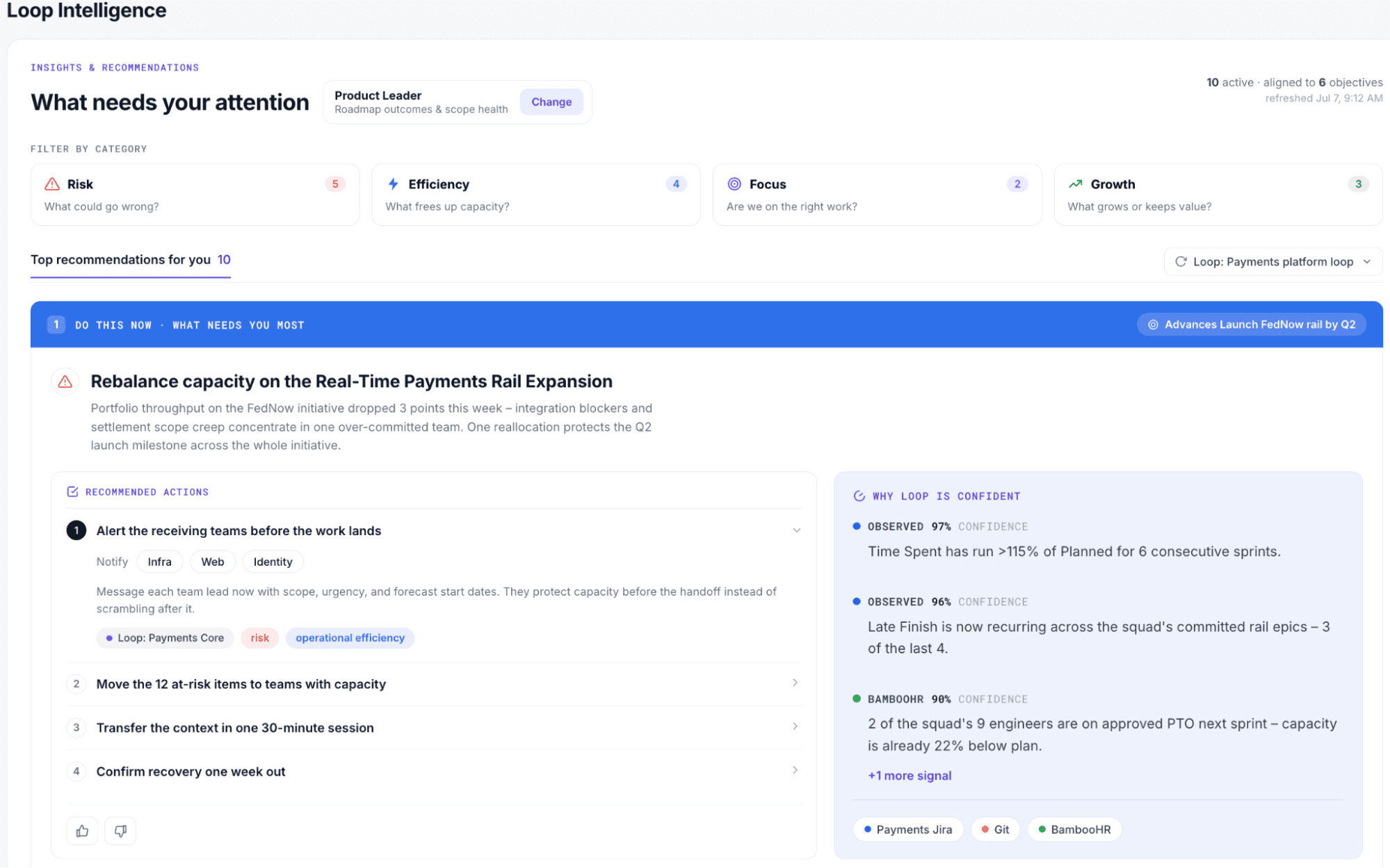
Rumberg was skeptical of Loop's recommendations early on, and he's upfront about it. The first ones were too tactical: Reassigning a team member without knowing anything about that person's actual skills.
As his team attached work to strategic objectives, the recommendations grew up with it, less "move this ticket," more "you're drifting on this product line, go have a conversation."
That shift, from execution-level suggestions to strategic ones, is what Loop's issue detection and recommended actions are meant to drive: Flagging drift early, in language a leader can act on, rather than after it's already a fire.
Tom added his own top tip for any users who start using Loop:
"Start with one small, real portfolio, not a perfect one. Get a few items linked to objectives with honest dates, then let Loop's health and scheduling signals show you what's actually off."
What's next
Rumberg’s story is one of the first built around Loop while it was still in early access. Loop is now generally available to every Tempo customer, and Rumberg’s workflow is fast becoming a template other product and PMO teams inside Tempo are starting to copy.
Now, it gives teams across Tempo, from engineering to marketing, a live portfolio view doing the heavy lifting in meetings, with an AI layer on top recommending how to get everything back into the green.
Rumberg added: "You can finally keep up. The pace of change and the pace of work is real. If I went back even six months, I don't know how I'd manage without these tools.
"Nobody has a clean Jira system. If they tell you they do, they're lying, but with Loop they can."
Tempo Loop
Ambition delivered at the speed of AI.
Direct every human, every agent, and every dollar to the work that matters most.
Book a demo