Jira Align and Tempo: How they coexist in the Atlassian stack
Where Align sets the executive SAFe investment thesis, Tempo carries the labor actuals and capitalization beneath it.


Key Takeaways
Tempo and Jira Align solve different problems and are not direct competitors
Jira Align excels with executive strategy-to-execution, including SAFe-aligned Investment Categorization for CapEx-flagged Epics
Tempo owns the labor actuals below it: Timesheets captures the hours, Financial Manager classifies them as Capitalized labor with a line-by-line audit trail
PMO and finance teams can be live with Tempo in weeks, alongside an existing Jira Align deployment without disturbing it
Jira Align records the SAFe-aligned investment thesis and flags Epics for CapEx via Investment Categorization. Underneath that strategy layer, Tempo captures the labor actuals against those Epics, classifies them into the right ledger, and tracks the cost and capacity the plan ultimately depends on.
Jira Align sits at the top of the Atlassian stack. Per Atlassian's positioning, it connects team-level Jira work to C-suite strategy and fits organizations committing to enterprise agile frameworks – particularly SAFe (Scaled Agile Framework). If you need executive OKR traceability across hundreds of teams and you're ready to fund a transformation program, Jira Align is the right tool for that job.
Tempo, available on the Atlassian Marketplace, works alongside Align. The Tempo SPM suite backs portfolio decisions with auditable cost actuals, CapEx/OpEx mechanics, and capacity constraints – all extending Jira's data model directly. The two products are often deployed together inside the same Atlassian estate.
How do Jira Align and Tempo compare?
Tempo offers a Jira-native strategic portfolio management suite with more than 15 years in the Atlassian ecosystem, and is used by 30,000+ companies. Its modular product line – including Structure PPM, Timesheets, Capacity Planner, Financial Manager, and Custom Charts – extends Jira's data model directly. No parallel hierarchy to maintain.
Jira Align is Atlassian's enterprise agile planning product. It sits above Jira in the Atlassian stack and was purpose-built to connect team-level work to program, portfolio, and executive strategy. It's designed for organizations adopting scaled agile frameworks at the enterprise level and is often sold as part of Atlassian's broader strategy and transformation offerings.
The two products approach overlapping buyers from different angles. Jira Align's premise is that strategy-to-execution alignment is the primary governance challenge, and a scaled agile operating model is the way to solve it. Tempo starts from the other end: portfolio decisions are incomplete without cost, capacity, and time-to-value mechanics – and those mechanics belong inside Jira alongside the work itself.
Both can be defensible choices, depending on which problem the organization is trying to solve.
What each solution is best for
Tempo | Jira Align |
|---|---|
Jira-native portfolio governance with financial and capacity controls | Enterprise strategy-to-execution alignment for scaled agile programs |
CapEx/OpEx tracking, labor cost actuals, and project profitability | OKR cascading from executive themes to team-level epics and stories |
Individual and team capacity planning with planned vs. actual reporting | PI planning, release trains, and SAFe ceremony support at scale |
Modular adoption in weeks – start with Timesheets or Capacity Planner, expand as needed | Enterprise adoption program spanning one or more quarters |
Foundational differences between Tempo and Jira Align
Dimension | Tempo | Jira Align |
|---|---|---|
Primary purpose | Jira-native SPM – time, capacity, financial, and portfolio governance | Enterprise strategy-to-outcomes alignment across programs, portfolios, and the C-suite |
Portfolio management | Custom issue hierarchies across projects and programs via Structure PPM | SAFe-aligned hierarchy (portfolio, solution, program, team) sitting above Jira |
Financial management | Budget vs. actuals, labor costs, CapEx/OpEx, expenses – plus revenue and cost forecasting and project profitability | Investment themes and "invest vs. spend" framing – no time-to-cost conversion |
Capacity planning | Individual + team dashboards, planned vs. actual | Team-level capacity at program increment level |
Time tracking | AI-assisted via Rovo agents (paid Atlassian Cloud; full credits on Premium and Enterprise), with human approval before entries hit CapEx/OpEx accounts and line-by-line audit trail | Forecast-level effort modeling and team commitment tracking at the program level; not built for per-entry timesheets with CapEx/OpEx accounts |
Primary buyer | PMO, finance, Portfolio Managers, Engineering leadership | C-suite, enterprise agile transformation leads, portfolio owners |
Jira integration | Native – Jira is the system of record | Native Atlassian product that sits above Jira in the Atlassian stack |
Each product places the governance center of gravity in a different place. Jira Align puts it with executive strategy and maps downward into teams. Tempo puts it with delivery work and financial actuals, and rolls upward into portfolio views.
If the unresolved problem is cost, capacity, and profitability visibility on top of existing Jira work, Tempo is the closer match. If the unresolved problem is connecting executive OKRs to team delivery inside a SAFe operating model, Jira Align is.
How Tempo and Jira Align approach AI and integrations
Tempo's AI stays close to the work. Rovo agents run across the stack. Structure View Builder builds portfolio hierarchies from a plain-language prompt. Structure Formula Assistant helps PMOs build the roll-up calculations they'd otherwise hand off to a power user. Custom Charts Assistant turns natural-language prompts into Jira dashboard charts.
On the time side, Timesheets Worklog Assistant takes natural-language entries in Jira, Timesheets Summary Analyzer reports project and team-lead time allocation, and Time Insights for Jira surfaces user-level summaries against native Jira worklogs. A human approves every entry before it hits a CapEx/OpEx account, and every entry is auditable line by line. The job is focused: Make portfolio structure, time, and cost data more accurate, so financial actuals, capacity reporting, and portfolio views hold up under scrutiny.
Tempo reads Jira's data model natively, so the AI works on the same data that drives delivery, not a mirrored copy. (Rovo and Tempo's compliance certifications apply to Tempo Cloud; Data Center has a separate compliance posture.)
Jira Align's integration story is built around the Atlassian ecosystem. It connects to Jira Software, Confluence, and the rest of the Atlassian suite, and can ingest data from third-party systems for portfolio aggregation. Its workflow model is built around PI planning, cadence-based ceremonies, and scaled agile rituals.
The workflow philosophies split on a core assumption. Jira Align assumes the organization is building toward a scaled agile operating model. Tempo assumes the organization already runs on Jira and wants to add financial and capacity governance without changing how work is done.
The CapEx coexistence pattern
The CapEx workflow shows how the two products fit together. Jira Align's Investment Categorization feature records the SAFe-aligned investment thesis – an Epic flagged as capitalizable lives in Align as a strategic decision. The flag itself doesn't capitalize labor. Capitalization happens when hours are captured against that Epic and classified at the worklog level.
That's where Tempo takes over. The flow: an Align Epic flagged for CapEx via Investment Categorization, then Tempo Timesheets captures the hours logged against that Epic, then Financial Manager classifies them as capitalized labor with a line-by-line audit trail finance can defend. Align owns the strategic categorization. Tempo owns the financial actuals. The Epic ID links the two.
For organizations running both products, this is the most common operational seam. Align Portfolio Managers decide what gets capitalized. Turning that call into auditable CapEx is Tempo's job.
Top Jira Align strengths
Jira Align's credibility comes from the Atlassian stack it plugs into and from its depth on scaled agile frameworks. If you're already committed to a SAFe operating model, that's the right direction.
Atlassian suite halo and tight positioning alongside Jira, Confluence, and the rest of the Atlassian portfolio
Strategy Collection bundling that simplifies enterprise procurement when other Atlassian products are in play
Deep support for SAFe and other scaling frameworks, including PI planning and release train constructs
C-suite strategy-to-outcomes language that resonates with executive sponsors and transformation leaders
Atlassian transformation services ecosystem for organizations that want a single-vendor change program
Where Tempo sits relative to Jira Align
Tempo handles the operational and financial mechanics underneath Align that turn an Align Epic into an audit-ready ledger entry. MasOrange's adoption of Tempo Structure PPM is one example of an enterprise standing up Jira-native governance; more examples live on the Tempo customer stories page.
Strategy-to-profitability mechanics – time-to-cost conversion, CapEx/OpEx classification, budget vs. actuals, plus revenue and cost forecasting and project and portfolio profitability – that complement Align's Investment Categorization rather than duplicate it
Jira-native architecture that builds on Jira's data model, with no parallel hierarchy to maintain
Modular rollout path that can sit underneath an existing Align deployment: Start with Timesheets or Structure. Add Tempo Financial Manager when finance asks for CapEx reporting tied to Align-flagged Epics. Add Capacity Planner when planning conversations outgrow spreadsheets.
AI-assisted time tracking via Rovo agents, with human approval before entries hit CapEx/OpEx accounts and a line-by-line audit trail
Audit-grade ledger built from the same Jira work data Align already governs at the strategy level
Ideal customer for each tool
Tempo is the right fit when:
PMO and finance are joint stakeholders who need auditable cost actuals on top of Jira delivery data
Capacity planning and resource governance have to work at the individual and team level, not just the program increment level
Leaders need project profitability tied to labor cost and CapEx/OpEx classification
Jira is the system of record and a parallel database would create compliance or reconciliation risk
Jira Align is the right fit when:
The organization is adopting SAFe or another scaled agile framework at the enterprise level
The primary governance need is OKR-to-epic traceability across hundreds of teams
Atlassian transformation services are already engaged and a bundled strategy-to-delivery story is preferred
Executive sponsors are comfortable investing in a multi-quarter adoption program before expecting operational returns
When should you choose Tempo vs. Jira Align?
Choose Tempo | Choose Jira Align |
|---|---|
CapEx/OpEx tracking and labor cost actuals are required deliverables | A scaled agile framework adoption is already in progress |
Finance and PMO are co-buyers asking for auditable cost data | C-suite OKR traceability is the primary governance driver |
Modular rollout in weeks is required | An enterprise adoption program has dedicated budget and timeline |
Jira must remain the single, unambiguous system of record | A bundled Atlassian strategy-to-delivery purchase is preferred |
There is also a newer question Jira Align doesn't reach: What your AI workforce costs and delivers. Workforce Intelligence records human effort and AI activity on the same Jira work item and rolls AI spend up from epic to initiative to OKR, giving engineering and finance leaders a defensible read on AI return – on the delivery data they already govern in Jira.
See what your AI tools cost and deliver, right in Jira.
Try Workforce IntelligenceRecap
Jira Align and Tempo aren't competing to solve the same problem. Jira Align answers how executive strategy connects to team delivery at scale inside a scaled agile operating model. The cost of that answer is a transformation program – framework adoption, data mapping, and a multi-quarter change effort before operational returns arrive.
Tempo starts from where most PMO and finance teams already sit: Jira is the system of record, delivery data already exists, and the unmet need is cost governance, capacity planning, and financial accountability now. Tempo's native Jira architecture means no new system to learn, no sync to configure, and no parallel database to maintain. Financial actuals, capacity views, and portfolio reports are live within weeks of activation.
If both strategy alignment and financial governance matter, the two can coexist: Jira Align handles executive OKRs, Tempo handles the cost, capacity, and time-to-value mechanics underneath. For teams that need portfolio governance without a transformation budget, Tempo is the direct answer.
Compare Tempo to other solutions
See Comparisons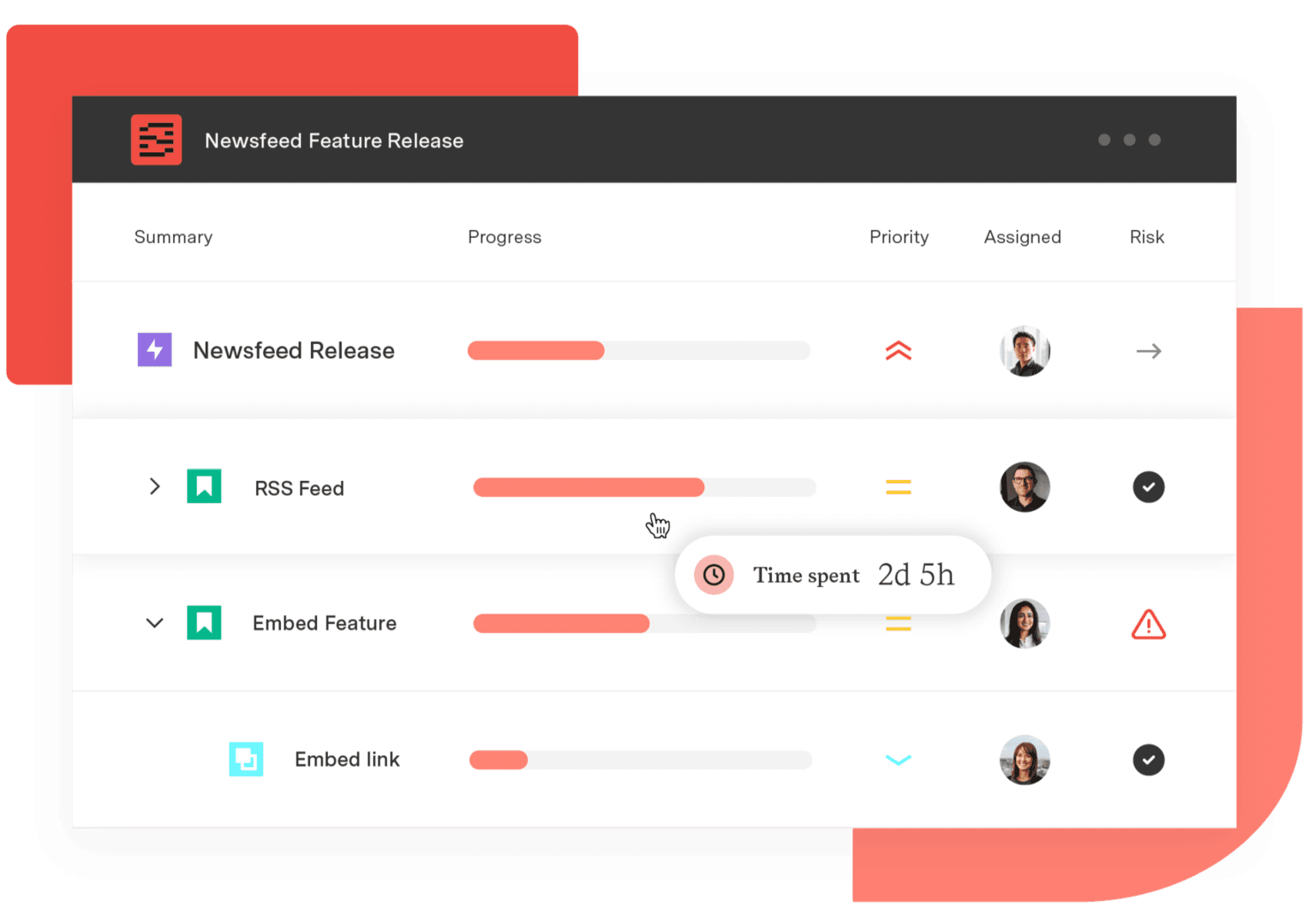
Structure PPM
Align your entire organization
Manage products, projects, and programs in a single spreadsheet-like view. By providing a clear, real-time view of project progress and resource allocation, Structure helps teams meet deadlines and adapt swiftly to changing priorities.
Start a Free TrialFrequently Asked Questions
Couldn't find what you need?Go to our documentation
Tempo and Jira Align coexist. Align owns the executive strategy-to-execution layer, including SAFe-aligned Investment Categorization that flags Epics as capitalizable. Tempo excels at the labor actuals layer below it. The workflow: an Align Epic flagged for CapEx via Investment Categorization → Tempo Timesheets captures the hours logged against that Epic → Tempo Financial Manager classifies them as Capitalized labor with a line-by-line audit trail. Align Portfolio Managers own the strategic categorization. Tempo owns the financial ledger underneath. Many enterprise Atlassian customers run both products in production.
Tempo customers typically activate core modules within days and reach full portfolio governance configuration within a few weeks. Jira Align implementations are usually structured as adoption programs spanning one or more quarters, especially when SAFe adoption is part of the scope.
Yes. Tempo Timesheets supports CapEx/OpEx account classification, so organizations can tag time logged against Jira issues to capital or operating expense categories. Tempo Financial Manager surfaces those classifications alongside labor cost actuals, budget vs. actuals, expense tracking, revenue and cost forecasting, and project and portfolio profitability.
Tempo Timesheets uses Atlassian Rovo agents – Timesheets Worklog Assistant, Timesheets Summary Analyzer, Time Insights for Jira, and other AI agents for Structure and Custom Charts. They handle time-logging suggestions, variance detection, and workload insights. A human approves every entry before it hits a CapEx/OpEx account, and every entry is auditable line by line. The AI feeds directly into financial actuals and capacity reporting. Jira Align's positioning, per Atlassian, centers on enterprise agile planning rather than AI-driven time and cost intelligence.
Not in the Tempo sense. Jira Align is an enterprise agile strategy and OKR-cascading product with program- and team-level capacity planning for PI planning, but it doesn't include native time tracking with CapEx/OpEx accounts or labor-cost financial actuals. Organizations that need those mechanics typically pair Tempo Timesheets, Capacity Planner, and Financial Manager with their Jira instance.
Jira Align is Atlassian's own enterprise SAFe and strategy product, sitting above Jira and oriented around OKR cascading, PI planning, and program ceremonies. Tempo's SPM suite – Structure PPM, Timesheets, Capacity Planner, and Financial Manager – is a modular Jira-native alternative focused on governance and finance rather than scaled agile ceremony. Tempo runs inside Jira as Marketplace apps; Jira Align is a separate Atlassian product with its own data layer.
Both products price on a per-user basis, but the buying motions are different. Tempo is sold as modular Marketplace apps that can be activated independently, so PMO and finance teams can start with one product (often Timesheets or Structure PPM) and expand. Jira Align is positioned as an enterprise platform purchase, often bundled with Atlassian transformation services. For current numbers, check the Atlassian Marketplace listings for each Tempo product and Atlassian's Jira Align sales team directly.