Using Tempo Planner to streamline the management of teams and resources to find available team members and maximize your resource utilization.
Team planning can get really messy when every team takes its own approach

You may have forgotten the 1998 film A Bug’s Life (though nobody would fault you for forgetting a 25-year-old kids’ film), but there is an excellent bit of wisdom delivered in a small scene by the main villain – Hopper.
Just as everything goes wrong for Flik, the new leader of the ants, she looks for things to blame. That’s when Hopper comes out with, “ah ah ah, first rule of leadership: Everything is your fault.” When projects and plans all start to unravel, the fault usually lies with the people who made those plans, not the ones executing them.
However, a lot of things that don’t work (and a precious few that can) help bring teams and people together when it matters most.
At Tempo, we’ve been working with a wide variety of teams that follow a whole range of methodologies. One of our goals is helping companies take a strategic stance where individuals are achieving their best work, teams are well-orchestrated, and business units are sharing resources and staying aligned on their priorities.
Ultimately, that’s the recipe for a high-performing strategic enterprise. Unfortunately, it’s a hard recipe to get right.
Team planning can get really messy when every team takes its own approach. How can a professional services team, which plans on an individual basis, stay on the same page with an agile development group that plans work on a team basis?
For companies to truly benefit from capacity management, they need to enable both individual and team planning – ideally, both within the same dashboard.
So that’s what the Tempo Planner team decided to do – they spent the past year working on dozens of features to bridge the gap between individual and team level planning and help leaders manage their resources, people, and projects and not have to double-check where everything is or keep a running tab in their head.
Here is a quick blast of what we added:
New Team planning views for team-centric planning aid product companies with visualizing multiple teams, managing shared resources, and team plans.
A new team capacity dashboard for centralized insights into organizational or departmental capacity, utilization, and team operational efficiency.
Team specific insights within the dashboard to help pinpoint bottlenecks and areas where productivity can be improved.
Team capacity indicators for planning and managing all of an organization's team capacity during PI planning directly within the tool.
There is so much value leaders can get from having better visibility into how individuals and teams are being utilized, how tasks are prioritized, and how to effectively share resources to accomplish each goal in the order it should be done.
Remember, there’s a flip side to Hopper’s leadership insight: Everything may be your fault when it’s going sideways, but when things start running more smoothly you get to take some credit for that too.
No more overbooking or stale spreadsheets! Try it out.
Sign up for a demo
Request demo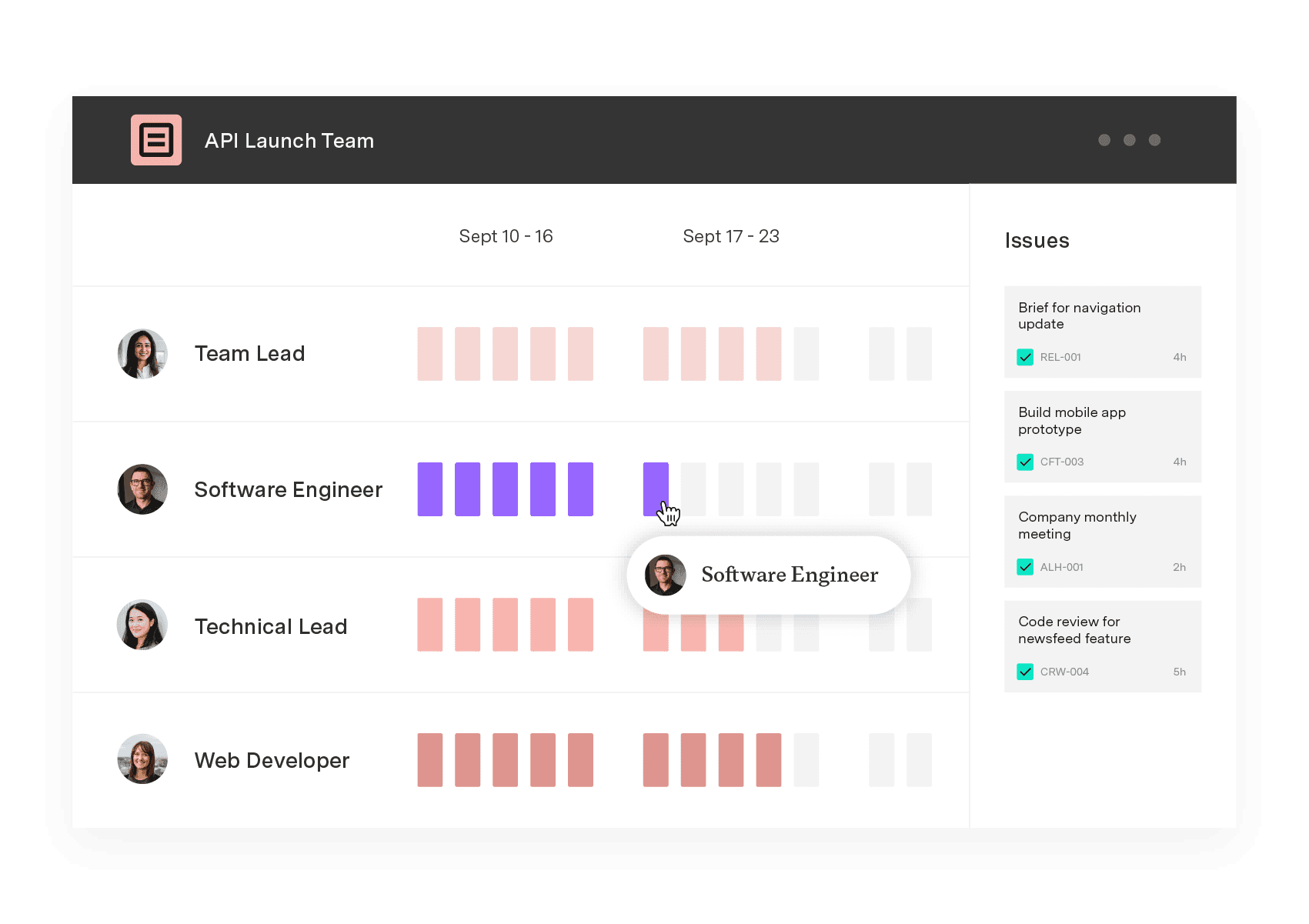
Capacity Planner
Capacity Planner is the only tool in the Atlassian Marketplace that allows planning for multiple resources on one issue. Users can customize the UI to include their existing Jira issues and projects.
Start a Free TrialUsing Tempo Planner to streamline the management of teams and resources to find available team members and maximize your resource utilization.

Failed projects present a learning opportunity. Explore these famous project failures and find out what went wrong so you can get it right.

Discover how strategy execution management bridges the gap between planning and doing. Learn tips to ensure your organization achieves its goals.

Roadmaps are essential to bridge the gap between planning and action. Learn how to transform your roadmap into a dynamic, decision-ready tool.

Project managers perform structured investigations using root cause analysis to uncover why problems happen and prevent repeat issues.

Introducing two new tools built on Atlassian’s AI platform, Rovo: the Structure Formula Assistant and the Sprint Performance Assistant.

Cross-Jira reporting improves your execution for multiple projects by helping you monitor resources and identify dependencies to optimize execution.
Learn what an affinity diagram is, how to create one, and how it helps teams organize ideas and turn insights into action.

Learn how ecosystem mapping helps you visualize relationships, spot opportunities, and make smarter decisions for your projects.