How Wienerberger AG uses Structure PPM across a global enterprise


Wienerberger has been building for more than 200 years. From bricks and clay blocks to piping and drainage systems, the company operates across a broad industrial landscape with approximately 20,000 employees worldwide.
Managing projects in such a decentralized organization is challenging enough. Managing an enterprise-wide portfolio across dozens of countries, business units, and working styles is an entirely different story.
The core problem they had to face was how to give project managers across 20+ countries a consistent way to track and report work, without stripping out the local flexibility that makes each entity successful?
“We can never enforce a corporate strategy that does not work locally,” says Gencho Srebrev, Team Lead – Strategic IT Projects and Process Advisory at Wienerberger AG. “The goal is always to find solutions that enable global transparency while still giving teams enough flexibility to work effectively.”
For Wienerberger’s IT and PMO teams, Jira combined with Structure PPM became the platform of choice for understanding an enterprise-level IT portfolio – a fusion of big visibility with local flexibility.
From SharePoint to a scalable Jira ecosystem
After moving from SharePoint-based project coordination toward Jira, Wienerberger introduced Structure PPM and Gantt Charts for Structure to extend Jira’s portfolio and reporting capabilities.
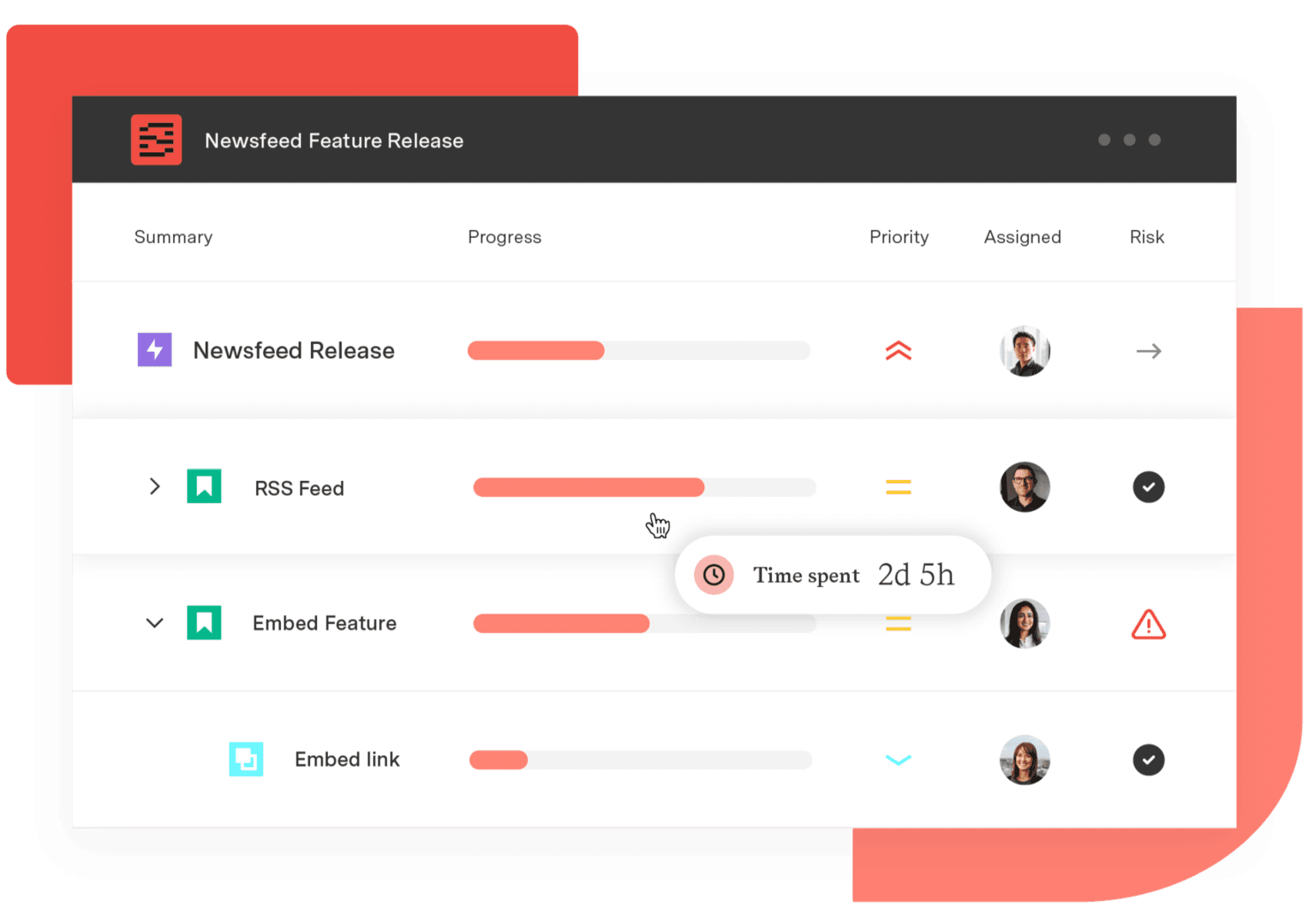
Structure is a project management tool that can visualize all Jira projects, programs, and portfolios in one place – and represent any number of custom fields either in a spreadsheet view or a Gantt chart.
Wienerberger’s regional PMOs use automatically generated structures to consolidate and visualize all the work in their portfolios directly from Jira data.
Projects can be grouped, filtered, and organized dynamically, while integrations with SAP ensure that financial and project-related information remains up to date.
The result is a centralized but flexible reporting environment that gives stakeholders live access to portfolio data without relying on static exports.
“I can simply share a link during a steering committee meeting and management can immediately access the latest information,” says Srebrev. “One of the biggest mindset shifts was moving away from screenshots and PDFs toward live data that is always current.”
Organic adoption across business departments
What began in IT eventually expanded into additional functions including finance, marketing, product management, contract management, and security.
According to Srebrev, adoption was not driven by top-down enforcement.
Instead, teams became interested after collaborating with IT on shared initiatives and seeing how the solution improved visibility and coordination.
“Adoption works best when people see value themselves,” he says. “You can demonstrate possibilities, but forcing tools rarely creates long-term engagement.”
Over time, Structure evolved beyond classic project management usage.
“It’s used for project management, reporting, structuring information, and even lightweight operational tracking,” Srebrev says. “In many scenarios, it becomes a more transparent and collaborative alternative to spreadsheets because everyone can immediately see changes and ownership.”
Supporting all kinds of work
Srebev and the team also needed something that could operate with a mix of agile, hybrid, and traditional delivery models – Structure PPM helped to bridge that gap between different project management approaches by allowing project managers to plan to use timelines and Gantt-style visualization, while development teams continue working in agile boards and sprints.
“The project manager thinks in timelines with milestones and due dates. The developer thinks in sprints,” Srebrev explains. “Structure allows both perspectives to coexist without forcing one methodology onto everybody.”
Executive reporting without manual consolidation
One of the major advantages for leadership teams has been the ability to create tailored reporting views directly within Jira.
For example, dedicated structures were configured for executive stakeholders, including finance leadership, combining project status, financial tracking, and portfolio health indicators into a single spreadsheet-style view.
This eliminates much of the manual effort traditionally associated with preparing steering committee or board-level reports.
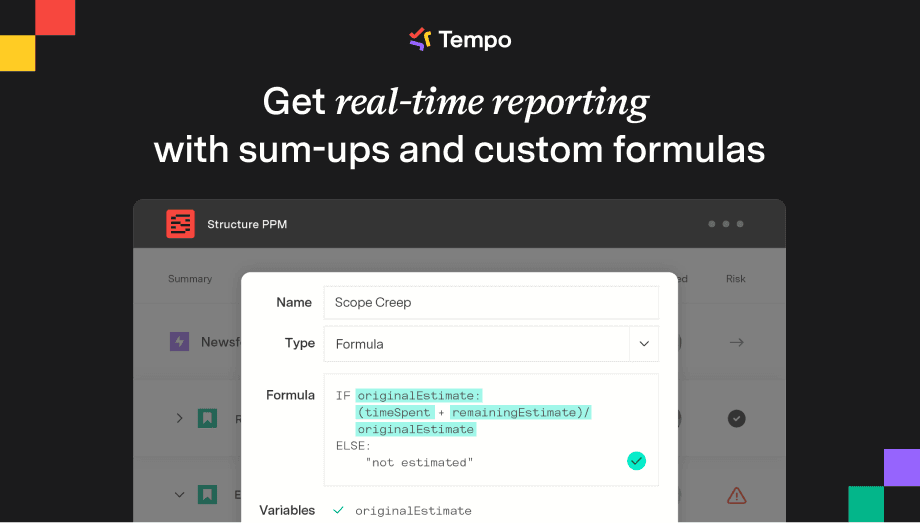
Enabling self-service through the Formula Assistant
One capability Wienerberger teams frequently use is Structure’s formula and automation functionality.
Calculated columns, conditional logic, custom KPIs, and advanced reporting often require scripting knowledge that many business users do not have.
According to Srebrev, the introduction of the Structure Formula Assistant significantly simplified that process.
“Some colleagues discovered the assistant on their own and started using it to generate formulas for their use cases,” he explains. “It reduced dependency on experts and helped teams become much more self-sufficient.”
For a decentralized organization operating across countries and departments, that type of self-service capability became especially valuable.
Lessons for enterprise PMOs
After years of driving portfolio management and process standardization initiatives at Wienerberger, Srebrev believes one mistake organizations frequently make is focusing on tools before defining processes.
“Technology should support a process – not define it,” he says. “The most important step is understanding how a team actually wants to work before implementing workflows in Jira.”
He also recommends introducing solutions incrementally rather than attempting immediate large-scale transformations.
“Start small. Give people access, train them on the basics, let them see the value, and build from there,” Srebrev says. “If users understand the capabilities and experience practical benefits themselves, adoption becomes much easier.”
A long-term part of Wienerberger’s Jira landscape
Since initially introducing Structure PPM, Wienerberger has also completed a broader migration of its Jira environment to the cloud.
Today, Structure remains an important component of the company’s Jira ecosystem, supporting portfolio management, reporting, and collaboration across multiple functions and countries.
For Wienerberger, the focus was never simply deploying another project management tool.
The objective was creating a scalable and flexible environment that could support both global transparency and local ways of working – at an enterprise scale.
Structure PPM
Align your entire organization
Manage products, projects, and programs in a single spreadsheet-like view. By providing a clear, real-time view of project progress and resource allocation, Structure helps teams meet deadlines and adapt swiftly to changing priorities.
Start a Free Trial