
From invisible issues to impactful insights: The 3 Banken IT story

3 Banken IT is the internal IT provider for an international financial powerhouse created from the union of three Austrian banks that operate throughout central Europe.
We spoke with Jurica Petricevic, their Atlassian product specialist, about his work supporting three major banks and thousands of employees in everything from infrastructure to application development – and how Tempo’s solutions platform help him and his team get the job done.
Visibility into every detail
Petricevic said that before using Tempo, it just wasn’t possible to get a view of all the work going on across teams. Their old system could provide some information overall, but it couldn’t give them data or visualizations at the issue level.
That level of visibility can seem like a small matter, but when that issue-level work remains invisible, it can lead to some major headaches for teams:
Visibility gaps: Teams can't see what's actually blocking progress until it's too late – a "50% complete" epic tells you nothing about whether three critical problems are sitting unresolved.
Accountability is muddled: When the unit of tracking is a feature or sprint, it becomes harder to know who worked on what, and mistakes get made when people assume someone else is handling an issue.
Retrospectives lack data: You can't look back and understand why a project failed or succeeded. Issue-level history gives you the root cause; milestone-level history gives you only outcomes.
Silo threats: If your PM tool can't track at issue level, it might force teams to create their own systems to track what they need – for engineering, IT, PMs, or any role. This leads to sync overhead, duplicate work, and a constant "source of truth" debate.
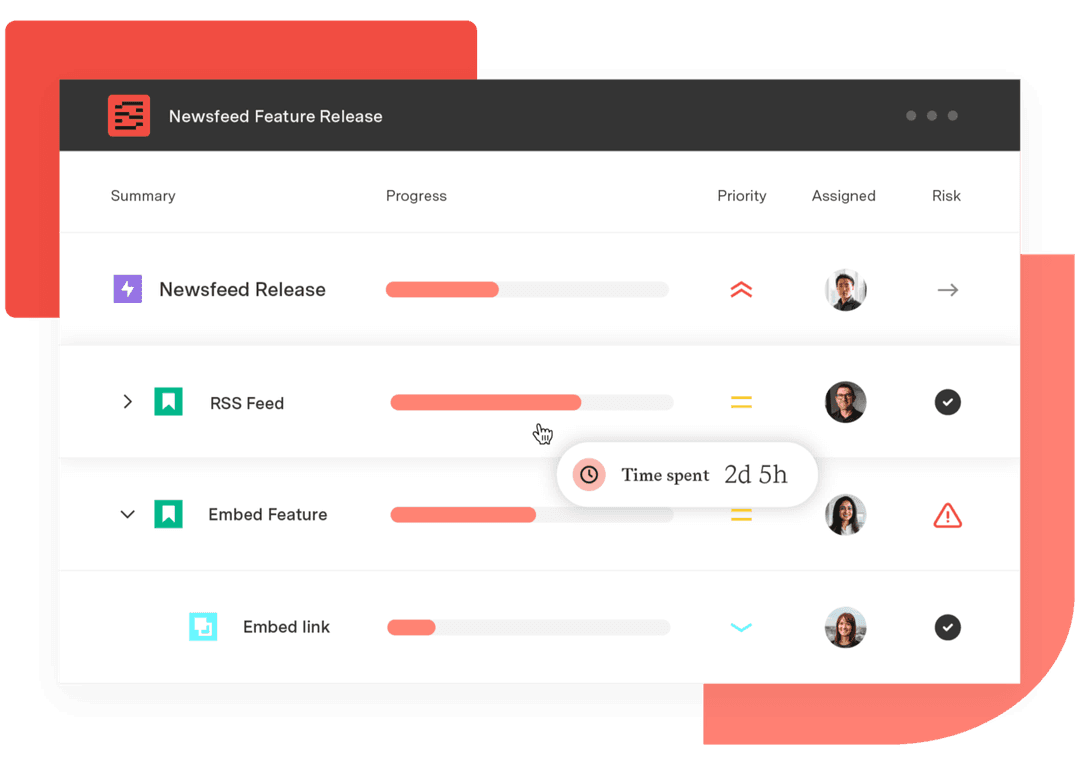
Petricevic said: “We wanted to understand more than just the big picture of what everyone was doing. That required a change, and the tool we needed was Structure PPM.
“Structure gave us the views and insights for work, both at the task level and the big-picture level. We needed something that could give us oversight, but also could go down to the issue level.”
They were careful with their implementation – starting with a small team and phasing it out over the course of many months to factor in more and more teams.
A platform with power and purpose
Visibility was just the start – before adopting Tempo, work was planned in messages and emails. Now everything can be done in Jira itself, with no swapping between tabs.
There was no need to keep that change to his own teams however – after seeing Structure’s effectiveness at visualizing and tracking work, Petricevic began introducing Structure to other teams until it was adopted across the entire organization.
The rollout was so successful that Petricevic and his team began to add other Tempo modules:
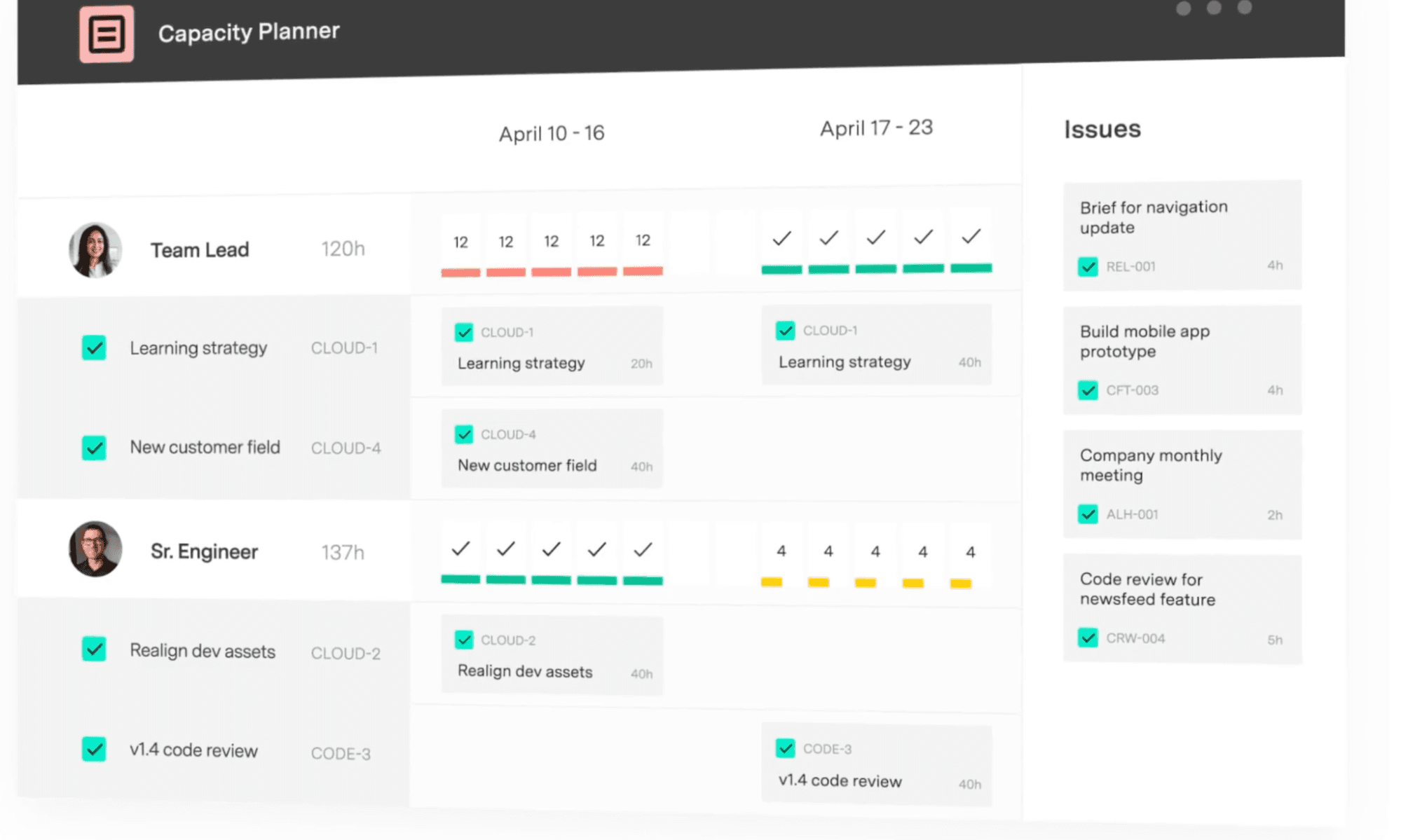
Capacity Planner was brought in to manage teams’ capacity and resources, providing insights into upcoming blockers. It also helps visualize resource availability, roles, and skills.
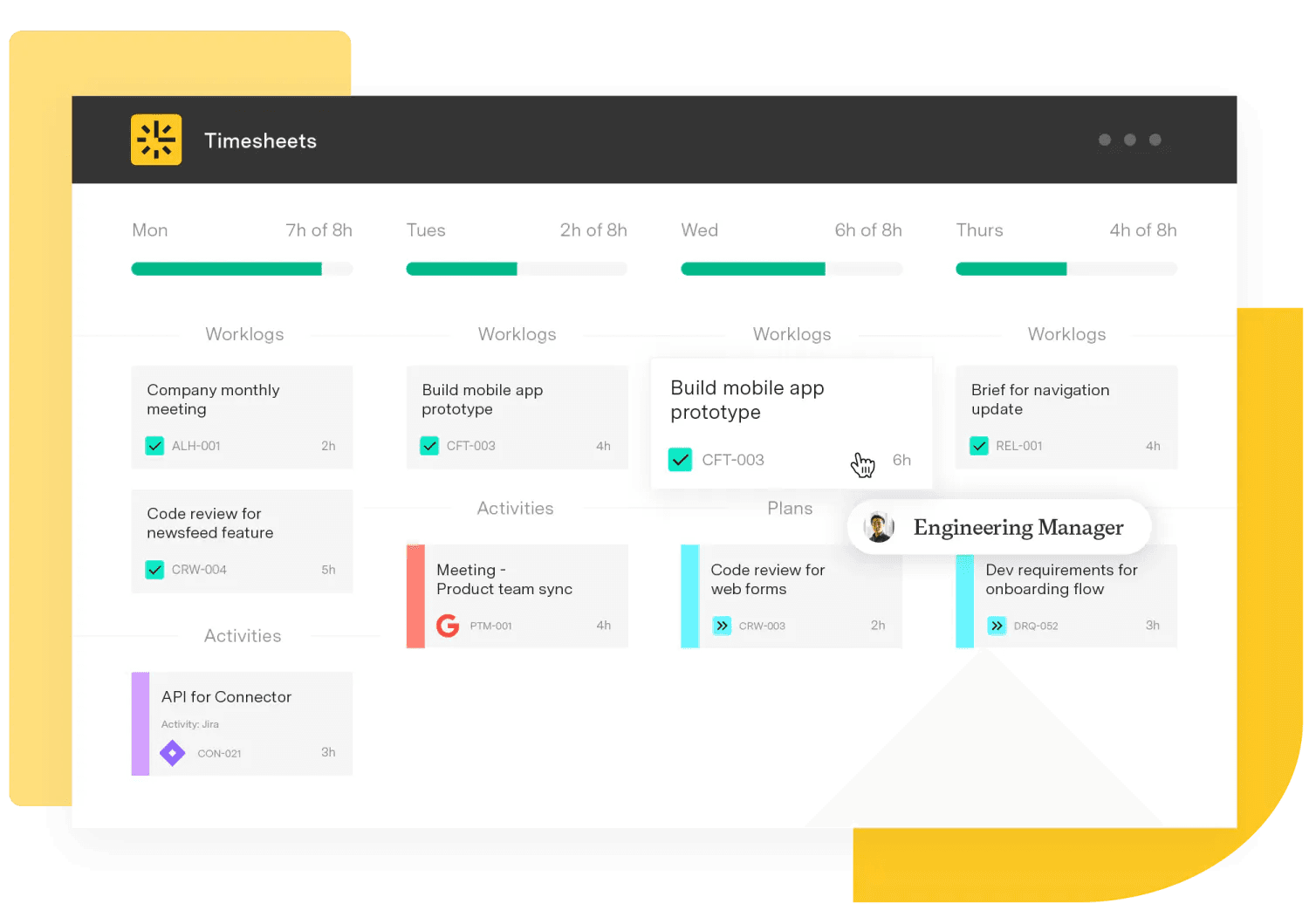
Timesheets now gives 3 Banken Jira-native automation for quick and simple time tracking, so they can see how time is being spent without adding mundane administrative tasks.
Like Capacity Planner and Structure, Timesheets drops right into an existing instance, transforming Jira into a one-stop-shop for all the things a team needs to visualize progress, manage capacity, and track time.
Marko Turic, 3 Banken IT’s Jira Developer, said: “The whole company uses it now. Every team has its own Tempo Team, every project has its own Tempo Team, and everything is linked together to track and plan. “Internal work, external projects, plans, capacity, reporting, the work being done and logged in real time – it is all done through our Tempo solutions.”
The cloud migration and what it unlocks
3 Banken IT is currently migrating from a data center setup to the cloud – partly out of necessity, since Atlassian announced DC is reaching end of life, and partly because the developer team had been dreaming of moving to cloud for years.
Working in the data center meant working around limitations. For example, Petricevic’s team wanted to surface Tempo data inside Structure. In the cloud, that's built in. In the data center, it required building complex ScriptRunner formulas that ran nightly jobs heavy enough to occasionally take their instance down.
"In the cloud it's there, just like that," said Petricevic. "It's funny how the things that we needed were already there – but not in the data center version."
How to get adoption from your teams
When asked what advice they'd give to other IT teams considering the same tools, Petricevic didn't talk about setup or configuration.
He talked about people.
"Our biggest concern is always people," he said. "No matter how advanced the tech is, people need to use it and want to use it. If you spend years working in a certain way, it can be hard to get people to change. Even if you’ve made the new way quicker and simpler – sometimes people still fight it.”
It's a message Petricevic has delivered at regional meetups. Change and adoption don’t happen overnight, even when there is enthusiasm.
“When we presented at our regional meet-up, we showcased our setup in Jira, and everyone wanted it. They all say it is beautiful, easy to use, and it delivers exactly what large enterprises in our environment are looking for today.”
“However, it does take a while to get to where we are, and the biggest hurdle is changing people’s thinking. Work that was once really complicated and time-consuming can now be easy. With Structure, Tempo’s solutions, and Jira, it is now so simple. It can be hard to accept that.”
3 Banken IT started with a small pilot team and a problem that most IT organizations recognize: Nobody could see what anyone was actually working on.
Today, every team and every project in 3 Banken IT runs through Tempo. Hundreds of employees, projects, and issues – all of it tracked, planned, and reported in one place.