Trello vs. Tempo: Portfolio governance vs team boards comparison
How Trello's team boards and Tempo's Jira-native portfolio governance compare for enterprises deciding where delivery economics should live.


Key Takeaways
Trello is a lightweight kanban and task-board tool known for ease of use and freemium adoption across teams.
Tempo is a modular alternative to Trello for organizations that need portfolio governance, financials, and capacity on top of Jira delivery.
Trello and Jira are sister products under Atlassian; Trello is typically used alongside Jira by non-delivery teams, not as a portfolio system.
The question isn't kanban vs SPM. It's whether team boards are enough, or whether portfolio-level decisions need governed data.
Trello is one of the most recognizable names in work management. Its pitch is simple. Sign up, create a board, and you're off. For individuals, small teams, and cross-functional groups that want a visual to-do list without setup overhead, that simplicity is hard to beat.
Instead of helping individuals track tasks, Tempo helps enterprise PMO, finance, and engineering leaders fund, staff, and prove delivery outcomes across portfolios. If your delivery work lives in Jira, Tempo provides a modular alternative to Trello for the moments when the real need is governance of delivery economics, not another board.
This page compares both at face value and explains which role each fills for enterprise delivery teams.
How do Trello and Tempo compare?
Trello is a kanban and task-board tool owned by Atlassian. Boards hold cards, cards hold checklists and automations, and Power-Ups extend what the boards can do. Trello's positioning leans on ease of use, no-code automation, AI for inbox and capture, and a freemium model that drives broad adoption.
Tempo provides a Jira-native strategic portfolio management (SPM) suite and serves more than 30,000 companies, with a history of 15+ years in the Atlassian ecosystem. Tempo Structure PPM, Timesheets, Capacity Planner, Financial Manager, and Custom Charts share Jira as the single source of truth for delivery data – the foundation of portfolio governance.
Trello and Jira are sister products under Atlassian. In practice, many organizations run Trello for marketing, HR, or ad-hoc team work while Jira carries engineering delivery. Tempo's products sit on top of that Jira work and turn it into governed portfolios, capacity plans, and financial views.
What each solution is best for
Best fit for | Tempo | Trello |
|---|---|---|
Team-level task and idea capture | Not the target use case | Core strength |
Enterprise portfolio governance | Core design goal | Not built for enterprise portfolio governance; Trello is a team kanban tool |
CapEx/OpEx and labor cost tracking | Built into Timesheets and Financial Manager | No native CapEx/OpEx or labor-cost tracking; would rely on third-party Power-Ups |
Capacity planning tied to delivery | Native through Capacity Planner | Basic workload limits via Power-Ups (List Limits, Dashcards); no capacity planning tied to live delivery data |
Freemium adoption for non-delivery teams | Not the focus | Strong freemium footprint |
Foundational differences between Tempo and Trello
Dimension | Tempo | Trello |
|---|---|---|
Primary purpose | Jira-native SPM – time, capacity, financial, and portfolio governance | Team kanban and task boards |
Portfolio management | Custom issue hierarchies across projects and programs | No native portfolio management; Trello is a team kanban tool |
Financial management | Budget vs. actuals, labor costs, CapEx/OpEx, expenses – plus revenue and cost forecasting and project profitability | No native financial management; budgeting and cost tracking rely on third-party Power-Ups |
Capacity planning | Individual and team dashboards, planned vs. actual | Basic workload limits via Power-Ups (List Limits, Dashcards); no native capacity planning or resource dashboards |
Time tracking | AI-powered (Rovo agents), with approvals and CapEx/OpEx accounts | Available via Power-Ups (Toggl, Clockify, etc.) and Card aging; not native to Trello, and not built for CapEx/OpEx classification |
Primary buyer | PMO, finance, Portfolio Managers, Engineering leadership | Team leads and individual contributors |
Jira integration | Native – Jira is the system of record | Sister product under Atlassian; standalone kanban tool often used alongside Jira by non-delivery teams |
The two operate at different altitudes. Trello is tuned for team boards and card-level task tracking. Tempo's products are tuned for portfolio governance – programs, budgets, and capacity – sitting above the Jira issues that delivery teams already manage. Running both is common and reasonable; substituting one for the other rarely is.
How Tempo and Trello approach AI and integrations
Trello's AI messaging centers on lightweight use cases like inbox and capture – helping individuals and teams turn notes and ideas into cards and boards. Automation inside Trello is no-code and card-level.
Tempo's AI runs across the whole suite inside Jira. On the Structure PPM side, Structure View Builder turns a plain-language prompt into a portfolio view and Structure Formula Assistant writes the rollup formulas, while Custom Charts Assistant builds charts on Jira dashboards from natural-language prompts. On the time side, Timesheets works with several Rovo agents: Timesheets Worklog Assistant for natural-language time logging from Jira activity, Timesheets Summary Analyzer for project and team-lead allocation reads, and Time Insights for Jira for user-level summaries.
Every Timesheets suggestion needs human approval before it posts to a CapEx or OpEx account, and each entry stays auditable line by line. Rovo is available across paid Atlassian Cloud plans, with full credit allocations on Premium and Enterprise.
Because the agents read the Jira issues Structure PPM, Capacity Planner, and Financial Manager already govern, AI outputs feed straight into portfolio decisions instead of sitting in a separate tool.
When AI needs to drive portfolio and financial decisions – not just surface task lists – Tempo's Rovo agents address that directly, grounded in the Jira work and budget data those organizations already govern.
Top Trello strengths
Trello's reputation rests on low-friction adoption, and that read is fair.
Ease of use – sign up, create a board, and start working.
"75% deliver value in 30 days," per Trello's own positioning.
No-code automation with Butler for repeatable board actions.
AI capabilities for inbox and capture workflows.
Freemium adoption that lowers the bar for cross-team usage.
Strong cross-team brand awareness across marketing, HR, operations, and ad-hoc work.
What is Tempo's strength vs Trello?
Tempo's products target portfolio-level decisions – the scope is visible in what each module governs.
Enterprise portfolio governance – Structure PPM in the Tempo SPM suite models programs, projects, and dependencies at scale, with custom hierarchies and roll-ups across multiple Jira projects (up to 30,000 issues per structure on Cloud).
Delivery economics built in – Financial Manager and Timesheets cover CapEx/OpEx, labor costs, and budget vs. actuals, plus revenue and cost forecasting and project and portfolio profitability.
Capacity planning tied to Jira delivery through Capacity Planner, not standalone board data.
AI grounded in the portfolio of record through Atlassian Rovo agents (Timesheets Worklog Assistant, Structure View Builder, Custom Charts Assistant, and others).
Enterprise trust signals: SOC 1, SOC 2 Type 2, ISO 27001/27701, and PCI DSS, plus CSA STAR Level 1, DORA alignment, and a VPAT, with GDPR and CCPA covered via standard DPA, with Fortune 500 trust. (These certifications apply to Tempo Cloud; Tempo Data Center has a separate compliance posture.)
BI connectors – Power BI Connectors for Jira, ServiceNow, and monday.com; Tableau Connector for Jira, BigQuery Connector for Jira, Looker and Looker Studio support, Oracle Analytics and SAP Analytics Cloud connectors, plus SQL or data warehouse exports – ship as separate Marketplace apps from Tempo.
SiriusXM unified 3,000+ users on the full Tempo suite – the kind of portfolio governance outcome that Trello's "any workflow" framing isn't built to produce. Trello shines for cross-functional team work. Tempo earns its keep when leadership wants the same number for capacity, labor cost, and CapEx/OpEx every quarter.
Ideal customer for each tool
Tempo is built for:
Enterprise PMO and EPMO groups governing Jira-based portfolios.
finance and FP&A teams that need CapEx/OpEx and labor cost governance.
Engineering and product leaders running capacity and financial planning against live Jira work.
Atlassian-standardized organizations where Jira is the delivery system of record.
Trello is built for:
Individuals and small teams who want a fast, visual to-do system.
Non-delivery functions – marketing, HR, operations – that need lightweight boards.
Cross-team collaboration around ideas, campaigns, or content.
Organizations that value freemium adoption and low-friction onboarding.
When should you choose Tempo vs. Trello?
Choose Trello when… | Choose Tempo when… |
|---|---|
You need a fast, visual team board | You need portfolio governance across programs and projects |
Your use case is task or idea tracking | Your use case is funding, staffing, and proving delivery outcomes |
Freemium and low onboarding friction matter most | Governance, financials, and capacity tied to Jira matter most |
Work is non-delivery or ad hoc | Work is Jira-based delivery that leadership needs to steer |
Recap
Trello and Tempo aren't substitutes. Trello is a team-level board tool that thrives on simplicity, freemium adoption, and cross-functional use. Tempo's Jira-native SPM suite is built for depth – portfolio hierarchies, financial governance, capacity planning, and AI-powered time tracking through Rovo agents.
For an enterprise PMO, finance leader, or engineering executive deciding where portfolio decisions should live, the answer is rarely more boards. It's governed delivery data and the controls to act on it. Tempo provides a modular alternative to Trello when the work that matters already lives in Jira and needs portfolio-level rigor on top.
Compare Tempo to other solutions
See Comparisons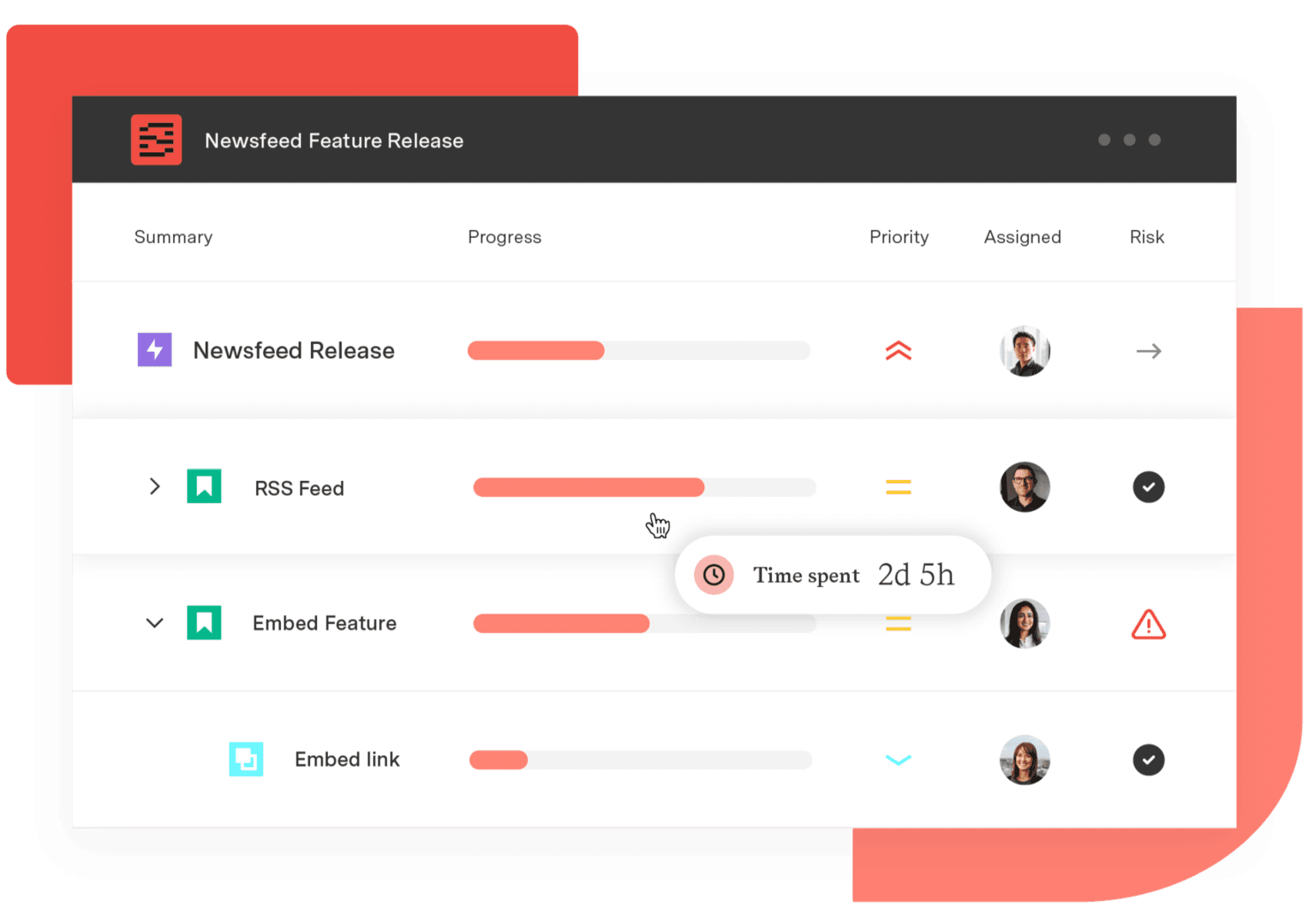
Structure PPM
Align your entire organization
Manage products, projects, and programs in a single spreadsheet-like view. By providing a clear, real-time view of project progress and resource allocation, Structure helps teams meet deadlines and adapt swiftly to changing priorities.
Start a Free TrialFrequently Asked Questions
Couldn't find what you need?Go to our documentation
Yes. Trello and Jira are both Atlassian products. Trello is typically used alongside Jira by non-delivery teams, not as a replacement for Jira or for a portfolio management layer.
Trello's public positioning centers on team boards, automation, and AI for inbox and capture. Portfolio hierarchy, CapEx/OpEx, and budget-vs-actuals capabilities aren't stated features.
Tempo's named Atlassian Rovo agents include the Timesheets Worklog Assistant (natural-language time logging from Jira activity), Timesheets Summary Analyzer (allocation reads for project and team leads), Time Insights for Jira (user-level summaries), Structure View Builder, Structure Formula Assistant, and Custom Charts Assistant. Every Timesheets suggestion needs human approval before it posts to a CapEx or OpEx account, and entries stay auditable line by line. Rovo is available across paid Atlassian Cloud plans, with full credit allocations on Premium and Enterprise.
Tempo maintains SOC 1, SOC 2 Type 2, ISO 27001/27701, and PCI DSS certifications, plus CSA STAR Level 1, DORA alignment, and a VPAT, with GDPR and CCPA covered via standard DPA. These apply to Tempo Cloud; Tempo Data Center has a separate compliance posture.
Not natively. Trello is a kanban board with no-code automation and AI for inbox and capture. It doesn't include native time tracking, capacity planning, or CapEx/OpEx accounts. Tempo Timesheets, Tempo Capacity Planner, and Tempo Financial Manager cover those capabilities natively against Jira data.
Not really. Trello is Atlassian's lightweight kanban product. It's often used alongside Jira by non-delivery teams, but it doesn't add portfolio governance, time tracking, or financial controls. For Jira-based portfolio governance, Tempo's SPM suite sits directly on Jira data via the Atlassian Marketplace.
Trello publishes per-user tier pricing starting with a free plan. Tempo's pricing is published per product on the Atlassian Marketplace, with tiered per-user pricing for each module. The two tools price for different jobs: Trello prices for team boards and freemium adoption; Tempo prices for portfolio, financial, and capacity governance on top of Jira. Buyers should pull live quotes from both vendors at their seat count.