Dotwork vs. Tempo: Portfolio operations vs. decision intelligence comparison
Dotwork maps organizational decisions. Tempo governs portfolio execution – with time, capacity, and financial controls built into Jira.


Key Takeaways
Tempo runs portfolio operations inside Jira; Dotwork captures organizational decisions outside it
Tempo handles execution-layer time tracking, capacity, and budget vs. actuals tied to Jira worklogs; Dotwork operates at the intent layer with portfolio and investment planning
Tempo has 30,000+ customers and 15+ years on the Atlassian Marketplace; Dotwork is a newer standalone tool
Choose Tempo for execution governance; choose Dotwork for institutional knowledge management
Tempo offers a Jira-native portfolio management suite for time, capacity, and financial governance; Dotwork is a standalone AI tool that captures organizational decisions and context.
Choosing between Tempo and Dotwork is less about features than about which problem your PMO has to solve. Both market themselves on strategy-to-execution alignment. But they sit in different categories: one captures the organizational context behind decisions, the other governs how the portfolio runs.
This piece walks through where each tool fits, where they don't overlap, and how to tell which problem you're solving. Tempo offers a modular alternative to Dotwork for teams whose real need is execution governance, built for the PMO, finance, and delivery leaders running Jira-standardized enterprises.
How do Dotwork and Tempo compare?
Tempo offers a Jira-native strategic portfolio management suite. Modular products work together inside Jira: Tempo Structure PPM for portfolio hierarchies, Timesheets for time tracking, Capacity Planner for resourcing, Financial Manager for budget vs. actuals, and Tempo Custom Charts for reporting.
The whole stack extends Jira's data model directly – no separate platform to maintain.
Every Timesheets suggestion needs human approval before it posts to a CapEx or OpEx account, and each entry stays auditable line by line.
Dotwork is an AI-native intelligence platform that captures organizational decisions and surfaces context across teams. Its model is a graph of people, decisions, projects, and the conversations that produced them: institutional knowledge made searchable and tied to who said what. Beyond decision capture, Dotwork also offers strategic portfolio management, capacity and resource planning, and investment tracking, all aimed at what gets decided rather than what gets executed in Jira.
Dotwork is a standalone platform with native Jira integration. It handles strategic portfolio management, capacity and resource planning, capitalization, and investment tracking from the planning side down. What it doesn't do is track time at the worklog level or audit timesheets line by line the way Tempo does.
This is the real split. Dotwork works at the intent layer: What was decided, why, and how resources and investments should line up behind those decisions. Tempo governs execution: Whether the right work gets done, with what people, at what cost.
What each solution is best for
Use case | Best fit |
|---|---|
Jira-native portfolio governance with time, capacity, and financial controls | Tempo |
Capturing decision history and organizational context through a graph model | Dotwork |
CapEx/OpEx labor classification and budget vs. actuals reporting | Tempo |
AI-assisted retrieval of prior decisions and institutional knowledge | Dotwork |
Enterprise deployment with SOC 2, ISO 27001/27701, GDPR, CCPA compliance | Tempo |
Foundational differences between Tempo and Dotwork
Dimension | Tempo | Dotwork |
|---|---|---|
Primary purpose | Jira-native SPM – time, capacity, financial, and portfolio governance | AI-native decision memory and organizational context graph |
Portfolio management | Custom issue hierarchies across projects and programs in Jira | Strategic portfolio management at the intent layer, built on an organizational graph of people, decisions, and projects |
Financial management | Budget vs. actuals, labor costs, CapEx/OpEx, expenses against live Jira worklog data – plus revenue and cost forecasting and project profitability | Capitalization and investment planning; an Investment Agent tracks spend against outcomes |
Capacity planning | Individual and team dashboards in Jira, planned vs. actual against worklogs | Team-level capacity and resource planning across portfolios; not tied to Jira worklog data |
Time tracking | AI-powered (Rovo agents), with approvals and CapEx/OpEx accounts | Not an execution capability; can ingest time tracking data from Tempo |
Primary buyer | PMO, finance, Portfolio Managers, Engineering leadership | Strategy teams and knowledge management leaders evaluating AI-native tools |
Jira integration | Native – Jira is the system of record, embedded in the Jira UI | Standalone platform with native Jira integration via secure workspace connections |
Dotwork's framing is sharp. Decisions get made, then poorly documented, then forgotten, and that's a real organizational problem. The gap shows up when strategy has to connect to delivery. Dotwork can show that leadership chose to prioritize Product A.
What it can't tell you is whether the right engineering hours are flowing to that initiative, whether those hours are being capitalized correctly line by line, or how actual worklogs compare to budget. Those are execution questions, not planning questions, and they need a governed system of record. Tempo provides one, natively in Jira.
How Tempo and Dotwork approach AI and integrations
Tempo's AI runs inside the work itself, through Atlassian Rovo agents tied to each product, and it spans more than time tracking. Structure View Builder and Structure Formula Assistant handle Structure configuration and formulas, while Custom Charts Assistant builds charts on Jira dashboards. On the time side, Tempo Timesheets pairs with Timesheets Worklog Assistant for natural-language time logging from Jira activity, Timesheets Summary Analyzer for project and team-lead allocation reads, and Time Insights for Jira for user-level summaries.
Every Timesheets suggestion needs human approval before it posts to a CapEx or OpEx account, and entries stay auditable line by line.
Every confirmed entry can be mapped to a cost rate and an account code, which means the automation cleans up data in Financial Manager, not just somebody's personal Friday-afternoon timesheet. From there, data flows out to the BI tools finance and execs already use through Tempo's BI Connector modules: Power BI Connector for Jira, Power BI Connector for ServiceNow, and Power BI Connector for monday.com, Tableau Connector for Jira, BigQuery Connector for Jira, Looker and Looker Studio support, plus SQL or data warehouse exports – all separate modules within the Tempo SPM suite.
Dotwork's AI works on the planning side. The platform ingests documents, decisions, communications, and Tempo time and capacity data, then builds a graph that makes context retrievable. When teams hit a familiar choice, it surfaces what was decided last time and who was involved. Dotwork's Investment Agent tracks spend against outcomes at the portfolio level.
What Dotwork doesn't do is govern the work at the worklog level. Live Jira issue activity, CapEx/OpEx classification on individual time entries, and audit-grade financial reports against actual delivery stay Tempo's lane.
The two tools land at different points in the cycle – Dotwork at the decision layer, Tempo at the execution layer.
Top Dotwork strengths
Dotwork's framing is sharp – institutional amnesia is a real problem, and the graph approach is a fresh way to think about it. Strategy teams and knowledge leaders evaluating AI-native tools should take the pitch seriously.
Decision memory as a category framing – a fresh angle in a crowded PPM market
"AI-native" language that lands with strategy teams evaluating new tooling
Clean product and marketing execution with differentiated category positioning
Strategy-to-execution alignment narrative that names a real organizational pain
A focus on institutional knowledge retention, which most PPM tools don't address
What is Tempo's strength vs Dotwork?
Dotwork captures the decisions. Tempo governs whether they get carried out. The whole suite runs inside Jira, where delivery happens, where time gets logged, and where finance can trace dollars back to the work.
Jira-native architecture with Jira as the system of record – no separate product to adopt alongside delivery tools
Full execution governance: Tempo Structure PPM in the Tempo SPM suite, Timesheets, Capacity Planner, and Financial Manager, with Structure PPM scaling to large multi-project portfolios in Jira
CapEx/OpEx accounts, labor cost, budget vs. actuals, revenue and cost forecasting, and project and portfolio profitability as native capabilities
Modular adoption: Start with Structure or Timesheets. Add Financial Manager when finance asks for CapEx reporting. Add Capacity Planner for better-informed planning conversations.
Atlassian Marketplace authority with Fortune 500 references
Enterprise compliance: SOC 1, SOC 2 Type 2, ISO 27001/27701, and PCI DSS, plus CSA STAR Level 1, DORA alignment, and a VPAT, with GDPR and CCPA covered via standard DPA. (These certifications and Rovo apply to Tempo Cloud; Tempo Data Center has a separate compliance posture.)
Tempo's enterprise scale is documented, not asserted. SiriusXM unified 3,000+ users on the full Tempo suite – an execution outcome Dotwork's planning-first architecture isn't built to produce. TransUnion reduced its Tempo Timesheets workflow approvals from 17 levels to 4.
Pluxee scaled governance and visibility across 29 countries using Timesheets, Structure PPM, and Power BI Connector for Jira.
Ideal customer for each tool
Tempo fits best when:
The PMO or finance team needs governed time tracking, CapEx/OpEx accounts, and portfolio financial health in Jira
The organization is standardized on Atlassian and wants portfolio management without a separate system of record
Portfolio execution visibility – planned vs. actual, labor cost, capacity – is a quarterly governance requirement
Enterprise compliance and proven scale are procurement requirements
Dotwork fits best when:
The main gap is portfolio alignment and institutional decision memory, not how work gets executed in Jira
The buyer is a strategy or knowledge management leader evaluating AI-native tools
Decision context and forward planning matter more than worklog-level time tracking, CapEx/OpEx audit, and Jira-grounded financial governance
The priority is intent-layer alignment rather than governing delivery inside the Jira UI
When should you choose Tempo vs. Dotwork?
Choose Tempo when | Choose Dotwork when |
|---|---|
Finance needs CapEx/OpEx labor cost tracking and budget vs. actuals in Jira | Strategy teams need AI-assisted retrieval of prior decisions and organizational context |
PMO requires planned vs. actual hours, capacity dashboards, and workload balancing | Knowledge loss from team turnover is a strategic risk that needs systematic capture |
Portfolio data must feed Power BI, Tableau, or BigQuery for executive governance | The primary audience is knowledge workers and strategy leaders, not PMO or finance |
Enterprise compliance requirements include SOC 2, ISO 27001, GDPR, or CCPA | The problem is decision alignment and context, not execution tracking or financial governance |
Recap
Dotwork and Tempo bet on different failure modes. Dotwork's bet: strategy fails because decisions get lost. Tempo's: execution goes ungoverned, and strategy never lands.
Sign up for a demo
Request DemoIf your problem is institutional knowledge – decisions disappearing as people leave and context evaporating between leadership and teams – Dotwork's graph approach is worth a serious look. If your problem is execution governance, with hours mapping to accounts, capacity matching demand, and project costs rolling up to portfolios, Tempo runs that work natively in Jira.
For Jira-standardized enterprises, Tempo's track record carries weight: 30,000+ companies govern delivery on it. Dotwork tells you what was decided. Tempo governs whether the right work gets done.
Compare Tempo to other solutions
See Comparisons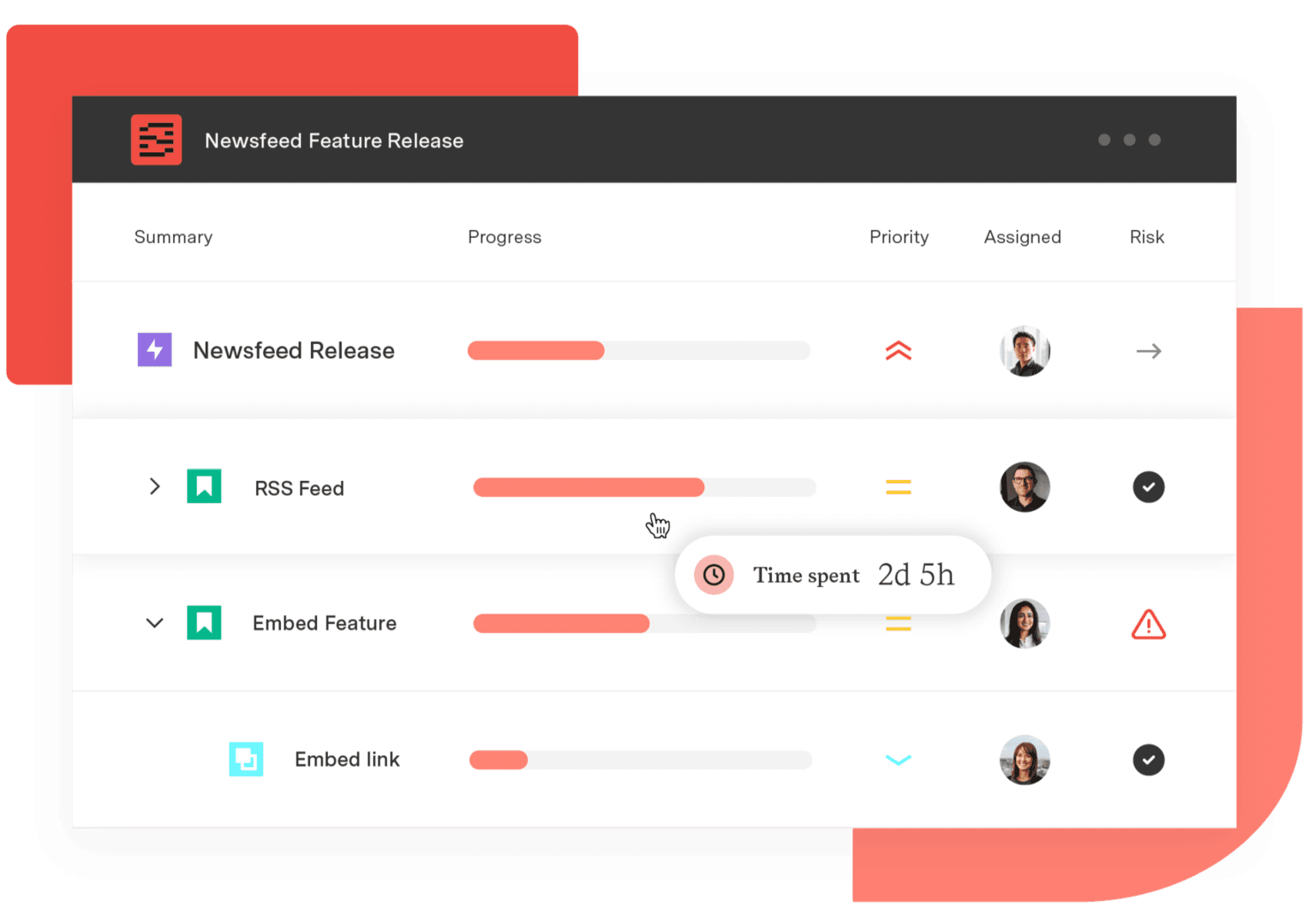
Structure PPM
Align your entire organization
Manage products, projects, and programs in a single spreadsheet-like view. By providing a clear, real-time view of project progress and resource allocation, Structure helps teams meet deadlines and adapt swiftly to changing priorities.
Start a Free TrialFrequently Asked Questions
Couldn't find what you need?Go to our documentation
Yes. Dotwork is a standalone platform with native Jira integration – it can securely connect to Jira workspaces and ingest data, including Tempo time and capacity data, into its organizational context model. The architectural difference is where the integration sits: Tempo extends Jira's data model directly inside the Jira UI, so worklogs, accounts, and portfolio hierarchies live on Jira issues themselves. Dotwork connects in as a separate platform and pulls data into its own context graph. For organizations where Jira is the system of record for delivery, that distinction matters.
In principle, the two tools address different layers: Dotwork captures decision context, Tempo governs execution. An organization could use Dotwork for knowledge management and Tempo for portfolio operations without functional conflict. In practice, most enterprise buyers evaluating portfolio governance tools prioritize the execution layer first. If the main gap is CapEx/OpEx tracking, capacity planning, or portfolio financial health, start with Tempo.
Tempo maintains SOC 1, SOC 2 Type 2, ISO 27001/27701, and PCI DSS certifications, plus CSA STAR Level 1, DORA alignment, and a VPAT, with GDPR and CCPA covered via standard DPA. Buyers should verify current certification documentation from both vendors during procurement.
Not at the execution layer. Dotwork doesn't provide line-by-line time entry, worklog auditing, or CapEx/OpEx classification on individual hours – it does offer strategic portfolio management, capacity and resource planning, and capitalization tracking at the intent layer. Tempo Timesheets handles execution-layer time tracking with AI-assisted entries via Atlassian Rovo agents and supports four account types – Capitalized, Operational, Billable, and Internal – for CapEx/OpEx reporting against actual Jira worklogs.
Not as a native Marketplace app. Dotwork is a standalone product without an Atlassian Marketplace listing as of our review. Tempo's SPM suite is on the Atlassian Marketplace with 15+ years of deployment, and Tempo was named Partner of the Year 2026 for Cloud Transformation Apps.
Tempo's pricing is published per product with tier-based per-user pricing on the Atlassian Marketplace. Dotwork's pricing isn't publicly published as of our review – buyers contact sales directly. The more useful comparison isn't unit cost: it's total cost of governance. Tempo bundles execution-layer governance – time tracking, CapEx/OpEx accounting, and budget vs. actuals against live Jira worklog data – into one Jira-native suite. Dotwork sits as a separate platform covering intent-layer portfolio, capacity, and investment planning. The two suites overlap at the portfolio layer, but Tempo's worklog-grounded financial governance isn't part of Dotwork's scope.
Tempo's AI shows up through named Atlassian Rovo agents tied to each product – Timesheets Worklog Assistant, Timesheets Summary Analyzer, Time Insights for Jira, Structure View Builder, Structure Formula Assistant, and Custom Charts Assistant. Every Timesheets suggestion needs human approval before it posts to a CapEx or OpEx account, and each entry stays auditable line by line. Rovo is available across paid Atlassian Cloud plans, with full credit allocations on Premium and Enterprise. Tempo doesn't offer a decision capture or organizational context graph. If institutional knowledge management is a separate and urgent requirement alongside portfolio execution governance, Dotwork addresses that use case directly.