Celonis vs. Tempo: Portfolio execution governance vs process intelligence
Compare Celonis's enterprise process intelligence overlay with Tempo's Jira-native portfolio execution governance and financial controls.


Key Takeaways
Celonis is a process intelligence platform for cross-functional operations. Tempo is Jira-native portfolio execution governance for delivery.
Celonis's public "$8 billion+ in value realized" narrative emphasizes enterprise transformation. Tempo emphasizes faster time-to-value inside Jira.
Tempo covers financial and capacity governance on delivery work. Celonis's strengths sit in supply chain, finance, AP, and IT process mining.
The two often complement: Celonis above for cross-functional transformation, Tempo for portfolio execution inside Jira.
Celonis is an enterprise process intelligence overlay that mines and redesigns cross-functional processes – supply chain, finance and AP, IT workflows – by reconstructing how work flows from system event logs. Tempo offers a modular alternative for the delivery portfolio question: Time, capacity, financial governance, and portfolio controls inside Jira.
Celonis and Tempo show up in the same conversations because both promise enterprise-scale intelligence. Different categories, though.
This page is for PMO leaders, delivery leaders, and finance/FP&A buyers trying to sort out where each tool earns its keep in strategic portfolio management (SPM). The core distinction: Celonis reshapes enterprise operations end-to-end over long cycles. Tempo gives delivery portfolios execution-native intelligence on the system of record they already run.
Tempo runs natively on the Atlassian Marketplace with Fortune 500 deployments. Celonis publicly positions with a "$8 billion+ in value realized" claim.
How do Celonis and Tempo compare?
Celonis sells process mining and AI-for-enterprise-operations across cross-functional domains like supply chain, accounts payable, and IT workflows. Its narrative emphasizes enterprise AI, transformation, and the "Analyze → Design → Operate" cycle.
Tempo offers a Jira-native SPM suite. Tempo Structure PPM builds custom issue hierarchies across projects and programs. Tempo Financial Manager covers budget vs. actuals, labor cost, and CapEx/OpEx. Tempo Capacity Planner provides individual and team dashboards with planned vs. actual. Tempo Timesheets delivers AI-powered time tracking through Atlassian Rovo agents.
Scope is the clearest divide: Celonis cuts across enterprise processes horizontally while Tempo goes vertically into delivery portfolios inside Jira, and the buyers and questions reflect that.
A PMO asking "are we funding, staffing, and delivering the right work?" gets a direct answer from Tempo on the Jira system of record. A transformation office chasing enterprise-wide process leaks will find Celonis's process mining fits that problem better.
What each solution is best for
Use case | Best fit |
|---|---|
Cross-functional process mining (supply chain, AP, IT workflows) | Celonis |
Jira-native portfolio governance and reporting | Tempo |
Financial controls on delivery: CapEx/OpEx, labor cost, budget vs. actuals | Tempo |
Enterprise AI for process transformation | Celonis |
AI-powered time tracking with Rovo agents | Tempo |
Foundational differences between Tempo and Celonis
Dimension | Tempo | Celonis |
|---|---|---|
Primary purpose | Jira-native SPM – time, capacity, financial, and portfolio governance | Enterprise process intelligence overlay – mining and transformation |
Portfolio management | Custom issue hierarchies across projects and programs | Not a delivery-centric portfolio module |
Financial management | Budget vs. actuals, labor costs, CapEx/OpEx, expenses – plus revenue and cost forecasting and project and portfolio profitability | Financial process focus (e.g., AP) rather than project financial governance |
Capacity planning | Individual and team dashboards, planned vs. actual | Not positioned as a delivery capacity capability |
Time tracking | AI-powered (Rovo agents), with approvals and CapEx/OpEx accounts | Not positioned as a delivery time-tracking tool |
Primary buyer | PMO, delivery leaders, finance/FP&A | Enterprise transformation, supply chain, finance and AP, IT operations |
Jira integration | Native – Jira is the system of record | Not native to Jira |
Those builds reflect different priorities. Execution-native intelligence with fast time-to-value points to Tempo. Reshaping enterprise processes end-to-end, over multi-quarter cycles, is where Celonis was designed to operate.
How Tempo and Celonis approach AI and integrations
Tempo's AI runs on Rovo agents across the suite inside Jira. In Tempo Structure PPM, Structure View Builder builds portfolio views from a plain-language prompt and Structure Formula Assistant writes the rollup formulas; Custom Charts Assistant turns natural-language prompts into Jira dashboard charts. Tempo Timesheets adds Worklog Assistant for natural-language time logging, Summary Analyzer for project and team-lead insights on time allocation, and Time Insights for Jira for user-level time summaries. A human approves before any entry posts to CapEx/OpEx accounts, and every entry is auditable line by line.
Rovo is available across paid Atlassian Cloud plans, with full credit allocations on Premium and Enterprise. The agents read the Jira issues and worklogs teams already produce.
Celonis publicly positions enterprise AI and transformation across process domains, with an "Analyze → Design → Operate" cadence that implies longer time-to-value. Integrations span enterprise systems rather than Jira natively.
For delivery portfolios in Jira, that gap matters. Tempo's AI applies to the same artifacts the PMO already reports on – Jira issues, worklogs, capacity. Celonis's AI targets cross-functional processes that typically sit well outside Jira.
Tempo also moves delivery-system data – worklogs, costs, capacity – into the warehouses and BI tools enterprises already run, through BI Connector modules: Power BI Connector for Jira, Tableau Connector for Jira, and BigQuery Connector for Jira, with downstream support for Looker, Looker Studio, and SQL or data warehouse exports. That puts execution data on the system of record, not in a process-mining overlay sitting above it.
Top Celonis strengths
Celonis defined the enterprise process mining category and signs named Fortune 500 customers, with a cross-functional scope most platforms don't match. The points below cover what it handles well.
Object-centric process mining and process-intelligence AI at enterprise scale – Celonis maps real business processes from system event data, enabling cross-functional diagnosis and improvement across ERP, supply chain, and finance workflows
Cross-functional process breadth across supply chain, AP, and IT workflows.
Process mining as an established category for end-to-end transformation.
More than $8 billion in customer value realized across large enterprises
What is Tempo's strength vs Celonis?
Tempo isn't trying to reshape enterprise processes end-to-end. It focuses on the delivery portfolio inside Jira, with execution-native intelligence and a time-to-value measured in weeks rather than multi-quarter transformation cycles. Pluxee is one published reference – the company scaled portfolio governance and visibility across 29 countries using Tempo Timesheets, Tempo Structure PPM, and the Power BI Connector for Jira. That's Jira delivery data flowing into the warehouses and BI tools the enterprise already runs, rather than into a process-mining overlay.
Execution-native portfolio intelligence inside Jira, not a transformation overlay on top of enterprise processes.
Quick time-to-value via modular deployment on the Atlassian Marketplace.
Financial governance on delivery work: CapEx/OpEx, labor cost, budget vs. actuals, revenue and cost forecasting, and project and portfolio profitability.
Capacity realism on Jira artifacts through availability-based planning (hours, holidays, and PTO) with individual and team planned vs. actual dashboards.
AI for delivery via Atlassian Rovo agents – Timesheets Worklog Assistant, Timesheets Summary Analyzer, Time Insights for Jira, Structure View Builder, and Structure Formula Assistant – across time, variance, and workload (Rovo runs on paid Atlassian Cloud plans; full credit allocations on Premium and Enterprise).
Ideal customer for each tool
Choose Tempo if:
Jira is the delivery backbone and you need execution-native portfolio intelligence.
PMO, finance, or FP&A want auditable controls on delivery cost and capacity.
You need a short path from purchase to governance value.
You want AI time and capacity insights through Rovo agents like Timesheets Worklog Assistant and Structure View Builder (available on paid Atlassian Cloud plans; full credits on Premium and Enterprise).
Choose Celonis if:
Your problem is cross-functional process transformation – supply chain, AP, IT operations.
Your buyer is enterprise transformation, not delivery governance.
You have the patience and budget for "Analyze → Design → Operate" transformation cycles.
You need enterprise-scale AI on processes outside Jira.
When should you choose Tempo vs. Celonis?
Criterion | Choose Celonis | Choose Tempo |
|---|---|---|
Scope | Cross-functional enterprise processes | Delivery portfolios in Jira |
Time-to-value | Longer transformation cycles | Modular, measured in weeks |
Primary buyer | Enterprise transformation office | PMO, delivery leaders, finance/FP&A |
Source of truth | Process data across enterprise systems | Jira as system of record |
Recap
Most enterprises using Celonis for process transformation still need a separate governance layer for delivery work. That's the gap Tempo fills: portfolio controls, financial visibility, and capacity data on the Jira system of record – without a multi-quarter implementation.
Sign up for a demo
Request DemoIf you're a PMO or finance team running delivery in Jira, the path to governance value is measured in weeks, not quarters. Many enterprises run both tools: Celonis for cross-functional process intelligence, Tempo for execution governance on the delivery side.
Compare Tempo to other solutions
See Comparisons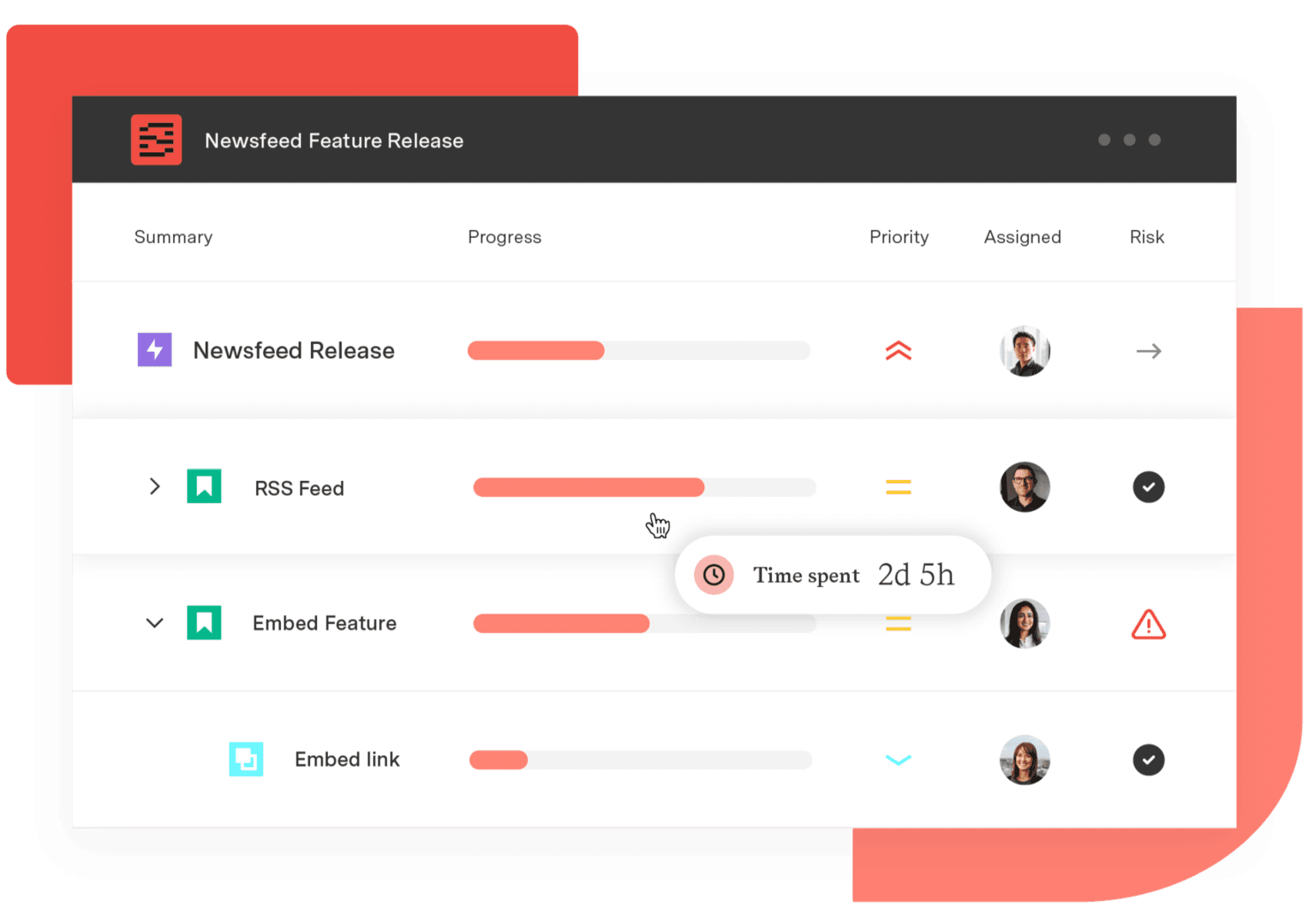
Structure PPM
Align your entire organization
Manage products, projects, and programs in a single spreadsheet-like view. By providing a clear, real-time view of project progress and resource allocation, Structure helps teams meet deadlines and adapt swiftly to changing priorities.
Start a Free TrialFrequently Asked Questions
Couldn't find what you need?Go to our documentation
Not as delivery tooling. Celonis is process intelligence for cross-functional operations, not a delivery time tracker, capacity planner, or project financial management tool. Tempo Timesheets, Tempo Capacity Planner, and Tempo Financial Manager cover that layer for Jira-based portfolios.
No. Celonis is a standalone enterprise platform that integrates with source systems across the enterprise rather than running natively on Jira. Tempo runs natively on the Atlassian Marketplace.
The two tools sit in different categories – delivery portfolio governance versus enterprise process intelligence – so direct price comparisons are rarely apples-to-apples. Compare current Tempo pricing at tempo.io and request a Celonis quote based on the specific process domains and data volumes in scope.
Tempo Financial Manager covers budget vs. actuals, labor cost, and CapEx/OpEx, plus revenue and cost forecasting and project and portfolio profitability. Tempo Timesheets adds time-driven cost data through approvals and CapEx/OpEx accounts.
Tempo Timesheets uses Atlassian Rovo agents – the Timesheets Worklog Assistant for natural-language time logging in Jira, the Timesheets Summary Analyzer for project and team-lead insights, and Time Insights for Jira for user-level time summaries – for AI-powered time logging suggestions, variance detection, and workload insights. Beyond Timesheets, Rovo agents span the suite: Structure View Builder turns a plain-language prompt into a portfolio view, Structure Formula Assistant writes rollup formulas, and Custom Charts Assistant builds Jira dashboard charts from natural-language prompts. Rovo is available across paid Atlassian Cloud plans, with full credit allocations on Premium and Enterprise.
Tempo deploys modularly on the Atlassian Marketplace, which supports a shorter path from purchase to governance value than enterprise transformation platforms.
Tempo serves 30,000+ companies with 15+ years in the Atlassian ecosystem and is a three-time Atlassian Partner of the Year. Tempo Structure PPM scales to 30,000 issues per structure on Cloud and roughly 100,000 on Data Center, with support for multi-instance Jira and audit-ready governance. Compliance includes SOC 1, SOC 2 Type 2, ISO 27001/27701, and PCI DSS certifications, plus CSA STAR Level 1, DORA alignment, and a VPAT, with GDPR and CCPA covered via standard DPA. Rovo agents and these certifications apply to Tempo Cloud; Data Center has a separate compliance posture.