Azure DevOps vs. Tempo: Portfolio governance vs DevOps delivery toolchain
Compare Azure DevOps's delivery toolchain with Tempo's strategic portfolio management and financial governance for Jira-native enterprises.


Key Takeaways
Azure DevOps is a DevOps delivery toolchain (Boards, Repos, Pipelines, Test Plans, Artifacts). Tempo is Jira-native strategic portfolio management and financial governance.
Azure DevOps optimizes delivery velocity. Tempo governs funding, staffing, and profitability above delivery.
Tempo covers CapEx/OpEx, labor cost, project profitability, and portfolio-level capacity. Azure DevOps doesn't.
Complementary positioning is often more useful than head-to-head: Tempo above for portfolio and financial governance, Azure DevOps below for engineering delivery.
Azure DevOps and Tempo come up together in enterprise delivery conversations, but they do different jobs. Azure DevOps runs the engineering toolchain. Tempo's products add portfolio governance and financial control on top of it.
Azure DevOps is a DevOps toolchain – Boards, Repos, Pipelines, Test Plans, and Azure Artifacts – backed by Microsoft, GitHub, and Copilot AI. Tempo offers a modular set of products for strategic portfolio management (SPM) and financial governance, built around Jira as the system of record.
Azure DevOps isn't a Jira add-on like the products Tempo offers. It's an alternative delivery system to Jira, though official Atlassian Marketplace connectors can sync the two. The practical decision is rarely which single tool to pick. It's where portfolio governance runs in an enterprise stack that already has a delivery toolchain in place.
Tempo runs natively on the Atlassian Marketplace with Fortune 500 deployments. Azure DevOps publicly positions as a DevOps leader with Microsoft security credibility and Copilot AI integration ("Agentic DevOps").
How do Azure DevOps and Tempo compare?
Tempo offers a Jira-native SPM suite. Tempo Structure PPM builds custom issue hierarchies across projects and programs. Tempo Financial Manager handles budget vs. actuals, labor cost, and CapEx/OpEx. Tempo Capacity Planner covers individual and team dashboards with planned vs. actual. Tempo Timesheets delivers AI-powered time tracking through Atlassian Rovo agents, with approvals and CapEx/OpEx accounts.
Azure DevOps is a DevOps delivery toolchain built around engineering workflows: Backlog and sprint management in Boards, source control in Repos, CI/CD in Pipelines, test management in Test Plans, and package management in Azure Artifacts. Its narrative pairs velocity with Microsoft/GitHub/Copilot AI integration.
The practical split is organizational: Azure DevOps serves engineering teams and DevOps leadership focused on delivery velocity. Tempo's products are for the PMO, finance and FP&A, and CIO/CTO stakeholders tracking cost, capacity, and portfolio performance.
In Jira-standardized enterprises, Tempo's products handle governance natively, on the same surface as the work. Where some engineering teams run on Azure DevOps instead, the portfolio-level view still tends to consolidate elsewhere.
What each solution is best for
Use case | Best fit |
|---|---|
DevOps toolchain: Boards, source control, CI/CD, test plans, package management | Azure DevOps |
Jira-native strategic portfolio management | Tempo |
CapEx/OpEx, labor cost, and project profitability | Tempo |
Portfolio-level capacity planning across programs in Jira | Tempo |
Microsoft/GitHub/Copilot-aligned delivery stack | Azure DevOps |
Foundational differences between Tempo and Azure DevOps
Dimension | Tempo | Azure DevOps |
|---|---|---|
Primary purpose | Jira-native SPM – time, capacity, financial, and portfolio governance | DevOps delivery toolchain – Boards, Repos, Pipelines, Test Plans, and Artifacts |
Portfolio management | Custom issue hierarchies across projects and programs | Portfolio Backlogs in Azure Boards track epics and features across teams; lacks integrated enterprise strategic portfolio governance and financial alignment |
Financial management | Budget vs. actuals, labor costs, CapEx/OpEx, expenses – plus revenue and cost forecasting and project profitability | Not included – no CapEx/OpEx or project profitability |
Capacity planning | Individual and team dashboards, planned vs. actual | No portfolio-level capacity planning |
Time tracking | AI-powered (Rovo agents), with approvals and CapEx/OpEx accounts | Native effort fields (Original Estimate, Completed Work, Remaining Work) drive sprint capacity planning and burndown charts, but there are no timers, timesheets, approval workflows, or per-user audit of logged hours |
Primary buyer | PMO, finance, Portfolio Managers, Engineering leadership | Engineering and DevOps teams |
Jira integration | Native – Jira is the system of record | Supported via official Atlassian Marketplace connectors; Azure DevOps acts primarily as an execution alternative rather than a native Jira extension |
For Jira-standardized enterprises, the choice is Tempo for governance plus Jira for delivery, set against a full Microsoft-stack alternative that leaves portfolio-level financial governance unaddressed. Tempo's pitch to finance is direct: get cost visibility and capacity control on top of the Jira the organization already runs.
How Tempo and Azure DevOps approach AI and integrations
Tempo's AI runs on Rovo agents across the whole suite. Structure View Builder assembles portfolio views from a plain-language prompt and Structure Formula Assistant writes the rollup formulas in Tempo Structure PPM; Custom Charts Assistant turns natural-language prompts into Jira dashboard charts. On the Timesheets side, Timesheets Worklog Assistant handles natural-language time logging in Jira, Timesheets Summary Analyzer reads time allocation for project and team leads, and Time Insights for Jira covers user-level time summaries against native Jira worklogs.
A human approves before any entry posts to CapEx/OpEx accounts, and every entry is auditable line by line. Rovo is available across paid Atlassian Cloud plans, with full credit allocations on Premium and Enterprise. The agents read the same Jira issues and worklogs teams already work in.
Azure DevOps's AI story, per its public positioning, centers on Microsoft/GitHub/Copilot integration under an "Agentic DevOps" banner, oriented toward developer productivity inside the Microsoft delivery stack.
The AI use cases are aimed at different buyers: Rovo-powered Tempo gives portfolio and finance teams visibility into cost, capacity, and time. Copilot in Azure DevOps is oriented toward developer throughput. Neither replaces the other.
Top Azure DevOps strengths
Azure DevOps is an established delivery toolchain with Microsoft's security and AI weight behind it. It fits cleanly where engineering has standardized on the Microsoft stack.
End-to-end DevOps toolchain – Boards, Repos, Pipelines, Test Plans, and Artifacts – with deep Microsoft, GitHub, and Copilot integration.
Microsoft/GitHub/Copilot AI integration under "Agentic DevOps," per Microsoft's published positioning.
Security credibility via Microsoft's publicly positioned 100+ compliance certifications and 34,000 security engineers.
Native Azure Boards planning with effort fields (Original Estimate, Completed Work, Remaining Work) feeding sprint capacity planning and burndown charts.
Deep fit for Microsoft-stack engineering organizations.
What is Tempo's strength vs Azure DevOps?
Tempo's products serve a different buyer. They're built for the PMO and EPMO and finance and FP&A teams who need portfolio governance and financial controls above the delivery toolchain rather than inside it. TransUnion is one published example – the company reduced workflow approvals from 17 levels to 4 with Tempo Timesheets (see more Tempo customer stories). Even Microsoft and Azure DevOps shops reach Tempo through Jira when the wedge is finance value rather than engineering velocity.
Portfolio governance and financial management are first-class capabilities: CapEx/OpEx, labor cost, budget vs. actuals, project profitability, and revenue and cost forecasting.
Portfolio-level capacity planning that spans programs and teams, above the sprint-level team board.
AI-powered time tracking and workload insight through Atlassian Rovo agents – Timesheets Worklog Assistant, Timesheets Summary Analyzer, and Time Insights for Jira (Rovo runs on paid Atlassian Cloud plans; full credit allocations on Premium and Enterprise).
Jira-native architecture, so governance runs on the engineering system of record.
Sits above delivery for PMO/EPMO and finance/FP&A buyers rather than inside the developer toolchain.
Ideal customer for each tool
Choose Tempo if:
Jira is the delivery backbone and you need portfolio governance on the same surface.
PMO/EPMO or finance/FP&A need CapEx/OpEx, labor cost, and project profitability controls.
Portfolio-level capacity planning across programs is a priority.
You want AI time and capacity insights through Rovo agents like Timesheets Worklog Assistant and Timesheets Summary Analyzer (available on paid Atlassian Cloud plans; full credits on Premium and Enterprise).
Choose Azure DevOps if:
Your engineering organization runs on the Microsoft/GitHub/Copilot stack end-to-end.
The primary need is developer delivery – boards, repos, pipelines, test plans, and package management.
Your stakeholders are engineering and DevOps leaders, not PMO or finance.
You're consolidating delivery on a Microsoft-native platform.
When should you choose Tempo vs. Azure DevOps?
Criterion | Choose Azure DevOps | Choose Tempo |
|---|---|---|
Primary role | Developer delivery toolchain | Portfolio and financial governance |
Primary buyer | Engineering and DevOps | PMO/EPMO, finance/FP&A, CIO/CTO |
Delivery backbone | Microsoft-native DevOps | Jira as system of record |
Financial governance | Not included | Core capability |
Recap
If the question is whether Azure DevOps and Tempo can coexist: yes. Engineering teams committed to the Microsoft/GitHub/Copilot stack don't have to abandon it. What portfolio and finance leadership need – cost visibility, capacity controls, CapEx/OpEx accounts – Tempo delivers directly in Jira, on the same surface where the work happens.
Sign up for a demo
Request DemoFor many organizations the most useful posture is complementary: Tempo above for portfolio, capacity, and financial governance, Azure DevOps below for teams already committed to its delivery toolchain. Where Jira is the system of record, Tempo keeps governance on the same surface as the work.
Compare Tempo to other solutions
See Comparisons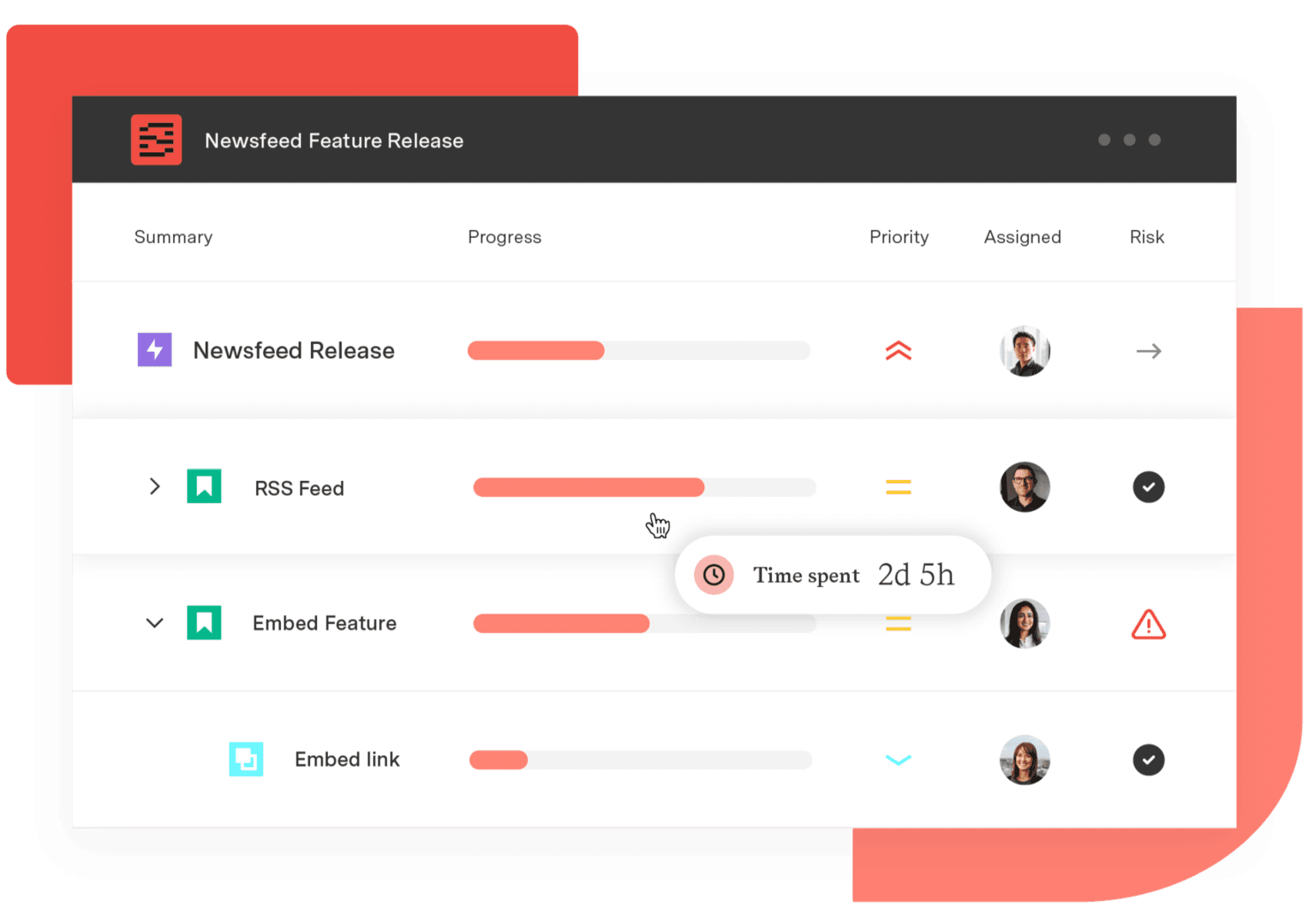
Structure PPM
Align your entire organization
Manage products, projects, and programs in a single spreadsheet-like view. By providing a clear, real-time view of project progress and resource allocation, Structure helps teams meet deadlines and adapt swiftly to changing priorities.
Start a Free TrialFrequently Asked Questions
Couldn't find what you need?Go to our documentation
Not for portfolio governance. Azure DevOps has native effort fields (Original Estimate, Completed Work, Remaining Work) that drive sprint capacity planning and burndown, but no timers, timesheets, approval workflows, or per-user audit of logged hours. It does not include CapEx/OpEx accounting, project profitability, labor cost tracking, or portfolio-level capacity planning across programs. Those sit in Tempo Financial Manager, Tempo Timesheets, and Tempo Capacity Planner.
Azure DevOps itself is a standalone Microsoft delivery toolchain, not a Jira app – though Atlassian publishes an official "Azure DevOps for Jira" connector on the Marketplace that syncs the two. Tempo, by contrast, runs natively on the Atlassian Marketplace as a Jira-native SPM suite.
Pricing models differ by category. Microsoft prices Azure DevOps per user with tiered service levels, while Tempo prices its modules per user on the Atlassian Marketplace. Compare current Tempo pricing at tempo.io and current Azure DevOps pricing on Microsoft's site rather than relying on third-party numbers.
Tempo is Jira-native. For teams standardized on Jira, Tempo runs on the same system of record. Azure DevOps shops typically consolidate portfolio governance on top of whichever delivery system they use.
Tempo Timesheets uses Atlassian Rovo agents – the Timesheets Worklog Assistant for natural-language time logging in Jira, the Timesheets Summary Analyzer for project and team-lead insights, and Time Insights for Jira for user-level time summaries – for AI-powered time logging suggestions, variance detection, and workload insights. Beyond Timesheets, Rovo agents span the suite: Structure View Builder turns a plain-language prompt into a portfolio view, Structure Formula Assistant writes rollup formulas, and Custom Charts Assistant builds Jira dashboard charts from natural-language prompts. Rovo is available across paid Atlassian Cloud plans, with full credit allocations on Premium and Enterprise.
PMO, finance, Portfolio Managers, and engineering leadership inside enterprises that use Jira as the delivery backbone.
Tempo serves 30,000+ companies with 15+ years in the Atlassian ecosystem and is a three-time Atlassian Partner of the Year. Tempo Structure PPM scales to 30,000 issues per structure on Cloud and roughly 100,000 on Data Center, with support for multi-instance Jira and audit-ready governance. Compliance includes SOC 1, SOC 2 Type 2, ISO 27001/27701, and PCI DSS certifications, plus CSA STAR Level 1, DORA alignment, and a VPAT, with GDPR and CCPA covered via standard DPA. Rovo agents and these certifications apply to Tempo Cloud; Data Center has a separate compliance posture.