
Tackling project execution: Strategies for success

Making the leap from project planning to implementation seems easy enough: Just follow the project plan’s instructions as your team speeds toward the finish line. However, while a well-polished plan provides a necessary guide during project execution, it can't solve every potential issue that may arise throughout this dynamic stage.
Once your team kicks into execution mode, they're putting your plans to the ultimate stress test – and as their manager, you must know how to respond to problems in real time. Don’t worry: Learning the common strategies associated with project execution can help you move through challenges with grace and achieve tangible results.
What’s project execution?
Project execution is when teams transition from brainstorming and planning to taking action and monitoring a plan's success. In the traditional stages of a project plan, execution follows the initiation and planning phases, and it uses the information from these primary stages as both a roadmap and benchmark for evaluating future successes and failures.
Think of the planning stage as figuring out everything you need for a road trip – including your budget, itinerary, and final destination – while the execution phase is when the rubber hits the road.
Often, project execution is the longest stage in a project's lifecycle, and the most prone to unforeseen issues. Since project execution occurs in the real world rather than a theoretical bubble, it's vulnerable to challenges such as time constraints, inadequate resources, and miscommunications.
During execution, managers shift from actively outlining their goals and strategies to monitoring the status of their projects and intervening whenever they spot issues.
What happens during the project execution phase?
When project execution begins, teams use their pre-planned procedures to achieve measurable goals for stakeholders. While there are a lot of moving parts during this stage, most tasks fall into a few categories:
Allocating resources: Starting a project puts new burdens on team resources such as time, equipment, and capital. A detailed project plan estimates how much a project will cost the company, but it's only during the execution phase that managers see the true impact and adjust resource allocation accordingly.
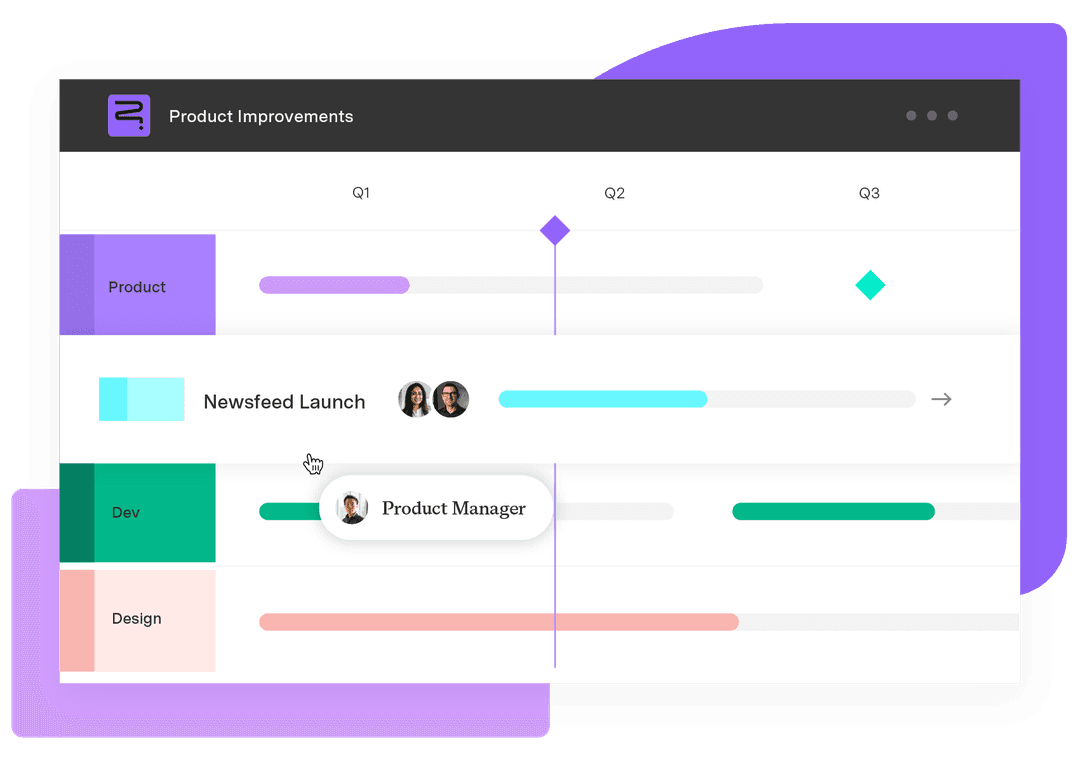
Assigning tasks: Teams use tools like workflow templates, Gantt charts, and roadmaps on project management software to assign and track the progress of assignments. In addition to providing clean organization and an easy way to collaborate, these apps set the pace for a project's timeline.
Monitoring project updates: Managers schedule regular meetings with team members to stay informed on a project's progress and address concerns. Frequent check-ins with staff and stakeholders keep everyone on the same page and promote transparent communication throughout the execution process.
Assessing and managing risk: Another benefit of regular meetings is they help managers spot potential risks to a project's success. Managers who don't intervene fast enough to prevent an emergency use risk management plans to respond to threats, minimize damage, and steer employees back on track.
Common challenges during the execution of a project
Project execution is full of potential pitfalls, so you need to be nimble as you move through challenges and maintain milestone objectives. Issues can strike your team from dozens of angles, but there are some common complaints during this stage:
Resource shortages: During the planning stage, you might underestimate the resource requirements for a new project and fail to provide team members with sufficient time or materials. Poor resource allocation puts the company at risk of numerous constraints, including bottlenecks, delays, and budget overruns.
Scope creep: One common source of resource shortages during execution is "scope creep," or unplanned additions and alterations to a project's initial plan. When left unchecked, scope creep busts a project's expected limitations, leading to higher spending and company-wide confusion.
Communication plan breakdowns: Speaking of confusion, poor communication is a frequent issue during project execution. When team members don't completely understand their roles or tasks, there's a greater chance of unexpected delays or poor-quality deliverables. As manager, you must maintain transparent communication pathways both internally and with stakeholders to set the proper expectations from the get-go.
Lax quality control: As due dates approach, it’s tempting to focus on hitting deadlines at the expense of thorough quality control procedures. Although maintaining a steady workflow is critical for success, failing to account for the quality of deliverables puts your company’s reputation at risk.
What’s a project execution plan?
You can never know the specific challenges you’ll face each time you move from planning to execution – but you can use project execution plans (PEPs) to prepare for the most likely contingencies.
A PEP is your organization’s primary document for addressing key questions about a project's scope and how the team intends to realize its goals. After outlining and defining core details – such as the project's deliverables and due dates – PEPs list protocols and procedures to guide your team's workflow and minimize the threat of execution-related challenges.
A few elements of a PEP include an estimated budget, resource allocation details, and quality assurance standards. PEPs also have relevant risk analysis and management information to mitigate potential emergencies. Since PEPs are "living" documents, managers and relevant team members have the flexibility to alter procedures or goals in line with changing circumstances, including new stakeholder requests, market volatility, or emergency scenarios.
With a well-established PEP, your team has the necessary framework to coordinate actions once you decide to move into execution.
Tips for an effective project execution phase
Designing the perfect PEP is the best way to prepare for execution, but managers use many other techniques during this project stage to support their team’s efforts. Incorporating a few expert strategies into an execution plan can make your teams more efficient at bringing projects to life:
1. Use the SMART criteria to define project scope
Just as architects need a blueprint before building, project teams must know their end goal before they set off creating deliverables. And the more precise you are when defining their scope and end goals, the less likely your team is to encounter issues when transitioning from planning to execution.
Refine your project's scope by running the PEP through the acronym "SMART," which stands for specific, measurable, achievable, relevant, and time-bound. The SMART criteria’s five elements are a simple way to define a project's objectives and evaluate its impact on business operations, time constraints, and budget. Referring back to a project's SMART criteria also helps avoid scope creep by setting clear boundaries and parameters.
2. Establish measurable metrics and milestones
Once a plan is in action, you need quantifiable ways to assess the team's successes and shortcomings. A simple way to keep tabs on a project's development is to break it down into smaller units and set dates for significant milestones.
Using milestone tracking on a roadmap gives you a clear sense of the team's time management and warning signs of problems or potential delays. Aside from measuring a project with time, you can also use metrics like budget expectations and performance reviews to identify concerns throughout the execution phase.
3. Factor in time lag for more realistic due dates
Transferring project responsibilities from one department to another rarely happens without a hitch. Sometimes, managers overestimate their team’s capacity to juggle new tasks at a moment's notice, but it usually takes extra time and training for even expert employees to adjust to new demands.
Rather than expecting everything to go as planned once a project is in execution mode, add some “buffer time” during key transition points for more realistic deadlines.
4. Test sprints for agile execution
If your team hits stumbling blocks when achieving targets, consider incorporating time-bound sprints into a workday schedule. The sprint method is an agile project development process in which team members have a short time to achieve “micro-goals,” with the aim of using these smaller, more manageable tasks to accomplish an overarching objective.
Sprinting isn't ideal for all teams or project types, but it can be an effective strategy to achieve breakthroughs, boost team engagement, and ensure timely deliverables.
5. Schedule frequent status checks
Monitoring is just as, if not more, important than managing once a project hits the execution stage. Get in the habit of scheduling status checks, progress reports, and team meetings to get a bird's eye view of a project's progress and areas of concern. Take time to record and evaluate documentation at every stage of a project's execution, and keep these notes in secure data storage for future reference.
The more care you place on documenting the project's lifecycle, the easier it is to identify strengths and weaknesses and incorporate prior strategies into future PEPs.
Set your project on a course for success with Roadmunk by Tempo
Don't make planning and executing projects more complicated than they need to be. With Strategic Roadmaps, your team can enjoy a flexible way to design and share audience-friendly roadmaps for transparent project management.
Plus, Tempo Timesheets can help staff stay on track with efficient automation and seamless Jira integration. Discover for yourself how Tempo’s solutions make managing and monitoring project execution effortless.