

Every professional services firm has the same conversation at quarter-end: which engagements made money, which lost, and why nobody saw it sooner. The answer usually lives in three places – timesheets in one tool, costs in finance, project status in Jira – and reconciling them is somebody's full-time second job. Financial management for services is what happens when those views collapse into one. It is also where margin lives or dies.
What is professional services financial management?
Professional services financial management is the practice of tracking project labor costs, billable revenue, expenses, and budgets at the level of individual engagements, then rolling those figures up to portfolios, clients, and practices. It covers cost rates, billable rates, milestone budgets, expense capture, and the live comparison of all four against plan.
For services firms, it answers the questions that separate a business from a busy delivery org. What did this engagement actually cost? What is our margin on this client across the year? Are we on track to hit the budget for this fixed-price program, or are we three weeks from a write-off? When financial management is connected to the work itself, those questions take minutes. When it is not, they take spreadsheets.
Why financial management matters for professional services firms
Margin in services is fragile. Senior hours absorbed quietly into a junior-priced project. Expenses logged late or against the wrong account. Scope creep that everyone agreed to in a meeting and nobody priced. Each of these is a small leak; together, they decide whether the firm hits its target margin or explains why it did not.
The cost of late visibility is real money. A program that runs materially over budget is often the difference between a profitable client and one the firm is subsidizing. Catching the overage early is recoverable. Catching it at close-out is a write-off.
Financial management also drives the harder strategic questions. Which client segments earn their margin? Which service lines should the firm invest in or sunset? Which proposals are pricing themselves into a loss? None of those calls can be made on revenue alone – they require connected cost, time, and engagement data.
Benefits of financial management with Tempo
Real-time project financial health. See costs, revenue, and budget against plan as work happens, not after it ends.
Automatic cost capture. Pull billable hours and account data straight from time entries, with no manual import.
Budget milestones. Set checkpoint budgets across an engagement and get early warning when one slips, not just when the final number lands.
Portfolio-level rollups. Group engagements by client, practice, or business unit and measure margin at the level you actually plan against.
How Tempo enables professional services financial management
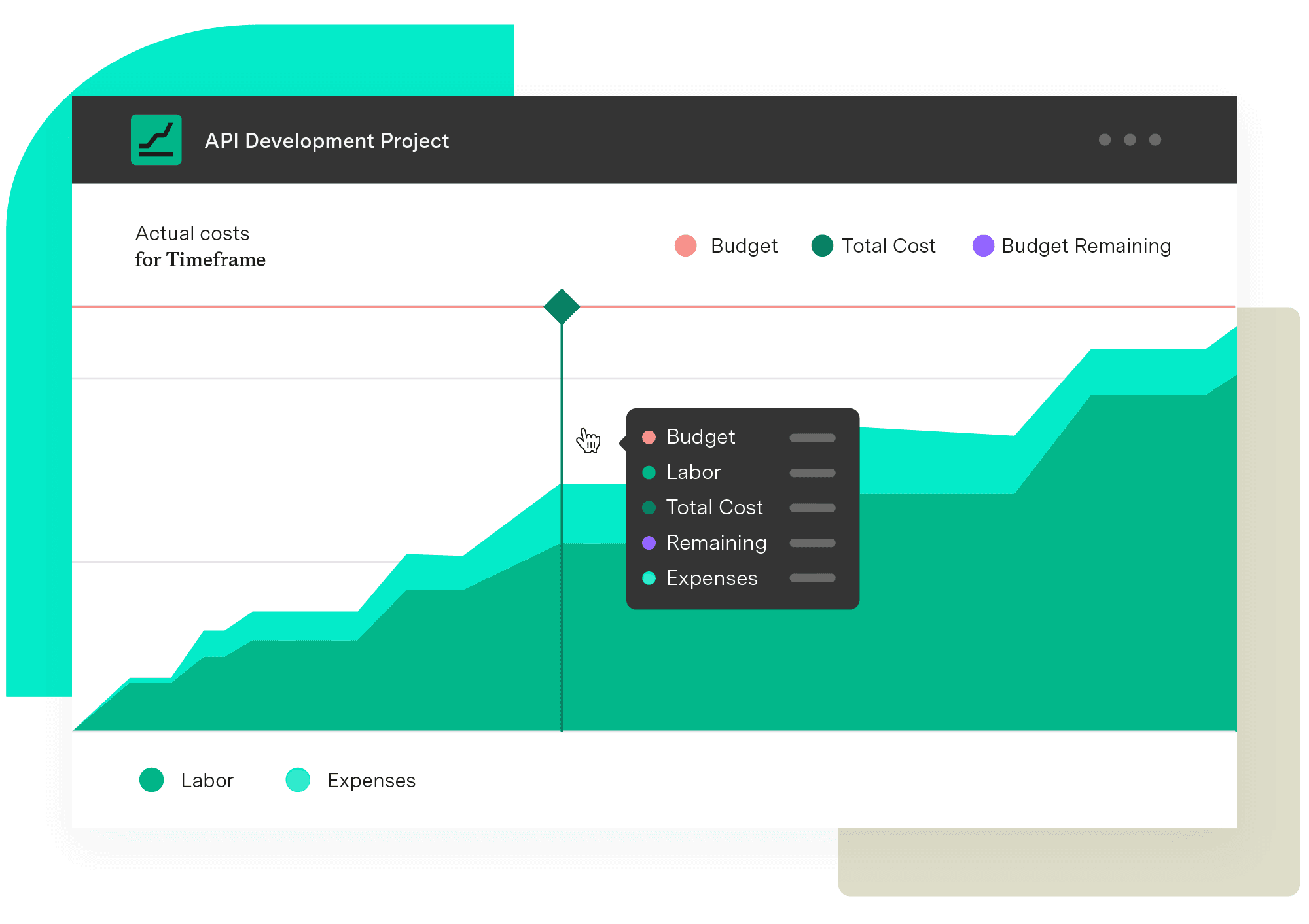
Financial Manager is the financial system of record for services firms running delivery in Jira. It harnesses real-time worklog data to produce visual representations of project and portfolio financial health – labor costs, revenue, budgets, and expenses, all visible at engagement and aggregate level.
Professional Services Automation (PSA) Demo 2023
Financial Manager works with Timesheets to remove the manual data-entry step that breaks most project finance workflows. Billable and non-billable classifications, account assignments, and CapEx vs. OpEx data flow from Timesheets directly into Financial Manager – no import, no spreadsheet reconciliation, no period-end heroics. Project managers set adjustable rates by team member, approve hours at the project level, and add expenses to round out the financial picture.
The CapEx vs. OpEx classification is particularly relevant for services firms with regulated or capitalized work. Misclassification creates audit risk and tax exposure. Financial Manager makes the distinction explicit at the worklog level and surfaces it in reporting.
For firms running multiple engagements per client or practice, projects can be grouped into portfolios for aggregated reporting on budget, costs, revenue, and scope. Combined with Custom Charts for Jira, finance leaders build the executive dashboards they need without exporting data into a separate tool.
Sign up for a demo
Request Demo