





Most professional services firms know their numbers a month after they would have been useful. Utilization, realization, and margin reports arrive in a deck pulled together from spreadsheets, exported timesheets, and a finance system that does not speak to delivery. By the time leadership sees a slipping engagement or a sliding utilization rate, the quarter is already shaped. Analytics is how services leaders shorten that loop – turning delivery data into decisions while the engagement is still in flight.
What is professional services analytics?
Professional services analytics is the practice of measuring how a services business actually runs: utilization, realization, project margin, forecast accuracy, and client profitability. It connects time, capacity, and cost data to the engagements that produced them, so leaders can see not just what happened but why.

Done well, analytics for a services firm answers four questions on demand. Are we billing the time we are working? Are we delivering at the margin we sold? Are our people loaded at the right level? Are our forecasts holding up against reality? When those questions take a week to answer, the firm runs on instinct. When they take an afternoon, it runs on evidence.
Why analytics matters for professional services firms
Services businesses live and die on small percentage points. A few points of realization across a delivery org can fund a new practice. The same drift in utilization can close one. The leaders who catch those shifts early – inside the quarter, not after – are the ones who can act on them.
Analytics also exposes the gap between what was sold and what is being delivered. Fixed-price engagements quietly burn senior hours. Time-and-materials projects under-bill because hours never get logged against the right account. A retainer client absorbs scope creep that nobody priced. Without a connected reporting layer, those leaks stay invisible until they show up as a margin miss.
The third reason analytics matters is forecasting. Pipeline alone does not tell a services leader what is achievable next quarter – capacity does. Connecting actuals to plans is what turns a hopeful forecast into a defensible one.
Benefits of analytics with Tempo
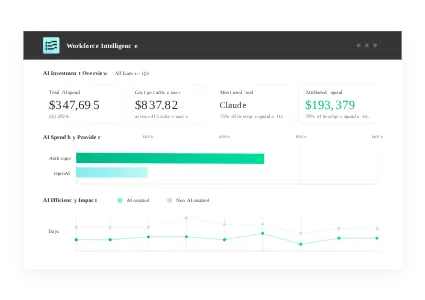
Real-time delivery KPIs. See utilization, billable hours, and project status without waiting for a manual roll-up.
Estimated vs. actual reporting. Compare what was scoped to what was delivered – at the engagement, team, or client level.
Custom dashboards. Build the views your finance, delivery, and PMO leaders each need, instead of reformatting one report for everyone.
Connected to source data. Reports pull directly from Jira and time entries, so the numbers leadership sees match the work consultants logged.

How Tempo enables professional services analytics
Tempo's analytics layer for services firms combines three products. Custom Charts for Jira is the visualization surface – a tool that lets non-technical stakeholders build dashboards in Jira and Confluence without learning JQL. Practice leads, finance partners, and PMO directors can each shape the view they need from a shared data source.
Timesheets supplies the time-and-billing truth. Every billable and non-billable hour is captured against Jira work, classified by account, and made available to reporting. Custom Charts then surfaces that data as time per client account, billable vs. non-billable mix, estimated vs. actual hours, and utilization trends over time – all without exporting to a BI tool unless you want to.
Financial Manager adds the cost and revenue layer. Project labor costs, rates, expenses, and budgets sit in one place, fed automatically by Timesheets data so there is no manual import. Financial Manager is the same product trusted by regulated and financial-services customers including Takeda, Al Rajhi Bank, and Mercury Financial. Together, the three products turn delivery activity into financial signal: which clients are profitable, which engagements are eroding margin, and which patterns to estimate against next time.
For firms that want to push data further, Tempo's BI Connectors send Jira and Tempo data into Power BI, Tableau, BigQuery, or Looker Studio – useful when finance and delivery analytics need to live alongside the rest of the business.
Professional Services Automation (PSA) Demo 2023
Analytics in practice
A mid-sized strategy firm replaces its monthly margin review deck with a Custom Charts dashboard pulling from Timesheets and Financial Manager. Partners now see live realization by practice every Monday, and the conversation shifts from explaining last month to changing the next two weeks.
A managed services provider builds an estimated-vs-actuals dashboard for fixed-price engagements. The pattern that emerges is consistent: discovery phases run materially over scope. The next round of statements of work prices that overage in, and overall margin lifts.
A global IT consultancy uses BI Connectors to push Tempo data into a corporate data warehouse, where it joins CRM and ERP data. Account leaders see client-level profitability in their existing executive dashboard – no new tool to learn, no new login.
Frequently asked questions
Do we need a separate BI platform to get value from Tempo's analytics?
No. Custom Charts handles most services analytics needs natively in Jira and Confluence – utilization, billable mix, estimated vs. actuals, and project KPIs. BI Connectors are for firms that already standardize reporting in Power BI, Tableau, or a data warehouse and want Tempo data alongside the rest of the business.
How quickly does data flow from time entry to reporting?
Reports pull from live Jira and Timesheets data, so dashboards reflect what consultants logged as soon as worklogs are saved. There is no overnight batch or manual export step.
Can non-Jira-admin users build their own dashboards?
Yes. Custom Charts is designed for business users to build, customize, and share dashboards without writing JQL or relying on a Jira admin to translate requests.
Does the analytics layer require all three Tempo PSA products?
No. Custom Charts works with Jira data alone, gets richer with Timesheets, and richer still with Financial Manager. Most services firms layer in capabilities as their reporting needs mature.